Weekend links 336

okanoue.jpg

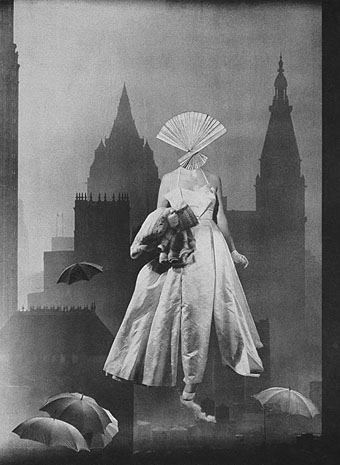
Visit in Night (1951) by Toshiko Okanoue.

• Rhythms of the World: Bombay and All That Jazz; a 60-minute BBC documentary featuring Trilok Gurtu, L. Shankar, Don Cherry, Alice Coltrane, Zakir Hussain and others. The quality of the full-length copy is a little rough so it’s worth noting the six-part version here.

Adam Scovell talks to Leah Moore and John Reppion about adapting the ghost stories of MR James for the comics medium. Related: The Corner of Some Foreign Field, a short piece of folk horror written by Martin Hayes with art by Alfie Gallagher.

Callum James on the overtly gay nature of Films and Filming magazine (1959–1990). Having seen a few copies over the years I’d always suspected this but didn’t realise it was so persistent. Related: The Boy and the Wolf by Callum James.

• At Dangerous Minds: Lucifer Rising live in concert: Bobby Beausoleil and the Freedom Orchestra perform their Kenneth Anger soundtrack, 1978.

Simon Says: A rare cassette tape of instructions by Peter Levenda for using the Simon Necronomicon (1977) as a grimoire.

• Mixes of the week: Fact Mix 577 by Outer Space, and Incantations and Manifestations by Melmoth_The_Wanderer.

• At Dennis Cooper’s: _Black_Acrylic presents … Art Sex Music: A Cosey Fanni Tutti Day.

• Up from the Abyss: Brenda SG Walter on Rammstein, Lovecraft and Sea Zombies.

• Cinematic Alchemy: Christopher Gibbs on designing sets for Performance (1970).

• Magic carpets: the art of Faig Ahmed‘s melted and pixellated rugs.

• Drips, pop and Dollars: the music that made Ennio Morricone.

• At Bibliothèque Gay: Cocteau et quelques autres.

• “Sleepers Awake!” says Moon Wiring Club.

Can your city change your mind?

The Paul Laffoley Archive

The Ambivalent Abyss (2001) by Lustmord | Byss And Abyss (2004) by Espers | Dark Bullet From The Abyss (2010) by Pleq

Weekend links 295

dupre.jpg

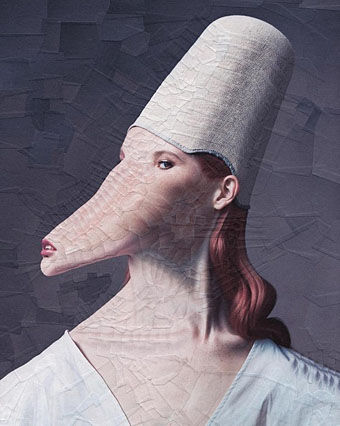
Untitled (2014) by Lola Dupré. Via.

Announcement of the week (if not the month/year) is the news that the BFI will be releasing all of the BBC dramas directed by Alan Clarke on DVD/Blu-ray in May. In addition to the long-awaited appearance on disc of Penda’s Fen (1974) we can expect a previously unseen director’s cut of Clarke’s last TV film, The Firm (1989), the DVD premier of Baal (1982) with David Bowie, plus many other works including some from the 1960s that were believed lost. (And it should be noted that this isn’t everything of Clarke’s; he also worked occasionally for ITV and later directed feature films for Channel 4.)

The BFI attention is a tribute to an exceptional director that’s overdue. Clarke has long been a cult figure among the British actors who worked with him, and among directors such as Harmony Korine and Gaspar Noé, but the tendency of TV to give one-off dramas a single screening has meant that much of his best work has been unavailable for years outside old VHS tapes. Clarke is important for having persistently chosen difficult subjects which he directed with a flair and intensity usually only found in cinema. When he died in 1990 the BBC repeated a handful of his films but the only ones given repeated DVD release have been the violent dramas with the big names attached: Scum (1979, with Ray Winstone), Made in Britain (1982, with Tim Roth), and The Firm (with Gary Oldman). Clarke’s oeuvre is much more than a parade of nihilistic villains, as will become evident later this year.

• A psychedelic video directed by Peter Strickland for Liquid Gate (ft. Bradford Cox) by Cavern of Anti-Matter. The debut album from Cavern of Anti-Matter, Void Beats/Invocation Trex, will be out later this month.

Celebrating Dusseldorf, the city that birthed Krautrock. (Article loses points for not mentioning producer Conny Plank.)

All Rivette’s features might be regarded as different kinds of horror films; Céline et Julie vont en bateau is his first horror comedy. The anxiety and despair of Paris Nous Appartient and La Religieuse, L’Amour Fou and Spectre seem relatively absent, yet they perpetually hover just beyond the edges of the frames. We still have no privileged base of ‘reality’ to set against the fictions, each of which is as outrageous as the other; and along with Borges, we can’t really say whether it’s a man dreaming he’s a butterfly or a butterfly dreaming he’s a man—although we may feel, in either case, that he and we are just on the verge of waking.

Jonathan Rosenbaum on work and play in the house of fiction: Jacques Rivette’s Out 1 and Céline and Julie Go Boating

• Mixes of the week: Finders Keepers Radio Show Krautrock Special, and The Ivy-Strangled Path Vol. XV by David Colohan.

• At Dangerous Minds: Super strange sculptures (by Shary Boyle) only the dark and demented could love.

• Beautiful Brutalites: S. Elizabeth questions Arabella Proffer about her paintings.

KTL is a musical collaboration between Peter Rehberg and Stephen O’Malley.

• Why study art when you can make it? The strange world of…This Heat.

Sarah Galo on the explicitly sexual female artists that feminism forgot.

Irmin Schmidt‘s favourite music (this week).

• LSD: My life-saving drug by Eric Perry.

The Occult Activity Book

Twenty Tiny Cities

Der LSD-Marsch (1970) by Guru Guru | Krautrock (1973) by Faust | Düsseldorf (1976) by La Düsseldorf

Foreign appearances

steam1.jpg

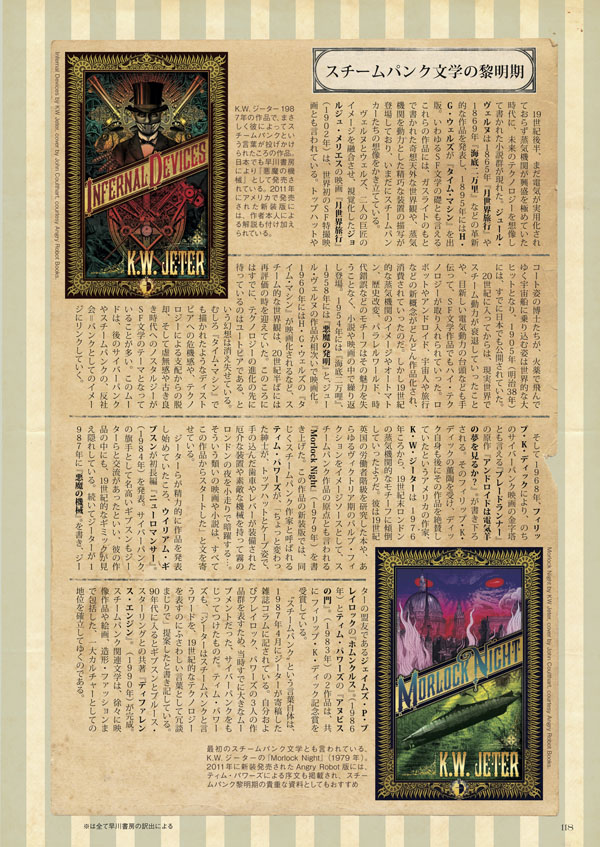
My work has appeared in a couple of foreign collections recently, each approaching popular culture from very different directions. The volume above is called Steampunk Japan Fashion Book according to a German bookseller although the title may read differently to Japanese speakers. This was published at the end of last year, and features my ever-popular covers for the Angry Robot editions of two steampunk novels by KW Jeter, Infernal Devices and Morlock Night. The book is the work of a collective who call themselves The Japanese Steampunkers.

steam2.jpg

popculture1.jpg

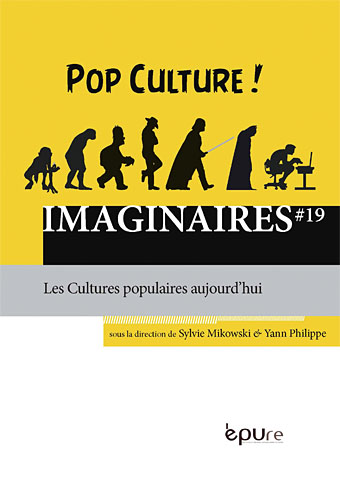
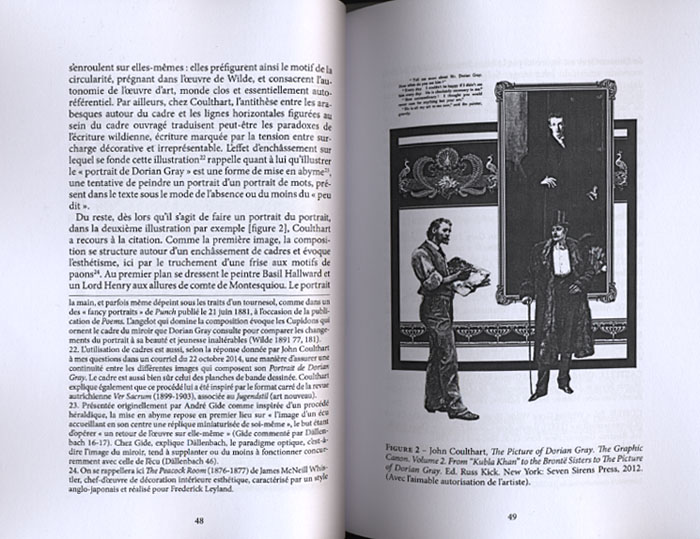
Meanwhile in France, Imaginaires #19: Les cultures populaires aujourd’hui is a collection of academic pieces about popular culture published by ÉPURE, Éditions et Presses universitaires de Reims. Inside there’s an essay by Xavier Giudicelli (University of Reims Chamapgne-Ardenne), The Picture of Dorian Gray et la culture populaire: du texte à la bande dessinée, which compares Wilde’s novel to various graphic adaptations. Xavier wrote to me some time ago about my Dorian Gray adaptation for the Russ Kick-edited Graphic Canon (2012) so the piece includes some of my remarks about my interpretation together with two of the pages.

popculture2.jpg

Previously on { feuilleton }
Picturing Dorian Gray

The weekend artists, 2015

hermes.jpg

Fathomless Sounding (1932) by Gertrude Hermes.

This should have been the last post of the year but Ken Murphy’s film made a more fitting end. This is still the laziest post of the year, however, being a review of the artists/designers/photographers from 50 or so weekend posts. Scroll down to see what caught my attention over the past twelve months.

gourmelin.jpg

Untitled drawing by Jean Gourmelin.

hugo.jpg

Cover by Valentine Hugo for Contes Bizarres (1933) by Achim d’Arnim. See Hugo’s interior illustrations here.

Continue reading “The weekend artists, 2015”

Collagescapes

tortoise1.jpg

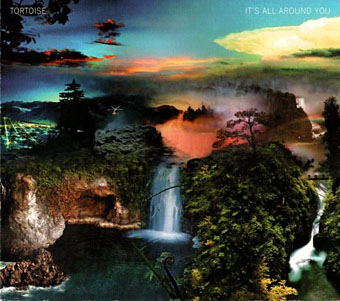
Oliver Wasow‘s artwork for It’s All Around You (2004), an album by US group Tortoise, contains some fine examples of disjunctive (Surrealist, if you must) collage landscapes. This is a sub-genre of collage that I’ve always enjoyed, especially when it’s carefully done, and I was wondering recently whether Wasow had done anything similar for other groups. Discogs has a few more examples, one of which looks like something from the masters of the photo-collage cover, Hipgnosis.

slapphappy.jpg

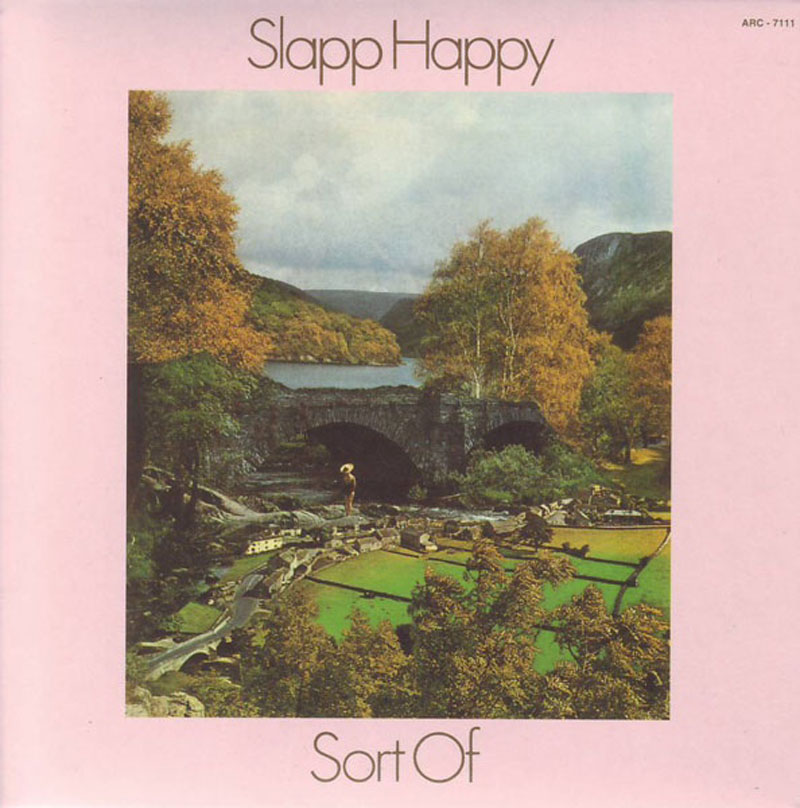
But searching was curtailed when I remembered a much earlier example of the disjunctive collagescape on the cover of Sort Of (1972) by Slapp Happy. I’d forgotten all about this superb piece by avant-garde filmmaker David Larcher which really needs to be seen on a 12-inch sleeve; this is one of those collages where the combination of careful composition, equalised light and shade, and concealed edges makes the picture seem at first glance like an ordinary photograph. Whether Larcher has produced more work of this quality, I can’t say. Another of his collages can be found at The Quietus where Cyclobe enthuse about his films. For more elaborate collagescapes you have to look elsewhere, to one of the prime exponents of the technique, Tsunehisa Kimura.

Elsewhere on { feuilleton }
The album covers archive