Weekend links 312

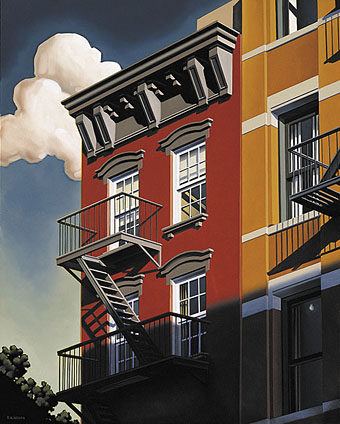
nelson.jpg

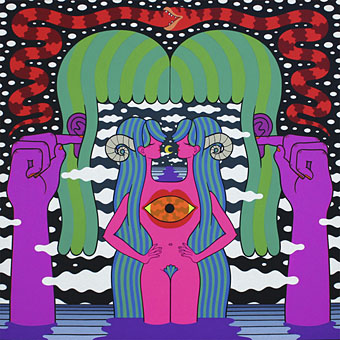
The Shadow by Kenton Nelson.

• The week in Coil: An interview by Derek de Koff, plus an extract from the new edition of England’s Hidden Reverse by David Keenan. Opening later this month at Ludwig, Berlin, is Chaostrophy, a Coil-related exhibition/celebration.

Strange Flowers remembers the incomparable Marchesa Casati, a woman who happens to feature in the book I’ve been designing and illustrating for the past few weeks. (More about that later.)

• “It wasn’t about how we could meet the demands of the book, but rather how the book meets us.” Ben Wheatley (again) talking to Jamie Sherry about bringing High-Rise to the screen.

• The latest release from Hawthonn is Sea-Spiral Spirit. The album has two accompanying videos: Pan Laws and Last Chimes From A Dormant Moon.

Alan Moore celebrates Chris Petit’s The Psalm Killer—a nerve-shredding Irish noir.

• Not a mix but a reading guide: The Brit Horror Mixtape collated by Mark West.

• More Penda’s Fen: Graham Fuller on the Romantic tradition in British film.

• Previews of Tooth by Raime, “a steadfast concoction of brooding dystopia”.

• “How big an issue is the nausea problem for Virtual Reality products?”

• FACT chooses 16 of the best songs powered by Sly and Robbie.

Geeta Dayal on the pioneering computer music of Bell Labs.

• Mix of the week: Finders Keepers’ Space Rock Special.

Paul Schütze: The True Art of Fine Fragrance

The Surrealist Legacy of Claude Lalanne

Les illustrateurs de Baudelaire

• RIP publisher Peter Owen

• Perfumed Garden Of Gulliver Smith (1967) by John’s Children | Perfumed Metal (1981) by Chrome | Fragrance (Ode To Perfume) (1981) by Holger Czukay

Weekend links 310

monogenis.jpg

Parkland (2012) by Dean Monogenis.

• “The Story Behind the Planet’s Most Influential Road Map of ‘Weird Music’“. Gustavo Turner investigates the enduring influence of The Nurse With Wound List. Related: A Discogs list of links to all the NWWL discographies, and a recommended listening guide by Ultima Thule.

Tokyo Melody: Un film sur Ryuichi Sakamoto (1985) by Elizabeth Lennard features Sakamoto at work on Illustrated Musical Encyclopedia, together with Akiko Yano, Haruomi Hosono and Yukihiro Takahashi.

• “We wanted to fuse the aesthetics, histories and values of witchcraft, the traditional ideas with a contemporary edge,” says editor and creative director of Sabat magazine, Elisabeth Krohn.

There is a very seductive and very dangerous demon: the demon of generalities. He captivates man’s thought by marking every phenomenon with a little label, and punctiliously placing it together with another, similarly carefully wrapped and numbered phenomenon. Through him a field of human knowledge as changeable as history is turned into a neat little office, where this many wars and that many revolutions sleep in folders – and where we can pore over bygone ages in complete comfort. This demon is fond of words such as “idea”, “tendency”, “influence”, “period”, and “era”. In the historian’s study this demon reductively combines in hindsight the phenomena, influences and tendencies of past ages. With this demon comes appalling tedium – the knowledge (utterly mistaken, by the way) that, however humanity plays its hand or fights back, it follows an implacable course. This demon should be feared. He is a fraud. He is a salesman of centuries, pushing his historical price list.

Vladimir Nabokov in a previously unpublished lecture, On Generalities

• More Tom Phillips: 20 Sites n Years, a film by Jake Auerbach & David Thorp about the artist’s long-term urban photography project, is showing at Camberwell College of Arts next month.

• Mixes of the week: Sass In Pocket by Abigail Ward, Near Mint, 17th May 2016 by Robin the Fog & Hannah Brown, and Secret Thirteen Mix 184 by Andi Stecher.

• Grey Dog Tales talks to Brian J Showers of Swan River Press about horror and supernatural fiction.

• “Magic mushrooms lift severe depression in clinical trial.” But their use is still illegal in the UK.

• “Your brain does not process information, and it is not a computer,” says Robert Epstein.

Cliff Martinez’s theme for Nicolas Winding Refn’s forthcoming The Neon Demon.

Diamanda Galás, Still Wild and Primal, Returns to the New York Stage.

Janae Corrado on the photography of Joel-Peter Witkin.

Alastair Gee on gay home movies from the 1940s on.

People Laugh At Me (Coz I Like Weird Music) (1980) by The Instant Automatons | Weird Caravan (1980) by Klaus Schulze | Call It Weird (1983) by Xymox

Weekend links 308

trochut.jpg

Frank Herbert’s Dune receives a new cover design by Alex Trochut together with other notable works of science fiction and fantasy for a new series from Penguin.

• “…poet, scholar and biographer Sandeep Parmar…has raised the possibility that a long poem by Hope Mirrlees, titled Paris and published by the Hogarth Press in 1919, was a strong influence on The Waste Land.” Alfred Corn on new TS Eliot scholarship.

• “[Evolution‘s] strain of body horror brings to mind an ethereal HP Lovecraft mixed with David Cronenberg.” Rachel Bowles talks to the film’s director, Lucile Hadžihalilović.

• Library music “is a sonic world of ‘weird beats, odd instrumentations, albums full of dark jazzy interludes or bizarre garage rock.'” Adrian Shaughnessy on innovation in banality.

Italy, which EM Forster called “the beautiful country where they say ‘yes’”, became another resort, especially the island of Capri, where a French poet staged a ceremonial flogging of his teenage Italian lover before the boy departed to do his military service and became the subject of a novel by his compatriot Roger Peyrefitte. In the Egyptian city of Alexandria, Forster observed the Greek poet Constantine Cavafy “standing absolutely motionless at a slight angle to the universe”, and the Australian novelist Patrick White met a local man who became his lifelong companion. For decades, the novelists Paul and Jane Bowles presided in Tangier, which Jack Kerouac was to call a “sinister international hive of queens”. William Burroughs arrived in 1954 with a teenage Spaniard named Kiki who, Woods writes, “was, famously, the boy who would blow smoke into his pubic hair and say ‘Abracadabra’ as his hardening cock emerged from the cloud”. Tangier was to figure in Burroughs’s novel Naked Lunch as a phantasmagoric, rubbery walled sex market called the Interzone.

Caleb Crain reviewing Homintern by Gregory Woods

• Beardsley biographer Matthew Sturgis reviews Aubrey Beardsley: A Catalogue Raisonné, a two-volume collection edited by Linda Gertner Zatlin.

• “He was the Bresson of Birkenhead.” Andrew Collins reviews the forthcoming collection of BBC dramas directed by Alan Clarke.

• “The postwar Hollywood western was more content to let strangeness be strange,” says Michael Newton.

• “Bosch’s work has always caused trouble for interpreters and critics,” says Morgan Meis.

Misplaced New York: a project by Anton Repponen and Jon Earle.

Wyrd Daze, Lvl2 Issue 6, is out, and as before is a free download.

Lessons we can learn from Robert Altman’s 3 Women.

• Mix of the week: FACT Mix 548 by Peder Mannerfelt.

Paris 1971 (1971) by Suzanne Ciani | Paris II (1987) by Jon Hassell | Dreaming Of Paris (2013) by Van Dyke Parks

Weekend links 306

midian.jpg

• The Midian Books Occulture catalogue launched this week sporting a cover that I pieced together for Midian’s Jonathan Davies. The design pastiches the look of the Process Church magazines of the early 1970s; inside there’s a haul of Process material on sale together with COUM/Throbbing Gristle ephemera (that’s Cosi Fanni Tutti on the right, as seen on her modelling business card), Kenneth Anger ephemera (that’s Bobby Beausoleil on the left) and much more.

• More occulture: Lost Envoy: The Tarot Deck of Austin Osman Spare launches on 11 May at Camden Arts Centre, Arkwright Road, London NW3 6DG, from 7–9pm. All are welcome.

• Out this week: Close To The Noise Floor – Formative UK Electronica 1975–1984: Excursions in Proto-Synth Pop, DIY Techno and Ambient Exploration.

• Mixes of the week: Spin Doctor’s All Vinyl Prince Tribute Mix, and the Rum Music Mix by Russell Cuzner.

David Gentleman’s illustrations for New Penguin Shakespeare books, 1967–1977.

• More electronica: Walberswick by Jon Brooks is now available in a digital edition.

• Blown up: Steve Rose on how cinema captured the dark heart of the swinging 60s.

• Six Quietus writers choose favourite Prince songs. Related: The A–Z of Prince

A Timeline of Slang Terms for Male Homosexuality by Jonathan Green.

Berenice Abbott’s views of New York streets then and now.

• Jan Švankmajer is crowd-funding his next film, Insects.

Laurie Anderson on the creation of O Superman.

• Blood Ceremony: The Great God Pan (2011) | Oliver Haddo (2011) | Ballad Of The Weird Sisters (2013) | Let It Come Down (2014)

Weekend links 305

marchbank.jpg

Threads of Fate—The Weird Sisters from Macbeth (2013) by Fiona Marchbank.

• The week in books: Claire Cameron on the difference between US & UK cover designs | Jason Diamond asks “Why do cats love bookstores?” | Alan Moore’s cover art for his forthcoming novel, Jerusalem, has been revealed | Brian Phillips on the typefaces used by New English Library for their Dune covers in the 1970s.

• On writing: Poetry and horror “share a universally human quest toward intimacy” says Evan J. Peterson | “The best work neither shows nor tells: it says by being, not by saying,” says M. John Harrison.

• At the BFI this week: Where to begin with Jerzy Skolimowski, and 10 overlooked British horror films of the 1970s. Both lists include Skolimowski’s excellent The Shout (1978).

Cultures do not, and cannot, work through notions of ‘ownership’. The history of culture is the history of cultural appropriation—of cultures borrowing, stealing, changing, transforming.

Nor does preventing whites from wearing locks or practicing yoga challenge racism in any meaningful way. What the campaigns against cultural appropriation reveal is the disintegration of the meaning of ‘anti-racism’. Once it meant to struggle for equal treatment for all. Now it means defining the correct etiquette for a plural society. The campaign against cultural appropriation is about policing manners rather than transforming society.

Kenan Malik on ill-considered complaints against “cultural appropriation”. Malik isn’t the first to note the intersection of such complaints with those of white supremacists who also want cultural purity and segregation

OUT, DEMONS, OUT!: The 1967 Exorcism of the Pentagon and the Birth of Yippie! An oral history by Larry “Ratso” Sloman, Michael Simmons and Jay Babcock.

• The long-overdue republication of Moebius’s work in English will begin with a new edition of The World of Edena (1985).

• More from radioactive Russia: Nadav Kander’s photographs of Soviet nuclear test sites.

• Comic artist and illustrator Kris Guidio in conversation with Jonathan Barlow.

• Francesca Gavin meets Tadanori Yokoo, “the Grandmaster of Pop-Psych Art”.

• “LSD’s impact on the brain revealed in groundbreaking images”

• Mix of the week: Secret Thirteen Mix 182 by Paul Jebanasam.

• A trailer for Nicolas Winding Refn’s The Neon Demon.

• Tony Conrad: 1940–2016 by Geeta Dayal.

Brian Eno’s favourite records

Neonlicht (1994) by Mitja VS (with Enzo Fabiani Quartet) | On Demon Wings (2000) by Bohren & Der Club of Gore | Shout At The Devil (2002) by Jah Wobble & Temple Of Sound