Weekend links 406

tac.jpg

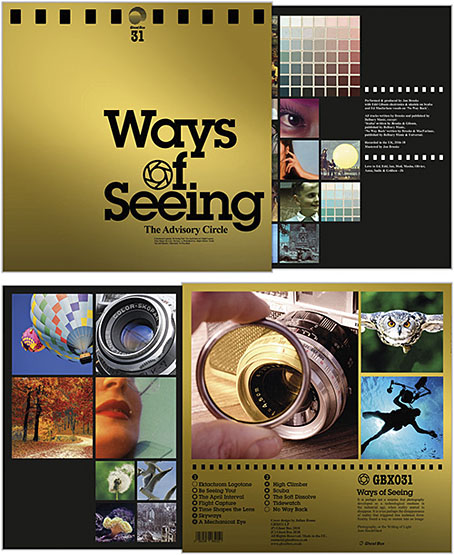
Ways Of Seeing will be the next release by The Advisory Circle on the Ghost Box label, and with metallic gold cover art by Julian House.

• “The structure came to Argento while he was tripping on some good acid, a fevered dream logic piecing everything together. […] ‘People came running out, screaming, telling people in the queue “Don’t go in! Don’t go in! It’s all witches!” It just made everyone in line want to get in even more… it was amazing.'” Ben Cobb talks to Dario Argento about the making of a horror masterpiece, Suspiria.

• Mixes of the week: The Wire Playlist by Mary Halvorson, XLR8R Podcast 535 by Sofie, and Out of the Wood Show 93 by Robin The Fog.

• Death by Balloon: Chris Mautner on the horrifying and hilarious world of comic artist Junji Ito.

Look, any honest estimation of the new translation, by Michael Hofmann, of Alfred Döblin’s Berlin Alexanderplatz from NYRB Classics is bound to begin with duteous piety, lauding it, since it is a one-and-done masterpiece that’s basically impossible to oversell, as (why not) the single biggest event in publishing in a lifetime, a crucial refurbishment of something English-language readers have been missing out on for a century, and a long-missing piece of Modernism’s ponderous jigsaw. All of which is the case of course. But when we’re talking about a dense, all-but-untranslatable Weimar-era novel, whose only point of reference for Anglophone audiences until now has been Rainer Werner Fassbinder’s meticulous fifteen-hour adaptation from 1980 (one heck of a tease) it feels important to attempt a slight rescue from its own forbidding reputation, because Alexanderplatz is less a book than a living thing, and one that joyously resists the dust heap of bourgeois literary scholarship with its every line.

JW McCormack on the new translation of Alfred Döblin’s Modernist classic

Section 28 protesters 30 years on: “We were arrested and put in a cell up by Big Ben”.

Angelique Kidjo talks reinventing Talking Heads’ Remain In Light on new LP.

• The hidden lives of gay men in the Middle East: photographs by Hoda Afshar.

Al Pacino’s journey with Wilde’s Salomé.

Tenebrous Kate

• Are You Seeing (1969) by Ora | Seeing Out The Angel (1981) by Simple Minds | Sine Seeing (2014) by The Advisory Circle
Weekend links 400

bernard.jpg

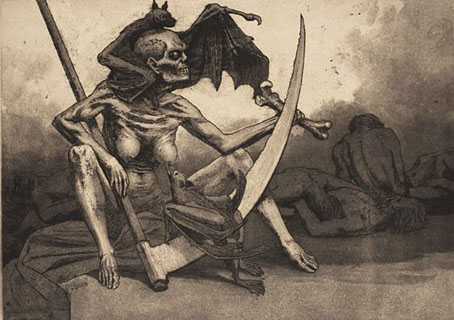
Le Répit (La Mort allaitant une chauve-souris) (1895) by Valère Bernard.

Playhouse 90 presents Heart of Darkness by Joseph Conrad. An American TV production from 1957 starring Boris Karloff, Roddy McDowall, Eartha Kitt and others; introduced by Sterling Hayden. It’s bizarre. Acidemic goes into the detail.

• Erik Davis talks to occult writer and drug geek Julian Vayne about Baphomet, the (sur)reality of spirits, evolution, ritualizing entheogens, and his new book Getting Higher: The Manual of Psychedelic Ceremony.

• “Unsurprisingly, 1. Outside was the record that the #BowieBookClub readers most readily associated with Hawksmoor.” Anna Aslanyan revisits Peter Ackroyd’s architectural mystery.

The Flowers of Dorian Gray: part one of a series of posts examining one of Oscar Wilde’s favourite symbols.

• At Haute Macabre, an interview with Michael Locascio & Heather Jean Skawold of Dellamorte & Co.

One Minute Art History, an animated film by Cao Shu.

Film posters at the Harry Ransom Center, UT-Austin.

• Mix of the week: FACT mix 639 by Black Milk.

Susanna‘s favourite albums.

• Welcome to The Spoodoir.

• Flowers Of Evil (1983) by Cortex | Baphomet (1989) by Foetus Inc. | Heart Of Darkness (1989) by Syd Straw

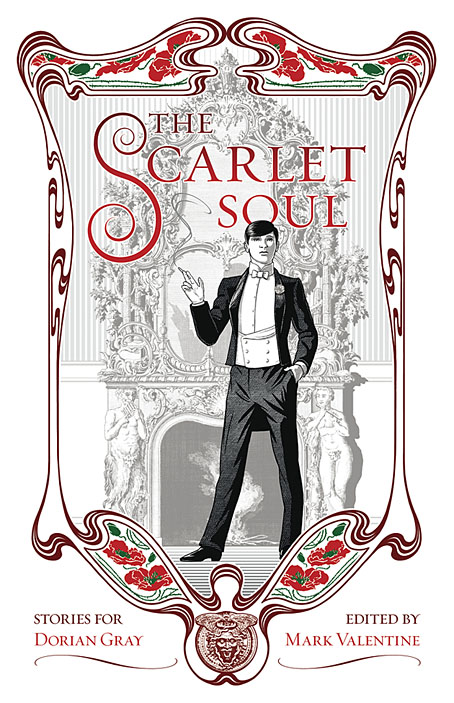
The Scarlet Soul: Stories for Dorian Gray

scarlet.jpg

With the running out of the year it’s time to start posting some of the things I’ve been working on for the past few months. This year has been an incredibly busy one with little breathing space between projects. Last month I mentioned not having enough time to put together a decent mix for Halloween; I also haven’t had enough time to prepare a calendar for next year. The latter isn’t a great loss since last year’s effort was a particularly bad seller but I still like doing them when I have the opportunity.

Before I get to one of the big illustration projects, here’s a cover I put together last month for Dublin’s Swan River Press. The theme should be self-evident, and this marks my second entry into Dorian Gray territory. It’s also the second thing that I’ve worked on this year with a connection to Mark Valentine (see this post for details of the first). Swan River publish a range of elegant hardback editions so I’m looking forward to seeing this one in print. As to the artwork, the frame is adapted from a 1900 calendar design by one Oscar Ziemann which I found in an issue of Deutsche Kunst und Dekoration. There’s next to nothing about Herr Ziemann on the web so his design may have been a one-off. The poppies are my own replacement for Ziemann’s floral designs; they relate to the hints that Oscar Wilde gives to Dorian Gray’s opium indulgence, and they’re scarlet flowers, of course.

The Scarlet Soul will be published next month but it’s available for pre-order here. My next work for Swan River Press will be a major edition of William Hope Hodgson’s weird masterwork, The House on the Borderland. More about that later.

Previously on { feuilleton }
Picturing Dorian Gray

Weekend links 383

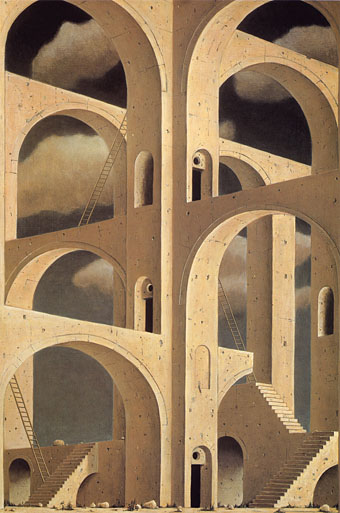
nomata.jpg

Arcadia-24 (1988) by Minoru Nomata.

Dark Entries and Honey Soundsystem Records release a video of edited moments from gay porn film Afternooners to promote the release of the film’s electronic soundtrack by Patrick Cowley. The album, which is the third and final collection of Cowley’s porn soundtracks, is out now.

Emily Temple looks at some of the art inspired by Italo Calvino’s Invisible Cities. I explored the same subject a couple of years ago in a week of Calvino art posts. From 2014: Peter Mendelsund on designing covers for Calvino.

Jim Downes on the late Charley Shively, a gay liberation activist who wasn’t interested in equality. Not an uncommon attitude in some gay circles but it’s one you seldom see aired in the mainstream press.

Geeta Dayal on A Little Electronic Milky Way of Sound by Roland Kayn, a 14-hour composition of “cybernetic music” which has been released in a lavish 16-CD box set by Frozen Reeds.

• An introduction to Henri-Georges Clouzot in seven films by Adam Scovell. Clouzot’s masterwork, The Wages of Fear (1953), is released on blu-ray by the BFI next week.

• Ubu Yorker: Menachem Feuer interviews Kenneth Goldsmith, writer and the man behind Ubuweb.

• Why Oscar-winning cinematographer Vittorio Storaro thinks the film vs. digital debate is bullshit.

David Barnett on supernatural fiction’s “best kept secret”, Robert Aickman.

Michèle Mendelssohn on how Oscar Wilde’s life imitates his art.

• Mix of the week: Secret Thirteen Mix 233 by Mick Harris.

Invisible Limits (1976) by Tangerine Dream | Invisible Cities (1990) by Jah Wobble’s Invaders Of The Heart | Invisible Architecture (1995) by John Foxx

Form and Austin Osman Spare

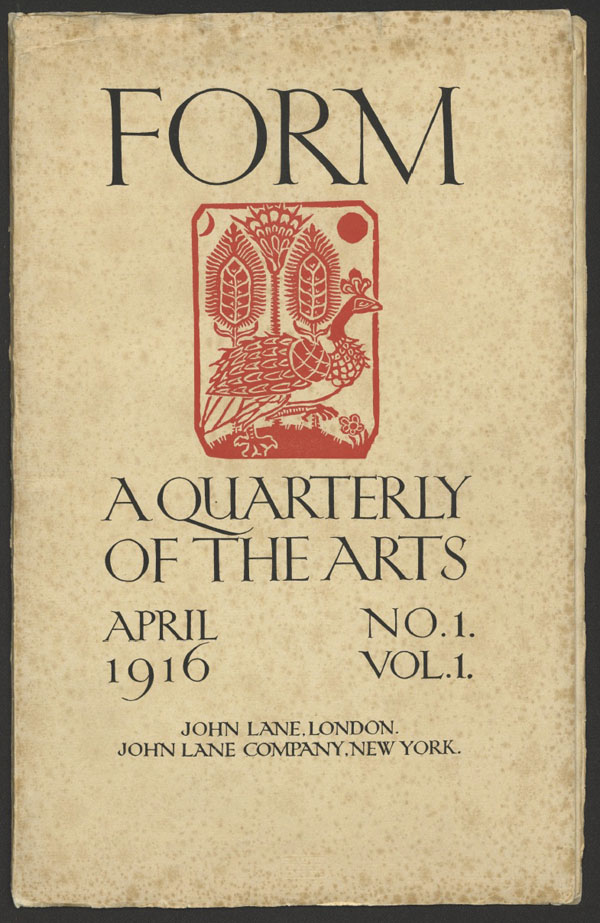
form01.jpg

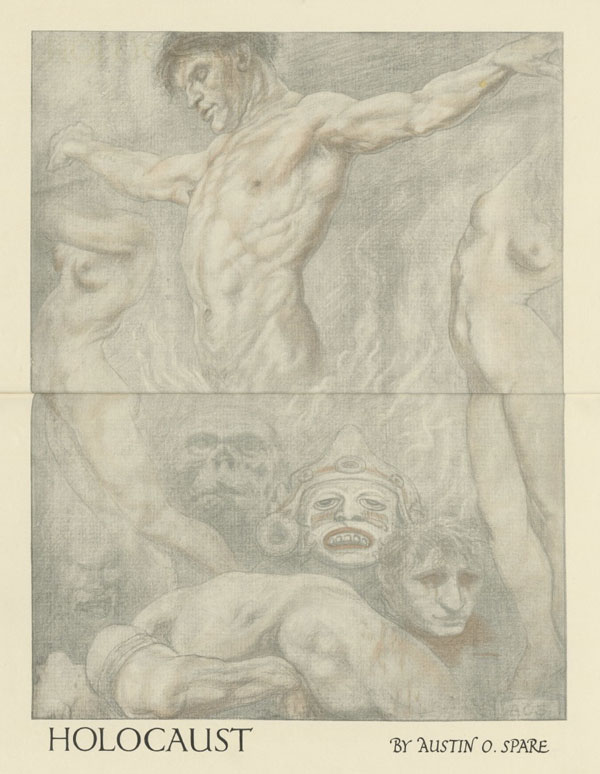
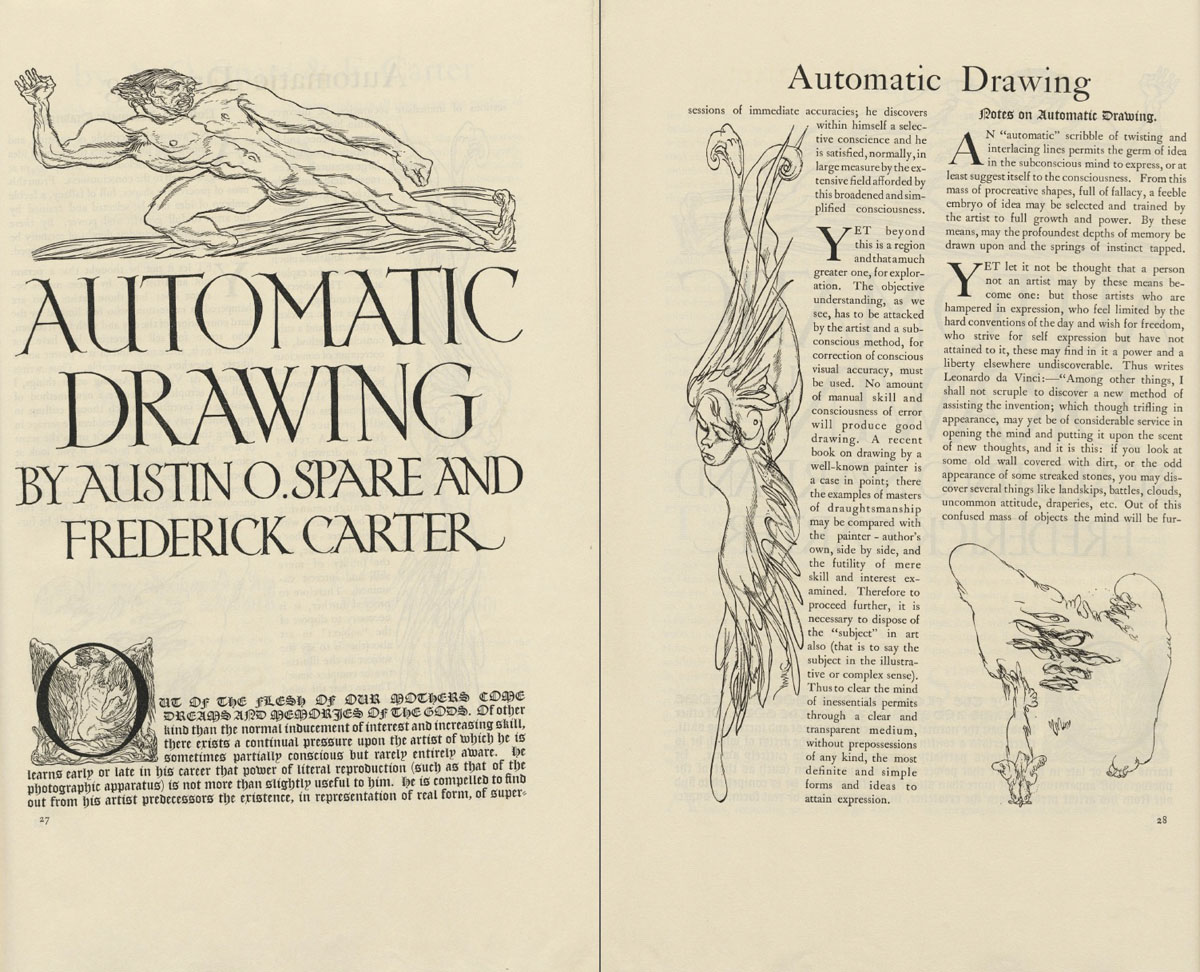
The University of Heidelberg‘s scanning programme continues to be a source of delight for those of us without professional or financial access to rare book collections. Having recently made the entire run of Der Ochideengarten available, they’ve added scans of another journal that was on my list of magazines I’d been hoping would eventually turn up online. Form was the first of two short-lived publications edited by Austin Osman Spare from 1916 to 1924, the second being The Golden Hind. Spare and co-editor “Francis Marsden” (Frederick Carter) published two issues of Form before Spare was conscripted in 1917. After the war, publication resumed with two further issues. Spare aficionados have long been familiar with the drawings in these publications, many of which have been reprinted over and over in collections of Spare’s art but often with no indication of their original context.

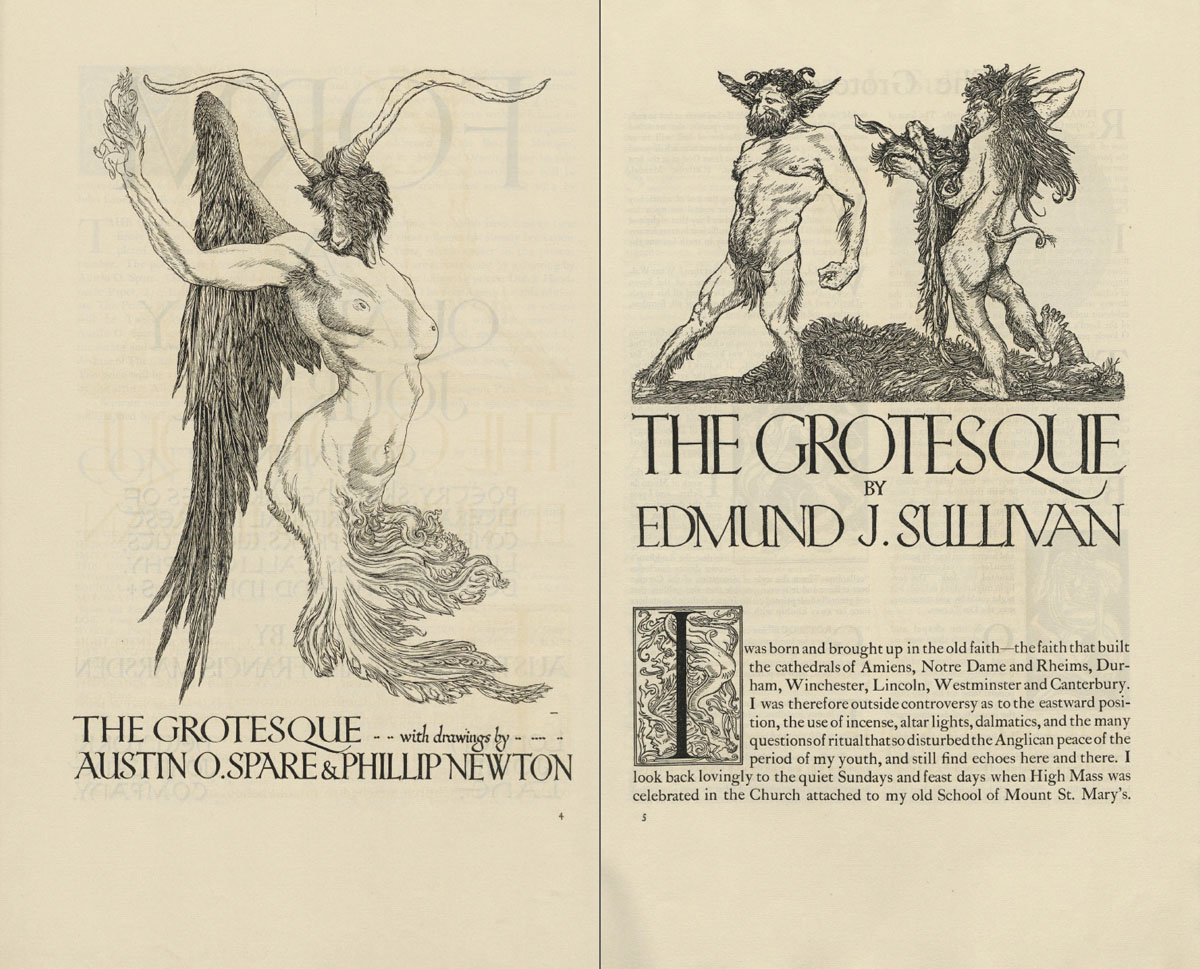
form02.jpg

Seeing the drawings in situ like this not only restores the context but also sets them beside the accompanying work by Spare’s fellow writers and artists. Some of the other contributors need no introduction—WB Yeats, Robert Graves—while others have been neglected or even forgotten. Most descriptions of Form mention its following in the lineage of The Yellow Book, publisher John Lane having been responsible for both publications. But looking through the first two issues I’d say the model is as much The Savoy, the magazine that Aubrey Beardsley and Arthur Symons put together after The Yellow Book kicked out Beardsley in the wake of the Oscar Wilde trial. Yeats was a contributor to The Savoy, and two other artists present in Form—Charles Ricketts and Charles Shannon—were friends and publishers of Wilde.

form03.jpg

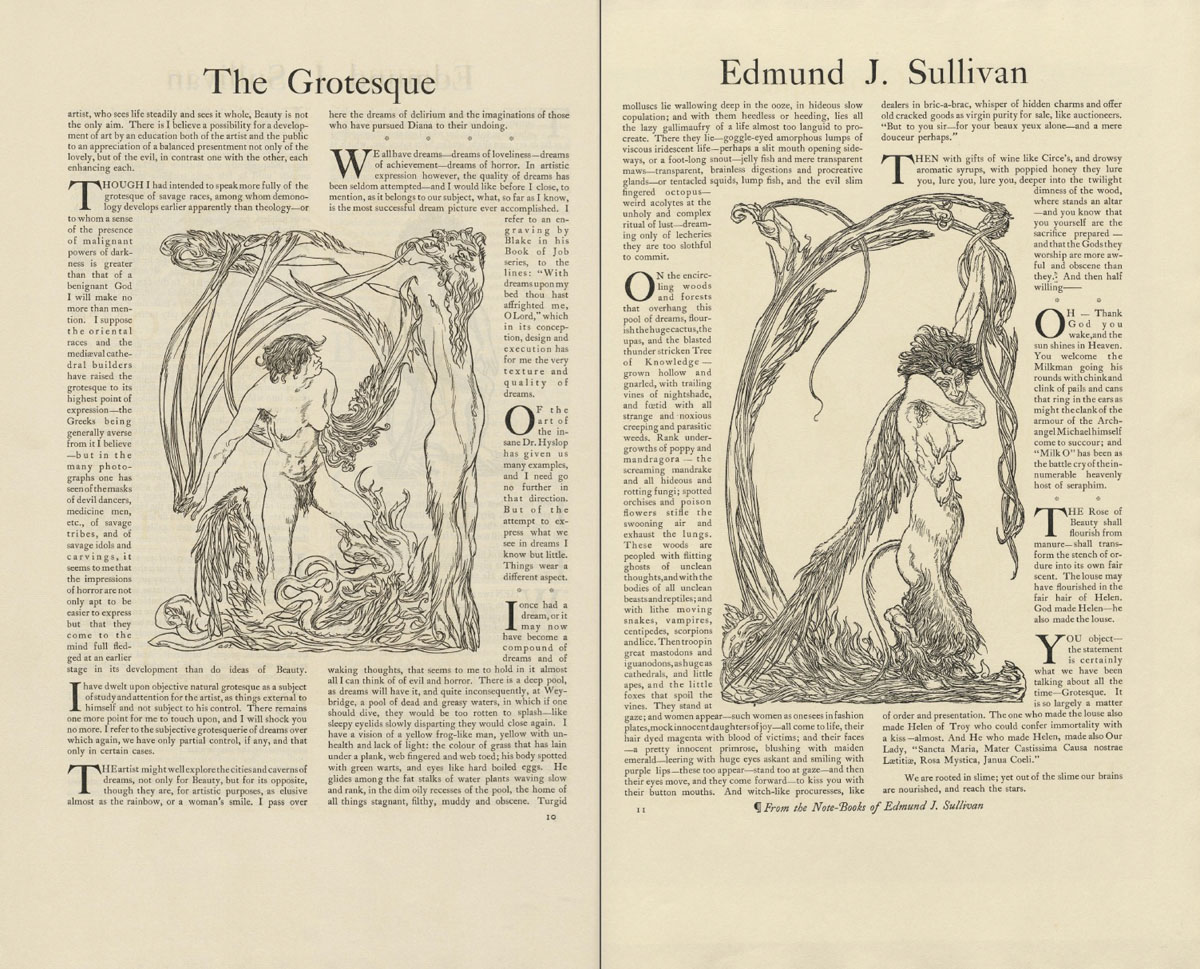
The samples here are mostly Spare’s work, and only a small selection at that. Enthusiasts are encouraged to download the PDFs for themselves. I had seen one of these issues before (Alan Moore has an enviable collection of Spare publications) but the rest were magazines I’d been waiting decades to see in full. I’m hoping now that the excellent staff at Heidelberg may have copies of The Golden Hind waiting for similar treatment.

form04.jpg

form05.jpg

Continue reading “Form and Austin Osman Spare”