Midsummer

midsummer8.jpg

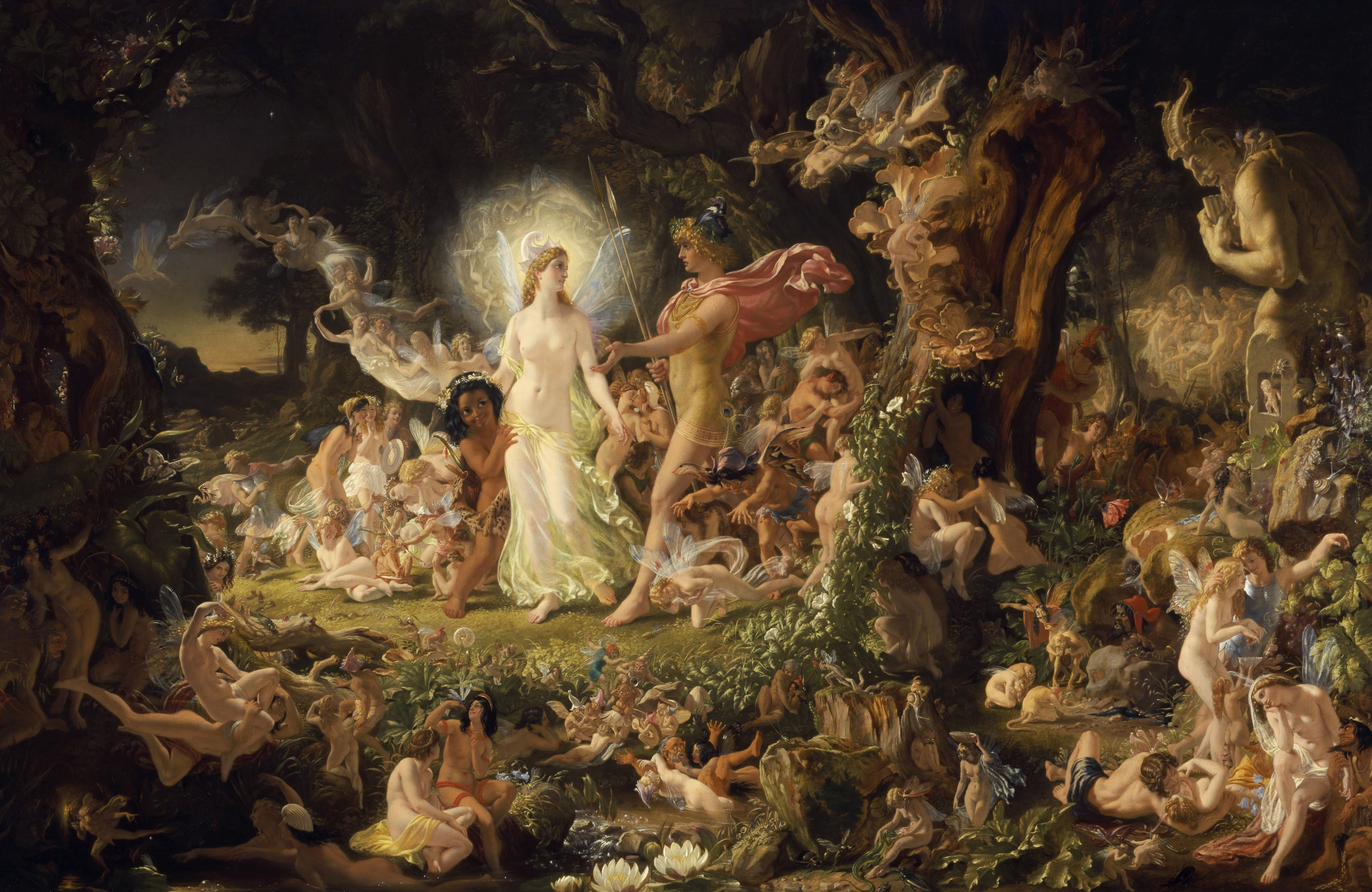
A statue of the Great God Pan looks down on the teeming chaos of Joseph Noel Paton’s The Quarrel of Oberon and Titania (1849), one of many 19th-century paintings based on A Midsummer Night’s Dream. Paton’s canvas gives Richard Dadd a run for his money in its wealth of incident and grotesque detail (see the big version at Wikipedia), and the artist returned to the theme a few years later with the equally excessive Fairy Raid (below). The later painting presumably depicts the kidnapping of the Changeling which Oberon and Titania quarrel over.

While we’re on the subject, a couple of years ago I wanted to link to the amazing fairy scene in William Dieterle’s 1935 film (which supposedly features Kenneth Anger as the Changeling) but it wasn’t on YouTube. Now you can watch it here.

midsummer7.jpg

The Midsummer Night’s Fairies (detail, 1847) by Robert Huskisson.

midsummer1.jpg

The Quarrel of Oberon and Titania (1849) by Joseph Noel Paton.

midsummer4.jpg

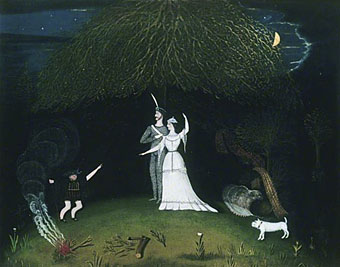
A Midsummer Night’s Dream (c. 1860) by W. Balls.

midsummer2.jpg

The Fairy Raid: Carrying Off a Changeling, Midsummer Eve (1867) by Joseph Noel Paton.

midsummer5.jpg

Midsummer Morn, Bushy Park (1905) by George Dunlop Leslie.

midsummer3.jpg

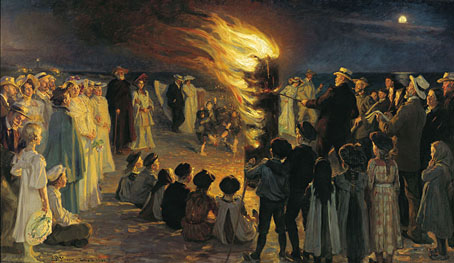
Midsummer’s Eve Bonfire on Skagen’s Beach (1906) by PS Krøyer.

midsummer6.jpg

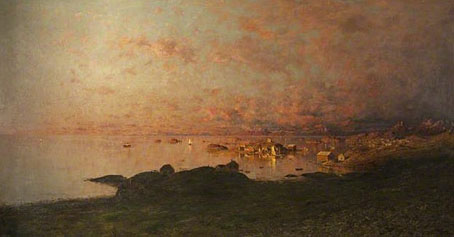
Midsummer Night, Lofoten, Norway (no date) by Adelsteen Normann.

Previously on { feuilleton }
Max Reinhardt’s Dream
The Midsummer Chronophage
Another Midsummer Night
A Midsummer Night’s Dadd
William Heath Robinson’s Midsummer Night’s Dream

Weekend links 209

soundcarriers.jpg

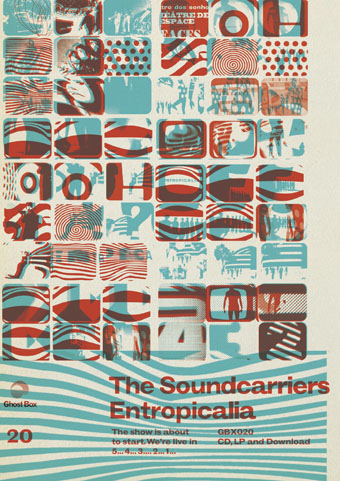
Soundcarriers poster by Julian House.

A new release on the Ghost Box label is always a welcome thing but Entropicalia by The Soundcarriers, out on May 20th, is one I’m especially looking forward to. Julian House has made a video for new song Boiling Point, and there’s also the poster above which can be downloaded at larger size here. The Ghost Box Guest Shop has a couple of new additions including the recent Man Woman Birth Death Infinity album by Raagnagrok.

• “It’s a funny time to be making music, because we’re a generation of people who make music with screens instead of with ears.” Ben Frost talking to Tristan Bath.

• At Dangerous Minds: You Gotta Say Yes to Another Excess, a rare glimpse of Yello live in concert, 1983.

Our movements about London are closely circumscribed, and while we may imagine ourselves to be free, the truth is that the vast majority of our journeys are undertaken for commercial imperatives: we travel either to work or to spend. All about us during our daily existence we are presented with buildings we cannot enter, fences we cannot climb and thoroughfares it would be foolhardy to cross. We are disbarred from some places because we don’t have the money — and from others because we don’t have the power. The city promises us everything, but it will deliver only a bit.

The place-hackers draw our attention to how physically and commercially circumscribed our urban existence really is. […] As more and more international capital flows into London, so public space is increasingly eroded — it’s just too valuable for us ordinary folk to paddle about in any more.

Give the freedom of the city to our urban explorers, says Will Self. Related: Robert Macfarlane accompanied urbexer Bradley Garrett on a night-time jaunt.

Black Sabbeth: Metal band Gonga covering a classic with Portishead’s Beth Gibbons on vocals.

• Pelican books take flight again; Paul Laity on the resurrection of the non-fiction imprint.

• Finland’s homoerotic stamps are an ocular feast for women, too, says Nell Frizzell.

• “I guess you could say I am a Pagan.” Kenneth Anger on the occult.

• “How much gay sex should a novel have?” asks Caleb Crain.

• Mix of the week: Secret Thirteen Mix 112 by Kyoka.

The Gibraltar Encyclopedia of Progressive Rock

Zombi’s Guide to Goblin

Decadence Comics

Zombie Warfare (1979) by Chrome | Escape From The Flesheaters (Zombie) (1979) by Fabio Frizzi | Zombie’ites (1993) by Transglobal Underground

Weekend links 208

sungwon.jpg

The Blue Girl (2013) by Sungwon.

• “Meanwhile, in her parents’ room [Max] Ernst painted aardvarks eating ants and big human hands around the windows. ‘Sexual connotations, I think,’ she says shyly.” Agnès Poirier talks to Cécile Eluard about her childhood among the Surrealists.

• “Thrilling and prophetic”: why film-maker Chris Marker‘s radical images influenced so many artists. Sukhdev Sandhu, William Gibson, Mark Romanek and Joanna Hogg on the elusive director.

• At Dangerous Minds: Throbbing Gristle live in Manchester in 1980, and Brian Butler talks about the rediscovered early print of Kenneth Anger’s Lucifer Rising. There’s a trailer!

• From 1981: The Art of Fiction No. 69 at The Paris Review, an interview with Gabriel García Márquez. Related: Thomas Pynchon reviewed Love in the Time of Cholera in 1988.

• “Seven years ago, a stolen first edition of Borges’s early poems was returned to Argentina’s National Library. But was it the right copy?” Graciela Mochkofsky investigates.

• “What was Walter Benjamin doing with his shirt off in Ibiza?” Peter E. Gordon reviews Walter Benjamin: A Critical Life by Howard Eiland & Michael W. Jennings.

• A video by Marcel Weber for Måtinden, a track from Eric Holm’s Andøya album. Another album on the Subtext label that I helped design.

• More Ian Miller: Boing Boing has pages from his new book, The Art of Ian Miller, and there’s an interview at Sci-Fi-O-Rama.

Outrun Europa, a free compilation of 80s-style electronic music. There’s a lot more along those lines here.

• Praise Be! Favourite religious and spiritual records chose by writers at The Quietus.

Ralph Steadman illustrated Alice’s Adventures in Wonderland in 1973.

British Pathé is uploading 85,000 of its newsreel films to YouTube.

• Drawings by Lebbeus Woods at The Drawing Center, New York.

• At Pinterest: Ian Miller and Kenneth Anger.

Lucifer Sam (1967) by Pink Floyd | The Surrealist Waltz (1967) by Pearls Before Swine | Which Dreamed It (1968) by Boeing Duveen And The Beautiful Soup

Weekend links 207

barker.jpg

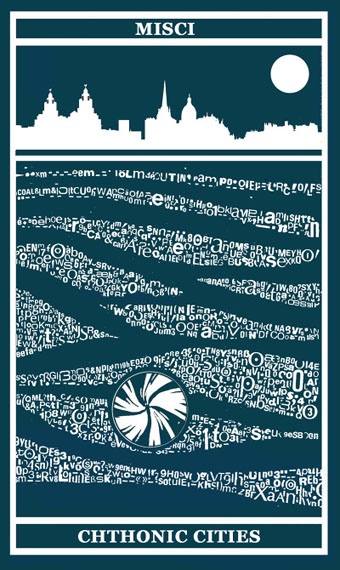
Chthonic Cities by David Chatton Barker. One of a series of Folklore Tapes screenprints available from Bleep.

• The original version of Kenneth Anger’s Lucifer Rising, the one with the Jimmy Page soundtrack that was completed in 1973, has always been described as lost/stolen/buried or otherwise gone forever. So you’d think the news that a print had been discovered recently by Brian Butler would have received greater attention. There’s a screening in Los Angeles this Thursday. When do the rest of us get to see it?

Chris Marker: A Grin Without a Cat, an exhibition and series of Marker-related events at the Whitechapel Gallery, London. Related: The Encounter of M. Chat & Chris Marker as Told By Louise Traon.

• The trailer for The Gospel According to St Derek, a forthcoming documentary about Derek Jarman. Related: Carl Swanson on why Tilda Swinton is not quite of this world.

Maybe there’s just something conservative at the bedrock of American fiction. […] Or maybe it’s just another symptom of the creeping conservatism that’s infected so many aspects of the culture.

Eric Obenauf talks to author Jeff Jackson whose comments about cultural conservatism could equally be applied to the UK.

• Primitive graphics, inventive graphics, budget Surrealism, and some great theme tunes; it’s Trunk TV, Episode 1: Title Sequences.

• Mixes of the week: Secret Thirteen Mix 110 by Black To Comm, and Intro To Drone For Debcon 1, almost 7 hours of music!

Joseph Burnett reviews Ett, an album of electronic music by Klara Lewis.

The Delian Mode (2009), a film about Delia Derbyshire by Kara Blake.

• Extracts from Tokyo Reverse by Simon Bouisson and Ludovic Zuili.

Dan Piepenbring on The Haunting Illustrations of Alfred Kubin.

• At Strange Flowers: Photos of arcades by Germaine Krull.

• Fish, Fiends, and Fantasy: The Gothic Art of Ian Miller.

• At 50 Watts: Richard Teschner and His Puppets.

• Sonic Foam: Ian Penman on Kate Bush and Coil.

Bits and Pieces

Lucifer (1968) by The Salt | Experiment IV (1986) by Kate Bush | Methoxy-N, N-Dimethyl (5-MeO-DMT) (1998) by Coil

Songs for the Witch Woman

cameron1.jpg

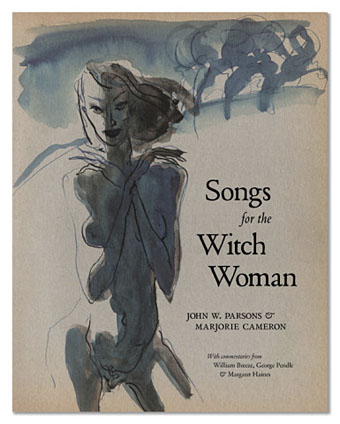
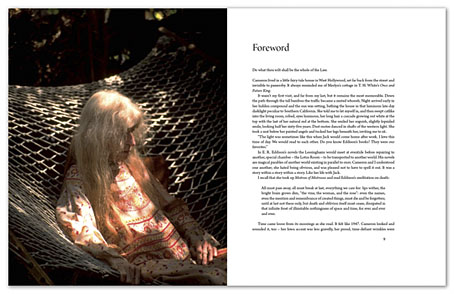
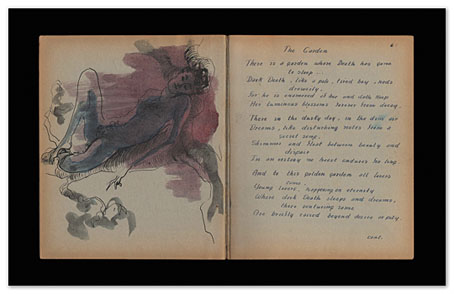
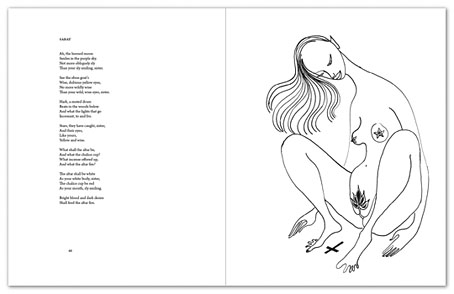
It wasn’t so very long ago that occult artist Marjorie Cameron (1922–1995) was visible only as a silent and enigmatic presence in films by Kenneth Anger and Curtis Harrington. Previous posts here have catalogued the resurrection of interest in her life and work which now includes a book of poems by husband Jack Parsons, embellished by Cameron’s drawings and paintings. This is another quality production from Fulgur Esoterica who provided me with these page layouts. Details of the book follow. See this page at Fulgur for a few more pieces of artwork.

cameron2.jpg

Songs for the Witch Woman
A Romantic Tragedy filled with Magic

‘He’ll be back some time. Laughing at you’

Fulgur Esoterica has announced today the publication of a collection of poems by rocket scientist Jack Parsons’ illustrated by his wife and magical partner Marjorie Cameron. The drawings and poetry have been gathered by Cameron after her husband’s death and are here published together for the first time. The book is the first publication to mark 100 years from Parsons’s birth (1914).

Jack Parsons was not only the most influential Californian magician of his day but was also at the heart of the US rocketry programme as one of the founder of the Jet Propulsion Laboratory before his untimely death at the early age of 37. He died in an explosion which was probably an accident but which has also been seen by some as either a result of his ‘Babalon Working’ or, by some occultists, as a direct result of tampering with dark forces.

Parsons’s wife Cameron continued to illustrate the poems he wrote for her years after his death. Cameron was an artist and actress who after Parsons’ death moved on to become one of most sought after faces in counter cultural Hollywood circles having appeared in Kenneth Anger’s Inauguration of the Pleasure Dome (1954) and Curtis Harrington’s Wormwood Star as herself and having figured on the cover of Wallace Berman’s first issue for Semina (1955).

The collaboration presented here creates a unique insight into an intense and unique romantic tragedy. As stated by Parsons’s official biographer and contributor to Songs for the Witch Woman George Pendle, “A collection of uneasy love poems, the language and meter of Songs for the Witch Woman owe a considerable debt to the Romantic poets. Keats’ “Lamia”, Byron’s Browning’s “Childe Roland to the Dark Tower Came”, Tennyson’s “Idylls of the King” are all referred to. […] But nothing is quite what it seems”. He further states that “many of the poems speak of entrapments and reversals, of women tricking or teasing men into their web to be devoured or eaten. And although a rich, pungent sensuousness overlays the poems, with datura and jasmine filling the lines with a somnolent musk, neurosis and fever, worry and sickness, never seem far away. In many ways the poems seem to act as a sort of testing ground for the emotions stirred up by the often masochistic relationship with the fiercely independent Cameron.”

The volume is complemented by critical essays and by a diary entry from Cameron’s magical diary. Some say this text constitutes the summoning of a magical entity while others looked at it as an invocation to her lost lover.

Price: Hardback £40.  Deluxe £140. Dimensions and info: large format (305mm x 240mm). 176 pages. Premium Italian Paper.
cameron3.jpg

Marjorie Cameron was born in Belle Plaine, Iowa in 1922. The fiery and uncompromising character for which she would later be known manifested from an early age. School friends and teachers alike saw her as a peculiar child who by nature looked at the world from a different angle. After the outbreak of the Second World War Cameron enrolled in the Navy and after a period of training became the cartographer for the Joints Chiefs of Staff. Discharged from the military in 1945, she joined her family in Pasadena where less than a year later she met the man who would change her life.

Cameron was twenty-four when she met Jack Parsons, a young and charismatic rocket scientist at the peak of his public career, associate founder of the Jet Propulsion Laboratory and acting master of the  ‘Agape Lodge of the Ordo Templis Orientis’. For the following seven years Cameron and Parsons worked together in magick, love and art giving birth to one of the most legendary magico-artistic partnerships of the century. Firmly believing that Cameron’s appearance in his life was the result of an intense series of magical workings carried out in the weeks preceding the encounter, Parsons famously wrote to Aleister Crowley ‘I have found my Elemental’. Be it as it may, in the first years of their relationship Cameron was not only unaware of such goings-on but also uninterested in Jack’s spiritual path, preferring art and love over the practice of magic.

But as time went by Parsons assumed another function in Cameron’s life as he quickly became her magical mentor. He renamed her Candida, recommended books, prescribed rituals and meditative practices to deal with her depressions. When Jack Parsons died in an explosion at the age of thirty-seven, Cameron was left alone, wondering whether she was human or elemental.

A very dramatic period follows for Cameron. For a time she withdraws into the desert, where she attempts to connect with the spirit of her lost lover through a series of magical workings. A few years later she comes back to Los Angeles, where in 1954 she appeared in Kenneth Anger’s landmark film Inauguration of the Pleasure Dome. She also met the director Curtis Harrington, for whom she appeared as herself in the short film Wormwood Star. In 1955 she was featured on the cover of the first issue of Wallace Berman’s artistic and literary journal Semina, so marking her firm arrival in the Hollywood artistic counter-culture.

Cameron spent the last decades of her life in West Hollywood, painting, writing and mastering the art of Thai Chi. She died of cancer in 1995 at the age of 73.
cameron4.jpg

cameron5.jpg

Previously on { feuilleton }
More Cameron
Inauguration of the Pleasure Dome: The Eldorado Edition
The Wormwood Star
Street Fair, 1959
House of Harrington
Curtis Harrington, 1926–2007
The art of Cameron, 1922–1995