Two albums

mu1.jpg

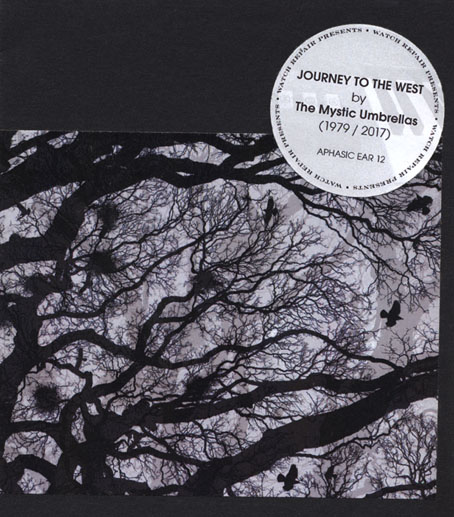
A pair of albums by friends of mine are released this month: the first, Journey to the West (1979–2017) by Watch Repair presents The Mystic Umbrellas, has been gestating for several years; the second, Dreaming Dangerous Rainbows by Albatross Project, came together very quickly earlier this year after song sketches led to an album that none of the participants had originally planned. I designed both releases so I have more than a passing interest.
mu3.jpg

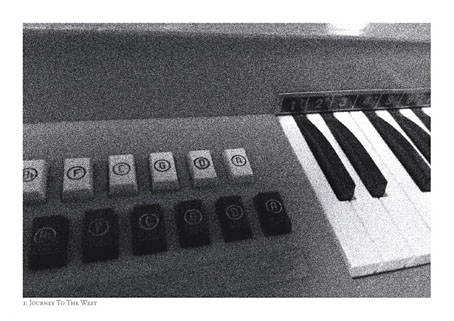
The Mystic Umbrellas project will probably be of most interest to regular readers since it evolved from a couple of very minimal organ recordings made in 1979 by Mark Valentine. Mark is well-known today as a writer of weird fiction, and also an editor and publisher of the same, but in the early 1980s he was involved briefly with the British wing of the independent cassette scene, a micro-budget offshoot of the post-punk DIY ethos which spurred many amateur (or non-) musicians to create and release their own musical works on limited-edition cassettes. The UK manifestation of this scene tended either to imitate higher profile post-punk artists (some of the better examples may be heard on the recent Cherry Red compilation, Close To The Noise Floor) or indulge in a very British form of what might be called Low Surrealism, although “absurdity” is probably a more accurate definition. (A UK label of the time was even named Absurd Records.)
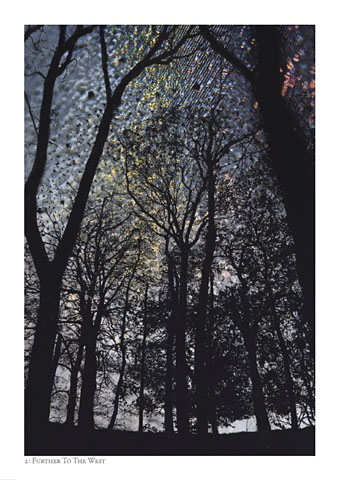
mu4.jpg

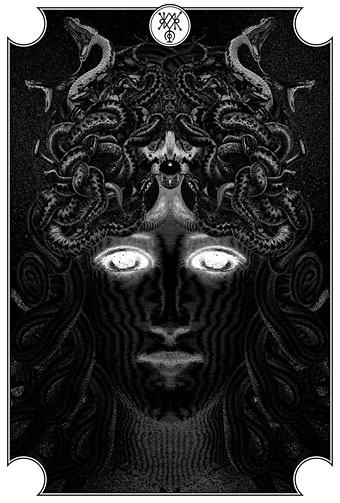
Photocard by Deborah Judd.

Mark’s Mystic Umbrellas pieces—Journey To The West, Radio Dromedary (a short-wave radio capture) and Rainsborough’s Grave 1 & 2—were released on separate cassette compilations, Deleted Funtime (1980) and National Grid (1981). My friend in Watch Repair (who is happy to remain otherwise anonymous) bought both cassettes, and marked out the Mystic Umbrellas pieces as favourites for their qualities of melancholy and restraint; the organ recordings were very different from the post-punk fumblings or the absurdity in evidence elsewhere. The cassettes sat in a box for years until the same friend decided to try using them as source material for some of his sound processing experiments; these experiments eventually yielded a suite of marvellously atmospheric extensions/transmutations which mutate the recordings beyond recognition but which remain faithful to the haunting qualities of the originals. The precedence for this kind of repurposing would include Jon Hassell’s Magic Realism (1983) and some of the recent works of Thomas Köner, but Mystic Umbrellas and Watch Repair are in a territory of their own.
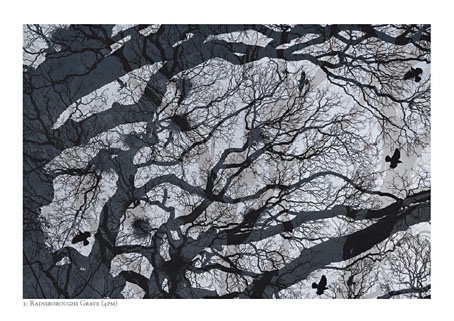
mu5.jpg

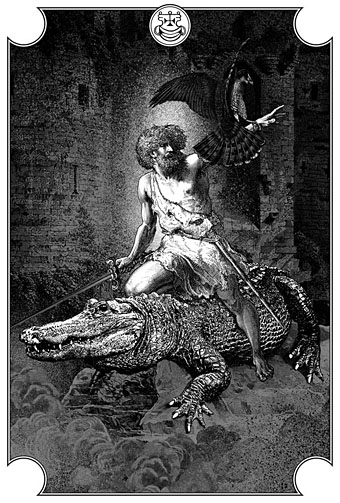
Photocard by Deborah Judd.

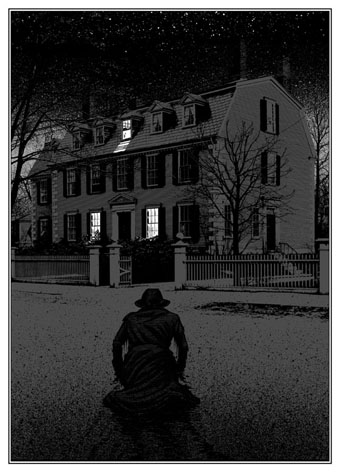
While working on the design for this release I kept ruminating on the curious net of connection and coincidence around these recordings. After buying the Deleted Funtime cassette my Watch Repair friend contacted one of the other artists, “Stabmental”, to ask about similar recordings. Stabmental was a name used by Geoff Rushton for his post-Throbbing Gristle musical experiments and an Industrial music fanzine; a couple of years later he joined Psychic TV and changed his name to John Balance. Geoff/John was later in Coil, of course, and a decade after this was in correspondence with me having been greatly impressed with my Lovecraft art in The Starry Wisdom anthology. My earlier Lovecraft story, The Haunter of the Dark, had been published in a large-format edition in 1988 by Caermaen Books, an imprint run by a pair of Arthur Machen enthusiasts, Roger Dobson and Mark Valentine. It was shortly after my first meeting with Mark and Roger that my Watch Repair friend realised that Mark must be the Mystic Umbrellas person so the Lovecraft artwork helped remind us of the Deleted Funtime cassette. The same cassette surfaced again a few years ago when it was sold to an obsessive Coil collector who wanted it for the Stabmental piece. That sale led to the cassette being digitised before it was let go, and the digitisation process led to these recordings.
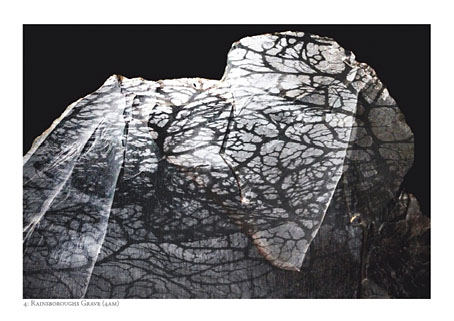
mu6.jpg

Photocard by Deborah Judd.

Things got even more tangled earlier this year when I was working on the final layout while also reading the expanded edition of England’s Hidden Reverse, David Keenan’s fascinating history of Coil, Current 93 and Nurse With Wound. Keenan discusses the independent cassette scene (and mentions Stabmental) so all the above was circling in my head once more; but I really wasn’t expecting the instance when Keenan goes into David Tibet’s enthusiasm for Arthur Machen by including a page of explanation from a Machen expert…Mark Valentine. In Mark’s notes for the Watch Repair release he describes the origin of the Mystic Umbrellas name which came about during a rainy day-trip to Glastonbury. Somerset’s most mystical town includes Chalice Well among its complement of New Age tourist traps; shortly after finishing England’s Hidden Reverse I was re-reading a typically wild interview with Alejandro Jodorowsky in which he proposes that the humble umbrella is in fact a black chalice, and that the knights of the Round Table are searching for a Holy Grail that’s actually an umbrella. A mystic umbrella, in other words. Elsewhere in the same interview he expounds on the symbolism of the Black Sun, a favourite symbol of Coil’s. (And Coil for a short while had a Chalice record label…) By this point I’d ceased to be surprised, the endless chain of connections seemed inevitable.

albatross1.jpg

After all the above the album by Albatross Project risks seeming a little mundane, although grounded (one meaning of “mundane”) would be better. The origin this time was a series of poems written by Roger (that’s him on the cover) from 1972 to 1986. These were set to music by Dan of Warper’s Moss and Watch Repair. (Nobody in this group is offering their surnames so you’ll have to accept the circumspection.) Everyone involved was surprised by the quality of the resulting songs, not least Roger who wrote the words sporadically while travelling the world in his youth. Dan and friends have been writing songs and playing in bands since the 1980s which is why they were able to produce such an accomplished album in a matter of months. Musically, this is quite straightforward: well-crafted songs in a rock idiom which had me thinking at times of Pink Floyd circa 1972 (fitting since several of the musicians are from the Floyd-worshipping environs of Merseyside). But it also owes something to the Elektra years of the early 70s (as does my design), and the period flavour harks back to the time and experiences that Roger was writing about.
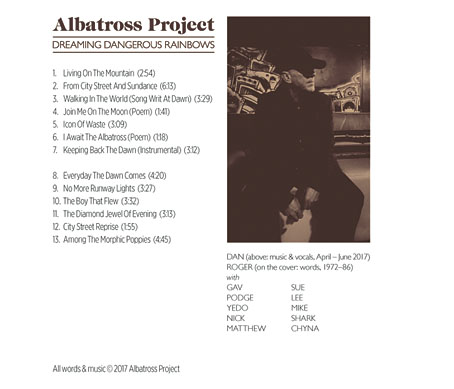
albatross2.jpg

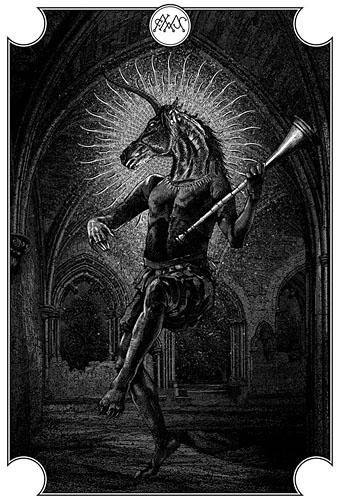
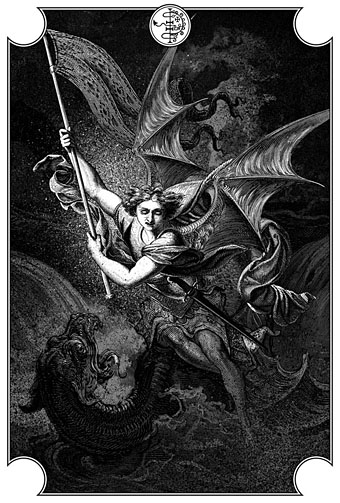
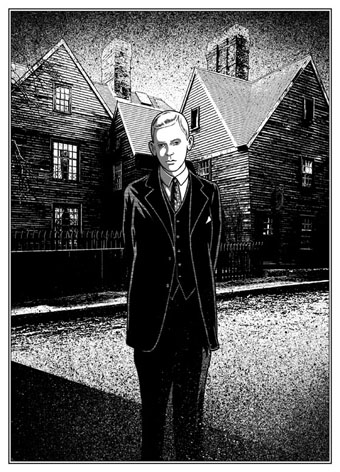
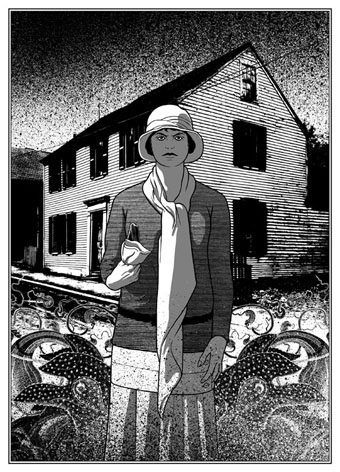
Both albums are available via Bandcamp. The hard format of Dreaming Dangerous Rainbows is a CD-R in a jewel case while the Mystic Umbrellas hard format is a lavish hand-crafted package that includes copious notes and four art cards, three of which feature Deborah Judd’s evocative photo montages. The latter package will be strictly limited. Original copies of the Deleted Funtime cassette command high prices among Coil collectors but the curious (or foolhardy) may download a copy at Die or DIY?

Previously on { feuilleton }
The Polarities by Watch Repair
Seven Harps by Warper’s Moss
The Tidal Path by Watch Repair
Watch Repair

Weekend links 369

popovic.jpg

Untitled painting by Serbian Surrealist Ljuba Popovic (1934–2016). I missed the announcement of Popovic’s death last year.

Bryan Washington on the radical grace of Gengoroh Tagame: My Brother’s Husband and the tradition of gay manga. Where bara artists are concerned, I favour the work of Mentaiko Itto. Bruno Gmünder recently published a collection in English.

• At madrotter-treasure-hunt: Post punk from old tapes; “Some live recordings from concerts in Holland from Charles Hayward and from This Heat, Metabolist, Pere Ubu, Holger Hiller…”

Dennis Cooper‘s favourite fiction, poetry, non-fiction, film, music, art & internet of 2017 so far. (Thanks again for the nod to this blog!)

The Weird and the Eerie is an evocative and carefully-written short study in cultural aesthetics. Far from the familiar line-up of vampires, zombies, and demons, Fisher’s eclectic examples speak directly to one of the central themes of the horror genre: the limits of human knowledge, the metamorphic shapes of fear, and the blurriness of boundaries of all types. His simple conceptual distinction quickly gives way to reversals, permutations, and complications, ultimately refusing any notion of a monstrous or alien unhumanness “out there”; with Fisher, the unhuman is more likely to reside within the human itself (or as Lovecraft might write it, “the unhuman is discovered to reside within the human itself”).

Many books on the horror genre are concerned with providing answers, using varieties of taxonomy and psychology to provide a therapeutic application to “our” lives, helping us to cathartically purge collective anxieties and fears. For Fisher, the emphasis is more on questions, questions that target the vanity and presumptuousness of human culture, questions regarding human consciousness elevating itself above all else, questions concerning the presumed sovereignty of the species at whatever cost – perhaps questions it’s better not to pose, at the risk of undermining the entire endeavour to begin with.

Eugene Thacker reviewing The Weird and the Eerie by Mark Fisher. I’ve not read Fisher’s book yet (I’m intending to) but I was pleased to see one of my illustrations of R’lyeh accompanying the piece.

• At Dirge Magazine: Gwendolyn Nix on Twisted Labyrinths, Dark Mazes, and Ancient Methods of Reflection.

• Mixes of the week: XLR8R podcast 498 by Nicola Kazimir, and Secret Thirteen Mix 227 by Sculpture.

AO Scott reviews Endless Poetry, Alejandro Jodorowsky’s surreal self-portrait.

Maze Of Love (1968) by The Dave Clark Five | Audiomaze (2000) by Tabla Beat Science | Into The Maze (2012) by Pye Corner Audio

Weekend links 367

sarto.jpg

Human Nature by Esther Sarto.

I Feel Love: “Donna Summer and Giorgio Moroder created the template for dance music as we know it”. Bill Brewster on the creation of one of the greatest songs ever recorded.

The Tearoom by Robert Yang “is a (free) historical public bathroom simulator about anxiety, police surveillance, and sucking off another dude’s gun”.

Tim Walker’s Leonora Carrington-themed fashion shoot with Tilda Swinton reaches i-D‘s website at last. More pictures and in better quality.

Joe Dante on the legacy of Nigel Kneale. Related: We Are The Martians: The Legacy of Nigel Kneale, edited by Neil Snowdon.

Beth Comery‘s report on the progress of Gage Prentiss’s planned statue of HP Lovecraft for Providence, RI.

• The Plagiarist in the Kitchen: Jonathan Meades talks food and cooking with John Mitchinson.

• At Dangerous Minds: “Forget Louis Wain’s psychedelic cats, here are his crazy Cubist ceramics”.

• “Court orders Salvador Dalí‘s body be exhumed for paternity test.”

Flash the flesh: Manchester’s gay club heroes – in pictures.

Rick Poynor on the joy and sadness of dust.

MostlyCatsMostly

From The Tea-Rooms Of Mars…To The Hell-Holes Of Uranus: “Beguine”, “Mambo”, “Tango” (1981) by Landscape | I Feel Love (Patrick Cowley Mega Mix) (1982) by Donna Summer | Martian Sperm And Bagpipes (1991) by Helios Creed

Weekend links 366

kashiki.jpg

Dandelion (2009) by Tomoko Kashiki.

• “Standard Ebooks takes ebooks from sources like Project Gutenberg, formats and typesets them using a carefully designed and professional-grade style guide, lightly modernizes them, fully proofreads and corrects them, and then builds them to take advantage of state-of-the-art ereader and browser technology.”

Obscenity and the Arts, a previously unpublished essay by Anthony Burgess, will appear in book form later this year via Pariah Press.

• Mixes of the week: VF Mix 97: Talk Talk by The Last Dinosaur, and Secret Thirteen Mix 225 by Janek Schaefer.

Rub any two writers together and similarities will show. No two writers, however different, are completely different. Here’s a crucial instance: Lovecraft and Ballard both put architecture at the heart of their fiction, even though neither had the slightest formal training in the subject. And it is via this interest that the two intersect in an unexpected way. They are connected, through time and space, by that most humble of architectural events: the corner, the junction between two walls. What Lovecraft and Ballard did was to make the corner into a place of nightmares — and in doing so, they reveal its secret history.

Will Wiles in a long and rewarding essay, The Corner of Lovecraft and Ballard

• Dungeons Deep, Forests Dark – A beginner’s guide to Dungeon Synth by Daniel Pietersen.

Alex Ross on Joséphin Péladan, the Symbolists and the occult roots of Modernism.

• Cooling the Tube: engineering heat out of the [London] Underground by IanVisits.

Caroline on the mysteries of Pye Corner: Flames, poltergeists and bodysnatchers.

• The Saint of Sin City – Tony Kail Visits Las Vegas’ Santuario de la Santa Muerte.

• Photographs of Art Nouveau architecture by Keiichi Tahara.

• A stream of the new Porter Ricks album, Anguilla Electrica.

Jasper Sharp on 100 years of Japanese animation.

• At Dennis Cooper’s: 197 clocks.

On The Corner [Take 4] (1972) by Miles Davis | Corner Crew Dub (1976) by Augustus Pablo | Empty Avenues And Dark Corners (Pye Corner Audio Mix) (2013) by John Foxx and the Belbury Circle

Weekend links 364

focusgroup.jpg

Stop-Motion Happening with The Focus Groop is a new album by The Focus Group (now a Groop, apparently, à la Stereolab), and the next release on the Ghost Box label. Design, as always, by Julian House.

• At Dennis Cooper’s: Sypha presents…Voyager en Soi-Même: a Tribute to JK Huysmans’ Là-Bas. Related: Henry Chapront’s illustrations for a 1912 edition of Huysmans’ novel.

• At the BFI: Graham Fuller on Penda’s Fen and the Romantic tradition in British film; Pamela Hutchinson and Alex Barrett choose 10 great German Expressionist films.

• The Provenance of Providence: Chris Mautner on the Lovecraftian comic series by Alan Moore and Jacen Burrows.

Luke Turner on Sunn O))): the ecstatic doom metallers turning rock concerts into “ritualist experiences”.

• At Dangerous Minds: The homoerotic “needleporn” art of Zachary Nutman.

Conor McGrady on the visual art of Nurse With Wound’s Steven Stapleton.

• Collage and Mechanism: Anita Siegel’s art for Doubleday Science Fiction.

• Mix of the week: My name is Legion: Chapter 1 by The Ephemeral Man.

ChrisMarker.org is asking for small donations to help keep it running.

• 1967 is the year pop came out, says Jon Savage.

Allen Ginsberg’s Howl goes online.

Groupmegroup (1981) by Liquid Liquid | If I Were A Groupie (1995) by Pizzicato Five | Group Four (1998) by Massive Attack