Weekend links 570

griffin.jpg

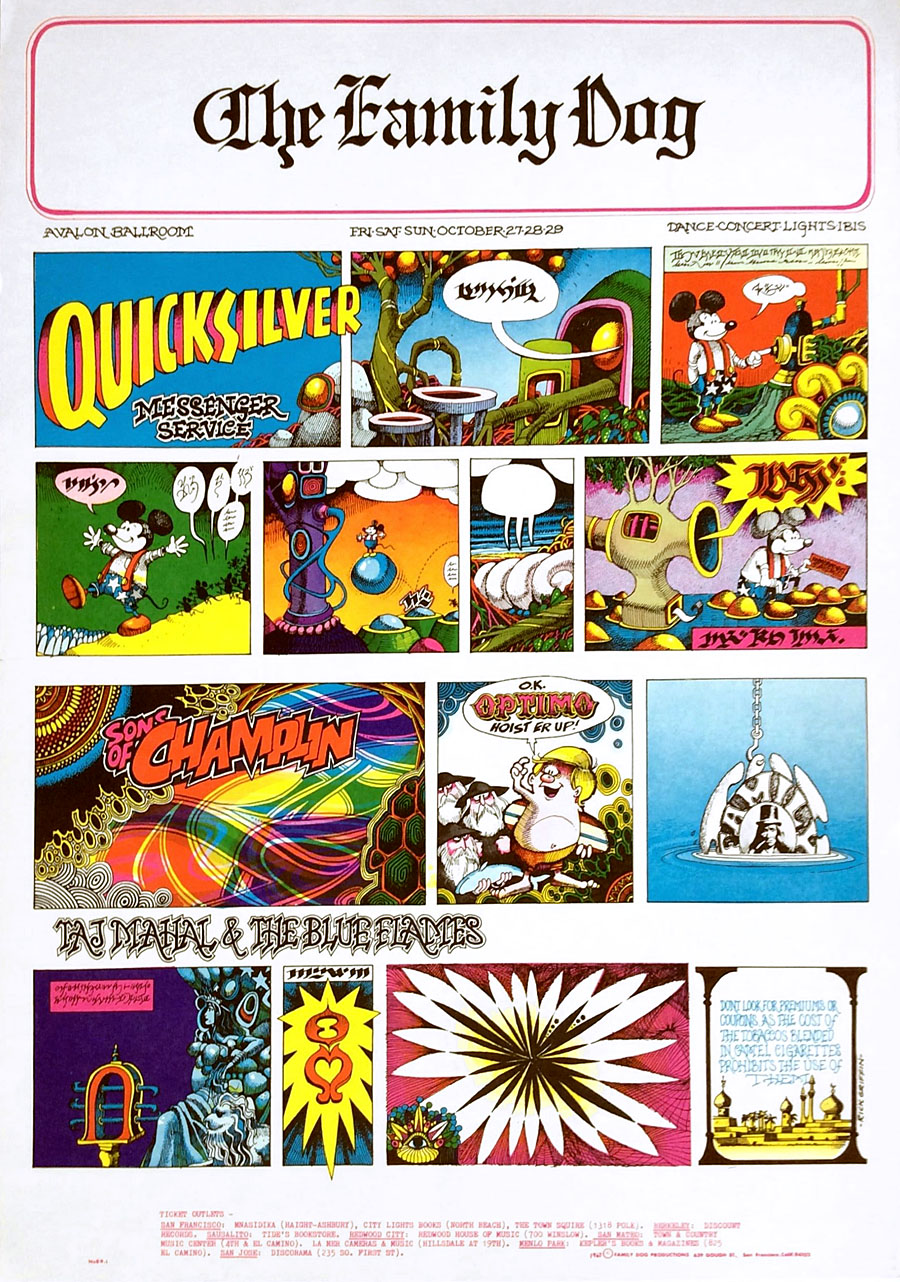
Rick Griffin’s comic-style poster for The Quicksilver Messenger Service at the Avalon Ballroom, October 1967.

• “Like ‘perversion,’ the word ‘script’ has a special meaning for Escoffier, who devotes most of the book’s attention to films featuring sex between men, and treats pornography as a vast screen on which all of our fantasies are projected.” Steve Susoyev reviews Sex, Society, and the Making of Pornography by Jeffrey Escoffier.

• “The themes reflect Griffin’s core obsessions: sex, death, Christ, flesh, liquids, goofy japes, and lysergic gnosis. Man from Utopia is an opus, one that Griffin felt strongly enough about to eschew the usual pulp, printing the cover on good full-color card stock.” Erik Davis on Rick Griffin and a comic book like no other.

Strange Things Among Us, a summer exhibition at The College of Psychic Studies, London, will include among its exhibits a room of art by Austin Osman Spare.

She delighted in the fact that after The Sadeian Woman, she ended up on the mailing lists of both pro- and antiporn groups, though no one (alas) ever sent her any actual porn. She aligns more naturally in retrospect with Madonna—potent, fiercely individualistic, disruptive, and self-invented. Carter’s evolved philosophical position on gender was a variation on Stoicism. Gender roles were “behavioural modes,” a construct (“Baby is hermaphrodite!”), and there was weakness in allowing oneself to be beholden to (let alone enslaved by) a construct. Above all, women should have total sexual agency and also their own money. “I became a feminist,” she wrote in a postcard to Susannah Clapp, “when I realised I could have been having all this instead of being married.”

Minna Zallman Proctor on the life and work of raucous fabulist Angela Carter

• New music: Chapter 4 by the Moritz Von Oswald Trio with Heinrich Köbberling & Laurel Halo, and Synth Vehicles For Guitar by Michael C. Sharp.

• DJ Food searched the back issues of International Times to find a handful of adverts for London’s legendary UFO Club.

• At Wormwoodiana: Mark Valentine explores Hy Brasil, a novel by Margaret Elphinstone.

• Remembering Tom of Finland through stories of those who knew him.

• What I’m Aiming For: Peggy Seeger’s favourite music.

• At Dennis Cooper’s: The Light Show (1965–1971).

• Mix of the week: Haze by The Ephemeral Man.

• A Strange Light From The East (1967) by Tuesday’s Children | Strange Things Are Happening (1968) by Rings & Things | Strange Walking Man (1969) by Mandrake Paddle Steamer

Weekend links 559

fukuda.jpg

Cover art by Toshiyuki Fukuda for the Japanese edition of the new novel by Kazuo Ishiguro.

• “The story here is how between 1978 and 1982, this impulse shed its novelty genesis and its spoils were divvied up between gay producers making high-energy soundtracks for carnal abandon, and quiet Hawkwind fans smoking spliffs in Midlands bedrooms.…this excellent compilation offers fresh understandings of a period in sonic history where the future was up for grabs.” Fergal Kinney reviews Do You Have the Force? Jon Savage’s Alternate History of Electronic Music, 1978–82.

DJ Food continues his history of mini CDs with Oranges And Lemons, the 1989 album by XTC which was released in the usual formats together with a limited edition of three small discs in a flip-top box. The cover art by Dave Dragon is a good example of the resurrected groovy look.

• “If Austin Osman Spare, William Burroughs, Mary Butts and Kathy Acker got together for a séance, the transcript could well look like this.”

• How Leonora Carrington used Tarot to reach self-enlightenment: Gabriel Weisz Carrington on his mother’s quest for mythic revelations.

• Mixes of the week: Sounds Unsaid at Dublab with Tarotplane, and To Die & Live In San Veneficio by SeraphicManta.

• At Dennis Cooper’s: 5strings presents…Solve et Coagula: An introduction to Israel Regardie.

• The Joy of Silhouettes: Vyki Hendy chooses favourite shadow-throwing cover designs.

Emily Mortimer on how Lolita escaped obscenity laws and cancel culture.

Freddie deBoer has moved his writing to Substack.

• New music: Wirkung by Arovane.

• Children Of The Sun (1969) by The Misunderstood | Children Of The Sun (1971) by Hawkwind | Children Of The Sun (2010) by The Time And Space Machine

Weekend links 556

wilson.jpg

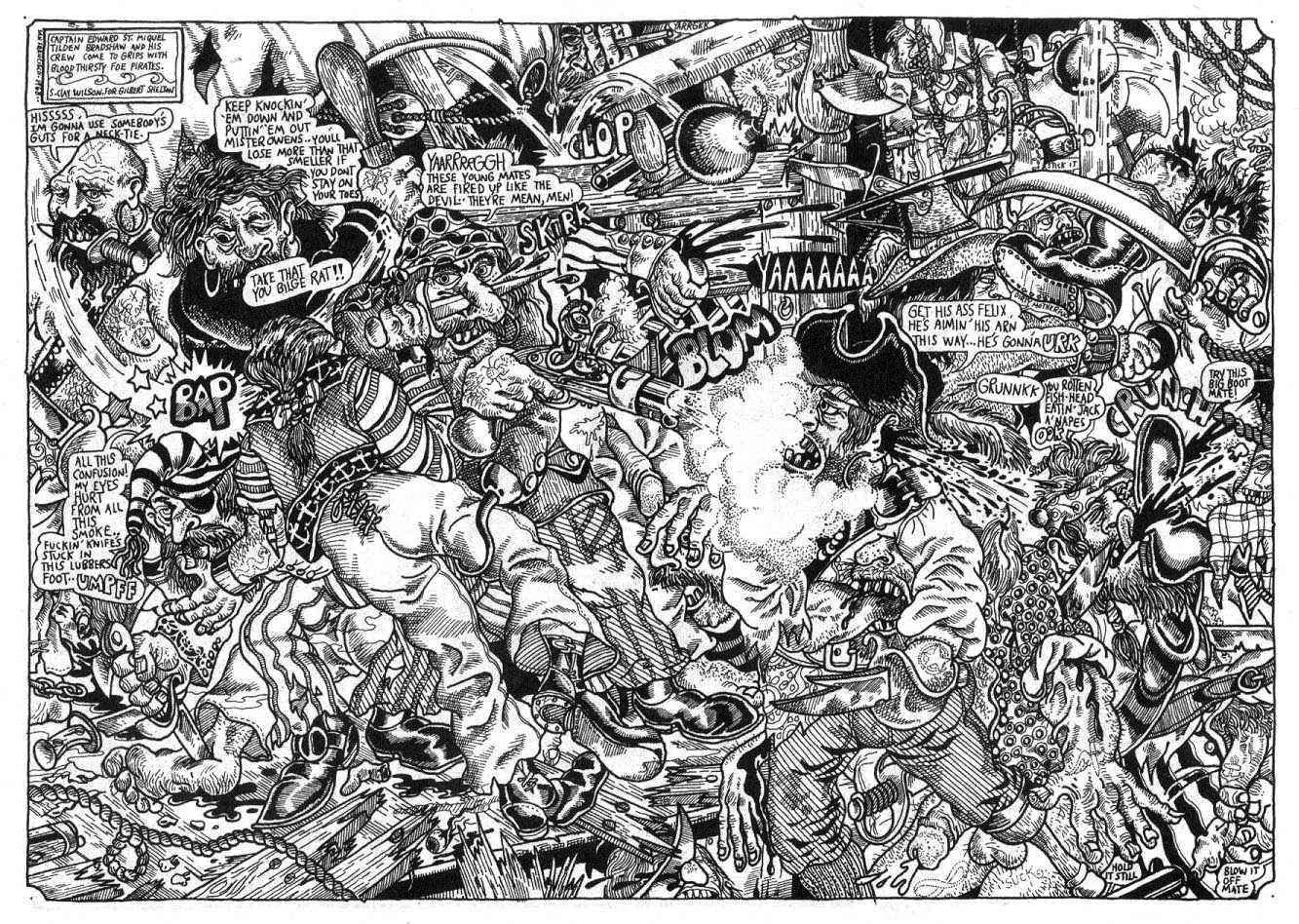
Captain Edward St. Miquel Tilden Bradshaw and his Crew Come to Grips with Bloodthirsty Foe Pirates by S. Clay Wilson, Zap Comix no. 3, 1968.

• RIP S. Clay Wilson, the wild man of American comics. The scene of mayhem above is typical in being barely coherent at a small size; click for a larger view. Patrick Rosenkranz at The Comics Journal describes Wilson as “the most influential artist of his generation…creating an extensive body of work that will defy authority and offend propriety until the end of days”. When Moebius was writing in the 1980s about the founding of Métal Hurlant he had this to say about the American undergrounds: “They were the first in the world to use comics as a means of communication, to express real emotions. Before, comics were used only to do stories, entertainment. They had some great moments but they were all very conventional. The American Underground showed us in Europe how to express true feelings, how to tell something to the reader through the comics. They blew the minds of the few professionals in Europe who saw them.” Also at TCJ, the S. Clay Wilson Interview. Wilson sent me a postcard once. I wish I knew what the hell I’d done with it.

• Michael Hoenig, synthesist for Agitation Free and (briefly) Tangerine Dream, plays one of the pieces from his debut album of electronic music, Departure From The Northern Wasteland, on a radio show in 1977. Hoenig’s album is long overdue a remastering and re-release.

• “My job, which the BBC has tasked me to do, is to provoke people and ask them, ‘Have you thought about looking at the world this way?'” Adam Curtis talks to Michael J. Brooks about his new TV series, Can’t Get You Out Of My Head.

m_chat.jpg

{ feuilleton } celebrates its 15th birthday today. Monsieur Chat, the mascot of this place, is happy about that but then Monsieur Chat is happy about most things.

• At Greydogtales: Opening The Book of Carnacki. A call for contributions to a collection of new stories about William Hope Hodgson’s occult detective. I’d be tempted if I didn’t already have more than enough to keep me occupied.

• “I’m being asked to talk about it a great deal at the moment, with the pandemic.” Roger Corman and Jane Asher on filming The Masque of the Red Death.

• New music: Cygnus Sutra by Mike Shannon, “a soundtrack to a fantasy/sci-fi epic not yet written”.

• A trailer for The Witch of King’s Cross, a documentary about occult artist Rosaleen Norton.

• At Dennis Cooper’s: Spotlight on…Hans Bellmer & Paul Eluard The Games of the Doll (1949).

• RIP also this week to Rowena Morrill, fantasy artist, and to Chick Corea.

• “Computers will never write good novels,” says Angus Fletcher.

• DJ Food on Zodiac posters by Funky Features, 1967.

• Mix of the week: Fact Mix 794 by Lutto Lento.

Annie Nightingale’s favourite music.

Zodiac (1984) by Boogie Boys | From The Zodiacal Light (2014) by Earth | Zodiac Black (2017) by Goldfrapp

Weekend links 555

demuth.jpg

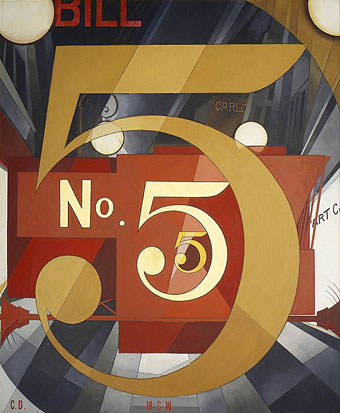
I Saw the Figure 5 in Gold (1928) by Charles Demuth.

• “Reading the new edition in 2021, I’m struck by his dismissal of CD-ROMs, of VR, of interactivity; how he anticipates contemporary debates about algorithmic bias…his prescient exhaustion.” Sukhdev Sandhu reviews Brian Eno’s diary for 1995, A Year with Swollen Appendices. Meanwhile, Eno himself says “Artists like me are being censored in Germany—because we support Palestinian rights.”

• “Kink is often pathologized in popular culture: it’s shamed, used as a punchline, and, on the whole, relegated to the margins of desire.” Greg Mania interviews R.O. Kwon and Garth Greenwell about Kink a collection of new stories about unorthodox desires.

• “This album is the king of hauntology. From where I’m sitting, I’m going back to the past, listening to an album imagining the future, imagining the past.” Tom Herdman on the fabulous Time (1981), a science-fiction concept album by the Electric Light Orchestra.

Cavafy, the ultimate Alexandrian, gave us an Alexandria that was already not quite there in his own lifetime. It kept threatening to disappear before his eyes. The apartment where he had made love as a young man had become a business office when he went to revisit it years later; and the days of 1896, of 1901, 1903, 1908, 1909, once filled with so much eros and forbidden love, were already gone and had become distant, elegiac moments that he remembered in poetry alone. The barbarians, like time itself, were at the gates, and everything would be swept in their wake. The barbarians always win, and time is hardly less ruthless. The barbarians may come now or in a century or two, or in a thousand years, as indeed they had come more than once centuries earlier, but come they will, and many more times after that as well, while here was Cavafy, landlocked in this city that is both the transitional home he wishes to flee and the permanent demon that can’t be driven out. He and the city are one and the same, and soon neither will exist. Cavafy’s Alexandria appears in antiquity, in late antiquity, and in modern times. Then it disappears. Cavafy’s city is permanently locked away in a past that refuses to go away.

André Aciman on the poetry of Cavafy and the Alexandrias of memory

DJ Food on the package design for The Superceded Sounds of…The New Obsolescents, which uses a similar foil card to the “Héliophore” stock used by Philips in their cult series of electroacoustic compositions, Prospective 21e Siècle.

Onlyou by Can, is “A relaxed studio session, recorded on a mono taperecorder in 1976 at the Innerspace”. Released in 1982 on a 34-minute cassette sealed inside a can (geddit?), and limited to 100 copies.

Olivia Rutigliano ranks 45 films containing prison escapes. I’d put the Bresson at number one but otherwise, yes.

• “…some kind of future unrealised time…” Mix of the week is a mix for The Wire by Muqata’a.

• RIP Christopher Plummer. Never mind the musical, watch him in The Silent Partner (1978).

• At Ubuweb: short films by Erkki Kurenniemi soundtracked by his own electronic music.

• New music: Neurogenesis by Robert Rich.

Kinky Boots (1964) by Patrick McNee & Honor Blackman | David Watts (1967) by The Kinks | The Dominatrix Sleeps Tonight (Dominant Mix) (1984) by Dominatrix

Weekend links 554

yokoo.jpg

Tadanori Yokoo Emphasizes Deliberate Misalignment in Contemporary Woodblock Series.

• Another week, another Paris Review essay on Leonora Carrington. This time it’s Olga Tokarczuk exploring eccentricity as feminism. At the same publication there’s more eccentricity in Lucy Scholes‘ feature about the neglected novels of Irene Handl, a woman best known for the characters she played in many British films and TV dramas. I’ve long been curious about Handl’s writing career so this was good to see.

• “The denial of our participation in the world, [Fisher] implies—the disavowal of our desire for iPhones even as we diligently think anti-capitalist thoughts—is incapacitating. It leads to a regressive utopianism that cannot envision going through capitalism, but only retreating or escaping from it, into a primitive past or fictional future.” Lola Seaton on the ghosts of Mark Fisher.

• More ghosts: Paranormal is the latest collection of spooky, atmospheric electronica from Grey Frequency, “an audio document exploring extraordinary phenomena which have challenged orthodox science, but which have also grown and evolved as part of contemporary culture and a wider folkloric landscape.”

• “Items billed as THE BEST EVER can stop us cold, and even cause us to take them for granted, never reassessing them, as we instead gesture, often without thought, to where they sit in the corner, under a halo and backdrop of blue ribbons.” Colin Fleming on Miles Davis and Kind Of Blue.

• “Diaboliques and Psycho both achieve something very rare: a perfect plot twist but an unspoilable movie,” says Milan Terlunen.

• Richard Kirk returns once more as “Cabaret Voltaire” with a new recording, Billion Dollar.

• Even more Leonora Carrington: some of the cards from her Tarot deck.

DJ Food on Zodiac Posters by Simboli Design, 1969.

Kodak Ghosts (1970) by Michael Chapman | Plight (The Spiralling Of Winter Ghosts) (1988) by David Sylvian & Holger Czukay | The Ghosts Of Animals (1995) by Paul Schütze