Weekend links 800

goya.jpg

Plate 43 from Los Caprichos: The sleep of reason produces monsters (El sueño de la razon produce monstruos) (1799) by Francisco Goya.

• At Senses of Cinema: An interview with Jacques Rivette from 2001 in which the director passes judgment on a variety of feature films, old and new. Having read a couple of Cocteau-related books recently, I was pleased to see his comments about the importance of Cocteau’s example for his own film-making. Via MetaFilter.

• “Why is sleep, which literally occurs daily on a planetary scale, so often taken for granted, and not only by most people but even by scientists? Perhaps because its essence, its key property, is to be elusive, out of sight?” A long read by Vladyslav Vyazovskiy on the nature of sleep.

• “Often one cannot be sure if an object in a Welch picture is drawn from life or from other depictions of it, in sculpture, porcelain, woodwork or embroidery.” Alan Hollinghurst on the paintings and drawings of Denton Welch. (Previously.)

• At Colossal: Sinister skies set the scene for derelict buildings in Lee Madgwick’s surreal paintings.

• New music: The Mosaic Of Starlight Slips Back Like The Lid Of An Opening Eye by Paul Schütze.

• At Public Domain Review: Charles le Brun’s Human-Animal Hybrids (1806).

• Mix of the week: DreamScenes – October 2025 at Ambientblog.

• At the BFI: Anton Bitel chooses 10 great French horror films.

Winners of the 2025 Photomicrography Competition.

• RIP Diane Keaton.

Sleep (1981) by This Heat | Sleep (1995) by Paul Schütze | Sleep (2006) by DJ Olive

Weekend links 754

picasso.jpg

The Remains of Minotaur in a Harlequin Costume (1936) by Pablo Picasso. Via.

• At Rarefilmm: Long Live the New Flesh: The Films of David Cronenberg, a TV documentary from 1987 which includes contributions from Martin Scorsese and Stephen King. I wrote about this one years ago but at the time the only available copy was chopped into 10-minute segments.

• Coming soon from Strange Attractor: Delinquent Elementals: A Pagan News Anthology, edited by Phil Hine & Rodney Orpheus.

• At Wormwoodiana: Mark Valentine explores the possible influence of the Sherlock Holmes stories on Arthur Machen’s early fiction.

Perhaps there was a Super-Sargasso Sea in the upper atmosphere into which were carried objects from earth—frogs, fish, leaves—and from which they later rained. Perhaps the universe was a living thing, rains of blood its bleeding. Perhaps in 1903 the earth, in its orbit about the sun, passed through the remains of a world destroyed in an interplanetary dispute, the particles falling as rains of dust and redness. Perhaps humanity was controlled. “I think we’re property”, Fort wrote. Or, perhaps not; so skeptical he could not accept even his own authority, he had given up theorizing. “We have expressions: we don’t call them explanations: we’ve discarded explanations with beliefs.”

Joshua Blu Buhs on how Charles Fort came to write The Book of the Damned

• More Alan Moore: “Magic is not this big, spooky, dark thing that’s full of nightmares,” he tells Séamas O’Reilly at the Irish Times.

High-resolution images of 14,000 woodblock illustrations and letterforms free to use at the Plantin-Moretus Museum, Antwerp.

• New music: Music For Bus Stations by Rod Modell; and Between Soil And Sky by Tarotplane.

• At Dennis Cooper’s: Spotlight on…Denton Welch In Youth is Pleasure (1945).

• At the Quietus: The Strange World of…Irena and Vojtech Havlovi.

Apollo Explorer

Pagan Love Song (1959) by Martin Denny | Pagan Lovesong (Vibeakimbo) (1982) by Virgin Prunes | Pagan Sun Temple (2022) by Hawksmoor

The art of Denton Welch, 1915–1948

welch04.jpg

Symbolist Figure (1946).

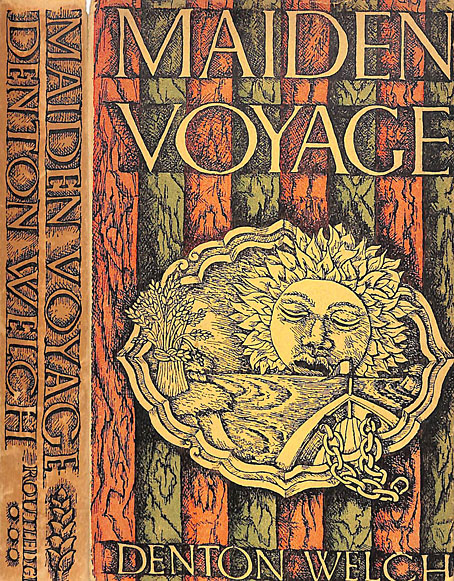
The visual art, that is, not the novels and short stories. Last month I finally got round to reading Denton Welch’s first two novels, Maiden Voyage (1943) and In Youth is Pleasure (1945). Finally, because I’ve known Welch’s name for a long time, mostly via William Burroughs—who dedicated The Place of Dead Roads to him—and John Waters—who often lists In Youth is Pleasure as one of his favourite novels. This was also the book that Burroughs favoured, and he wrote an introduction for a US reprint in 1983. At first glance, Welch would seem a surprising choice for the pair: the protagonist in each book is a thinly fictionalised avatar of the author—he’s even named Denton Welch in the first—an effete upper-middle-class English teenager who hates his school and most of the people he meets, and who spends as much time as possible wandering alone, looking for affordable antiques and any old buildings that may be of interest. The homosexual undercurrents in each book generate persistent tensions which are an obvious attraction for many readers, even though nothing is ever stated overtly and there’s no hand-wringing over unrequited passions. Welch’s boys are most passionate about the things they collect, and their determination to be left alone to pursue their interests when all the adults around them are trying to push them in different directions. Having been a similar school-hating, art-obsessed, introverted teenager, if I’d read In Youth is Pleasure when I was the same age as the beleaguered Orvil Pym it would have made a huge impression.

welch07.jpg

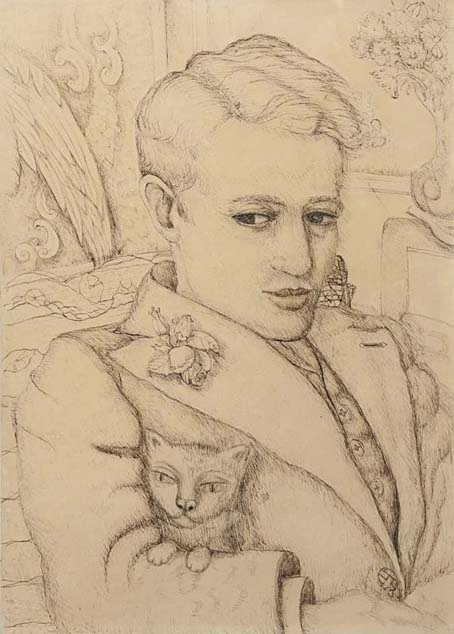
Self-portrait With Cat.

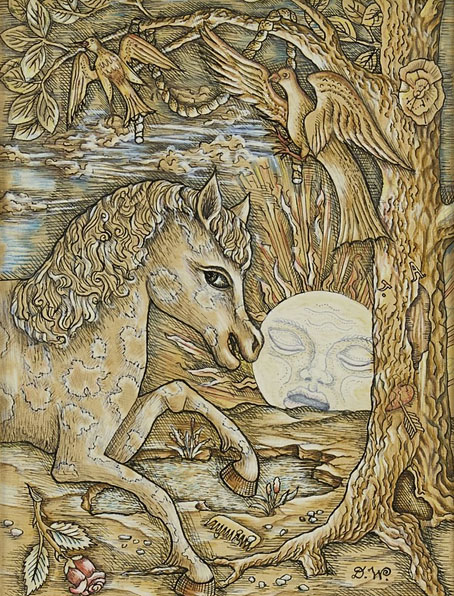
Art was the interest that Welch most wanted to pursue but it’s the writing for which he’s remembered. Few people have good things to say about his drawings and paintings but there’s a strange quality to many of them that I like, an atmosphere of menace that lurks beneath the often naive renderings. I was surprised how gloomy and claustrophobic many of them are. The refined sensibilities in the novels lead you to expect something lighter, frivolous even, like the paintings and illustrations of his contemporary, Rex Whistler, or other artists of the Neo-Romantic school of the 1930s. In fact looking at Whistler’s work again, it’s the Whistler style I most expected even though it’s unfair to compare the two. Welch and Whistler shared a taste for pictorial decoration, and a blithe indifference to the avant-garde trends of the day, but Whistler was a formidable talent, the kind of successful illustrator that Welch could only dream of being. (That said, both artists were commissioned by Shell for the company’s poster series showing views of Britain.) Yet lack of ability sometimes takes an artist into places that a professional wouldn’t reach. Whistler would have given us a perfect cat, not the strange creatures with almost human faces that Welch liked to draw. I’m curious to know which, if any, contemporary artists Welch preferred. His diaries are now earmarked for a future reading.

A Voice Through A Cloud: Discovering Denton Welch

welch05.jpg

Hadlow Castle, Kent (1937).

welch06.jpg

Horse and Moon (1943).

welch03.jpg

Continue reading “The art of Denton Welch, 1915–1948”

Weekend links 576

haberfield.jpg

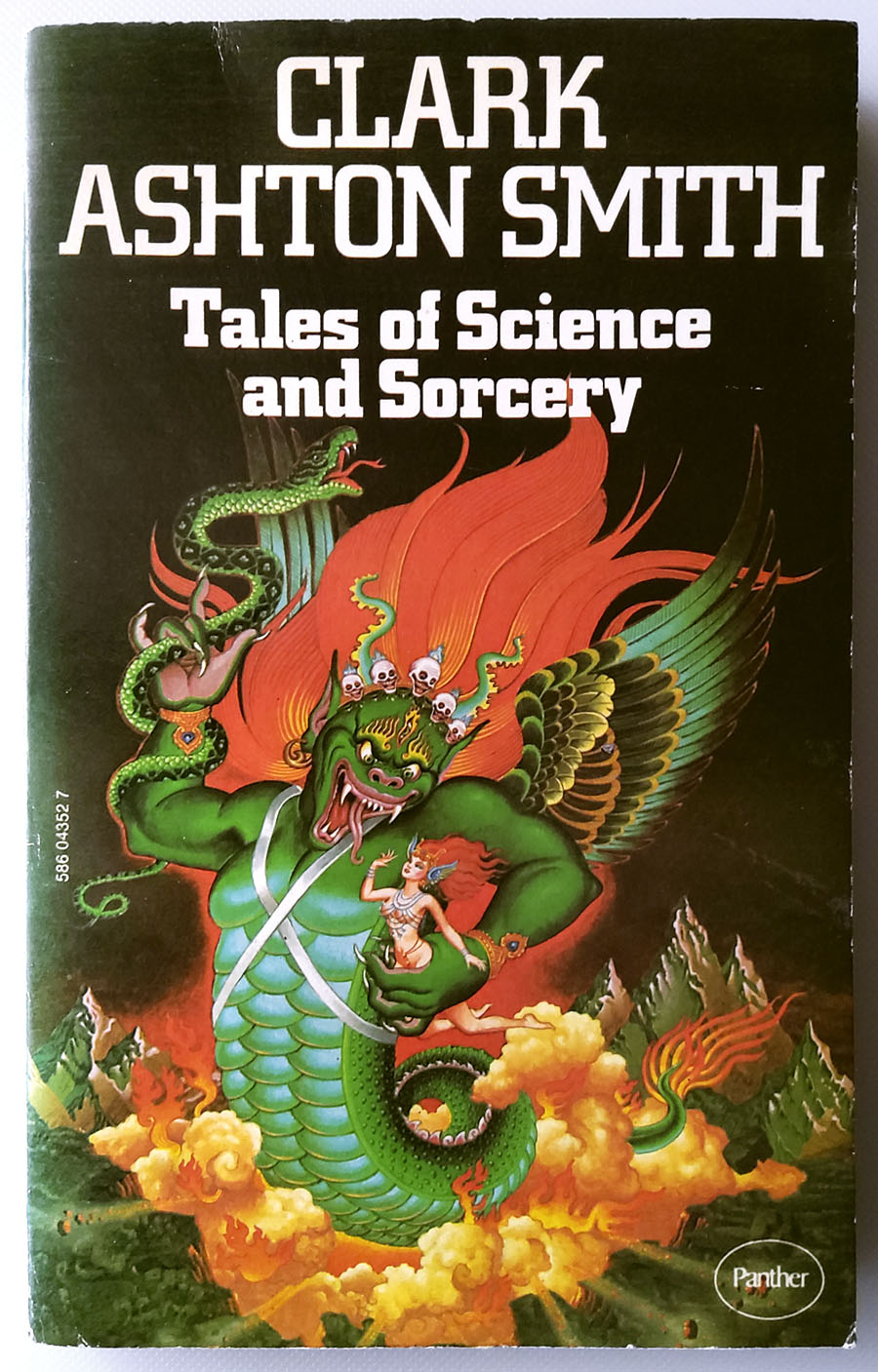
Cover art by Bob Haberfield, 1976.

• I’ve been reliably informed that Australian artist Bob Haberfield died recently but I can’t point to an online confirmation of this so you’ll have to take my word for it. “Science” and “sorcery” might describe the two poles of Haberfield’s career while he was working as a cover artist. His paintings made a big impression on British readers of fantasy and science fiction in the 1970s, especially if you were interested in Michael Moorcock’s books when they appeared en masse as Mayflower paperbacks covered in Haberfield’s art. Haberfield also appeared alongside Bruce Pennington providing covers for Panther paperbacks by HP Lovecraft, Clark Ashton Smith and others, although his work there isn’t always credited. Dangerous Minds collected some of his covers for a feature in 2017. (The US cover for The Iron Dream isn’t a Haberfield, however.)

• “Like Alice, who can only reach the house in Through the Looking-Glass by turning her back to it, Gorey reversed the usual advice to ‘write what you know’ and wrote the apparent opposite of his own situation.” Rosemary Hill reviewing Born to Be Posthumous: The Eccentric Life and Mysterious Genius of Edward Gorey by Mark Dery.

• “Orvil…wanders the countryside, visits churches, rummages in antique shops, and encounters strange men to whom he is no doubt equally strange.” John Self reviewing a new edition of In Youth Is Pleasure by Denton Welch.

• At the Wyrd Daze blog: Q&A sessions with Stephen Buckley (aka Polypores), Gareth Hanrahan, and Kemper Norton.

• “Fellini liked to say that ‘I fall asleep, and the fête begins’.” Matt Hanson on Federico Fellini’s phenomenal films.

• A Beautiful Space: Ned Raggett talks to Mick Harris about the thirty-year history of Scorn.

• Deep in the dial: Lawrence English on the enduring appeal of shortwave radio.

Clive Hicks-Jenkins on making a picture for Annie Darwin (1841–1851).

DJ Food looks at pages from Grunt Free Press circa 1970.

• Mix of the week: Fact Mix 814 by Loraine James.

• New music: Clash (feat. Logan) by The Bug.

• At BLDGBLOG: Terrestrial Astronomy.

LoneLady‘s favourite albums.

• At Dennis Cooper’s: Porn 2.

Tilings Encyclopedia

Betrayal (Sorcerer Theme) (1977) by Tangerine Dream | Science Fiction (1981) by Andy Burnham | Sorceress (2018) by Beautify Junkyards

Weekend links 349

burgess.jpg

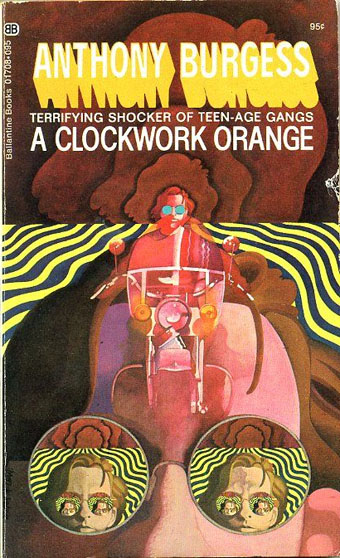
• Before Stanley Kubrick fixed an image of Alex and his droogs in the popular imagination, artists could get away with playing on the threat of biker gangs as Wilson McLean does in this vaguely psychedelic cover from 1969. (McLean’s interpretation may possibly derive from a 1965 edition.) LibraryThing has a collection of Clockwork Orange covers from around the world which run the gamut of cogs, orange hues and variations on David Pelham’s famous Penguin design from 1972. Meanwhile, AL Kennedy celebrates 100 years of Anthony Burgess by examining the writer’s career as a whole, although the web feature still manages to get a photo of Malcolm McDowell in there.

• “Even bad books can change lives,” says Phil Baker reviewing The Outsider by Colin Wilson and Beyond the Robot, a Wilson biography by Gary Lachman. I wouldn’t call The Outsider a bad book but Wilson’s more wayward opinions (and later works) are best treated with scepticism.

• “Murtaugh refers to his subject’s ‘pervasive sense of doom’ and Welch himself speaks of ‘the extraordinary sadness of everything.'” David Pratt reviewing Good Night, Beloved Comrade: The Letters of Denton Welch to Eric Oliver, edited by Daniel J. Murtaugh.

• At The Quietus this week: Tinariwen bassist Eyadou Ag Leche is interviewed by Richie Troughton, Jane Weaver unveils a new song from her forthcoming album, Modern Kosmology, and Danny Riley explores the strange world of Ben Chasny.

• “A micro-history of cultural gatekeeping: once told by the censors what we may read, then by critics what we should, we are now told merely what we can read.” Ben Roth writing against the use of “readability” as a literary value.

• Yayoi Kusama’s amazing infinity rooms are at the Hirshhorn Museum and Sculpture Garden, Washington DC, until May. For the rest of us, Peter Murphy’s panoramic photo is still online.

• More music: my friends Watch Repair have become visible enough to be interviewed by an Argentinian website. The group’s Bandcamp page recently made three new releases available.

• Yet more music: They Walk Among Us, a new song and video by Barry Adamson, and Anymore, a new song and video by Goldfrapp.

• Earth and The Bug announce Concrete Desert, a collaborative album inspired by Los Angeles and the fiction of JG Ballard.

• Bad Books for Bad People: Episode 7: The Incal – Epic French Space-Opera Comics.

• Mixes of the week: FACT Mix 589 by Aisha Devi, and Secret Thirteen Mix 212 by Qual.

Eduardo Paolozzi‘s forays into fashion and furnishings.

Cooking with Vincent [Price]

Moroccan Tape Stash

• Tin Toy Clockwork Train (1986) by The Dukes Of Stratosphear | Clock (1995) by Node | Clockwork Horoscope (2009) by Belbury Poly