Weekend links 606

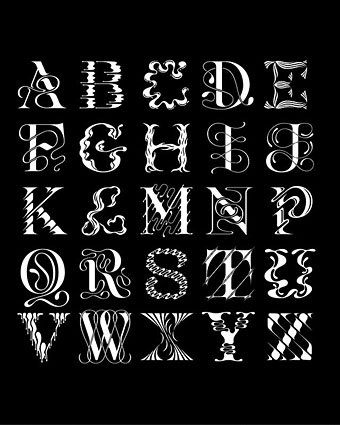
smith.jpg

An alphabet by Tina Smith.

• Coming in March from Warp records: reissues of three Broadcast releases that were previously only available in limited quantities, Microtronics, Volumes 1 & 2, and Mother Is The Milky Way. The latter is an EP which makes a perfect companion to Witch Cults Of The Radio Age, and while its reissue means I’ll no longer be able to brag about owning one of the rare originals it really ought to have been more widely available. In addition, Warp will be releasing the group’s first live album, BBC Maida Vale Sessions, a collection of performances for radio. All these releases are packaged in new cover designs by Julian House.

• “Nature Boy was the conduit through which vegetarian ideals, nonconformism and notions of living in harmony with nature began to filter into US culture.” Jon Savage on the exotic world of Eden Ahbez.

• At Dennis Cooper’s: Two booklets of Austin Osman Spare: Earth: Inferno (1905), The Book of Pleasure (Self-Love) (1913).

Joyce refused to fix the meaning of the words on the page and left the reader to fend for themselves. So the content may not be actually shocking, but the book feels exciting—as though it might turn shocking any second. Anything might stir in the body or consciousness of a character, in the body or consciousness of the reader. My mother was right to consider it a dangerous text. The thing the censors worried about were the uncensored workings of their own minds.

More than any other book, Ulysses is about what happens in the reader’s head. The style obliges us to choose a meaning, it is designed to make us feel uncertain. This makes it a profoundly democratic work. Ulysses is a living, shifting, deeply humane text that is also very funny. It makes the world bigger.

Anne Enright on Ulysses at 100

• At Aquarium Drunkard: occult scholar Mitch Horowitz on the Transmissions podcast.

• 5th Dimension: DJ Food examines a piece of psychedelic Op-art by Michael English.

• New music: Möbius by Jonathan Fitoussi/Clemens Hourrière.

• At Spoon & Tamago: Hiraku Suzuki’s Constellations.

• The month in type at I Love Typography.

Wyrd Daze Six Star.

Nature Boy (1975) by Big Star | Nature Boy (1980) by Manu Dibango | Nature Boy (1999) by Jon Hassell
Weekend links 605

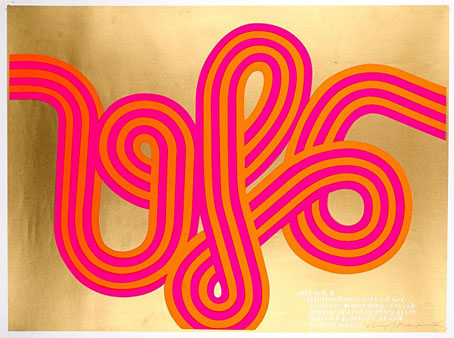
ufo.jpg

UFO Mk2 (1967), a poster for the UFO club by Hapshash and the Coloured Coat (Michael English & Nigel Waymouth).

• Link of the week without a doubt is Yuka Fujii’s raw video footage of the sessions for David Sylvian’s solo debut, Brilliant Trees, which includes appearances by Jon Hassell, Holger Czukay and Ryuichi Sakamoto. Czukay’s contribution to this and other albums in the 1980s included the use of a second-hand IBM Dictaphone, a machine which was often credited on album sleeves but seldom discussed in interviews beyond Czukay’s claims that it was a superior sound-sampling tool. You can see the mysterious “instrument” in this film and discover (at last!) more about the machine here. Big thanks to Colin for the tip!

• “Part of what makes watching it so compelling now is Berger’s fascinated immersion in the culture of images itself.” Olivia Laing on 50 years of Ways of Seeing by John Berger.

• At The Wire: David Toop on what happens when the performance of music is extended over long durations, from all night concerts to sacred rituals that last for weeks.

• At Bandcamp: Tony Rettman profiles Audion magazine and its editors, indefatigable Krautrock experts Alan & Steve Freeman.

• New music: W by Boris, a remix of Laurie Anderson’s Big Science by Arca, and a cover of King Crimson’s Red by Hedvig Mollestad.

• The latest exploration of psychedelic graphics by DJ Food is a collection of posters for London’s UFO Club.

• Wolf Moon: Nina MacLaughlin has some questions for our ancient satellite.

• At Dennis Cooper’s: Frank’s Box: The Real Telephone to the Dead.

• Mix of the week: XLR8R Podcast 731 by Anthea.

• At Strange Flowers: 22 books for 2022.

UFO (1970) by Guru Guru | UFO Over Paris (1978) by Steve Hillage | El UFO Cayó (2005) by Ry Cooder

Weekend links 603

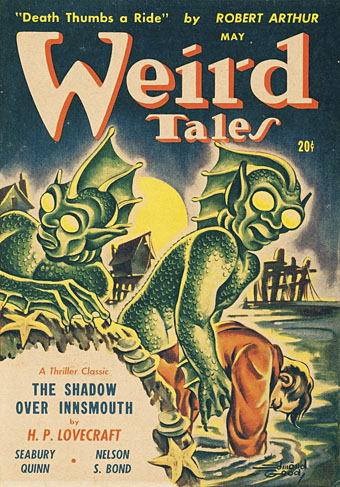
weird.jpg

Weird Tales (Canada), May 1942. Cover art by Edmond Good.

• “…in 1968, seven years after the MOMA retrospective, Orson Welles appreciatively got in touch and suggested that Bogdanovich do a book-length set of interviews with him like the one that Bogdanovich had just done with Ford. The resulting book, This Is Orson Welles (which took a winding path to publication, in 1992, seven years after Welles’s death), is a classic of the literature of movies.” Richard Brody on the late Peter Bogdanovich. The book of Welles interviews is one of my favourite film books, as good in its way as Hitchcock/Truffaut, and like Truffaut’s book you wish it was twice as long.

• At Public Domain Review: Paloma Ruiz and Hunter Dukes on Johann Caspar Lavater’s frog-to-human physiognomies. If you reverse the sequence, as I did for one of the illustrations in Lovecraft’s Monsters, you approach The Shadow Over Innsmouth.

• The week in virtual exploration (via MetaFilter): Mini Tokyo 3D and Explore the Soane Museum, London.

• Submissions are open for the 16th issue of Dada journal Maintenant which will have the theme “Nyet Zero”.

• At Spoon & Tamago: Artists and artisans collaborate on exhibition of 144 maekake aprons.

• DJ Food unearths flyers and posters for the Million Volt Light & Sound Rave, 1967.

• Mix of the week: Isolatedmix 116 by Chris SSG.

• At Dennis Cooper’s: Stephen Dwoskin Day.

The Little Blue Frog (1970) by Miles Davis | Jail-House Frog (1972) by Amon Düül II | Tree Frog (1995) by Facil

Weekend links 602

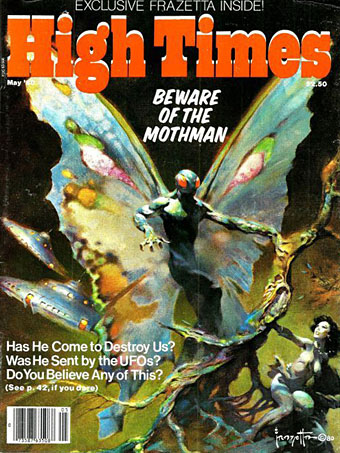
hightimes.jpg

High Times, May 1980. Cover art by Frank Frazetta.

• Desperately Seeking Mothman: “The Scythian Lamb, after all, was equal parts Venus flytrap and baby lamb, a mysterious woolly gourd,” says Tara Isabella Burton, on the trail of cryptids old and new.

• “In my youth of course I indulged in such stunts as bringing forth a Boramez, or a so-called vegetable lamb.” It’s that lamb again, in a translation of pages from The Voynich Manuscript.

• “2022: Be willing to be dazzled,” says S. Elizabeth. Also, follow her blog because she’s always turning up strange and wonderful things.

• “Why do we count down to the New Year?” Alexis McCrossen explores the history of countdowns, from Fritz Lang to the present day.

• “Snow coats reality in a fresh layer of strangeness,” says Charlie Fox.

• Spending the War Without You: Laurie Anderson’s Norton Lectures.

• New music: Our Hands Against The Dusk by Rachika Nayar.

• Mix of the week: Fact Mix 840 by Time Is Away.

• Galerie Dennis Cooper presents…Piet Zwart.

Does It Matter Irene? (1979) by The Mothmen | Tardis (Sweep Is Dead, Long Live Sweep) (1981) by The Mothmen | Mothman (1981) by The Mothmen

Weekend links 601

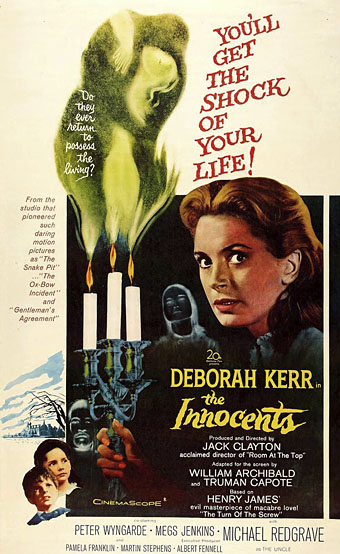
innocents.jpg

The Innocents (1961), one of the great cinematic ghost stories.

• “Out of the many adaptations, Jack Clayton’s [The Innocents] is considered the benchmark. The film celebrated its 60th anniversary this year, having premiered in London on the 24th of November, 1961. Considering the sheer number of competitors to Clayton’s version, it is telling of the film’s qualities that it still stands far and above its many peers. In fact, it is difficult to see James’s story without those stark black-and-white images of the film coming to mind, as well as its stunning central performance by Deborah Kerr. Suffice to say, 60 years on, James’s screen ghosts still haunt.” Adam Scovell on the many adaptations of The Turn of the Screw by Henry James.

• “I wanted to turn sex into art because art makes sense of life.” Jack Fritscher talks to photographer Rick Castro about gay S&M fetishes, Drummer magazine, Robert Mapplethorpe, and his BDSM porn studio, Palm Drive Video.

• “Fela was a very good human resources manager.” Lemi Ghariokwu, creator of over 2,000 album covers, talks to Nathan Evans about his time working for Fela Kuti.

I’ve been approached several times to ‘make an NFT’. So far nothing has convinced me that there is anything worth making in that arena. ‘Worth making’ for me implies bringing something into existence that adds value to the world, not just to a bank account. If I had primarily wanted to make money I would have had a different career as a different kind of person. I probably wouldn’t have chosen to be an artist. NFTs seem to me just a way for artists to get a little piece of the action from global capitalism, our own cute little version of financialisation. How sweet—now artists can become little capitalist assholes as well.

Brian Eno on the fool’s-goldrush du jour

• At Vimeo: The Snail on the Slope, a film of generative processes by Vladimir Todorovic based on the strange science-fiction novel by Arkady and Boris Strugatsky.

• At Dangerous Minds: an exploration of Eight Songs for a Mad King by Peter Maxwell Davies, “one of the most insane pieces of music ever written”.

• “This is how one ought to see, how things really are.” Ido Hartogsohn on Aldous Huxley’s mescaline experiments.

• Always an essential guide: The Wire magazine’s releases of year.

• The end of December brings us Alan Bennett’s diary at the LRB.

• At Dennis Cooper’s: Ryoji Ikeda Day.

Innocenti (1992) by Brian Eno | Innocent Square [excerpt] (2011) by Christian Skjødt Hasselstrøm | First In An Innocent World (2016) by The Pattern Forms