Weekend links 417

coil.jpg

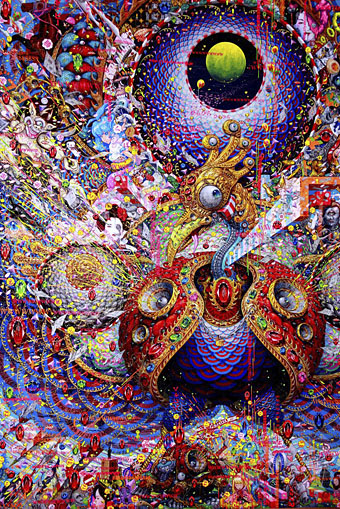
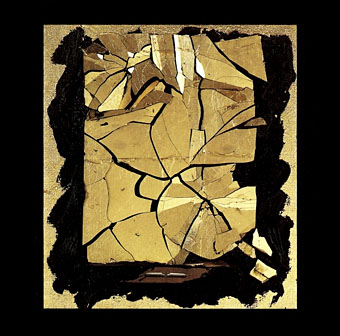
Cover of How To Destroy Angels (Remixes And Re-Recordings) (1992) by Coil. Artwork: Fine Balance (1986) by Derek Jarman.

• It’s that man again: “According to the late great short story writer Robert Aickman, the problem with our excessively modern world is not that it is strange, but that it is not strange enough.” Scott Bradfield on a writer who can no longer be described as neglected or overlooked.

• Coil may have expired over a decade ago after the death of John Balance but the posthumous releases persist. Latest of these is How To Destroy Angels, an album-length presentation of music (or audio) by Coil and Zos Kia (John Gosling) from 1983/84.

• “Two decades ago, a renowned professor promised to produce a flawless version of one of the 20th century’s most celebrated novels: Ulysses. Then he disappeared.” The Strange Case of the Missing Joyce Scholar.

• At Dangerous Minds: The Fool: The Dutch artists who worked for The Beatles (and made their own freak folk masterpiece). Previously here: The art of Marijke Koger.

• RIP Nick Knox. The Cramps were always best when playing live, as here in 1986 when they performed songs from A Date With Elvis on Channel 4’s The Tube.

• “The McKenzie Tapes is a collection of live audio recordings from some of New York City-area most prominent music venues of the 1980s and 1990s.”

• Beyond the veil: two extracts from Death by Anna Croissant-Rust, one of two new books from Rixdorf Editions.

• Impulse Responses: composer Deru on scoring with the Cristal Baschet.

Fleshback: Queer Raving in Manchester’s Twilight Zone Chapter 1–3.

• “Puzzler says he has cracked code to stolen Belgian masterpiece.”

• Mix of the week: FACT mix 657 by Beatrice Dillon.

Jenzeits

Death Have Mercy (1959) by Vera Hall | Oh Death (1964) by Dock Boggs | Oh Death (1967) by Kaleidoscope
Weekend links 410

hog.jpg

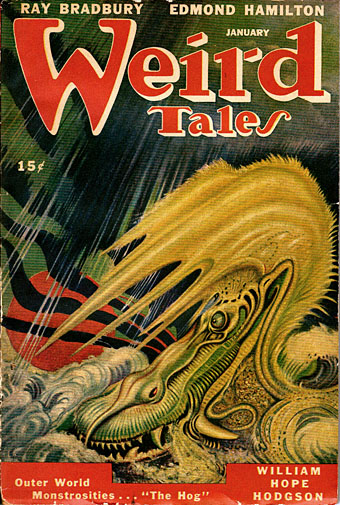
William Hope Hodgson’s final Carnacki mystery, The Hog, received its first magazine publication in January 1947. The cover art by AR Tilburne may not have been originally created for Hodgson’s tale but it complements the story’s atmosphere of febrile dread.

• It’s still April so that means it’s still the month that saw the 100th anniversary of the death of William Hope Hodgson, bodybuilder, manacler of Harry Houdini, and the author of several novels of weird fiction that continue to entrance new generations of readers. The edition of Hodgson’s The House on the Borderland that I illustrated for Swan River Press would have been on sale this month but print problems have caused delays with the run as a whole; anyone interested is advised to contact the publisher for news. • Meanwhile, Jon Mueller (composer of the book’s accompanying soundtrack CD) and myself talked to Swan River Press about the attractions of Hodgson’s novel. • More Hodgsoniana: Greydogtales acknowledged the Hodgson centenary via a discussion with Hodgson scholar Sam Gafford, while Michael Dirda reviewed the new edition of The House on the Borderland and another SRP title, The Scarlet Soul (whose cover I also designed), for The Washington Post.

• “From the ashes of countless decayed Modernities comes Neo-Decadence, a profaned cathedral whose broken stained glass windows still glitter irregularly in the harsh light of a Symbolist sun. Behind this marvellously vandalised edifice, a motley band of revellers picnic in the graveyard of the Real, leaving behind all manner of rotting delicacies and toxic baubles in their wake.” Drowning in Beauty: The Neo-Decadent Anthology edited by Daniel Corrick & Justin Isis is published this month by Snuggly Books, an imprint whose catalogue of new books and first-time translations will be of interest to anyone who comes here for Decadence, Symbolism or anything related. Related to the above: A Neo-Decadence Day at Dennis Cooper’s.

• “Witches are change-makers. They’re transgressive beings who dwell on the fringes of society, and so they’re the perfect icon for rebels, outsiders, and rabble-rousers, especially those of the female persuasion.” Pam Grossman talks to Grimoire about witchcraft and related arts.

• Mixes of the week: Resident Advisor Podcast 621 by Grouper, and Bacchus Beltane 5: The Owl Service by The Ephemeral Man.

• Back in black: Publisher/translator James Conway and designer Cara Schwartz on the cover designs of Rixdorf Editions.

• I was talking again this week at The Writer’s Corner where JKA Short asked me about working as an illustrator.

All Gates Open: The Story of Can by Rob Young is published next week. The Wire has an extract.

• Delusional Albion: Brad Stevens on how foreign directors saw Britain in the Swinging Sixties.

• “There’s no book I love more than Derek Jarman’s Modern Nature,” says Olivia Laing.

Eden Tizard on Soliloquy For Lilith, the drone album by Nurse With Wound.

Owls (1969) by Ruth White | Decadent & Symmetrical (1995) by ELpH vs Coil | The Owls (2013) by Félicia Atkinson

Weekend links 408

sasada.jpg

Kujaku (2018) by Yasuto Sasada.

• “The Ernst picture [Of This Men Shall Know Nothing] has also been interpreted as depicting sexual alchemy, which also ties in with much of Peter Grey’s writing on Babalon and the goddess’ connection to sexual magic and the three ‘Fs’: f(e)asting, flagellation and fucking!” Hawthonn’s Phil & Layla Legard talk to Folk Horror Revival about their superb new album, Red Goddess (of this men shall know nothing).

• South London “Psychic Circuit”: A walk with London writer Iain Sinclair inspired by cult writer Steve Moore—from Shooter’s Hill and the Shrewsbury burial mound to Charlton House then Maryon Park and the locations used in Antonioni’s Blow Up.

• Czech filmmaker Juraj Herz, director of The Cremator (1969) and Morgiana (1972), died last week. One of his later films, The Ninth Heart (1978), featured an animated title sequence by Jan Švankmajer and Eva Švankmajerova.

• The week in psychedelic visuals: Ben Marks on Bill Ham’s San Francisco light shows (a piece from 2016), and Dangerous Minds on Astralvision’s Electric Light Voyage (1979), a light show on Betamax tape.

• “From glaciers to nuclear bunkers, photographer Chloe Dewe Mathews descends into the dark heart of the Swiss mountains that inspired Mary Shelley.”

• Mix of the week: Secret Thirteen Mix 250 by Sote, and XLR8R Podcast 537 by SNTS.

When The Horses Were Shorn Of Their Hooves, new music by Dylan Carlson.

Emily Temple on Edward Gorey’s illustrated covers for literary classics.

Hidden Hydrology: Coil’s Lost Rivers studio sessions.

Tube: Minimalist YouTube search

Sukhdev Sandhu is In Wild Air

• Lost Roads (1988) by Bill Laswell | Lost Sanctum (1994) by Lull | Lost Ways (2016) by Pye Corner Audio

Derek Jarman: Know What I Mean…

dj1.jpg

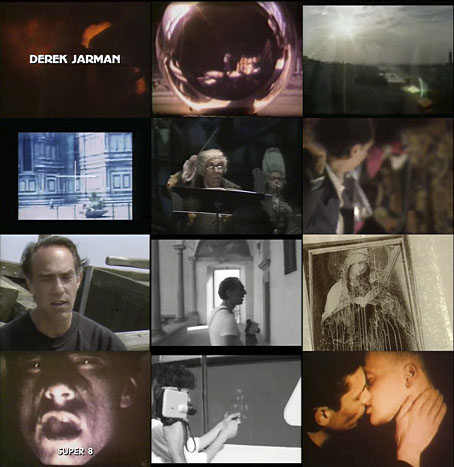
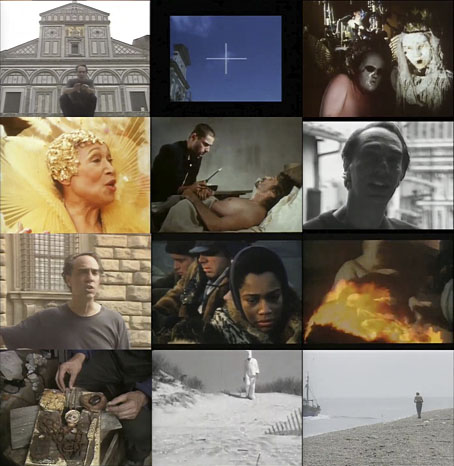
The recent news from the BFI about their forthcoming collections of Derek Jarman films sent me to YouTube once more in search of a documentary I’d been hoping to see again. Derek Jarman: Know What I Mean… is the film in question, and was posted a few months ago by director Laurens Postma on his own YouTube channel. Postma produced a number of arts features for Channel 4 (UK) in the 1980s, one of which, Six Into One: The Prisoner File, a documentary about the making of Patrick McGoohan’s The Prisoner, has been mentioned here already. The Jarman film was made in 1988, and I think was the first lengthy television examination of Jarman’s career. It’s still one of the best since the later documentaries tended to be either shortish interview sessions or posthumous works such as Derek (2008) by Isaac Julien and Bernard Rose.

dj2.jpg

Postma’s film captured Jarman shortly after he’d moved to his cottage at Dungeness, a relocation that was a kind of semi-retirement even though his films were becoming more visible as a result of funding and screening from Channel 4. This was also the period when he was becoming more vocally political thanks to what seemed at the time to be the unending reign of the iniquitous Margaret Thatcher. The Tories of the day had recently announced the now-infamous Section 28 of the 1988 Local Government Act (discussed in the film as both Clause 28 and—confusingly—Clause 29, the labels by which the amendment was first known), a ruling that forbid councils from promoting homosexuality, especially in schools. The late 80s saw the peaking of anti-gay bigotry in Britain, a reaction against the growing freedoms of the 1970s and, inevitably, the menace of AIDS which was still being regarded as “the gay plague”. Jarman had recently been diagnosed as HIV+, something he discusses here with typical good cheer although the conversation is generally more about art than his health, and about the way his own works were always related to gay sexuality. Jarman was one of many gay artists who welcomed their sexual identity as fixing them in the position of outsiders, and it’s notable how many of his films are concerned with outsider figures. When discussing The Tempest (1979) he compares Prospero’s island to gay sexuality, an uncharted enclave and a home to outcasts where different rules apply. This was still a common view among gay men and lesbians in the 1980s—Jarman’s friends in Coil used to say similar things in their interviews—and very different from today’s drive towards conformity and social assimilation. Postma’s film ends with Jarman on the beach at Dungeness, the perfect zone for a lifelong outsider, midway between the land and the sea.

(Note: the Winston Churchill referred to in the film is the grandson of the famous Prime Minister. Winston Churchill Jr. was an MP in the Thatcher government who tried to bring in a bill banning the public exhibition of “explicit homosexual acts” following Channel 4’s TV broadcast of Jarman’s Sebastiane.)

Previously on { feuilleton }
David Tibet meets Derek Jarman
Shooting the Hunter: a tribute to Derek Jarman
Derek Jarman’s landscapes
Derek Jarman album covers
Ostia, a film by Julian Cole
Derek Jarman In The Key Of Blue
The Dream Machine
Jarman (all this maddening beauty)
Sebastiane by Derek Jarman
A Journey to Avebury by Derek Jarman
Derek Jarman’s music videos
Derek Jarman’s Neutron
Mister Jarman, Mister Moore and Doctor Dee
The Tempest illustrated
In the Shadow of the Sun by Derek Jarman
Derek Jarman at the Serpentine
The Angelic Conversation
The life and work of Derek Jarman

Weekend links 388

nakayama.jpg

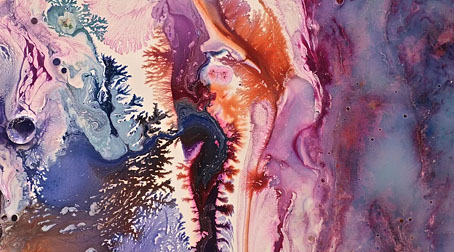
Still of an Alive Painting by Akiko Nakayama.

• “In what is a cross between performance art and installation, Nakayama uses a multitude of kitchen basters loaded with paint and water to add, mix, tilt, blow and add all sorts of extraneous effects to her paints, recording and projecting it all onto a large screen.” Continuously Changing “Alive Paintings” by Akiko Nakayama. There’s more performance video at the artist’s website.

• In January 2018 Song Cycle Records (UK) release Solaris, a “Collector’s Edition” of the Tarkovsky film and its soundtrack comprising vinyl/CD, blu-ray (no region details) and a book of photos, artwork and essays.

• Steve Davis may no longer be a snooker player but he’s still a Magma obsessive. This week he reviewed the new Retrospektiw collection for The Quietus.

What I was most thankful to TG for was leading me to Christopherson’s later band Coil with his partner, antagonist and lover John Balance (after they’d met in Genesis’ Psychic TV) whose music I fell for even harder. The arcane and homoerotic tragicomedy that underpinned their discography (and relationship) propelled me into new states, years before any first hand knowledge of the drug experiences they managed to intertwine so artfully with their music. Records like Scatology and Horse Rotorvator sexualised the male body for me for the first time—an awakening that’s hard not to find some amusement in when soundtracked by a romp called The Anal Staircase. From afar it seemed like their intense, exploration of electronic music as ritual was only possible as a result of the depth of the duo’s personal relationship and how it manifested spiritually, chemically and physically. The posture and machismo of the modern guitar music I listened to (and performed) with my friends could be tiring. The sound of Coil became a safe space in which to fantasise about manhood and Englishness and what it really meant, helping dismantle clichés I’d come to accept as reality. From medieval hymns to acid-house their music was unafraid and total. Though hard to define with any particular release I often play people their funereal takes on Tainted Love (of which all profits went to the Terrence Higgins Trust—a musical first in 1985 while AIDS was still very much taboo) and the Are You Being Served? theme tune, the basis of their transformative final track Going Up, completed by Christopherson after Balance’s death.

Fred Macpherson writing about Throbbing Gristle and Coil at new site The Queer Bible. This is the first appraisal of Coil I’ve seen on any site devoted to gay/queer issues, over ten years after the band expired following the death of John Balance. Better late than never, I suppose.

• Tom Phillips is helping support the National Campaign for the Arts by reworking a page of A Humument as a series of designs at CafePress.

• At Strange Flowers: The Secret Satan book list, a welcome alternative to the lists that fill the broadsheets at this time of year.

• Mixes of the week: Stephen O’Malley presents Acid Quarry Paris—A Hypnosis, and XLR8R podcast 517 by Davy.

• At the Internet Archive: 183 copies of Video Watchdog magazine (1990–2017).

• The TLS interview: Twenty Questions with M. John Harrison.

• At Unquiet Things: The solving of a family art mystery.

txt.fyi

The Hills Are Alive (1995) by Coil | Everyone Alive Wants Answers (2003) by Colleen | Only Lovers Left Alive (2014) by Jozef Van Wissem