Weekend links 495

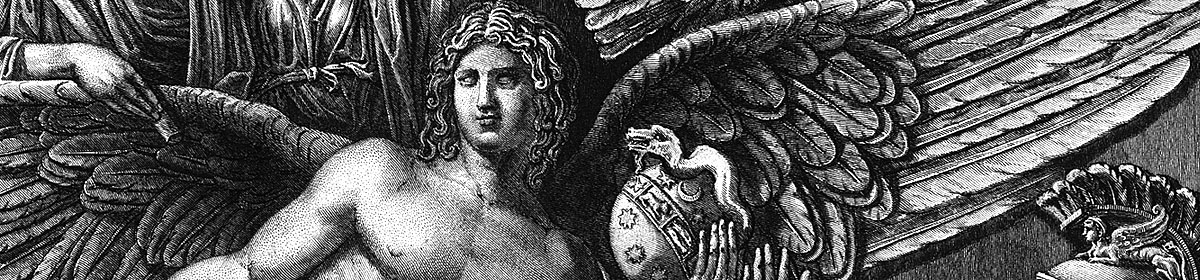
klee.jpg

Angelus Novus (1920) by Paul Klee.

• “Compared to [László] Krasznahorkai’s earlier fiction, Baron Wenckheim’s Homecoming is funnier and more stylistically accessible—despite its length and seemingly endless sentences—but it is also his most unremittingly ruthless work,” says Holly Case. Elsewhere: “Baron Wenckheim’s Homecoming may not bring joy or consolation, but reading it is a mesmerisingly strange experience: a slab of late modernist grindcore and a fiercely committed exercise in blacker-than-black absurdity,” says Sukhdev Sandhu.

Zeitraffer (“Time-lapse“) is an exhibition devoted to Tangerine Dream which opens at the Barbican, London, in January. Also coming in January is a new album, Recurring Dreams, by the current iteration of the group which will be available on CD and double vinyl. I was impressed by the last TD release, Quantum Gate, so I’m looking forward to this even if it is only a reworking of popular pieces from the Virgin years.

• RIP Gershon Kingsley, an electronic music pioneer best known for the silly but fun albums he made with Jean-Jacques Perrey, and for being the composer of that evergreen synthesizer novelty, Popcorn.

The first major study in English of ancient Greek sexuality—especially the way relationships between men were both common and celebrated as a perfect embodiment of love—A Problem in Greek Ethics helped set the stage for the modern-day gay rights movement. But it did so surreptitiously, behind closed doors, as required by the times. Symonds printed it privately in 1883; a print run of just 10 copies reduced the risk that it would fall into the wrong hands. The typesetter complained about the content. Symonds circulated it cautiously, to people he trusted or had reason to think would be discreet. Until now, researchers believed that only five copies survived.

Rachel Wallach on the discovery of a sixth copy of John Addington Symonds’ landmark study

Contagious Magick of the Super Abundance is a book of art by the late Ian Johnstone, former partner of John Balance and cover artist for some of the last releases by Coil.

Dennis Cooper‘s favourite fiction, poetry, non-fiction, film, art, and internet of 2019. Thanks again for the link here!

• At the BFI: Hannah McGill on the umbrellas of cinema, and Jasper Sharp on 10 essential films by Yasujiro Ozu.

• Bobby Krlic, aka The Haxan Cloak, talks to Claire Lobenfield about creating the soundtrack for Midsommar.

Joker and Chernobyl composer Hildur Guðnadóttir: “I’m treasure hunting”.

Joshua Rothman on how William Gibson keeps his science fiction real.

Samantha Rose Hill on Walter Benjamin’s last work.

Scientific phenomena photographs of the year.

The Dream Before (1989) by Laurie Anderson | Angel Tech (1994) by The Grid feat. Sheila Chandra | Angel Tech (1994) by Pete Namlook & Bill Laswell
Weekend links 483

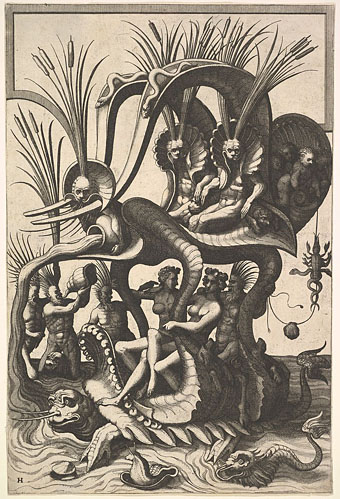
doetecum.jpg

Fantastic Sea Carriage (1556) by Johannes van Doetecum the Elder.

• I’ve grown increasingly tired of Kubrick-related micro-fetishism (despite contributing to it myself with previous posts) but this piece at Film and Furniture about the history of David Hicks’ Hexagon carpet design is a good one.

• “In hindsight, we can see how rarely one technology supersedes another…” Leah Price on the oft-predicted, never arriving death of the book.

• From Rome To Weston-Super-Mare: Eden Tizard on Coil’s Musick To Play In The Dark.

“It is,” the editor of the London Sunday Express had written nine years earlier, sounding like HP Lovecraft describing Necronomicon:

the most infamously obscene book in ancient or modern literature….All the secret sewers of vice are canalized in its flood of unimaginable thoughts, images and pornographic words. And its unclean lunacies are larded with appalling and revolting blasphemies directed against the Christian religion and against the name of Christ—blasphemies hitherto associated with the most degraded orgies of Satanism and the Black Mass.

Regarded as a masterpiece by contemporary writers such as TS Eliot and Ernest Hemingway, celebrated for being as difficult to read as to obtain, Ulysses had been shocking the sensibilities of critics, censors, and readers from the moment it began to see print between 1918 and 1920, when four chapters were abortively serialized in the pages of a New York quarterly called The Little Review. Even sophisticated readers often found themselves recoiling in Lovecraftian dread from contact with its pages. “I can’t get over the feeling,” wrote Katherine Mansfield, “of wet linoleum and unemptied pails and far worse horrors in the house of [Joyce’s] mind.” Encyclopedic in its use of detail and allusion, orchestral in its multiplicity of voices and rhetorical strategies, virtuosic in its technique, Ulysses was a thoroughly modernist production, exhibiting—sometimes within a single chapter or a single paragraph—the vandalistic glee of Futurism, the decentered subjectivity of Cubism, the absurdist blasphemies and pranks of Dadaism, and Surrealism’s penchant for finding the mythic in the ordinary and the primitive in the low dives and nighttowns of the City.

Michael Chabon on the US trial of James Joyce’s Ulysses

• Mix of the week: Through A Landscape Of Mirrors Vol. III—France II by David Colohan.

• Another Not The Best Ambient And Space Music Of The Year Post by Dave Maier.

Sarah Angliss and friends perform Air Loom at Supernormal, 2019.

• Out next month: The World Is A Bell by The Leaf Library.

Amy Simmons on where to start with Pier Paolo Pasolini.

• At Dennis Cooper’s: Candy Clark Day.

• Uccellacci E Uccellini (1966) by Ennio Morricone | Liriïk Necronomicus Kahnt (1978) by Magma | Ostia (The Death Of Pasolini) (1986) by Coil

Weekend links 468

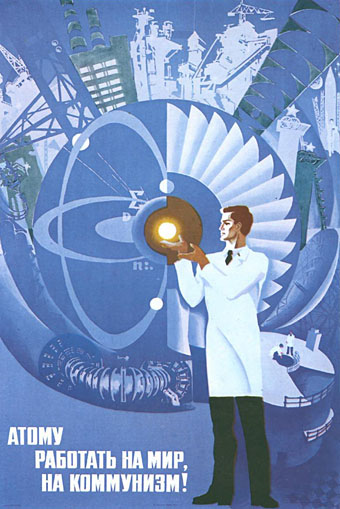
atoms.jpg

“The atom shall work for peace…” Soviet poster promoting the benefits of nuclear power.

• RIP Mac Rebennack aka Dr. John Creaux, The Night Tripper. Dan Auerbach remembers the man whose return to funky form, Locked Down, he produced in 2012. Elsewhere, Michael Hurtt details Mac Rebennack’s pre-Dr. John exploits; some of his music from that period is linked at the end of this post. Entries at YouTube are inevitably skewed to the present but among the older clips you’ll find these: The Doctor and his band in full voodoo regalia miming to Zu Zu Mamou on the Something Else TV show; audio extracts from a Dutch festival performance in 1970, here and here; more quality audio from a 1972 concert in Syracuse, NY; and an hour-long Chicago TV show from 1974 featuring Dr. John, Professor Longhair, The Meters, and Earl King.

• More Tangerine Dream: all the soundtrack music for Vampira (1971), a drama-documentary directed by George Moorse for German TV. Recommended to those who like the group’s Ohr period.

• More Chernobyl: a photo-essay by Tom Skipp featuring survivors of the disaster, and from 2013, Hari Kunzru‘s report from the Exclusion Zone.

• At The Quietus: Lottie Brazier on The Strange World of Stereolab, and Ned Raggett talking to Liz Harris about her Nivhek project.

• The sixth edition of Wyrd Daze—”The multimedia zine of speculative fiction + extra-ordinary music, art & writing”—is out now.

Clark Ashton Smith: The Emperor of Dreams, a DVD of the feature-length documentary by Darin Coelho Spring.

• Moon Wiring Club is back this month with fresh releases at Bandcamp, a YouTube post, and the EVP MVP Mix.

• Once the “Swingingest Street in the World”: Rob Baker on pictures of Carnaby Street 1924–1975.

• New video footage of Coil playing live at All Tomorrow’s Parties, 6th April, 2003.

Dean Hurley explores life after death on Philosophy of Beyond.

Tom Walker on Harry Clarke’s uncanny visions of Ireland.

Alex Barrett on where to begin with Alain Resnais.

• Martin Parr’s Soviet space dog collection.

Dennis Cooper winds you up.

Storm Warning (1959) by Mac Rebennack | Morgus The Magnificent (1959) by Morgus & The 3 Ghouls | Sahara (1961) by Mac Rebennack & His Orch.

Weekend links 462

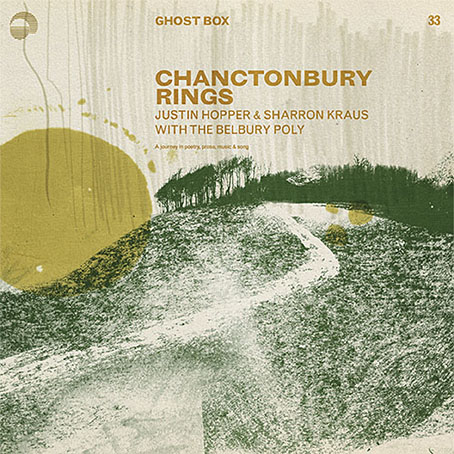
chanctonbury.jpg

The next release on the Ghost Box label, Chanctonbury Rings is “a blend of folk, electronic music, poetry, prose and environmental sound” by Justin Hopper & Sharron Kraus with The Belbury Poly. The album will be available in June. Design, as always, is by Julian House.

• Clumsy and insensitive translations can ruin the enjoyment of a foreign-language film. Don’t blame us, say the subtitlers pressing film-makers for more appreciation of their art. Anne Billson on the difficulties of translating for a medium of moving images.

• At Expanding Mind: Hypermedia researcher and author Konrad Becker talks with Erik Davis about algorithms from hell, the madness of rationality, media seances, and the martial art of freedom.

The HP Lovecraft Cat Book: a limited collection of Lovecraft’s writings about cats edited by ST Joshi and illustrated by Jason C. Eckhardt.

Amacher was also inspired by a short story she found in the 1986 cyberpunk anthology Mirrorshades, edited by Bruce Sterling—a tale called Petra by Greg Bear, about a grand cathedral, possibly Notre Dame in Paris, in a ravaged, postapocalyptic landscape. Stone gargoyles and other statues mate with humans, creating new hybrids who wander the labyrinthine chambers of the battered house of worship.

Geeta Dayal on composer Maryanne Amacher

• The novel that wouldn’t leave Anthony Burgess alone: Alison Flood on the discovery of a non-fiction continuation of the themes in A Clockwork Orange.

Kristina Foster on photographs of Central Asia’s Striking Soviet Architecture.

Adrian Shaughnessy‘s ten favourite design and visual culture books.

William Joel on the process behind Helvetica’s 21st century facelift.

• The Stupid Classics Book Club by Elisa Gabbert.

The Haunted Generation by Bob Fischer.

Haunted Cocktails (1983) by Intro | Haunted Gate (1997) by David Toop | The Universe Is A Haunted House (2002) by Coil

Weekend links 461

meryon.jpg

Le Stryge (The Vampire) (1853) by Charles Méryon.

Notre-Dame-de-Paris in art and photography. Related: Chris Knapp on the Notre-Dame fire, and John Boardley on the print shops that used to cluster around the cathedral. Tangentially related: Mapping Gothic France.

The Bodies Beneath: The Flipside of British Film & Television by William Fowler and Vic Pratt will be published next month by Strange Attractor. With a foreword by Nicolas Winding Refn.

• “In his new biweekly column, Pinakothek, Luc Sante excavates and examines miscellaneous visual strata of the past.”

I also gathered underland stories, from Aeneas’s descent into Hades, through the sunken necropolises of Italo Calvino’s Invisible Cities and the Wind Cave cosmogony of the Dakota Sioux, to accounts of the many cavers, cave-divers and free-divers who have died seeking what Cormac McCarthy calls “the awful darkness inside the world”—often unable to communicate to themselves, let alone others, what metaphysical gravity drew them down to death. Why go low? Obsession, incomprehension, compulsion and revelation were among the recurrent echoes of these stories—and they became part of my underland experiences, too.

Robert Macfarlane on underworlds real and imagined, past, present and future

• Mixes of the week: FACT Mix 703 by Mary Lattimore, and The Colour Of Spring by cafekaput.

• A witty appraisal by Anna Aslanyan of a lipogrammatic classic and its smart translation.

• “Unseen Kafka works may soon be revealed after Kafkaesque trial.”

• “Why do cats love bookstores?” asks Jason Diamond.

Sunn O))) pick their Bandcamp favourites.

Le Grand Nuage de Magellan

Cathedral In Flames (1984) by Coil | The Cathedral of Tears (1995) by Robert Fripp | Cathedral Et Chartres (2005) by Jack Rose