Weekend links 801

waterhouse.jpg

The Magic Circle (1886) by John William Waterhouse.

The Moon and Serpent Bumper Book of Magic has just been published in France by Editions Delcourt. A preview here shows how carefully they’ve managed to translate and reletter my page designs.

• Among the new titles at Standard Ebooks, the home of free, high-quality, public-domain texts: Algernon Blackwood’s stories of John Silence, occult detective.

• Relevant to some of my recent reading: The Necronomicon Wars, an examination of the many attempts to give life to HP Lovecraft’s fictional grimoire.

Altered States is tremendously exciting to watch—and not only during its psychedelic interludes when goat Jesus is being crucified and writhing red figures are toppling, Hieronymus Bosch–like, into hell and abstract splotches give the impression of cells endlessly dividing or murky membranes dissolving and beautiful women stare into Magritte skies and waves of lava crash as though the molten core of humanity itself were erupting. Even in its quieter moments, it is a beautiful film, with Hurt’s every appearance shot by cinematographer Jordan Cronenweth to emphasize his character’s alien otherworldliness.

Jessica Kiang explores the creation of Ken Russell’s flawed but fascinating psychedelic feature, Altered States

• A new catalogue of lots at another After Dark: Gay Art and Culture online auction. Homoerotic art, photos, historic porn. etc.

Tarot decks through the ages: a video showing some of the cards from Victoria and Albert Museum’s collection.

• More psychedelia: Neuroscientist Grigori Guitchounts asks “What is your brain doing on psychedelics?”

• At the Daily Heller: Ryan Hughes has published a weighty collection of his typeface designs.

• Old music: Caged (25th Anniversary Edition) by Ian Boddy & Chris Carter.

• At the BFI: Rory Doherty selects 10 great Technicolor melodramas.

• At Dennis Cooper’s: The Old School Horrors of Terence Fisher.

Photographs from the 2025 Wildlife Photographer of the Year.

Ambientblog celebrates 20 years of existence.

• RIP Dave Ball.

Necronomicon (1970) by Les Baxter | Liriïk Necronomicus Kahnt (1975) by Magma | Necronomicon–The Magus (2004) by John Zorn

Weekend links 560

martin.jpg

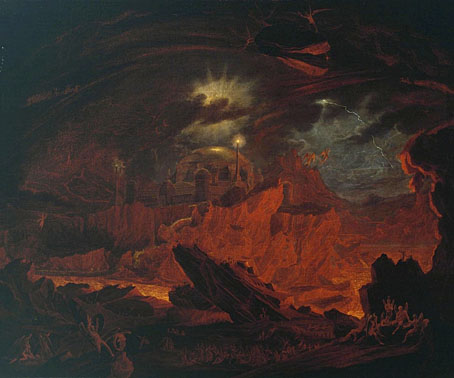
The Fallen Angels Entering Pandemonium, from ‘Paradise Lost’, Book 1 (c.1841) by John Martin.

• “Hergé’s heirs sue artist over his Tintin/Edward Hopper mashups.” The complaint is that the paintings of Xavier Marabout besmirch Tintin’s character by making him seem…human? Silly. I’d sooner complain that Hergé’s ligne claire drawing style is an awkward match for Hopper’s realism. And besides which, isn’t Tintin gay? There’s a lot of wish-fulfilling slash art showing Tintin and Captain Haddock in a closer relationship than Hergé ever would have wanted. This Canadian magazine cover by Normand Bastien dates from 1987.

• “Everyone wanted to make products that looked fast and angry and maybe wanted to lay eggs in your brain.” Alexis Berger tells S. Elizabeth how she avoided years stuck in a design office by becoming a jeweller instead.

• New music: Chiaroscuro by Alessandro Cortini, and Frequencies For Leaving Earth Vol. 4 (One-Hour Loop) by Kevin Richard Martin & Pedro Maia.

The Willows is less a flight of fancy and more an attempt to articulate the ways in which what we dubiously still call “nature” is at once an object of human systems of knowledge and yet also something that undermines those same systems. Thus if The Willows is indeed a classic of “supernatural horror” (as HP Lovecraft would famously note), we might also be justified in calling it “natural horror” as well. In Blackwood’s wonderfully slow, patiently constructed scenes of atmospheric suspense, there is the sense of an impersonal sublime, a lyricism of the unhuman that shores up the limitations of anthropocentric thinking, as well as evoking the attendant smallness of human beings against the backdrop of this deep time perspective.

Eugene Thacker on how Algernon Blackwood turned nature into sublime horror

• Women of Letters: John Boardley talks to Lynne Yun, Deb Pang Davis, Coleen Baik and Duong Nguyen about their typographic designs.

• At Google Arts & Culture: Music, Makers & Machines: A brief history of electronic music.

• At The Public Domain Review: The Universe as Pictured in Milton’s Paradise Lost (1915).

• Beyond the Perseverance drone: Chloe Lula on the sounds of space.

• At Wormwoodiana: Colour magazine (1914–1932).

Wyrd Daze Lvl.4 FOUR STAR is here.

• At Dennis Cooper’s: Hell.

O Willow Waly (1961) by Isla Cameron And The Raymonde Singers | Cool Iron (1972) by The Willows | The Willows (2005) by Belbury Poly

Weekend links 373

YDKMorimoe.jpg

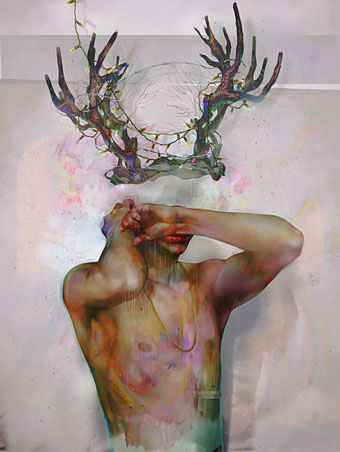
Untitled (2011) by YDK Morimoe. Via Jim Post at Dennis Cooper’s.

For The Climax Of The Night by Total Leatherette is almost certainly the only album you’ll see this year with autofellatio cover art. Faux Fox gives a taste of the new album, while an earlier piece, Squeeze Hunk, features a Tom of Finland-style video. And speaking of which, Dome Karukoski’s feature film, Tom of Finland, is released in the UK this week. Related: Tom of Finland coffee.

• The death of playwright Joe Orton in 1967 prompted yet more 50th anniversary articles this week. Mentioned here before, and better value than all the textual appraisal, is the BBC’s 70-minute TV documentary from 1982, A Genius Like Us: A Portrait of Joe Orton, which includes interviews with family, friends, colleagues and Orton’s biographer, John Lahr.

• Two skulls, 50,000 postcards and a book that took 50 years to finish: Stuart Jeffries visits artist Tom Phillips.

• New at the Internet Archive: 25,000 78RPM records. You can never go wrong with Duke Ellington.

Lock Your Door and The Reformation of St. Jules: Algernon Blackwood filmed in 1949.

Redemption, an exhibition of art by Fay Pomerance (1912–2001) at Ushaw College, Durham.

• At Dirge Magazine: Daniel Pietersen on the myth of the sunken city.

• Mix of the week: FACT Mix 613 by Aaron Dilloway.

Laetitia Sadier’s favourite albums.

• RIP Hywel Bennett

Sunken City (1961) by Les Baxter | Ys (1971) by Alan Stivell | Atlantis (1971) by Deuter

Haunted Corridors: The Temporal Enigmas of Sapphire and Steel

sands01.jpg

All irregularities will be handled by the forces controlling each dimension. Transuranic, heavy elements may not be used where there is life. Medium atomic weights are available: Gold, Lead, Copper, Jet, Diamond, Radium, Sapphire, Silver and Steel.

Sapphire and Steel have been assigned.

Voiceover at the beginning of each episode

Having revisited a fair amount of old television in the past few years I thought I was past being surprised, but this came as a revelation. Sapphire and Steel appeared at exactly the wrong moment for me to fully appreciate it the first time round. The six storylines ran on the ITV network from 1979 to 1982, a period when my home and personal life was so chaotic that I saw little television at all. At any other time a series featuring a pair of cosmic investigators immersed in mysteries involving haunted railway stations and people escaping from photographs would have been essential viewing. Sapphire and Steel was never repeated after those original screenings so watching the entire run recently has been like seeing it for the first time. In recent years the series has been included in discussion of the weirder British television of past decades; China Miéville in his interview in The Twilight Language of Nigel Kneale describes Sapphire and Steel as the strangest thing ever screened on British TV. After reading that, and a couple of other appraisals, I felt obliged to refresh my vague memories.
sands02.jpg

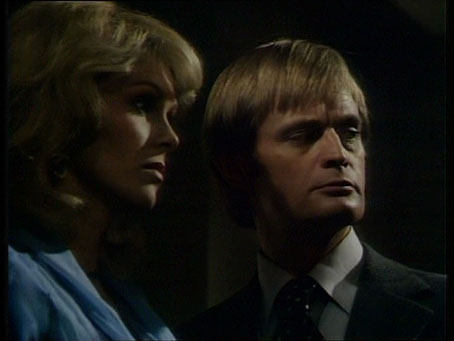
Assignment One: Sapphire (Joanna Lumley) and Steel (David McCallum).

Superficially, Sapphire and Steel belongs to the occult-detective subgenre, a minor category of weird fiction that in its early days included characters such as Sheridan Le Fanu’s Dr Martin Hesselius, Algernon Blackwood’s John Silence, William Hope Hodgson’s Thomas Carnacki and others. But several factors set Sapphire and Steel apart from their more staid predecessors: occult detectives are generally solitary figures whereas Sapphire and Steel operate as a pair; Sapphire is a woman in a field more commonly occupied by middle-aged men; and most striking of all, both Sapphire and Steel are supernatural beings themselves, dispatched to Earth by agencies we never see and learn nothing about, in order to mend ruptures in the flow of Time. Supernatural detectives had appeared in comic books before this but there’s no evidence that series creator PJ Hammond was considering such antecedents when he wrote The Time-Menders (as Sapphire and Steel was originally known). A few years earlier Hammond had been writing for Ace of Wands (1970–72), a mildly hippyish children’s TV series whose hero, Tarot, was a youthful stage magician with genuine occult powers. Between stage shows, Tarot and friends investigated supernatural events. Sapphire and Steel had originally been planned as a series for children but before the first script was finished it was moved to an early evening slot, thus allowing for darker and more adult-oriented material.
sands03.jpg

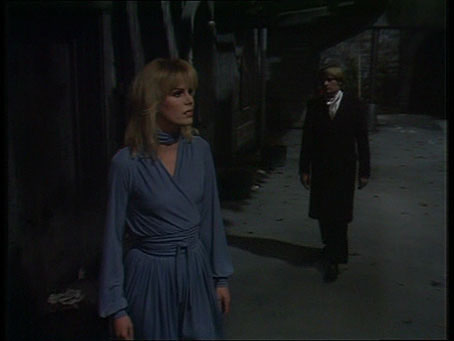
Assignment Two: the haunted railway station. The clothing worn by the pair changes with each assignment; on this occasion they’re in evening dress.

One of the attractions of Sapphire and Steel in a genre replete with origins and canonical histories is how little is explained about the two main characters, the source of their assignments, or even the true nature of the malevolent forces they have to face. Sapphire (Joanna Lumley) and Steel (David McCallum) embody the materials after which they’re named, the pair being part of a team of elemental operatives some of whose names are listed in the voiceover that introduces each episode. We only encounter two others: Lead (Val Pringle), a huge African-American man with superior strength; and Silver (David Collings), an effete and dandyish Englishman with the ability to mould metals, fix machines and replicate objects. Sapphire’s abilities are mainly psychometric—she reads the history and condition of people and places—but she can also rewind time for short periods; Steel is as cold and unyielding as his name; he’s fiercely analytical, often bad-tempered and also strong enough to tie a knot in a lift cable.

Continue reading “Haunted Corridors: The Temporal Enigmas of Sapphire and Steel”

Dreaming Out of Space: Kenneth Grant on HP Lovecraft

grant.jpg

Going through some of my loose copies of Man, Myth and Magic recently turned up this article by Kenneth Grant that I’d forgotten about. I have two separate sets of Man, Myth and Magic: a complete edition in binders, and a partial collection of loose copies of the weekly “illustrated encyclopedia of the supernatural”. The partial collection is worth keeping for the unique articles that ran across the last two pages of every issue, all of which are absent (along with the magazine covers) from the bound edition. These articles formed the Frontiers of Belief series, a collection of essays of the kind one might find in magazines today such as Fate or Fortean Times. An earlier essay about Wilfried Sätty, Artist of the Occult, was reproduced here a few years ago; none of these pieces have ever been reprinted so it seems worthwhile putting another of the more interesting pieces online.

Kenneth Grant was the only active occultist among Man, Myth and Magic‘s roster of very serious and well-regarded writers and experts. Grant wrote several of the encyclopedia entries although not the one about Aleister Crowley, as you might expect, that entry going to Crowley’s executor and biographer, John Symonds. Grant was also a lifelong champion of HP Lovecraft’s fiction which explains this article; many of Grant’s later occult texts have a distinctly Lovecraftian flavour, and they often refer to Lovecraft and Arthur Machen as being the unconscious recipients of actual occult emanations or presences. Grant’s belief that the authors channelled these emanations into their fiction is central to this piece, a belief that Lovecraft would have dismissed even though several of his stories (not least The Call of Cthulhu) concern exactly this process. Grant connects Lovecraft with another artist whose work he championed throughout his life, Austin Osman Spare. It was Grant’s involvement with Man, Myth and Magic that put one of Spare’s drawings on the cover of the first issue, and further drawings inside the magazine, introducing the artist’s work to a new, highly receptive audience. The drawing below (Were-Lynx) appears in the magazine behind Grant’s text so I’ve scanned a text-free copy from Grant’s Cults of the Shadow (1975).

DREAMING OUT OF SPACE by Kenneth Grant

Malevolent powers are lurking in wait to project themselves into the sleeping minds of men: this terrifying idea is a recurring theme in the stories of Howard Phillips Lovecraft, who claimed that they came to him in nightmares. But were they simply bad dreams, or was he in fact receiving communications from an unknown source, as Kenneth Grant here suggests?

spare.jpg

“I have watched for dryads and satyrs in the woods and fields at dusk”; illustration by Austin Osman Spare, who sensed the forces looming behind Lovecraft’s work, and was inspired to illustrate these presences.

Howard Phillips Lovecraft died in 1937; but the myth-cycle which he initiated in unrivalled tales of cosmic horror now raises the question whether it was a mere fiction engendered in the haunted mind of an obscure New England writer, or whether it foreshadowed a particularly sinister kind of occult invasion.

According to a well-known occult tradition, when Atlantis was submerged, not all perished. Some took refuge on other worlds, in other dimensions; others “slept” a willed and unnatural sleep through untold aeons of time. These awakened; they lurk now in unknown gulfs of space, the physical mechanism of human consciousness being unable to pick up their infinitely subtle vibrations. They lurk, waiting to return and rule the whole earth, as was their aim before the catastrophe that destroyed their corrupt civilization.

This tradition was a major theme in Lovecraft’s work. Until quite recently people read his stories and shuddered (if sufficiently honest and sensitive enough to admit their uncanny impact), not suspecting for a moment that such things could be.

Few know that Lovecraft dreamed most of his tales. And he sometimes thought that these dreams, or rather, nightmares, were caused by misdeeds in remotely distant incarnations when, perhaps, he had aimed at acquiring magical powers. These dreams were memories of the past and prophecies of the future, for he said that “nightmares are the punishment meted out to the soul for sins committed in previous incarnations—perhaps millions of years ago!”

In his life as Howard Phillips Lovecraft he tried again and again to bring himself to face squarely the ordeal through which he knew he would have to pass, if he were finally to resolve his spiritual difficulties. The issue is brought to the surface perhaps more clearly and urgently in his poems than in his stories. He is on the brink of making the critical discovery, of surprising the secret of his inner life, and he is forced back repeatedly by the dread, the stark soul-searing fear which he bottles up in his work and which he communicates so successfully—in neat doses—to his readers.

One of Lovecraft’s most vivid creations is the ancient book of hideous spells composed to facilitate traffic with creatures of unseen worlds. He ascribed its authorship to Abdul Alhazred, a mad Arab who flourished in Damascus about 700 AD. This grimoire, during the course of its mysterious career, is supposed to have been translated by the Elizabethan scholar Dr John Dee, into Greek, under the title of Necronomicon. It contains the Keys or Calls that unseal forbidden spaces of cosmic sleep, inhabited by elder forces that once infested the earth. The Keys are in a wild, unearthly tongue reminiscent of the Calls of Chanokh, or Enoch, which Dr Dee actually obtained through contact with non-terrestrial entities during his work with the magician, Sir Edward Kelley, whom Aleister Crowley claimed to have been in a previous life. It is possible that the “evil and abhorred Necronomicon” was suggested by the clavicles or Keys of Enoch, which Dee and Kelley discovered, and which Crowley later used to gain access to unknown dimensions.

Continue reading “Dreaming Out of Space: Kenneth Grant on HP Lovecraft”