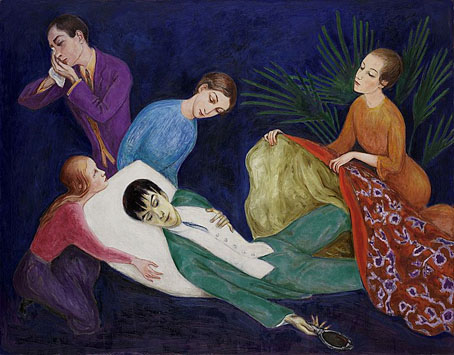
The Dying Dandy by Nils Dardel.
Wishing you all a happy new year with a small selection of art from a century ago.
Schicksal by Fritz Baumann.
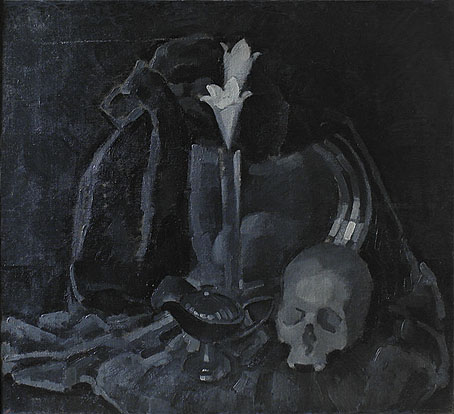
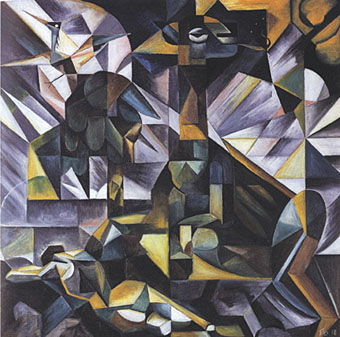
Black Still Life by Genrich Matveevich Blumenfeld.
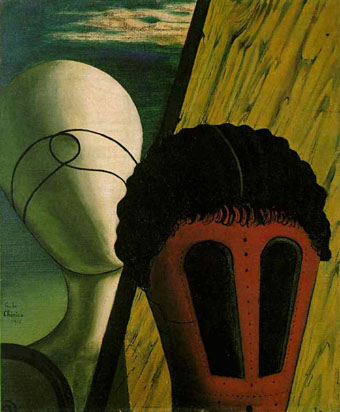
Two Heads by Giorgio de Chirico.
A journal by artist and designer John Coulthart.
The Dying Dandy by Nils Dardel.
Wishing you all a happy new year with a small selection of art from a century ago.
Schicksal by Fritz Baumann.
Black Still Life by Genrich Matveevich Blumenfeld.
Two Heads by Giorgio de Chirico.
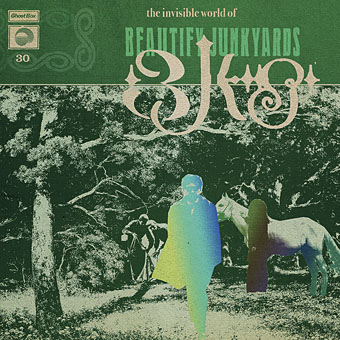
The Invisible World of Beautify Junkyards will be the next release on the Ghost Box label in March 2018. Design by Julian House.
• Tantalising discovery of the week was Alphons Sinniger’s Eno (1974), a 24-minute film about post-Roxy Music Brian Eno which shows (among other things) the recording of Here Come The Warm Jets. The film is a scarce item that appeared briefly on YouTube before being yanked. Copies have been reposted (see here) although they may not stay around for long.
• Nosferatu the Shapeshifter: An inventory of intertitles, prints and premiéres. A page that includes some detail about Die zwölfte Stunde. Eine Nacht des Grauens (The Twelfth Hour: A Night of Horror), a seldom-seen reworking of Murnau’s film from 1930 which added sound, additional scenes (none of them by Murnau) and a happy ending.
• At Dennis Cooper‘s: Entry Level: Luchino Visconti’s “German Trilogy”: The Damned, Death in Venice, Ludwig (1969–1973).
• “3,500 occult manuscripts will be digitized and made freely available online, thanks to Da Vinci Code author Dan Brown.”
• From 2015: Watch Alejandro Jodorowsky give a tarot reading (for Nicolas Winding Refn).
• Portals of London: “Towards a catalogue of London’s inter-dimensional gateways”.
• At Spoon & Tamago: Gigantic sculptures by Kenji Yanobe of cats wearing helmets.
• At the BFI: Adam Scovell on 10 great “urban wyrd” films.
• At Swan River Press: Our Haunted Year: 2017.
• Portals (2001) by Bill Laswell | Portals And Parallels (2010) by Belbury Poly & Moon Wiring Club | Abysmal Cathedrals Arise!—Beyond The Quivering Portal—Minds On Fire (2012) by The Wyrding Module
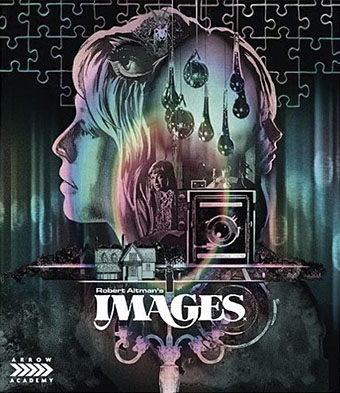
Art by Twins of Evil for the forthcoming blu-ray from Arrow Academy.
The laziest post of the year is invariably a review of the artists/designers/photographers featured on the weekend posts, so here’s another end-of-year list for you. Scroll down to see what caught my attention over the past twelve months.
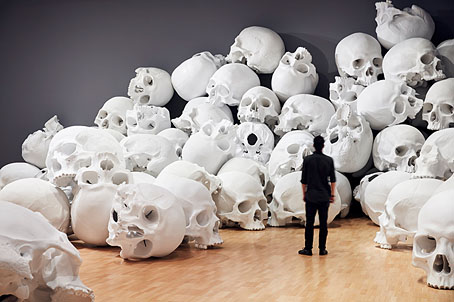
Mass by Ron Mueck at the National Gallery of Victoria Triennial. Photo by Tom Ross.
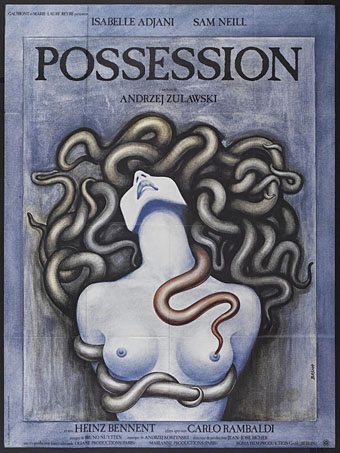
French poster by Basha (Barbara Baranowska) for Andrzej Żuławski’s extraordinary Possession (1981).
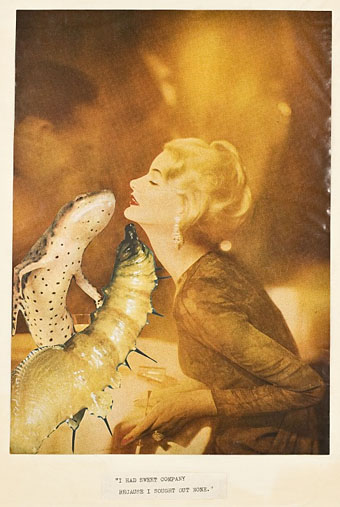
I Had Sweet Company Because I Sought Out None. Collage by Helen Adam.
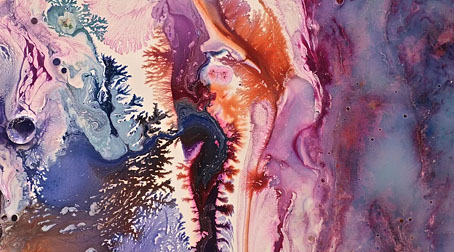
Still of an Alive Painting by Akiko Nakayama.
Art by Twins of Evil for the forthcoming blu-ray from Arrow Academy.
• Images (1972), the film that Robert Altman made between McCabe and Mrs Miller and The Long Goodbye, is the closest the director came to outright horror. A disturbing portrait of mental breakdown, with Susannah York in the lead role, and photography by Vilmos Zsigmond, the film has for years been so difficult to see as to be almost invisible. Arrow Academy will remedy this situation in March next year with a new blu-ray restoration. Related: Geoff Andrew on where to begin with Robert Altman.
• “[Johnson] is a paltry, utterly conventional, upwardly mobile, morally squalid parvenu who yearns to be taken for what he isn’t.” Jonathan Meades‘ vitriol is in a class of its own, here being deployed in a review of Nincompoopolis: The Follies of Boris Johnson by Douglas Murphy.
• “These films, all preserved in the BFI National Archive, are known as Orphan Works. When the rights-holder for a film cannot be found, that film is classified as an Orphan Work.” 170 orphaned films have been added to the BFI’s YouTube channel.
Don’t romanticize science fiction. One of the questions I have been asked so many times I’ve forgotten what my stock answer to it is, ‘Since science fiction is a marginal form of writing, do you think it makes it easier to deal with marginal people?’ Which—no! Why should it be any easier? Dealing with the marginal is always a matter of dealing with the marginal. If anything, science fiction as a marginal genre is more rigid, far more rigid than literature. There are more examples of gay writing in literature than there are in science fiction.
Samuel Delany in a lengthy two-part interview with Adam Fitzgerald
• One of the books I was illustrating this year was The Demons of King Solomon, a horror anthology edited by Aaron French. The collection is out now; I’ll post the illustrations here in the next month or so.
• Mixes of the week: Routledge Dexter Satellite Systems by Moon Wiring Club, No Way Through The Woods: A Conjurer’s Hexmas by SeraphicManta, and FACT mix 632 by Priests.
• Also at the BFI: Adam Scovell on a film adaptation of MR James that predates Jonathan Miller’s Whistle and I’ll Come To You (1968) by 12 years.
• At Weird Fiction Review: Jon Padgett on absurd degenerations and totalitarian decrepitude in The Town Manager by Thomas Ligotti.
• At Larkfall: Electricity & Imagination: Karl von Eckartshausen and Romantic Synaesthesia.
• It’s the end of December so the London Review of Books has Alan Bennett’s diary for the past year.
• Aquarium Drunkard‘s review of the year’s best music.
• At Dennis Cooper’s: Lotte Reiniger Day.
• Robin Rimbaud is In Wild Air.
• Dream Sequence (Images II) (1976) by George Crumb | Images (1977) by Sun Ra | Mirror Images (1978) by Van Der Graaf
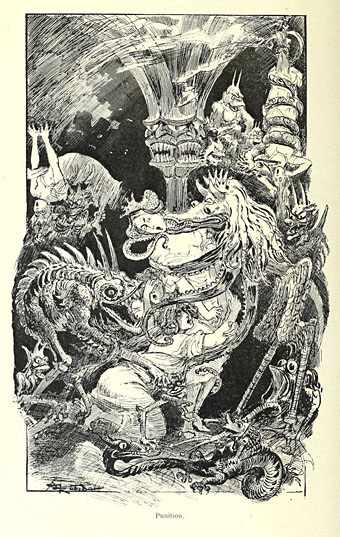
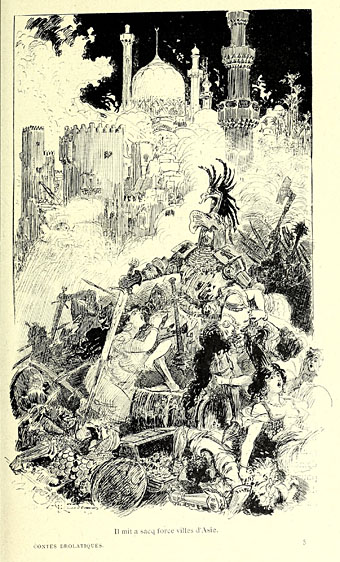
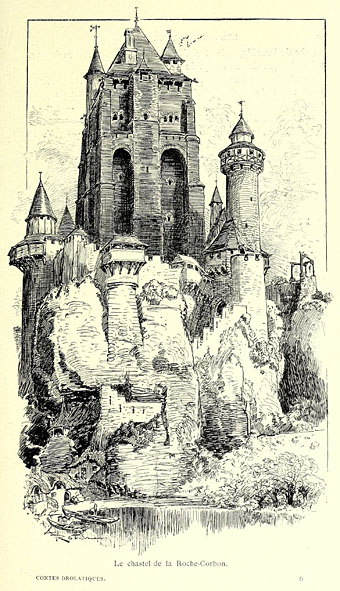
From Doré (see last week’s post) to Robida, and a set of drawings I hadn’t seen before. Albert Robida is best known today for the illustrations from his books which present a humorous look at life in the future. But he was also a working artist, and enough of an expert on medieval French architecture to oversee the recreation of Old Paris that filled a bank of the Seine for the Exposition Universelle of 1900.
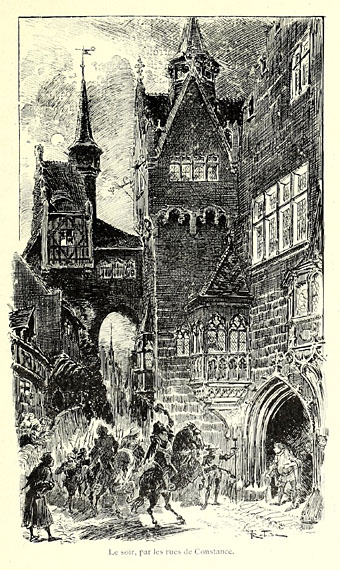
Robida’s architectural interest is to the fore in many of his illustrations for Balzac’s droll tales; where Doré often renders buildings as blurred silhouettes, Robida offers authentic detail. He’s also a match for Doré when it comes to comic grotesquery, as these stories demand, while adding anthropomorphic touches of his own.
As before, this is a small selection from a large quantity of illustrations. This time the book is in two volumes which may be browsed here and here.