Weekend links 437

watson.jpg

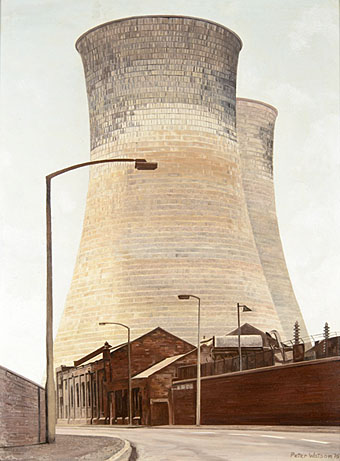
Rawmarsh Road, Rotherham, 1975 by Peter Watson.

Steel Cathedrals (1985), a composition by David Sylvian (with Ryuichi Sakamoto, Kenny Wheeler, Robert Fripp & others) was originally available only on the cassette release of Sylvian’s Alchemy: An Index Of Possibilities, and a video cassette where the music accompanied views of Japanese industry by Yasuyuki Yamaguchi. The video hasn’t been reissued since but may be viewed here.

• “If, as Arthur C Clarke famously observed, any sufficiently advanced technology is indistinguishable from magic, then can we accept that any sufficiently advanced magic is also indistinguishable from technology?” asks Mark Pilkington.

• “I didn’t like the idea of cartoons as just funny jokes, they had to have some relevant piece of observation in them to do with the society we are living in,” says Ralph Steadman.

I listen to music all the time, and I’ll often seek connections across quite disparate genres of that whatever I’m looking for. Sometimes it’s an aesthetic or a feeling, sometimes a pattern or structure, but it tends to cut across genres. The thing I liked about black metal and doom metal is the slowness and weightiness of it, it’s like deep time but in music. Sunn O))), Xasthur, and other bands captured this black gravity of sound. And they also tend to eschew the traditional vocal-lead guitar set-up, and everything is in the slow-moving wash and texture of sound.

I found that in other genres like noise music (especially Keiji Haino), the European avant-garde with composers like Ligeti, Scelsi, and Dumitrescu, dark ambient artists such as Lustmord or vidnaObmana, and contemporary works like Chihei Hatakeyama’s Too Much Sadness, Rafael Anton Irisarri’s A Fragile Geography, or Christina Vantzou’s No.4. There’s a lot to talk about in terms of music and forms of sorrow or grief, certainly every musical tradition has that—the funeral dirge, requiem, lamentation, or whatever.

Eugene Thacker listing a few favourite musicians and composers during a discussion with Michael Brooks about Thacker’s new book, Infinite Resignation

• The fourth edition of Wyrd Daze—”The multimedia zine of speculative fiction + extra-ordinary music, art & writing”—is out now.

• The Library of Congress has opened its National Screening Room, an online service for viewing films in the library’s collection.

The London Library discovered some of the books that Bram Stoker used for research when he was writing Dracula.

• “Oscar Wilde’s stock has never been higher,” says John Mullan, reviewing Oscar: A Life by Matthew Sturgis.

• Mixes of the week: RA Podcast 648 by Sarah Davachi, and Secret Thirteen Mix 269 by Sstrom.

• David Lynch directs a video for A Real Indication by Thought Gang.

• “Edward Gorey lived at the ballet,” says his biographer, Mark Dery.

• A new version of Blue Velvet Blues by Acid Mothers Temple.

• Photos of cooling-tower interiors by Reginald Van de Velde.

Aaron Worth on Arthur Machen: “the HG Wells of horror”.

• The Strange World of…Barry Adamson.

Glass And Steel No. 1 (1983) by Marc Barreca | Death Is The Beginning (1996) by Steel | Painless Steel (2000) by Bohren & Der Club Of Gore
A mix for Halloween: Subtexts

Presenting the thirteenth Halloween playlist, and another mix of my own. This year I thought I’d try a mix of material wholly taken from Subtext Recordings, an excellent label for whom I still provide design work now and then. Subtext releases have featured on some of the previous mixes in this series, and while the music (or sounds) on these albums isn’t necessarily horror-oriented much of it would work well as soundscapes in a David Lynch scenario. The material ranges from tracks with an acknowledged source—a telegraph pole north of the Arctic circle (Eric Holm), recordings made deep underwater (Eric Holm again), sounds recorded in a building with a reputation for being haunted (Emptyset)—to music whose origin is a complete mystery. See the Subtext Soundcloud page for more of the label’s output.

This is the running order:

Roly Porter—Atar (2011)
Eric Holm—Andøya (2014)
Emptyset—Divide (2012)
Eric Holm—Surface Detail (2016)
Blessed Initiative—Out With The Old, In With The New Flesh (2016)
FIS—Treat Inner Eris (2016)
FIS And Rob Thorne—Wooden Lung (2017)
Paul Jebanasam—depart as | air dx stop ∂ρ/∂ /dt somewhere = +∇∙(ρ sigma*(y waiting ­x) v)=0∂ρ/dy/dt for = you x dim (2016)
Joshua Sabin—Eki (2017)

Previously on { feuilleton }
Macabre mixes
A mix for Halloween: Analogue Spectres
A mix for Halloween: Teatro Grottesco
A mix for Halloween: Unheimlich Manoeuvres
A mix for Halloween: Ectoplasm Forming
A playlist for Halloween: Hauntology
A playlist for Halloween: Orchestral and electro-acoustic
A playlist for Halloween: Drones and atmospheres
A playlist for Halloween: Voodoo!
Dead on the Dancefloor
Another playlist for Halloween
A playlist for Halloween

Weekend links 436

cthulhusex.jpg

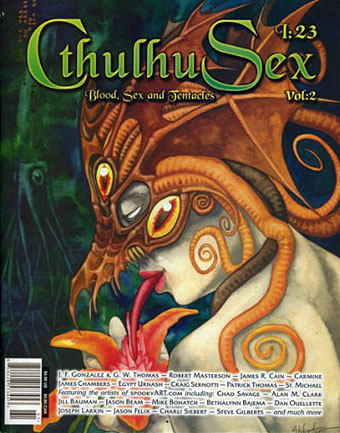
Cover for the now-defunct Cthulhu Sex magazine, volume 2, no. 23. Art by Chad Savage.

• Revising Lovecraft: The Mutant Mythos by Paul StJohn Mackintosh. Mackintosh was interviewed at Greydogtales in 2016 where he made a point that certainly chimes with my experience: “…the English-speaking genre community seems to have far more trouble with certain sexual themes than the mainstream literary community does, especially in Europe. […] A pity, because, for example, if H P Lovecraft’s worldview did owe much to sexual repression, then more mature engagement with that could really benefit the whole cosmic horror genre.”

• At Expanding Mind: Occultist and Aleister Crowley biographer Richard Kaczynski talks with Erik Davis about Jack Parsons, the “method of science,” the Agape Lodge, the women of Thelema, and the pluses and minuses of the Strange Angel TV series.

The Tell-Tale Heart (1953) is a short adaptation of the Poe story directed by JB Williams, and featuring Stanley Baker as the author. The film had been lost for 50 years but may now be seen on the BFI website.

• From July but more suited to the end of October: Paul Karasik on The Addams Family Secret: how a massive painting by Charles Addams wound up hidden away in a university library.

• Mixes of the week: Samhain Séance Seven: A Very Dark Place by The Ephemeral Man, Big Strings Attached, Oct. 2018 by Abigail Ward, and XLR8R Podcast 564 by Niagara.

• At Haute Macabre: Conjured from obscurity: lost, neglected and forgotten literature from Valancourt Books.

The Feathered Bough, a large-format collection of new fiction and art by Stephen J. Clark.

William Doyle on Music For Algorithms: in search of Eno’s ambient vision in a spotify era.

• The devils of our better nature: Daniel Felsenthal on Dennis Cooper and his new film.

Bone Mother, a short animated film by Dale Hayward & Sylvie Trouvé.

• “In Japan, the Kit Kat Isn’t Just a Chocolate. It’s an Obsession.”

Leigh Singer chooses 10 great films about the afterlife.

• “I am a haunted house,” says Sarah Chavez.

Psychedelitypes

Sex Voodoo Venus (1985) by Helios Creed | Sexy Boy (1998) by Air | Sex Magick (2002) by John Zorn

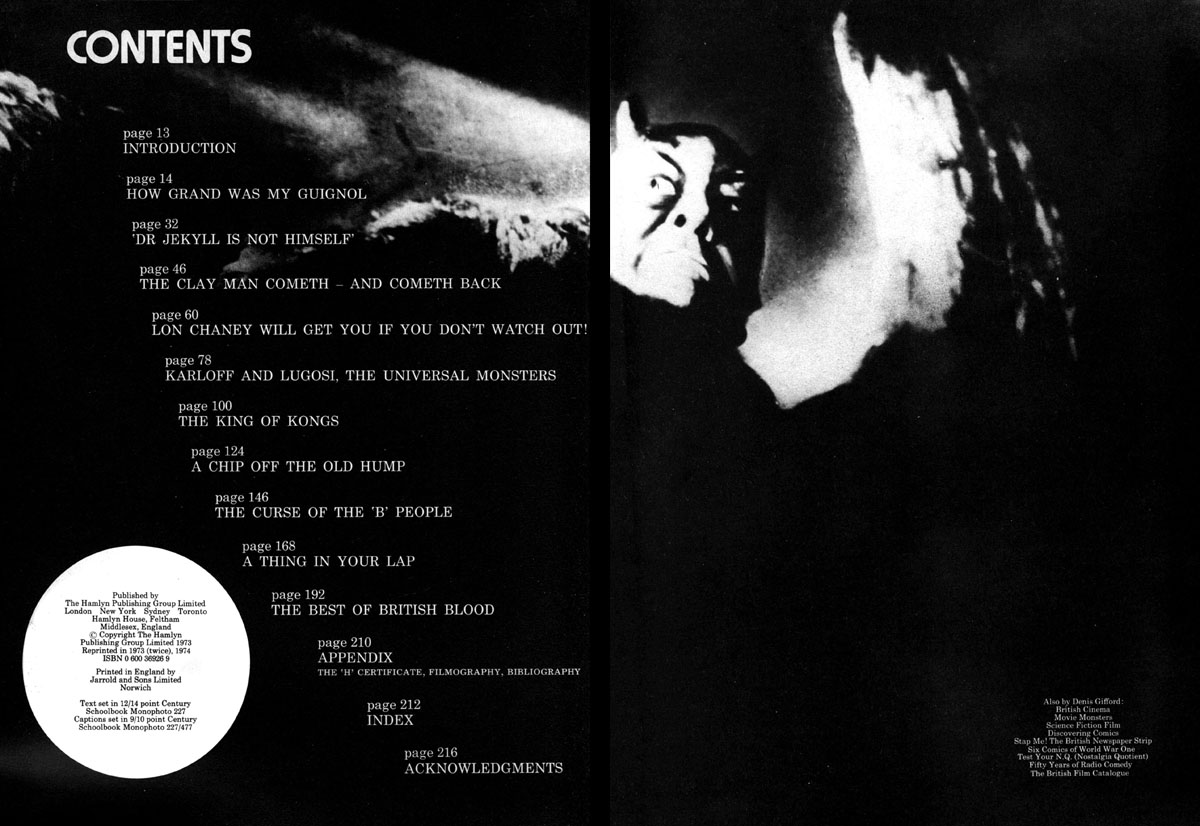
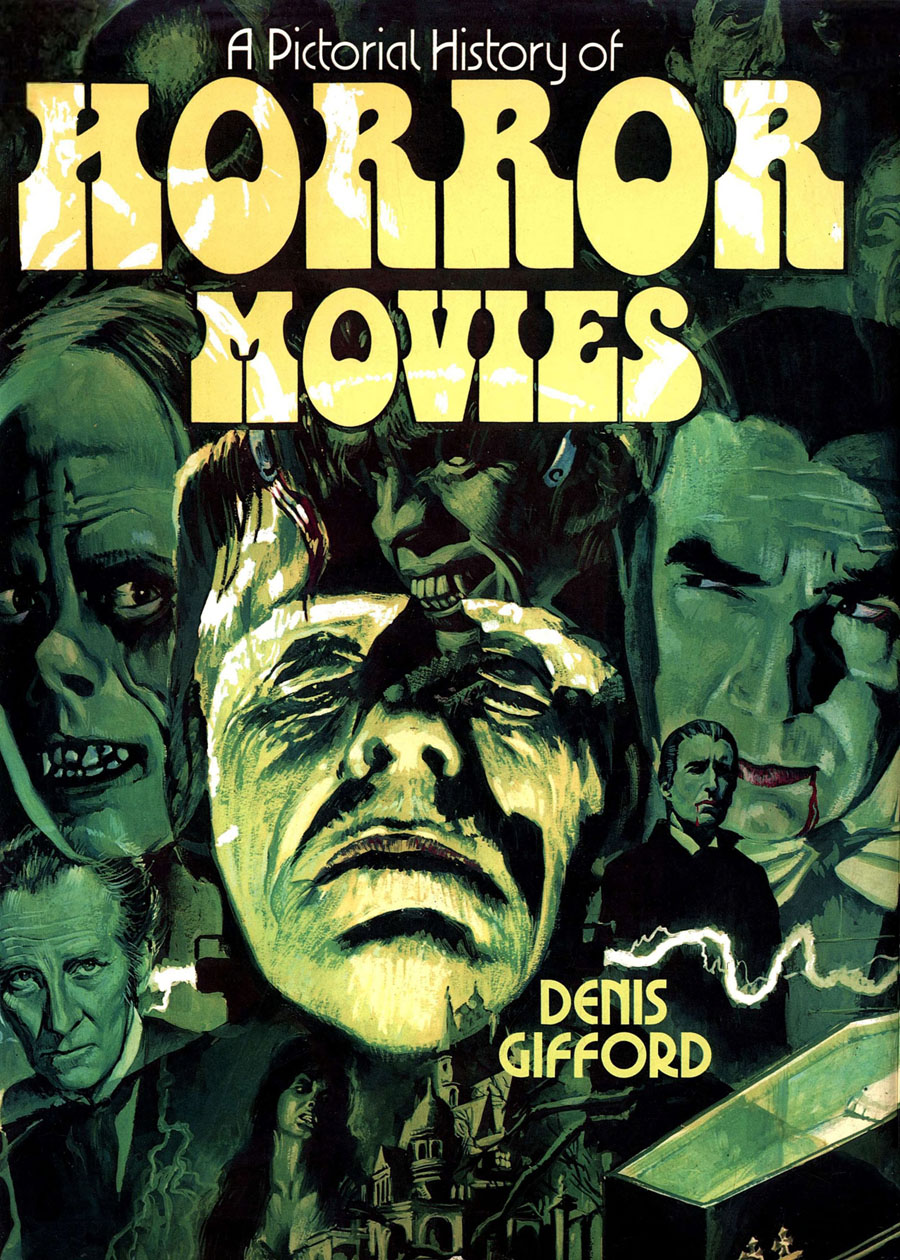
A Pictorial History of Horror Movies by Denis Gifford

gifford01.jpg

Cover art by Tom Chantrell.

Halloween approaches so here’s a book that suits the season. Denis Gifford’s A Pictorial History of Horror Movies was published in Great Britain by Hamlyn in 1973. A large-format hardback of just over 200 pages, this was a cheap production for wide distribution, and evidently sold well: my edition from 1980 is the 12th reprint, and the book was still in print in 1983, in a slightly longer edition with a new cover.

gifford17.jpg

For a generation of British kids Gifford’s book made an indelible impression, not least because of its ubiquity. It was always easy to find—for years I didn’t have a copy of my own because I invariably seemed to know someone who did—and its mostly black-and-white pictures featured a great deal of imagery that was generally forbidden to those of us under the age of 18. This may seem surprising to Americans, or those in more liberated European countries, but Britain has always had an uneasy relationship with the horror genre despite the legacy of Gothic novels and ghost stories, never mind Dracula, Frankenstein and the rest. Literary manifestations command a grudging acceptance if enough years have passed since first publication but Britain’s moralists and censors have fretted over pictorial horror for decades, especially the film and comic-book variety.

gifford02.jpg

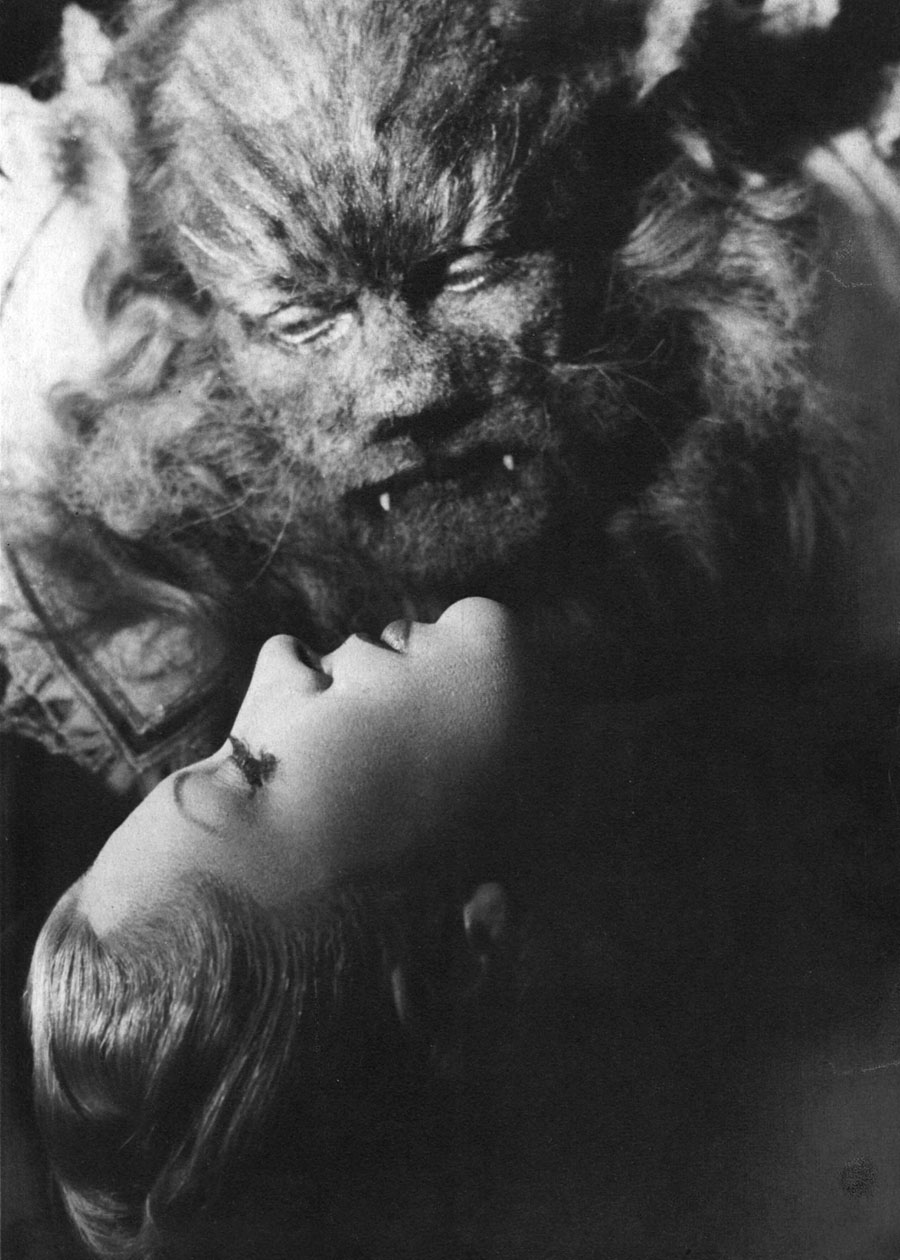
La Belle et la Bête (1946).

Almost all horror films screened in Britain over the past century were for audiences of 18 or over, while horror films on TV were never shown before 10pm. That scene in Halloween (1978) where the kids are watching The Thing From Another World on television in the early evening would have been impossible here. In 1982 we had the start of the “video nasties” panic, a particularly disgraceful episode for those eager to interfere in other people’s entertainment, and an issue that rumbled on for the rest of the decade. As for print media, I still have a leaflet from the late 1980s given to all applicants of UK passports which lists “horror comics” along with weapons, drugs, poisons, etc, among the items forbidden from import into Britain. This climate gave Gifford’s guide an illicit charge it might not have had if published elsewhere: the book delivered a concentrated dose of the forbidden.

gifford03.jpg

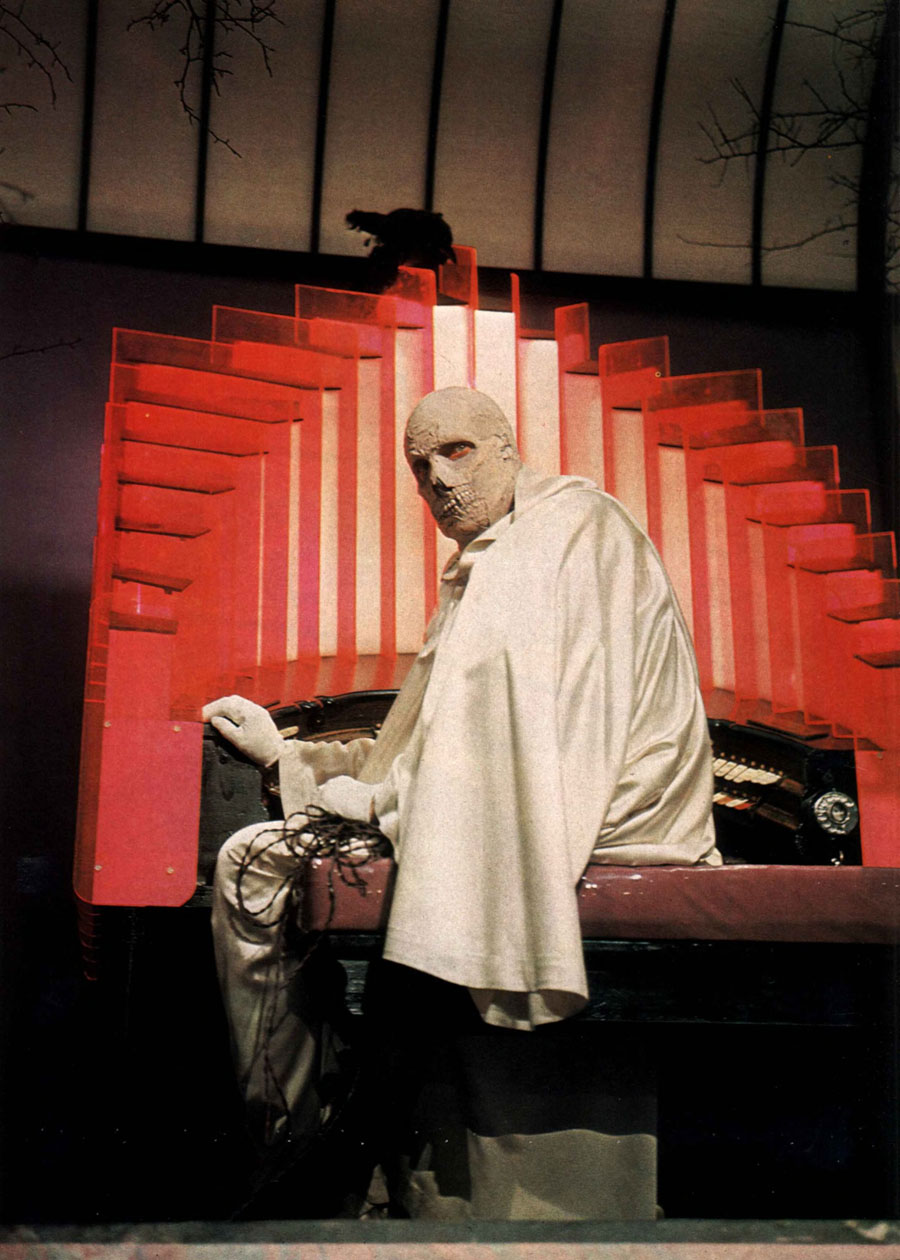
Vincent Price as Doctor Phibes.

Denis Gifford (1927–2000) was, among other things, a comics artist, a comics and film historian, and a collector of comic books and horror ephemera. Most of the material in A Pictorial History of Horror Movies is from his own collection, and an excellent collection it was. More than 300 stills run through the entire history of horror cinema from the earliest Méliès shorts to German Expressionism, Universal horror, Hammer horror, AIP monster movies, Toho monster movies, and on to the garish efforts of the late 1960s; he even manages to get in a still from Carry On Screaming. The accompanying text is concise but authoritative, although I doubt anyone ever used the book as a serious study. Yet for a 12-year-old this was a perfect introduction to the genre, as well as a dizzying intimation of hundreds of films yet to be seen. In place of the films you had pictures implying entire worlds of mystery and terror, many of which are so good they give very unrealistic expectations of the films from which they originate. Some of the most memorable examples for me have been those which are more atmospheric or eerie than horrific, like the sinister child at the window in Mario Bava’s Operazione Paura (1966) aka Curse of the Dead. (See this post for more about the extended life of Gifford’s still.) But there were also plenty of monsters, grotesque makeup effects and even some gore; a female friend of mine was obsessed with the picture of a blonde and bloodied young woman with an axe buried in her head (see below). Looking at the book today I suspect Gifford’s punning captions may have been a nod to Famous Monsters of Filmland, a magazine with a devoted readership but not a title I ever read myself.

gifford04.jpg

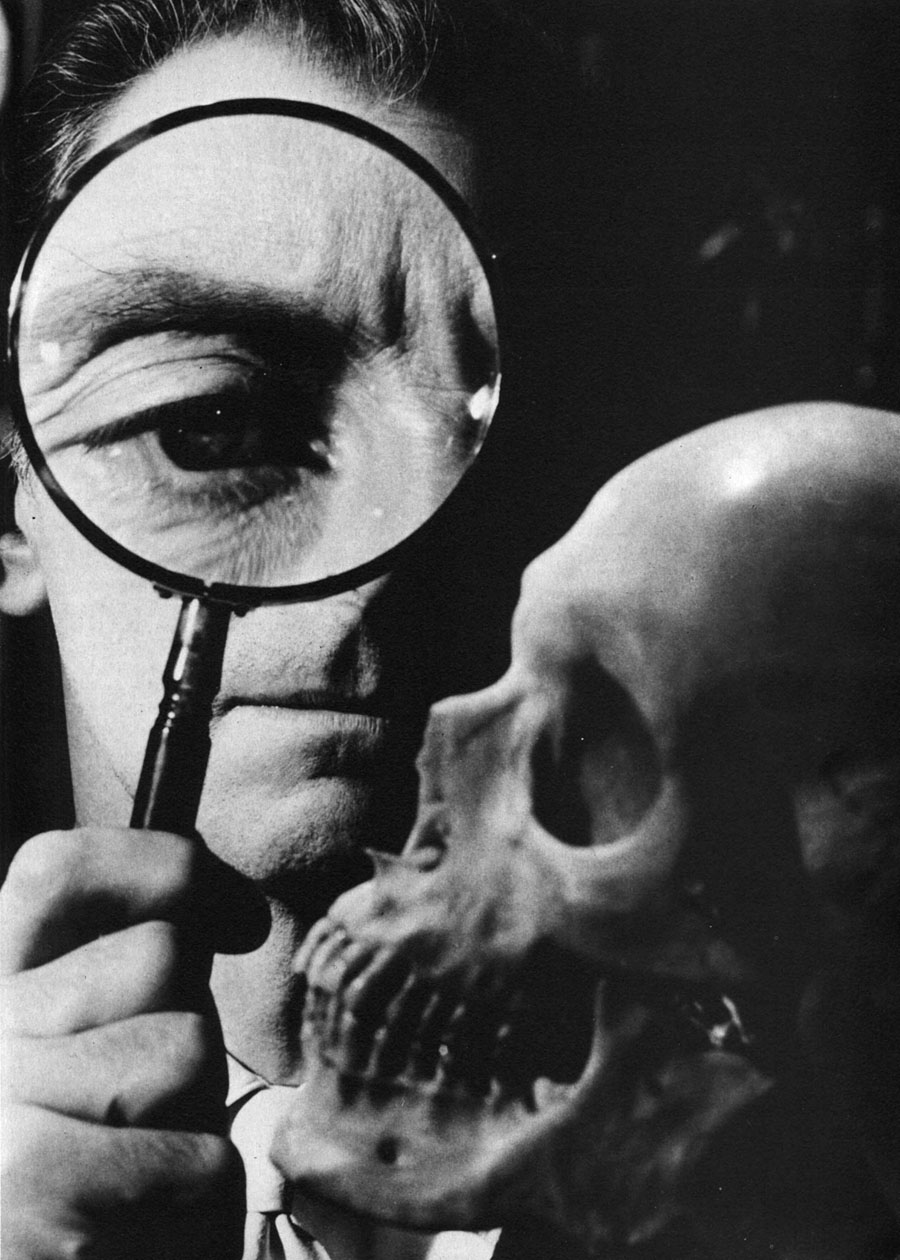
Peter Cushing (The Skull; 1965).

All the pictures here are from an upload of the entire book at the Internet Archive. Gifford isn’t around to complain about this but the book may not remain there for long so enjoy it while you can. A few more pages follow. For an earlier appraisal of the book’s impact on impressionable minds, there’s this piece by Dave Tompkins.

Continue reading “A Pictorial History of Horror Movies by Denis Gifford”

Weekend links 435

moss.jpg

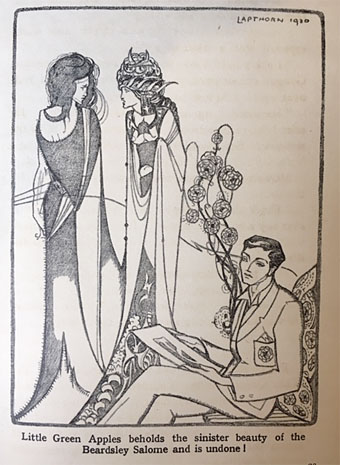
An illustration by “Lapthorn” for Little Green Apples: the Chronicle of a Fallen Man (1930) by Geoffrey Moss.

Jean-Michel Jarre & Michel Granger: how we made Oxygène. “[It] was initially rejected by record company after record company. They all said: ‘You have no singles, no drummer, no singer, the tracks last 10 minutes and it’s French!’ Even my mother said: ‘Why did you name your album after a gas and put a skull on the cover?'”

• “When we ignore or demean consensual BDSM erotica, or stories about female sexual submission, we inadvertently contribute to a cultural legacy that routinely pathologizes, demeans, or erases women’s sexual desires.” Hayley Phelan on why we need erotica.

• “More than a literal reconstruction of an imagined collaboration between Eno and Morricone, Ghost Box opens a door onto a world where ambient music and country-western make for natural bedfellows.” Ghost Box (Expanded) by Suss.

Peter Bebergal and Janaka Stucky discuss Bebergal’s new book, Strange Frequencies: The Extraordinary Story of the Technological Quest for the Supernatural. There’s more at the Occulture podcast.

Great Noises That Fill The Air (1988), an album by Bow Gamelan Ensemble, receives its first release on CD next month. Related: the group in 1987 staging one of their pyrotechnic performances.

• Mixes of the week: Bleep Mix #45 by Lawrence English & William Basinski – Casting Voices Mixtape, DJ Food Solid Steel mix by Matt Berry, and The Séance – 13th October 2018.

• “…the social position filled by art and aesthetics is increasingly best understood in terms of magic.” Marina Warner and Eleanor Birne discuss forms of enchantment.

• From 2104: Ten little tales of terror for late of a Halloween night by Levi Stahl.

Words I Heard by Julia Holter.

The Cosmodrome Futurists

Urban Gamelan (Pt. 1) (1984) by 23 Skidoo | Chez Les Futuristes Russes (1984) by Aksak Maboul | Oxygen (1997) by Gas