Power Spot by Michael Scroggins

powerspot.jpg

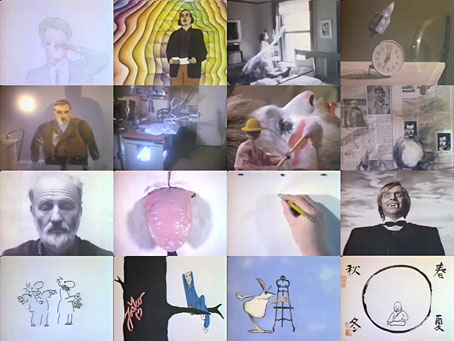
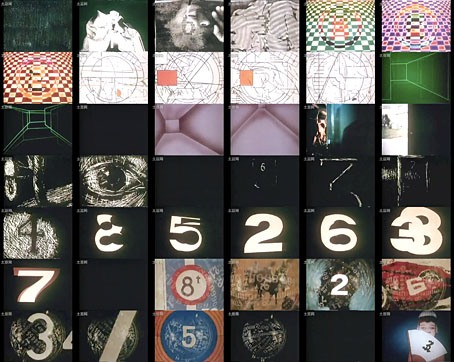
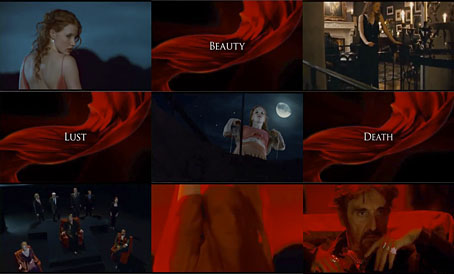
I was going to post this anyway but there’s a coincidental connection with yesterday’s post in the person of Richard Horowitz whose keyboards can be heard on the soundtrack. The music is Power Spot, the opening number on the album of the same name released by ECM in 1986. Also present on the album are Brian Eno (who co-produces with Daniel Lanois), Michael Brook and others. I’d tell you that Power Spot is a great album but then I like everything Hassell does so I’m rather biased. But it is a great album.

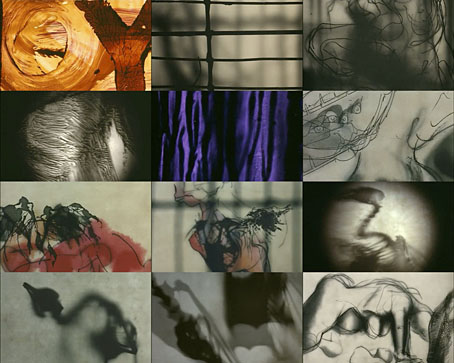
Michael Scroggins’ video was commissioned to accompany the release of the album, and if it looks of its time today it’s still an impressive piece, not least because Scroggins says it was created through live improvisation. That puts it in a different class to earlier abstract accompaniments for music which are either animated frame-by-frame or created independently with the music added later. (Thanks to Paul Schütze for the tip.)

Elsewhere on { feuilleton }
The abstract cinema archive

Made To Measure

mtm1.jpg

When you’ve sated yourself on a group’s back catalogue there’s always the solo albums. In the case of Tuxedomoon there are a number of these to choose from, thanks to several of the band members being both multi-instrumentalists and talented songwriters. Some of the more offbeat solo outings may be found among the albums released as part of the Made To Measure series, an offshoot of the excellent Belgian record label, Crammed Discs. Crammed have been Tuxedomoon’s label for some time, and seem increasingly unique in a world where independent labels tend to cater to narrow genres and small, select audiences. Crammed’s roster of artists is extremely eclectic, ranging from the expected Euro-pop and dance releases to a wide range of traditional and contemporary music from around the world.

mtm2.jpg

Made To Measure Vol. 1 (1984). Painting by Fernand Steven.

From 1984 to 1994 the Made To Measure series released over 30 albums that represent the more esoteric side of an already fairly esoteric label. All of the early releases were numbered, and Tuxedomoon happen to be on the first release, Made To Measure Vol. 1, together with Minimal Compact, Benjamin Lew, and Aksak Maboul. The series title refers to all of the music being “made to measure” some pre-existing work—film, theatre, dance performance, etc—although some of the later releases were simply an excuse to put out new music by an established Crammed artist. In addition to the first release, Tuxedomoon members Blaine L. Reininger, Peter Principle and Steven Brown were regular contributors to subsequent albums. Two of the Steven Brown albums, A Propos D’Un Paysage (MTM 15, 1985) and Douzième Journée: Le Verbe, La Parure, L’Amour (MTM 16, 1988) are marvellous instrumental collaborations with Benjamin Lew that are very different in tone to Tuxedomoon but well worth seeking out. Brown also recorded a soundtrack album, De Doute Et De Grace (MTM 22, 1990), with readings by actress Delphine Seyrig. The series has been discontinued in recent years but the MTM numbering was resurrected for the latest Tuxedomoon album, Pink Narcissus, which is MTM 39.

mtm3.jpg

Desert Equations: Azax Attra (1986). Photography by Georg Gerster.

I’ve still not heard all of the Made To Measure series, and I don’t like everything I have heard—I have to be in the mood for Hector Zazou’s quirkier moments. Aside from those mentioned above, the notable releases for me would include Desert Equations: Azax Attra (MTM 8, 1986) by Sussan Deyhim (here credited as Deihim) & Richard Horowitz, an album that led me to acquire almost everything Sussan Deyhim has recorded; If Windows They Have (MTM 13, 1986) by Daniel Schell & Karo; Nekonotopia Nekonomania (MTM 29, 1990) by Seigen Ono; Water (MTM 31, 1992) by David Cunningham; Sahara Blue (MTM 32, 1993) by Hector Zazou; Glyph (MTM 37, 1995) by Harold Budd & Hector Zazou. Sahara Blue exemplifies in miniature the eclecticism of Crammed Discs, being a tribute to Arthur Rimbaud featuring (among others) John Cale, Ryuichi Sakamoto, Gérard Depardieu, Khaled, David Sylvian, Bill Laswell, Lisa Gerrard, Sussan Deyhim and Tim Simenon.

mtm4.jpg

For those wishing to explore further without shelling out on mysterious, unknown quantities, I’d recommend The Made To Measure Résumé (1987), a compilation of tracks from the first 16 MTM releases, and an ideal introduction to the series.

Previously on { feuilleton }
Subterranean Modern: The Residents, Chrome, MX-80 Sound and Tuxedomoon
Tuxedomoon on La Edad de Oro, 1983
Tuxedomoon designs by Patrick Roques
Pink Narcissus: James Bidgood and Tuxedomoon

Weekend links 213

munro.jpg

No Tears for the Creatures of the Night (2005) by Will Munro.

• Steve Barker’s On The Wire show on BBC Radio Lancashire is one of the longest-running music shows on British radio but it’s not broadcast in London so you seldom hear it mentioned at all. (It’s also the only radio show I’ve appeared on, oddly enough.) Some of Barker’s shows, which predominantly feature dub and reggae artists, can now be heard at Mixcloud.

• “As protagonist after protagonist is undone by temptation and lust, one can’t help but divine a sinister double entendre in the book’s title – something nocturnal and obscene.” James Lovegrove on the reissue of Robert Aickman’s 1964 collection of “strange stories”, Dark Entries.

Coil vs. Kenny Loggins sounds like no contest, and so it proved in 1988 at the Mike Tyson/Michael Spinks fight. There’s another surprising connection between Tyson and Industrial culture with the poster that Neville Brody designed for the boxer’s Tokyo bout.

Ventriloquism: Unheimlich manoeuvres: Sarah Angliss (who performs as Spacedog) on the history of ventriloquist dummies. With a bonus appearance from the great Ray Alan and Lord Charles. Related: the Vent Haven Museum.

• I’ve been wanting to read Proust’s À la recherche du temps perdu for years but always hesitate over which translation to choose. As Leland de la Durantaye shows, the arguments about translating Proust into English are still unresolved.

Music For A Good Home 3: a collection of 31 rare or unique tracks by a variety of artists including Belbury Poly, Pye Corner Audio, and Grumbling Fur. All proceeds go to Shelter.

David Cronenberg – The Exhibition is running throughout the summer at the EYE Film Institute in Amsterdam showing props and other materials from the director’s films.

• “’I’m in pictures,’ John Wayne explained when Nabokov cordially inquired about his line of work.” Blake Bailey on Vladimir Nabokov’s unpublished Lolita screenplay notes.

• Original artwork for the Linweave Tarot (1967) at Sweet Jane’s Pop Boutique. As noted before, the full set of cards is probably the grooviest ever created.

• Mixes of the week: Secret Thirteen Mix 118 by Ensemble Economique, and a Wyrd Daze Solstice mix from The Ephemeral Man.

• At One With Chaos & Abandonment: The Irrepressibles’ Jamie McDermott talks to Joseph Burnett about his music.

From the Zodiacal Light, a new track from Earth with vocals by Rabia Shaheen Qazi.

• The Ultimate Chinatown Filming Location Map of Los Angeles.

Tuxedomoon at Pinterest.

Dark Companion (1980) by Tuxedomoon | Dark River (1990) by Coil | Dark Turn Of Mind (2011) by Gillian Welch

Pink Narcissus: James Bidgood and Tuxedomoon

tuxedomoon.jpg

Pink Narcissus (2014) by Tuxedomoon. Design by Flavien Thieurmel.

I’ve never paid much attention to Record Store Day, despite promoting it here on a couple of occasions, and paid even less attention this year now that the event has turned into an opportunity for some of the larger labels to fleece the punters. Consequently, I missed any mention of a new release from Tuxedomoon which Crammed Discs put out as part of this year’s vinyl deluge. I’ve been listening to Tuxedomoon for years so any new release is worthy of attention, especially when their last studio album, Vapour Trails (2007) was a particularly good one, with the added bonus of packaging by Jonathan Barnbrook.

bidgood.jpg

Hanging Off Bed, a still from Pink Narcissus, mid- to late 1960s.

The new album, Pink Narcissus, is a recording of the group’s live soundtrack performance for the film of the same name by James Bidgood, a luscious micro-budget, homoerotic labour-of-love filmed in the 1960s on 8mm in the cramped confines of Bidgood’s New York apartment. The original soundtrack comprises selections of romantic classical music by Mussorgsky and Prokofiev so the replacing of the score isn’t as much of an imposition as it can be when bands co-opt old films. I already liked Bidgood’s film a great deal so Tuxedomoon’s score is like a marriage made in heaven (and they once recorded their own version of In Heaven). Having watched the film synched to the new album I was impressed by how well the group matched the shifting moods. From their earliest releases Tuxedomoon’s music has tended towards the cinematic so you’d expect them to provide a sympathetic treatment; they’ve also recorded a few scores in the past, including one for their own ambitious film/stage performance, Ghost Sonata. But Pink Narcissus matches the scenes much more effectively than the classical selections, the group even work in a pause then a shift to a new style when Bidgood’s star boy, Bobby Kendall, puts a record on his wind-up gramophone. The only drawback in running the music with the film is that the album is 10 minutes short, possibly because of the limitations of the vinyl format. YouTube user bigniouxx has a few brief clips of the live performance at the L’Etrange Festival in Paris.

bidgood2.jpg

Blue Boy, a still from Pink Narcissus, mid- to late 1960s.

If the BFI ever reissues the film I hope they consider using the full Tuxedomoon score as an alternative soundtrack the way they did on the Peter de Rome porn films, some of which are scored by Stephen Thrower. Bidgood’s film is still available on DVD with a detailed booklet and a great interview with the director; the BFI also has it on their video-on-demand service. Despite its age and its campy glamour Pink Narcissus is still pretty pornographic in places, not as much as Peter de Rome’s films (or today’s porn, for that matter) but there’s enough wanking and erections to keep it off many TV networks. The album, housed in a great sleeve designed by Flavien Thieurmel, may be bought direct from Crammed Discs.

James Bidgood’s photography at ClampArt

Previously on { feuilleton }
William E. Jones on Fred Halsted
Flamboyant excess: the art of Steven Arnold
James Bidgood

More hypercubes

hypercube1.jpg

A few more extensions of the idea, not all of which have much to do with Hinton’s concepts beyond the name.

hypercube2.jpg

hypercube3.jpg

Salvador Dalí with hypercube (1952). Photo by Francesc Català-Roca.

hypercube4.jpg

Hypercubic Metropolis (2002) by Peter Gric.

hypercube5.jpg

HyperCube (2012) is an installation by artist Jaap van den Elzen and sound composer Augusto Meijer which combines the mirror room familiar from the work of Yayoi Kusama with changeable lighting and sound effects. See also Cube 2: Hypercube (2002) which concerns a group of people imprisoned in a tesseract.

Previously on { feuilleton }
Hinton’s hypercubes
Infinite reflections