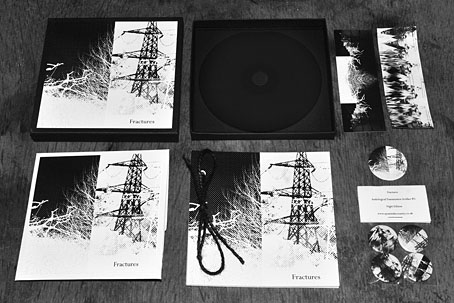
Fractures

fractures.jpg

Fractures is the latest musical anthology from A Year In The Country, and having been listening to an advance copy for the past couple of weeks I can say it’s as fine a collection as the label’s previous opus, The Quietened Village. The latter album encouraged a variety of artists to create pieces around the theme of lost or abandoned villages; the theme for Fractures fixates on a year rather than a location:

Fractures is a gathering of studies and explorations that take as their starting point the year 1973; a time when there appeared to be a schism in the fabric of things, a period of political, social, economic and industrial turmoil, when 1960s utopian ideals seemed to corrupt and turn inwards. […] Fractures is a reflection on reverberations from those disquieted times, taking as its initial reference points a selected number of conspicuous junctures and signifiers: Delia Derbyshire leaving The BBC/The Radiophonic Workshop and reflecting later that around then “the world went out of time with itself”. Electricity blackouts in the UK and the three day week declared. The Wicker Man released. The Changes recorded but remained unreleased. The Unofficial Countryside published. The Spirit Of Dark And Lonely Water released.

Track list:
1) The Osmic Projector/Vapors of Valtorr – Circle/Temple
2) The Land Of Green Ginger – Sproatly Smith
3) Seeing The Invisible – Keith Seatman
4) Triangular Shift – Listening Center
5) An Unearthly Decade – The British Space Group
6) A Fracture In The Forest – The Hare And The Moon ft Alaska/Michael Begg
7) Elastic Refraction – Time Attendant
8) Ratio (Sequence) – The Rowan Amber Mill
9) The Perfect Place For An Accident – Polypores
10) A Candle For Christmas/311219733 – A Year In The Country
11) Eldfell – David Colohan

This isn’t the first time a year has been isolated as a basis for a musical anthology but prior examples such as Jon Savage’s Meridian 1970 are invariably concerned with the musical scene alone. Fractures is different for trying to seize the essence of the year itself even if a number of the musicians involved may not have been alive in 1973.

The year has a resonance for me that I recounted in the memorial post for David Bowie. That summer was significant (and therefore memorable) for being warm, carefree and positioned between the end of junior school and the beginning of secondary school. The years after those few weeks were increasingly bad on a personal level so 1973 for me spells “fracture” in more ways than one. None of this can be communicated by Fractures, of course, the contents of which have more of a cultural focus: A Fracture In The Forest by The Hare And The Moon sets readings from Arthur Machen to music, while The Land Of Green Ginger by Sproatly Smith draws in part upon a TV film of the same name that was broadcast in the BBC’s Play For Today strand. As those Plays For Today recede in time they seem increasingly like a dream of Britain in the 1970s, reflecting back in a concentrated form much more of the nation’s inner life than you get from today’s Americanised fare. Another Play For Today, Penda’s Fen, was being filmed in the fields of England in the summer of 1973 so we can add the crack in the church floor to the catalogue of fractures. (And for an additional musical entry, I’d note the astonishing Fracture by King Crimson, not released until 1974 but most of the track was a live recording from Amsterdam in November of the previous year.)

Fractures is available from the usual sources such as Bandcamp but hard copies are also being distributed via the Ghost Box Guest Shop.
Weekend links 312

nelson.jpg

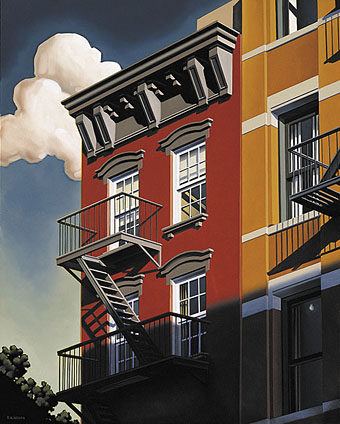
The Shadow by Kenton Nelson.

• The week in Coil: An interview by Derek de Koff, plus an extract from the new edition of England’s Hidden Reverse by David Keenan. Opening later this month at Ludwig, Berlin, is Chaostrophy, a Coil-related exhibition/celebration.

Strange Flowers remembers the incomparable Marchesa Casati, a woman who happens to feature in the book I’ve been designing and illustrating for the past few weeks. (More about that later.)

• “It wasn’t about how we could meet the demands of the book, but rather how the book meets us.” Ben Wheatley (again) talking to Jamie Sherry about bringing High-Rise to the screen.

• The latest release from Hawthonn is Sea-Spiral Spirit. The album has two accompanying videos: Pan Laws and Last Chimes From A Dormant Moon.

Alan Moore celebrates Chris Petit’s The Psalm Killer—a nerve-shredding Irish noir.

• Not a mix but a reading guide: The Brit Horror Mixtape collated by Mark West.

• More Penda’s Fen: Graham Fuller on the Romantic tradition in British film.

• Previews of Tooth by Raime, “a steadfast concoction of brooding dystopia”.

• “How big an issue is the nausea problem for Virtual Reality products?”

• FACT chooses 16 of the best songs powered by Sly and Robbie.

Geeta Dayal on the pioneering computer music of Bell Labs.

• Mix of the week: Finders Keepers’ Space Rock Special.

Paul Schütze: The True Art of Fine Fragrance

The Surrealist Legacy of Claude Lalanne

Les illustrateurs de Baudelaire

• RIP publisher Peter Owen

• Perfumed Garden Of Gulliver Smith (1967) by John’s Children | Perfumed Metal (1981) by Chrome | Fragrance (Ode To Perfume) (1981) by Holger Czukay

Weekend links 311

vasconcelos.jpg

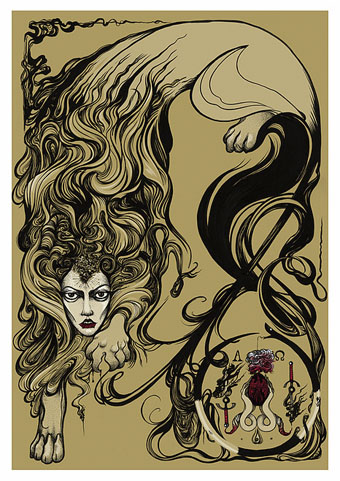
Sphinx (2015) by Lupe Vasconcelos.

• I’ve been reading my way through Patricia Highsmith’s Ripley novels for the past couple of weeks, and may well progress to some of her other books once I’m finished. Highsmith had a long career so there’s a lot to read on the web. Catching my eye this week were 10 Best Patricia Highsmith Books recommended by her biographer, Joan Schenkar; The Patricia Highsmith Recommendation Engine; Highsmith on Desert Island Discs in 1979 (the book she said she’d take, Moby-Dick, is the same one chosen by JG Ballard, albeit for different reasons); and a prickly interview late in her life with Naim Attalah.

Discovering 20th-century literature: books, manuscripts and other documents in the collection of the British Library.

• Signed copies of Paul Gorman’s Barney Bubbles monograph, Reasons To Be Cheerful, may be ordered from the author.

• How a mysterious ghost ship brought cosmic disco to Cape Verde. Related: Quirino Do Canto by Mino Di Mama.

• Zombi drummer AE Paterra and composer Paul Lawler make prog-synth epics as Contact.

• Mix of the week: Secret Thirteen Mix 185, a locked-groove mix by Massimo Carozzi.

• In London next weekend: Alchemy and Magic at Brompton Cemetery.

Die or DIY?: scarcities from the post-punk outer limits.

• More Penda’s Fen: a lengthy appraisal by Jerry Whyte.

Dennis Cooper salutes James Coburn

Bandcamp is good for musicians.

Vladimir Nabokov’s butterfly art.

• This Heat: Rimp Ramp Romp (1977) | 24 Track Loop (1979) | Health And Efficiency (1980) | Makeshift Swahili (1981)

Penda reborn

penda.jpg

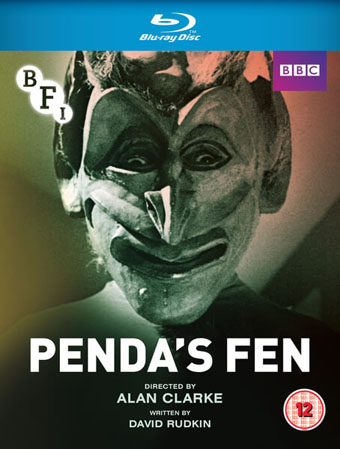
Penda’s Fen is one of the most important British television dramas of the 1970s, and would increasingly be recognised as such if the licensing problems which have dogged an official DVD release could be resolved.

That was how I ended the section about Penda’s Fen in the David Rudkin essay I wrote last year for Andy Paciorek’s Folk Horror Revival: Field Studies. The book had only been out for a couple of months when the BFI announced that Penda’s Fen would at long last be given a DVD and Blu-ray release, together with a collection of other TV dramas directed by Alan Clarke. A few months later and Penda’s Fen is now on sale, so those of us served by the European DVD region (or those with region-free players) no longer have to point people to a low-grade YouTube recording of the film.

penda2.jpg

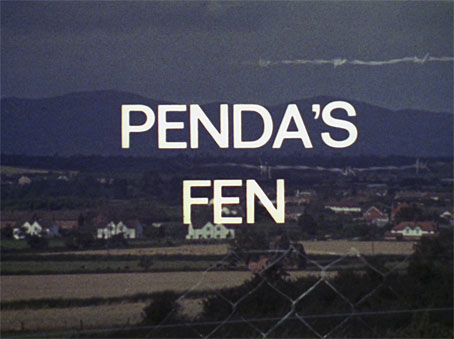
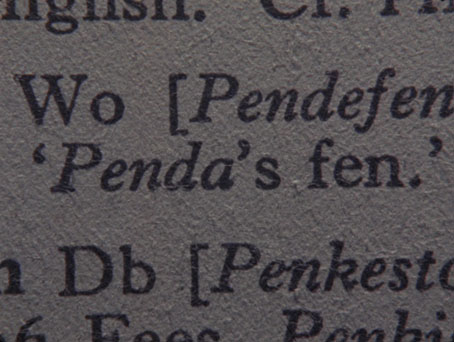
There’s no need for me to rhapsodise further about Rudkin’s work in general or Penda’s Fen in particular when I’ve already done so in the Folk Horror Revival piece, and in this lengthy post from 2010. The film itself looks the best I’ve ever seen it, slightly desaturated compared to the DVD I made of my own VHS recording (but then the BFI transfer is closer to the film elements) but with a fuller frame than in the TV screening. The one striking difference is in the title sequence which in the 1990 screening had a red cast throughout, something that’s missing from the BFI version. I don’t know why this is but the red cast always made the jump to the titles from a still shot of the Malvern hills more abrupt than it needed to be.

penda3.jpg

The extras on this release are minimal, with a short collection of interviewees apparently taken from a longer documentary about Alan Clarke’s work that will be in the Clarke collection out next month. The booklet features a new essay about the film by Sukhdev Sandhu, editor of the excellent Penda’s Fen tribute, The Edge Is Where The Centre Is. The Folk Horror Revival book is listed in the notes at the end of Sukhdev’s piece so I’m hoping this may prompt some of the people encountering Rudkin’s work for the first time to also look at his stage plays and that other sui generis television film, Artemis 81. David Rudkin, who will be 80 this year, was one of the many unique writers shunted out of the TV world by the very “entertainment barons” that Arne the playwright condemns in Penda’s Fen. I’m glad he’s lived to see this overdue reappraisal of his finest work for the medium.

Previously on { feuilleton }
Folk Horror Revival: Field Studies
The Living Grave by David Rudkin
The Edge Is Where The Centre Is
Afore Night Come by David Rudkin
White Lady by David Rudkin
Penda’s Fen by David Rudkin
David Rudkin on Carl Dreyer’s Vampyr

Weekend links 308

trochut.jpg

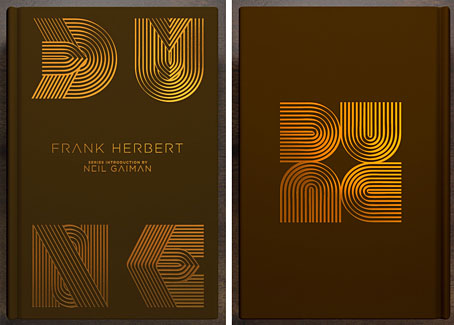
Frank Herbert’s Dune receives a new cover design by Alex Trochut together with other notable works of science fiction and fantasy for a new series from Penguin.

• “…poet, scholar and biographer Sandeep Parmar…has raised the possibility that a long poem by Hope Mirrlees, titled Paris and published by the Hogarth Press in 1919, was a strong influence on The Waste Land.” Alfred Corn on new TS Eliot scholarship.

• “[Evolution‘s] strain of body horror brings to mind an ethereal HP Lovecraft mixed with David Cronenberg.” Rachel Bowles talks to the film’s director, Lucile Hadžihalilović.

• Library music “is a sonic world of ‘weird beats, odd instrumentations, albums full of dark jazzy interludes or bizarre garage rock.'” Adrian Shaughnessy on innovation in banality.

Italy, which EM Forster called “the beautiful country where they say ‘yes’”, became another resort, especially the island of Capri, where a French poet staged a ceremonial flogging of his teenage Italian lover before the boy departed to do his military service and became the subject of a novel by his compatriot Roger Peyrefitte. In the Egyptian city of Alexandria, Forster observed the Greek poet Constantine Cavafy “standing absolutely motionless at a slight angle to the universe”, and the Australian novelist Patrick White met a local man who became his lifelong companion. For decades, the novelists Paul and Jane Bowles presided in Tangier, which Jack Kerouac was to call a “sinister international hive of queens”. William Burroughs arrived in 1954 with a teenage Spaniard named Kiki who, Woods writes, “was, famously, the boy who would blow smoke into his pubic hair and say ‘Abracadabra’ as his hardening cock emerged from the cloud”. Tangier was to figure in Burroughs’s novel Naked Lunch as a phantasmagoric, rubbery walled sex market called the Interzone.

Caleb Crain reviewing Homintern by Gregory Woods

• Beardsley biographer Matthew Sturgis reviews Aubrey Beardsley: A Catalogue Raisonné, a two-volume collection edited by Linda Gertner Zatlin.

• “He was the Bresson of Birkenhead.” Andrew Collins reviews the forthcoming collection of BBC dramas directed by Alan Clarke.

• “The postwar Hollywood western was more content to let strangeness be strange,” says Michael Newton.

• “Bosch’s work has always caused trouble for interpreters and critics,” says Morgan Meis.

Misplaced New York: a project by Anton Repponen and Jon Earle.

Wyrd Daze, Lvl2 Issue 6, is out, and as before is a free download.

Lessons we can learn from Robert Altman’s 3 Women.

• Mix of the week: FACT Mix 548 by Peder Mannerfelt.

Paris 1971 (1971) by Suzanne Ciani | Paris II (1987) by Jon Hassell | Dreaming Of Paris (2013) by Van Dyke Parks