Blood And Rockets by The Claypool Lennon Delirium

blood1.jpg

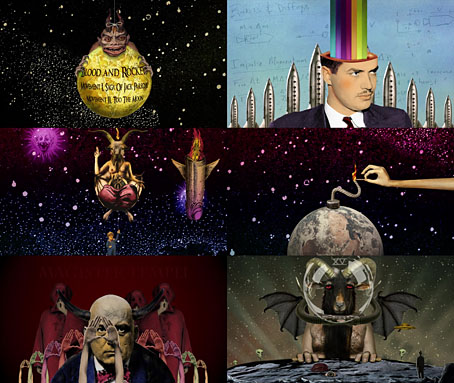
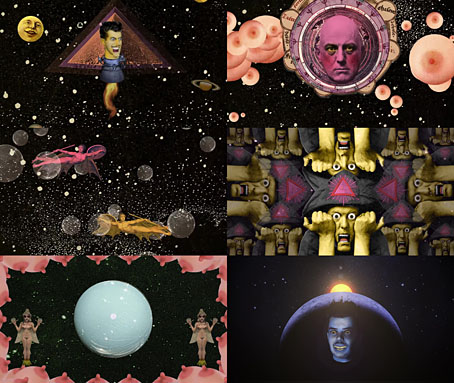
In an overburdened media landscape the words “Terry Gilliam-like animation” could easily mean some hastily-compiled film with a few nods to the collage style that Gilliam popularised in his interludes for the Monty Python TV series. Rich Ragsdale’s music video for The Claypool Lennon Delirium (Les Claypool and Sean Lennon) is much more than this, being a witty and inventive pastiche of the complete Gilliam style, replete with an abundance of sight gags, and familiar touches such as fizzing bombs, clutching hands and chattering heads.
blood2.jpg

The subject of the song is Jack Parsons, the ill-fated Californian rocket engineer whose wild life and entanglement with the West Coast chapter of Aleister Crowley’s Ordo Templi Orientis led to scandal and an untimely death. Parsons’ story is one of the more curious episodes in 20th-century occultism—a pre-Scientology L. Ron Hubbard was also involved in the Crowley shenanigans—but this must be the first time the history has been recounted in the form of a psychedelic ballad. Ragsdale is no slouch with the occult symbolism either, adding a number of Thelemic touches to the inevitable Satanic iconography. As befits the sex-obsessed Parsons the video also contains a fair amount of phallic imagery and boob constellations that somehow evaded the attentions of the YouTube Penis Police. Watch it here. (Thanks to Erik Davis!)

Previously on { feuilleton }
Aleister Crowley: Wandering The Waste revisited
Occult gestures
Konx om Pax
Aleister Crowley: Wandering The Waste
Brush of Baphomet by Kenneth Anger
Rex Ingram’s The Magician
The Mysteries of Myra
Gilliam’s shaver and Bovril by electrocution
Aleister Crowley on vinyl

Weekend links 451

smith.jpg

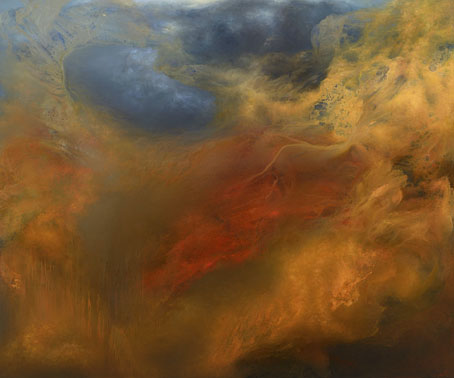
Manifold (2015), a painting by Samantha Keely Smith which will appear in April on the cover of Life Metal, a new album by Sunn O))).

• At Expanding Mind: Professor and queer historian Heather Lukes talks with Erik Davis about Silver Lake riots, gay bikers, house ball scenes, the nostalgia for repression, and the joys and challenges of working on the online archive The Grit and Glamour of Queer LA Subculture.

A Stroke of Ingenious: Chatting Fear and Fantasy with Darius Hinks.  Also this week, Darius Hinks’ The Ingenious (for which I created the cover art) was featured in a Barnes & Noble list of seven attractive (if hazardous) fantastic cities.

• “From the late ’60s and through the ’70s broadcasters invested in home-grown kids’ television, and much of it was decidedly weird.” Paul Walsh on the vanished, thought-provoking strangeness of British TV.

That late surrealism still needs rescuing by curators and critics is perhaps not a sign of its defeat but of the breadth and pervasiveness of its triumph. Could we have Pablo Picasso or Jackson Pollock without surrealism? What about David Lynch, JG Ballard or Angela Carter? As an influence, it’s easy to give [Dorothy Tanning] a crucial place in the canon of feminist art. Louise Bourgeois was born just a year later than Tanning but only started to sew after Tanning had exhibited her first sculptures.

Lara Fiegel on the weird, wild world of Dorothea Tanning

After its own death / Walking in a spiral towards the house by Nivhek, a new album from Liz Harris (Grouper) “recorded using Mellotron, guitar, field recordings, tapes, and broken FX pedals”.

• At Dangerous Minds: Michael Rother (Neu!/Harmonia) on the forthcoming reissue of his solo albums from the 1970s.

Clesse by Clesse, another pseudonymous musical project by Jon Brooks (The Advisory Council et al).

• After Dark: The art of life at night—and in new lights by Francine Prose.

Elena Lazic on where to begin with Gaspar Noé.

• Mix of the week: Headlands by David Colohan.

Steven Heller‘s confessions of a letterhead.

• RIP Albert Finney.

• Void (2009) by Monolake | Void (2013) by Emptyset | Void (2014) by The Bug feat. Liz Harris

Weekend links 450

redon.jpg

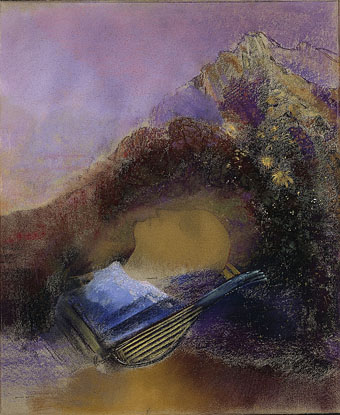
Orpheus (c. 1903–1910) by Odilon Redon. One of 30,000 public-domain images from the Cleveland Museum of Art’s collection.

• Network DVD has announced the premiere home release of Orson Welles’ Great Mysteries, a British TV series that ran from 1973 to 74. Welles’ involvement was limited to introducing each episode but the series itself was one I enjoyed a great deal: 26 short adaptations of period mystery stories that featured a wealth of British and American acting talent. The theme by John Barry was an additional bonus.

• The trailer for Apollo 11, a documentary by Todd Douglas Miller which presents for the first time the 70mm footage recording the Earth-bound parts of the Moon mission. Related: Michelle Santiago Cortés on how NASA used art to shape our vision of the future.

• At Dangerous Minds: a preview of Third Noise Principle, the latest in an excellent series of electronic music compilations from Cherry Red, and Cosey Fanni Tutti talks about her first solo album since 1983.

“The way I understood theory, primarily through popular culture, is generally detested in universities,” Mark [Fisher] told me in 2005, when I interviewed him for the Village Voice. “Most dealings with the academy have been literally clinically depressing.” He darkly surmised that his blog, K-Punk, and the surrounding blogosphere, “seemed like the space—the only space—in which to maintain a kind of discourse that had started in the music press and the art schools, but which had all but died out, with appalling cultural and political consequences.” Mark and the Village Voice are both dead now, leaving unfathomable voids in their wake.

Geeta Dayal on Mark Fisher

• At The Witch Wave: Peter Bebergal and Pam Grossman discuss Bebergal’s latest book (also my current reading), Strange Frequencies: The Extraordinary Story of the Technological Quest for the Supernatural.

• At Bandcamp: another release from the retro-synth cosmos of Jenzeits, and Ufology , an investigation of Britain’s flying-saucer landscape by Grey Frequency.

• Surprising collaboration of the week: Beth Gibbons and Krzysztof Penderecki have made a new recording of Henryk Górecki’s Third Symphony.

Alchemy (1969) the debut album by the Third Ear Band, receives an expanded reissue next month.

The Burn: a science-fiction story by Peter Tieryas with illustrations by Arik Roper.

• Mix of the week: Self-Titled Needle Exchange 275 by Black To Comm.

Amy Turk plays Bach’s Toccata and Fugue in D Minor on her harp.

Chrismarker.org is seeking donations.

Mystery Train (1955) by Elvis Presley | Mystery R.P.S. (No 8) (1981) by Holger Czukay, Jah Wobble, Jaki Liebezeit | Mystery Room (1985) by Helios Creed

Weekend links 444

guillou.jpg

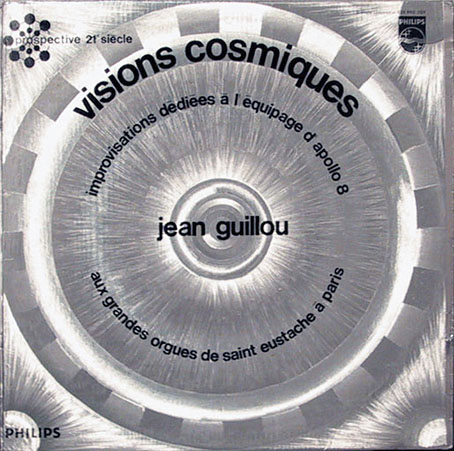
Visions Cosmiques—Improvisations Dédiées À L’équipage D’Apollo 8 (1969) by Jean Guillou. No designer credited.

• 50 years ago this weekend Apollo 8 was on its way to the Moon. Jean Guillou’s album of organ improvisations took the mission as its inspiration although his turbulent music seems more suited to the near-disaster of Apollo 13 than the weightless drift of space travel. The album has been out-of-print for decades but may be heard in full here and here. Related: the Discogs listing for the Philips’ Prospective 21e Siècle series of avant-garde music. Most of the other albums in this series remain unreissued, and are now very collectible, not least because of their metallic “Heliophore” sleeves.

• Christmas cheer be damned: the spook season extends from Halloween to the end of the year. At These Unquiet Things, Sarah Chavez offers a list of favourite seasonal vampires, witches and ghosts. For those who prefer something televisual that isn’t more MR James, The Lorelei (1990) is a feature-length supernatural drama written by Nick Dunning. And speaking of the unavoidable James, Sarah K Marr presents an annotated analysis of A Warning to the Curious embellished with her excellent photos of the area of the Norfolk coast where the story is set.

• At Bandcamp: Voltaic Liturgies: “A symbiosis of flesh, machinery and umbral cosmic mysticism” by Primitive Knot and The Wyrding Module; and In The Sunshine We Rode The Horses by Rowan : Morrison (Rowan Amber Mill with Angeline Morrison): “The album explores themes of our beautiful natural surroundings, and how the pursuit of profit guides us to learn ‘the cost of everything and the value of nothing’, paving the way for the scarring of the landscape with fracking, HS2, retail parks, and so on…”

• “Influential Manga Artist Gengoroh Tagame on Upending Traditional Japanese Culture”. Tagame is also a prolific gay porn illustrator, a part of his career the headline avoids although it is acknowledged in Anne Ishii’s interview.

• Mixes of the week: Dream Perception Mix by Moon Wiring Club, Strange Great Snow: A Conjuror’s Hexmas by Seraphic Manta, December’s Reverie by Cafekaput, and Secret Thirteen Mix 275 by CoH.

• On the Scary Thoughts podcast: Erik Davis on philosophical pessimism, cosmic horror, police procedurals, serial killers, gnostic notions, and Louisiana as featured in the first season of True Detective.

• Manuscripts, letters and other documents by HP Lovecraft are now digitised and available for browsing at Brown University Library.

• William Hope Hodgson—The Essex-born Master of Horror: a biographical essay by Peter Berresford Ellis.

• The best ambient releases of 2018 according to FACT.

• At Dennis Cooper’s: Donald Sutherland Day.

Sandspiel

Rocket USA (1977) by Suicide | Ticket To The Moon (1981) by Electric Light Orchestra | From Ape to Apollo (1994) Thomas Fehlmann

Prokofiev’s The Love for Three Oranges

lfto1.jpg

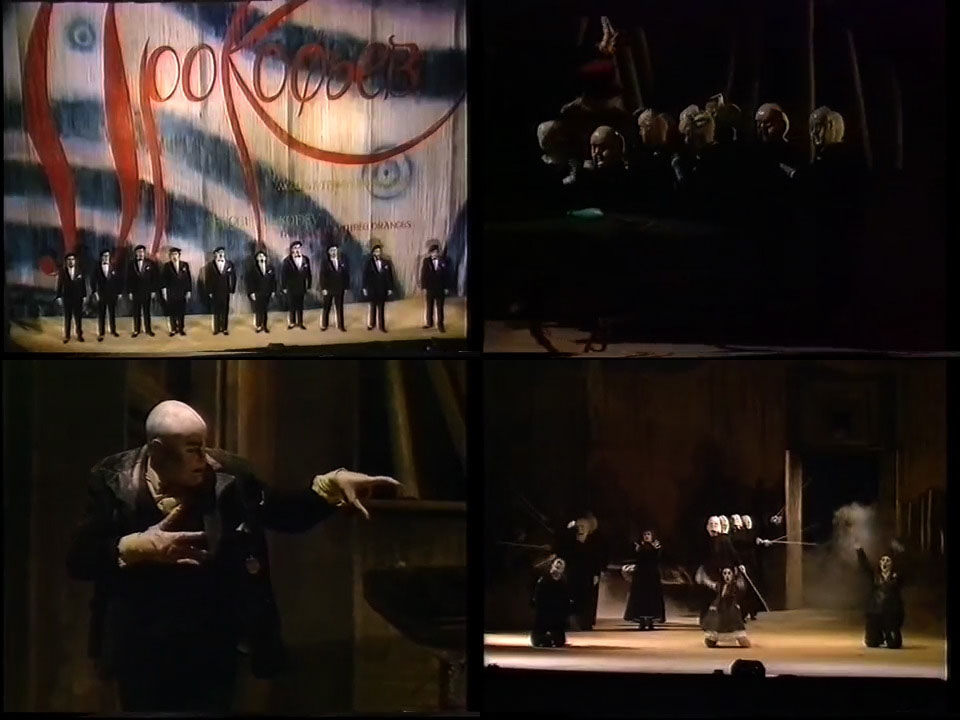
Given the time of year, and last week’s Quays-themed post, this seemed like a good follow-up. Opera North’s production of Prokofiev’s The Love for Three Oranges was broadcast by the BBC during the Christmas holiday of 1989. The opera isn’t quite as saccharine a Christmas entertainment as The Nutcracker Suite but the libretto is still light-hearted fare, being based on a Neopolitan fairy tale in which the son of the King of Clubs is afflicted by melancholy after reading too much tragic poetry. The King stages an entertainment to cheer the Prince but the only thing that makes him laugh is the witch, Fata Morgana, falling over and revealing her underclothes. This humiliation provokes the witch into cursing the Prince to fall in love with three oranges. These he immediately sets off to find, and thereby hangs the tale. Richard Jones directed the production, with the English Northern Philharmonia providing the music. The opera is also sung in English, the translation being by David Lloyd-Jones.

lfto2.jpg

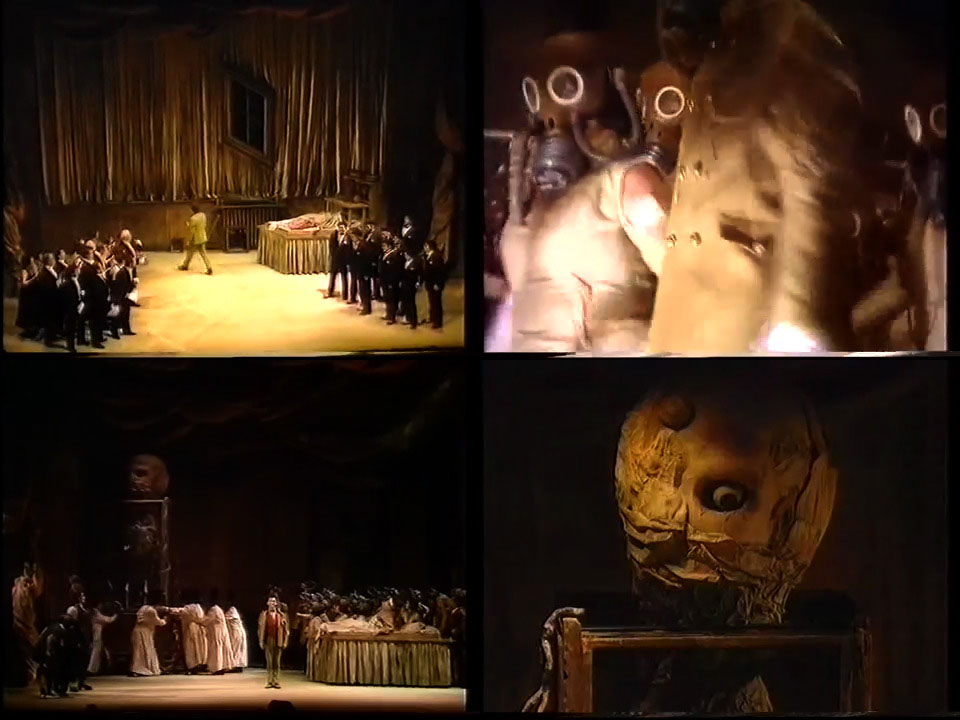
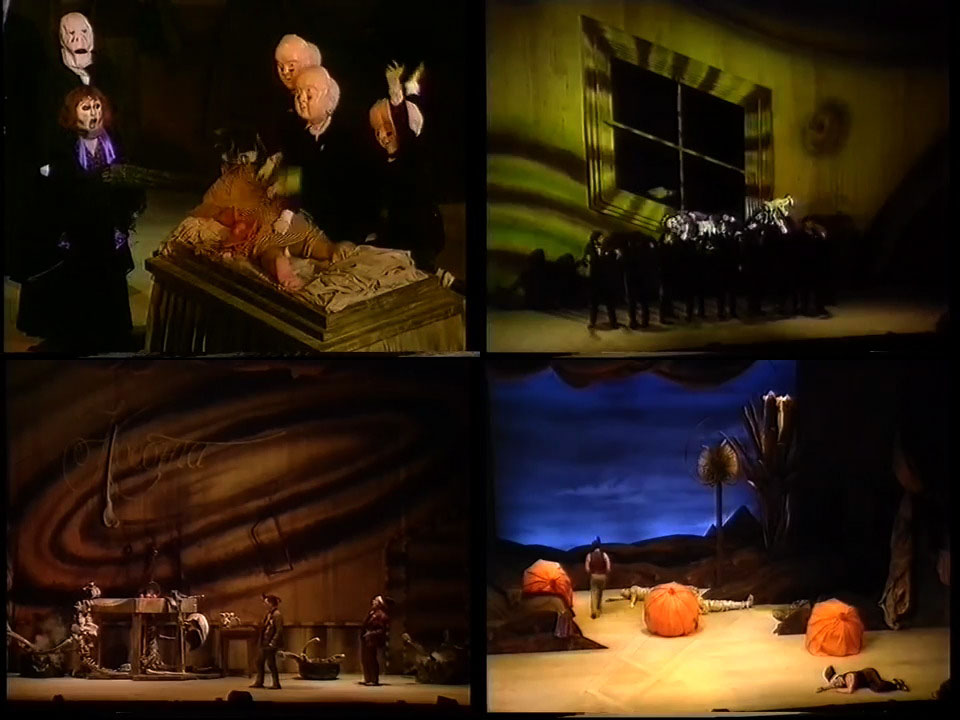
The stage decor for the Opera North production was designed by the Quay Brothers, one of several operas they worked on around this time. The opera may be a comic one but the design emphasis is on gloom and decay, a feature that extends to Sue Blane’s costumes, many of which seem to have been styled with the Quays’ films in mind. In addition to a Nosferatu-like Leander (the sinister Prime Minister), a company of children appear from time to time wearing masks which make them look like the Quays’ doll-headed puppets. The chorus, meanwhile, wear antique gas-masks of a style which people would now refer to as steampunk. The most overt reference to the Quays films occurs during the King’s entertainment when a vast mutant creature is wheeled onto the stage, the creature’s head being the colossal cousin of the twitching cyclops from Rehearsals for Extinct Anatomies. The cumulative effect of the grotesquery combined with absurd comedy is of an opera equivalent of Mervyn Peake’s Gormenghast, all of which makes me wonder what the BBC’s Gormenghast might have been like if the corporation had hired the Quays and Sue Blane to work the same magic they do here. (There is a Gormenghast opera by Irmin Schmidt but I’m not keen on the music and what I’ve seen of the staging it looks a lot less like Peake than this one does.)

lfto3.jpg

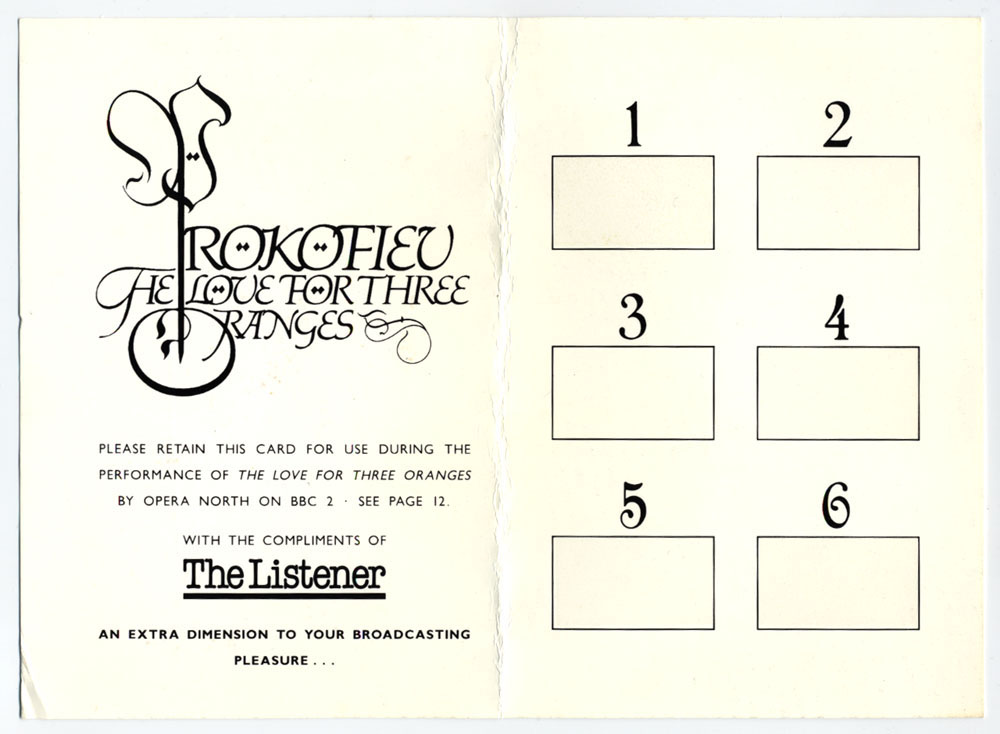
Decor aside, the most notable feature of this production, and the broadcast itself, was the scratch-and-sniff card which was provided to every member of the audience, and to any viewers who bought a copy of the BBC’s Listener magazine before the screening. Each time a numbered card appeared on the stage the audience had to scratch and sniff the relevant panel. The scents—which include orange, of course—are less offensive than those for John Waters’ Polyester (1981) although the audience is still surprised into sniffing the farts of the demon, Farfarello.

card.jpg

Elsewhere on { feuilleton }
The Quay Brothers archive