Weekend links 767

east-totem-west.jpg

East Totem West head shop poster, from DJ Food‘s latest delve into the psychedelic poster auctions.

• The week in science-fiction illustration: Joachim Boaz on Rodger B. MacGowan’s “approachable New Wave art”; and Andrew Liptak talks to Adam Rowe about Rowe’s Worlds Beyond Time: Sci-Fi Art of the 1970s.

• At The Wire: Philip Brophy sets out his intentions for the return of his long running column on film music.

• At Public Domain Review: Gustatory Wisdom: Bruegel the Elder’s Twelve Proverbs (1558).

Though the project’s genesis predated Roeg’s involvement, Cammell said that his codirector “needled” him: “He provoked me, made me focus more and more clearly on what I was trying to say.” It was Roeg’s visual sensibility, Cammell graciously admitted, that “mobilized” and “improved” his own concepts. It’s appropriate that the movie concerns two men who become fully realized only in meeting and merging with each other. Turner, said Cammell, “believes himself to be at the end of his creative life. He’s a man in despair. And then destiny brings him his mirror image, Chas, the man in whom he sees what he was and what he could be again.”

Roeg and Cammell were hardly in despair in 1968; both were novices in the foothills of their own artistry. It is not fanciful, though, to see in their collaboration something like the same lightning connection that forms between Turner and Chas. Cammell said that he set out “to make a transcendental movie.” In achieving that goal, he stretched and challenged not just himself but cinema too. Even as Performance closed the lid definitively on the sixties, it opened the door to a radical new way of making films.

Ryan Gilbey on Donald Cammell and Nicolas Roeg’s Performance

• At A Year In The Country: Broadcast and Pathways Through Otherworldly Villages.

• “Pilot is an elegant and expressive display serif,” says Kim Tidwell.

Winners of the 2025 World Nature Photography Awards.

• New music: Forgotten Worlds by Rodrigo Passannanti.

• Janus Rose presents her Digital Packrat Manifesto.

• RIP Jamie Muir and Gene Hackman.

Pilots Of Purple Twilight (1981) by Tangerine Dream | Pilots (2000) by Goldfrapp | I’m With The Pilots (2001) by Ladytron

Weekend links 763

parent.jpg

I Live in Shock (1955) by Mimi Parent.

• At Public Domain Review: “Ben Hecht’s Fantazius Mallare (1922) is at turns obtuse, grotesque, and moralizing—and sought to provoke the obscenity trial of the century. Only it didn’t, quietly vanishing instead. Colin Dickey rereads this failed satire, finding a transcendent rhythm pulsing beneath the novel’s indulgent prose.”

• “There are no surprises when a pallet of CDs arrives at my office, but when a pressing plant alerts me to a shipment of records headed my way I start to worry.” John Brien, head of Important Records, on the problems involved in the manufacture of vinyl albums.

• The sixth installment of Smoky Man’s exploration of The Bumper Book of Magic has been posted (in Italian) at (quasi).

They were building a vast alternative religion with a lack of dictates but no shortage of rituals and icons. They’d pass through the end of the world to get there first; the next album was based on a vision of the Four Horsemen of the Apocalypse slaughtering their animals and constructing a earth-gouging machine from their jawbones, demonstrating they weren’t quite intending to settle down yet. It would take them far from mainstream culture, and indeed mainstream gay culture given their repeated disdain for sanitised queerness, and into enigmatic territory. Having scared away most fans of synth pop and industrial with provocation, and the weak and tyrannical with ambiguity, they were unencumbered and “allowed to mature in the dark”, sustained by a cult following (you rarely encounter a tepid fan of Coil, most are acolytes).

Darran Anderson looking back at Coil’s debut album, Scatology

• At Smithsonian Magazine: See 15 winning images from the Close-Up Photographer of the Year Competition.

• At The Daily Heller: How did pink become a colour? Meanwhile, Steven Heller’s font of the month is Vibro.

• New music: Even The Horizon Knows Its Bounds by Lawrence English.

SciURLs: A science news aggregator.

Shackleton’s favourite albums.

• RIP Marianne Faithfull.

The Pink Panther Theme (1963) by Henry Mancini | The Pink Room (1988) by Seigen Ono | Pink (2005) by Boris

Copyright-free images

images.jpg

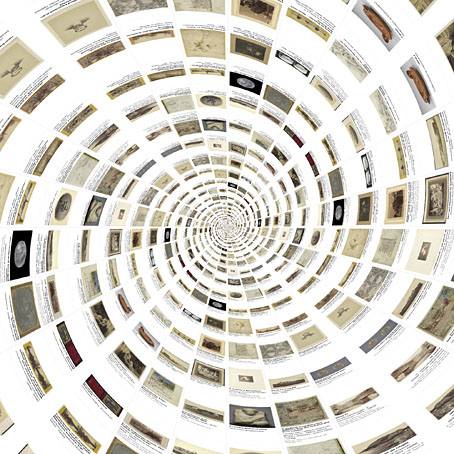
In recent discussions about AI ethics I’ve been seeing the same question raised by commenters, something like the following: “Okay, this stuff is bad…but if we shouldn’t use it then what can I use instead for my book cover/album cover/Substack article…?” This post is intended to provide one answer to the question, a guide to some of the more substantial alternatives for those who complain they can’t afford to hire a human being to decorate their work. Many of these archives have been around for years but searching for single images doesn’t always bring you to a useful copyright-free solution right away, especially if you’re using Google’s deteriorated service.

Wikimedia Commons. An obvious yet indispensible resource, especially for illustration research, and one that’s continually updated and improved. I only noticed recently that Wikimedia now has very large scans of Ernst Haeckel’s Kunstformen der Natur that are much better quality than the books at the Internet Archive.

The Internet Archive. And speaking of which… The Internet Archive has its own images section but for years now I’ve been mining the texts section looking for illustrated books. This isn’t an ideal solution for most purposes, not when the best material is often hidden under blank library covers, but persistence can be rewarding, especially where old engravings are concerned. Many of the 19th-century illustrations sold by stock libraries may be found here for free.

Gallica. The public face of the Bibliothèque Nationale of France, and a very useful resource despite being cursed with a slow and buggy interface. There’s also a Gallica app but you’re better off using the website.

Library of Congress. Excellent for anything to do with US history. Also a great selection of photochromes, among other things.

NYPL Digital Collections. “Explore 1,060,155 items digitized from The New York Public Library’s collections.”

Public Domain Image Archive. “Explore our hand-picked collection of 10,046 out-of-copyright works, free for all to browse, download, and reuse. This is a living database with new images added every week.”

Smithsonian Open Access & Smithsonian Image Gallery

Biodiversity Heritage Library. Animals and plants.

Wellcome Collection. Public domain medical (and related) images.

Metropolitan Museum of Art Open Access.

The Getty Museum Open Content.

The British Library Flickr Albums. A shame it’s Flickr, they really ought to have a dedicated site of their own for images.

Europeana. “Discover Europe’s digital cultural heritage.”

David Rumsey Map Collection. Maps, maps and more maps.

NASA Image and Video Library. NASA materials have always been free to use so long as you also credit their source.

ESO. ESO is the European Southern Observatory which is housed at a number of sites in the Chilean Atacama Desert. As with NASA, the high-resolution images created there are free to use so long as credit is included.

National Library of Medicine. “Images from the history of medicine.”

Pixabay. “Stunning royalty-free images & royalty-free stock.”

Pexels. “The best free stock photos, royalty free images & videos shared by creators.”

Unsplash. “All images can be downloaded and used for personal or commercial projects.”

Exotic Animal Photo Reference Repository. “Artists creating derivative or transformative works without Generative AI have blanket permission to reference these photos.”

Heidelberg Universitäts-Bibliotek: Art and satirical periodicals. An invaluable resource for European periodicals of the late 19th/early 20th centuries, with downloadable of scans of The Studio, The Yellow Book, Ver Sacrum, Pan, Jugend, and many other titles. Heidelberg is only one of many university libraries which now make parts of their collection available as free downloads. I’d love to point the way to the best of the others but I don’t have a useful list to hand. A recent discovery, however, is Polona, the site for the National Library of Poland which has a large quantity of prints and photographs as well as whole books. Happy searching!

Update: Added a few more links.

Weekend links 755

emsh.jpg

A painting by Ed Emshwiller for the cover of Fantastic Stories of Imagination, July 1962, illustrating The Singing Statues by JG Ballard .

• This week in the Bumper Book of Magic: my comments about the creation of the book’s cover and magical alphabet have been posted at Alan Moore World. At (Quasi), Smoky Man (in Italian) looks at other parts of the book, and includes my answers to his questions about the creation of The Soul, a character originally planned for a comic strip that Alan Moore and I were working on. I’ve been trying recently to find the first sketches I made of The Soul back in 2000 or 2001, without success. If I do find any of them I’ll post them here.

• New music: Juk-Shabb by Cryo Chamber Collaboration is this year’s installment in the Lovecraft-themed album series (previously) from Cryo Chamber. Also this week: Xerrox Vol. 5 by Alva Noto; Nocturne (Soundtrack for an Invisible Film) by Avi C. Engel; and Cat Location Conundrum by Moon Wiring Club.

Code: Damp: An Esoteric Guide to British Sitcoms by Sophie Sleigh-Johnson, being “an alternative occult and esoteric history of England told through one of its most popular cultural forms: the comedy sitcom”.

…the joy of art isn’t only the pleasure of an end result but also the experience of going through the process of having made it. When you go out for a walk it isn’t just (or even primarily) for the pleasure of reaching a destination, but for the process of doing the walking. For me, using AI all too often feels like I’m engaging in a socially useless process, in which I learn almost nothing and then pass on my non-learning to others. It’s like getting the postcard instead of the holiday.

Brian Eno at Boston Review

• “The typographic choices that Godard made were thematic and not only chosen for their stylistic properties.” Arijana Zeric looks inside the design world of Jean-Luc Godard.

• Coming soon from Strange Attractor: The Stammering Librarian: Essays by Timothy D’Arch Smith, edited by Edwin Pouncey & Sandy Robertson.

• At Public Domain Review: Fantastic Planet: The Microscopy Album of Marinus Pieter Filbri (1887–88).

• At the BFI: Michael Brooke offers suggestions for where to begin with Guy Maddin.

• At The Quietus: The Strange World of…Dennis Bovell.

• Mix of the week: A mix for The Wire by KMRU.

• Steven Heller’s font of the month is Gigafly.

Fantastic Cat (1996) by Takako Minekawa | Fantastic Analysis (2001) by Mouse On Mars | Fantastic Mass (2016) by Time Attendant

Weekend links 752

nemo.jpg

Captain Nemo by Alphonse de Neuville, from Twenty Thousand Leagues Under the Seas (1875) by Jules Verne.

• “…physical remoteness is a category of its own. It is an enhancer: It can make the glorious better and the terrible worse. The oceanic pole of inaccessibility distills physical remoteness on our planet into a pure and absolute form. […] Point Nemo is nearly impossible to get to and offers nothing when you arrive, not even a place to stand. It is the anti-Everest: It beckons because nothing is there.” Cullen Murphy explores the remotest place on Earth. A long and fascinating read, but no mention of Point Nemo’s dreaming tenant.

• More Bumper Book business: Smoky Man has posted the second part of his analysis of the book for (Quasi) (in Italian) which includes some comments from myself about the origin of the Moon and Serpent Magical Alphabet, and why the letter Q in the alphabet is assigned to Cthulhu. Elsewhere, Panini have announced an Italian edition of the Bumper Book for May next year, while at The Beat Steve Baxi reviewed the book from a philosophical perspective.

• At the BFI: David Parkinson on where to begin with Louis Feuillade. I’d suggest starting with Fantômas rather than Les Vampires but then I’m biased.

The combination of magic(k)al, ceremonial action, vivid colour and paradoxically serious camp in Jarman’s Super 8 films of the ’70s bears the influence of Kenneth Anger, but the differences between Jarman’s sensibility and Anger’s are more striking than the resemblances. Jarman’s vision is more materialist, austere and hermetic, and less sociological; where Anger identifies the glamour of American popular culture with the Will of the Crowleyan magician, Jarman situates the discovery of the cinematographic mechanism imaginatively within the history of alchemy. Anger cast rock stars as gods and adepts with the intention of harnessing the energy of their recognition; Jarman casts Fire Island, then in its heyday as a gay resort, as a desert defined by sculptural details and occupied by a single masked figure, in scenes that both recall his landscape paintings of the ’60s and ’70s and anticipate the design of his garden at Dungeness.

Luke Aspell on Derek Jarman’s hermetic film/painting, In the Shadow of the Sun

• At Smithsonian Magazine: “Visions of nuclear-powered cars captivated Cold War America, but the technology never really worked”.

• At The Spectator podcast: host Sam Leith talks to Michael Moorcock about 60 years of New Worlds magazine.

• At Public Domain Review: “Light from the Darkness” — Paul Nash’s Genesis (1924).

• At Bandcamp: “Disco godfather Cerrone’s enduring influence on dance music”.

• At Unquiet Things: The Art of Survival: Eyeball Fodder in Dark Times.

• Mix of the week: DreamScenes – November 2024 at Ambientblog.

• New music: The Laugh Is In The Eyes by Julia Holter.

• At The Daily Heller: The College of Collage.

• RIP jazz drummer Roy Haynes.

Thermonuclear Sweat (1980) by Defunkt | Nuclear Drive (1982) by Hawkwind | Nuclear Substation (2005) by The Advisory Circle