Leaving the Cafe

cafe.jpg

A good café. Budapest, 1930.

I have a new shop portal page, a deliberately low-maintenance affair which links to Etsy (where a few problems still need addressing), Redbubble (a brand new account), and the page here for Skull Print T-shirts. All the former links to CafePress have been removed. I’d been wanting to move away from the unsatisfying CafePress service for some time but before doing this I needed to arrange suitable replacements. Last weekend I finally disentangled my website from CafePress, something that involved stripping links from more pages than I expected, after which I closed my account there.

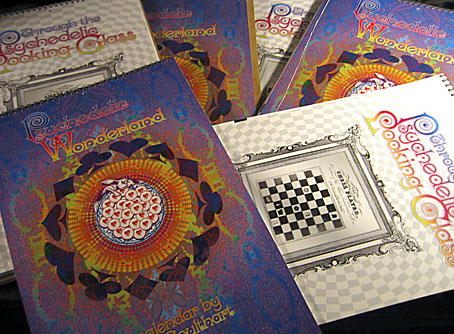
I opened an account at CafePress in May 2001 so I must have been one of the first users of their print-on-demand service. This was always a sideline not a business, a convenience for people who wanted something of mine on a print or T-shirt without having to pay the costs demanded by high-end printers like the one I use for the Etsy prints. My earnings from this were minimal at best, usually $50 a year. The rare exception was when my Alice in Wonderland calendar received a mention at Boing Boing during the time when that site had a substantial readership. After a short-lived spike of interest things returned to the usual $50 a year but even this meagre sum began to decline when the pandemic hit in 2020, becoming so sporadic it became evident there was little reason to keep the account open at all.

calendars.jpg

Beyond the meagre earnings there were others reasons for shutting things down. The front end of the site has always been dominated by the CafePress brand, while the back end, where sellers have to upload artwork and maintain their “shops”, never improved very much from its crudely designed beginnings, something I suspect was a legacy of CafePress having been one of the earliest successful print-on-demand outlets. After I’d got in the habit of putting together a new calendar each year they went and removed that product format, changing it to one that didn’t suit my work at all. And in later years they developed a bad habit of plastering your artwork on products you hadn’t approved of, so I’d find something of mine layered across a shower curtain, say, with no thought given (because none had been applied) as to whether the artwork or its ratio suited such a thing.

I’ve only been with Redbubble for just over a week so I’ve no idea whether I’ll earn anything from their service either but the seller process is a lot quicker and easier to set up than CafePress. As before, this is mainly for people who’d like a print of something at a reasonable price. I still have to add more designs so I’m open to requests. I used to have T-shirts available at CafePress but from now on I’ll only be doing these through Skull Print, a genuine small business who I’m happy to support. I’ll be adding more designs to the T-shirt page as well.

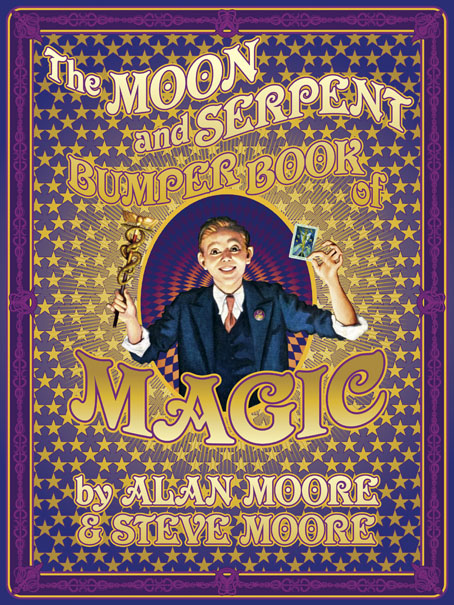
masbbom1.jpg

In other consumer news, the Moon and Serpent Bumper Book of Magic is now on sale in the USA and Canada, with the UK edition being officially published tomorrow. Take a look if you see it in a shop somewhere, it’s a beautiful thing.

Weekend links 742

hughes-stanton.jpg

Thunderstorm (1959) by Blair Rowlands Hughes-Stanton.

• “To create a novel or a painting, an artist makes choices that are fundamentally alien to artificial intelligence,” says SF writer Ted Chiang. A New Yorker essay which has received a fair amount of attention over the past week, with good reason. As someone who found his name on the list of artists whose work was allegedly being fed into Midjourney, I suppose I have a vested interest in the arguments. (Good luck to any machine trying to imitate my “style”. I don’t have one.) Too much of the discussion, however, has been very poor which is why this is the first time I’ve linked to such a piece here.

• “After going their own way for much of the 20th century, mathematicians are increasingly turning to the laws and patterns of the natural world for inspiration. Fields stuck for decades are being unstuck. And even philosophers have started to delve into the mystery of why physics is proving ‘unreasonably effective’ in mathematics, as one has boldly declared.” Ananyo Bhattacharya on why physics is good at creating new mathematics. Having recently finished reading Cormac McCarthy’s final novel, Stella Maris, this was all very timely.

• “…our films obey musical laws. Of course, you can never tell people how they should watch a film. But the musical element provides a narrative of its own.” Thus the Quay Brothers, in the news again with their forthcoming feature film, Sanatorium Under the Sign of the Hourglass. The quote is from a recent interview with Xan Brooks. Meanwhile, Alex Dudok de Wit posted another interview from 2019, originally published in French, now made available in English for the first time.

• At Wormwoodiana: Mark Valentine announces a new book of his essays, The Thunderstorm Collectors.

• At Dennis Cooper’s: 28 books that either faked ingesting LSD or did.

• At Public Domain Review: Antiquities of Mexico (1831–48).

• At Print mag: Kelly Thorn’s Tarot of Oxalia.

USC Optical Sound Effects Library

Strange Thunder (1987) by Harold Budd | Sweet Thunder (1991) by Yello |  Studies For Thunder (2004) by Robert Henke

Weekend links 741

magritte.jpg

The Empty Mask (1928) by René Magritte.

A Walk Across Northampton: Iain Sinclair and John Rogers wander the streets in search of significant historical locations before ending up at the home of the local magus, Alan Moore. I recently illustrated a new piece of writing by Iain Sinclair but can’t talk about that just now. Later.

• New music: The Invisible Road: Original Recordings, 1985–1990 by Sussan Deyhim & Richard Horowitz, and Through Other Reflections by The Soundcarriers.

• At Wormwoodiana: Mark Valentine reviews Joseph Hone’s The Book Forger: the true story of a literary crime that fooled the world.

• At Colossal: Across rural Europe, Ashley Suszczynski photographs remarkable and ancient masked traditions.

• Among the new titles at Standard Ebooks, the home of free, high-quality, public-domain texts: Poetry by WB Yeats.

• At Unquiet Things: Maggie Vandewalle’s enchanted autumns.

Richard Norris’s favourite albums.

Tapedeck.org

Preludes For Magnetic Tape (1966–76) by İlhan Mimaroğlu | Tape Hiss Makes Me Happy (1995) by Stars Of The Lid | Those Tapes Are Dangerous (1997) by The Bug

Weekend links 738

rossetti.jpg

How They Met Themselves (1860) by Dante Gabriel Rossetti.

• At Igloo magazine: Justin Patrick Moore interviews inventor and electronic music composer Don Slepian about his life and work.

• At The Washington Post (archived link): Michael Dirda in praise of weird fiction, horror tales and stories that unsettle us.

• At The Daily Heller: Tina Touli’s explosively twirling typography. Steven Heller’s font of the month is Doublethink.

• At Colossal: Dreams and memories form and dissipate in Tomohiro Inaba’s delicate iron sculptures.

• At Unquiet Things: Jerome Podwil’s captivating cover art.

• New music: Strangeness Oscillation by 137.

• At Dennis Cooper’s: Craig Baldwin’s Day.

Brìghde Chaimbeul’s favourite albums.

Penguin Series Design

Double Image (1971) by Joe Zawinul | Double Flash (1999) by Leftfield | Double Rocker (2001) by Stereolab

Weekend links 737

pinkfloyd.jpg

The Massed Gadgets of Auximines – Pink Floyd – in stereo concert with the “Azimuth Co-ordinator”. Design by Hipgnosis, 1969.

• At Rond1900: Sander Bink explores the life of another obscure Dutch Symbolist, Léonard Sarluis (1874–1949): artist, friend of Oscar Wilde and lover of Alfred Jarry.

• At Spoon & Tamago: Manga artist Hirohiko Araki pays tribute to Osaka station’s history and culture with new public art sculpture.

• At Public Domain Review: Scenes of reading on the early portrait postcard by Melina Moe and Victoria Nebolsin.

• At Dennis Cooper’s: 33 films that either faked ingesting LSD or did.

• At Bandcamp: Blissful Noise, Bad Vibes: A Doomgaze Primer.

• Mix of the week: Azimuth Coordinator by Tarotplane.

• New music: Global Transport by Monolake.

• The Strange World of…Gay Disco.

Speak & Glitch

Postcard From Jamaica (1967) by Sopwith Camel | Postcards Of Scarborough (1970) by Michael Chapman | An Unsigned Postcard (1991) by Tuxedomoon