Weekend links 849

mushroom.jpg

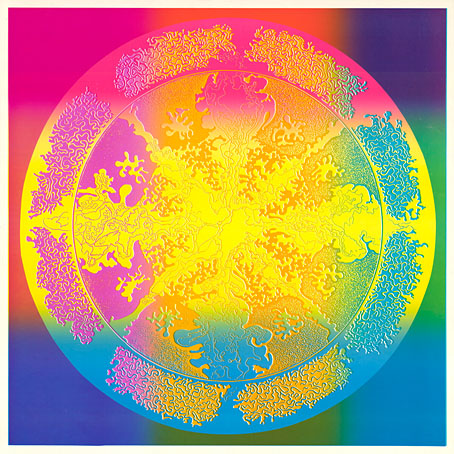
Mushroom Lady poster (1967) by East Totem West.

• “I want to be able to hear the process happening throughout the sounding music.” Composer Steve Reich talks to Flora Willson about his long career. More Reich: live performances from 1976 by Steve Reich and Musicians of Six Pianos and Music For Mallet Instruments, Voices And Organ.

• At Aeon: Eric Leas on toadstools and toxins. “When I found the mushroom Amanita muscaria being sold in candy wrappers, I uncovered legal loopholes, dangerous dosages and more.”

• At Little White Lies: Nicolas Winding Refn on his return to cinema—and from the dead—with a neon-hued fable about a father-daughter relationship from hell.

• At Bandcamp Daily: Faust reunite without reuniting. The surviving members of the group return with four solo albums.

• New music: Noon by Richard Skelton and Lawrence English.

• Mix of the week: a mix for The Wire by Kaja Draksler.

• Winners of Bird Photographer of the Year 2026.

• At Dennis Cooper’s it’s Luchino Visconti‘s Day.

• Wyrd Daze relaunches with a new issue.

• Rainy Day Mushroom Pillow (1967) by The Strawberry Alarm Clock | Amanita Kingdom (2014) by Moon Coven | Amanita (2025) by Huong Federkeil

Weekend links 767

east-totem-west.jpg

East Totem West head shop poster, from DJ Food‘s latest delve into the psychedelic poster auctions.

• The week in science-fiction illustration: Joachim Boaz on Rodger B. MacGowan’s “approachable New Wave art”; and Andrew Liptak talks to Adam Rowe about Rowe’s Worlds Beyond Time: Sci-Fi Art of the 1970s.

• At The Wire: Philip Brophy sets out his intentions for the return of his long running column on film music.

• At Public Domain Review: Gustatory Wisdom: Bruegel the Elder’s Twelve Proverbs (1558).

Though the project’s genesis predated Roeg’s involvement, Cammell said that his codirector “needled” him: “He provoked me, made me focus more and more clearly on what I was trying to say.” It was Roeg’s visual sensibility, Cammell graciously admitted, that “mobilized” and “improved” his own concepts. It’s appropriate that the movie concerns two men who become fully realized only in meeting and merging with each other. Turner, said Cammell, “believes himself to be at the end of his creative life. He’s a man in despair. And then destiny brings him his mirror image, Chas, the man in whom he sees what he was and what he could be again.”

Roeg and Cammell were hardly in despair in 1968; both were novices in the foothills of their own artistry. It is not fanciful, though, to see in their collaboration something like the same lightning connection that forms between Turner and Chas. Cammell said that he set out “to make a transcendental movie.” In achieving that goal, he stretched and challenged not just himself but cinema too. Even as Performance closed the lid definitively on the sixties, it opened the door to a radical new way of making films.

Ryan Gilbey on Donald Cammell and Nicolas Roeg’s Performance

• At A Year In The Country: Broadcast and Pathways Through Otherworldly Villages.

• “Pilot is an elegant and expressive display serif,” says Kim Tidwell.

• Winners of the 2025 World Nature Photography Awards.

• New music: Forgotten Worlds by Rodrigo Passannanti.

• Janus Rose presents her Digital Packrat Manifesto.

• RIP Jamie Muir and Gene Hackman.

• Pilots Of Purple Twilight (1981) by Tangerine Dream | Pilots (2000) by Goldfrapp | I’m With The Pilots (2001) by Ladytron