Weekend links 467

td.jpg

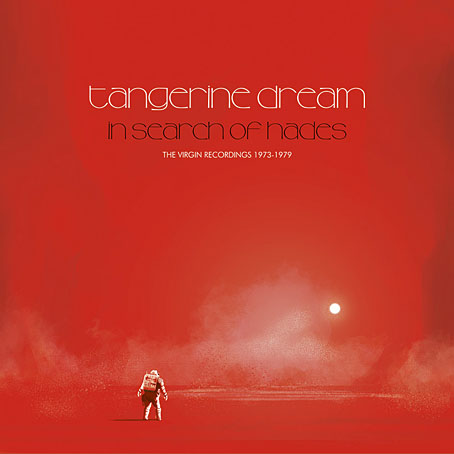
Artwork by Kuldar Leement (maybe…I’ve yet to see a credit for this). No, it’s the work of Rupert Lloyd.

In Search Of Hades: The Virgin Recordings 1973–1979, is a retrospective box set comprising 16 CDs and 2 blu-ray discs devoted to the first phase of Tangerine Dream’s output on the Virgin label. For enthusiasts of the group’s Virgin recordings (myself among them) this is very welcome, especially for the albums being given the Steven Wilson remix treatment, and the wealth of rare and unreleased material. In addition to several live concerts the box will include the complete Oedipus Tyrannus theatre soundtrack, the overture of which appeared on a compilation in 1975 but has since been unavailable outside bootlegs. Baroque 2 is a taster of the unheard soundtrack. The box itself will be released on 14th June. Related: Edgar Froese interviewed on a US radio station in 1974. Among the topics of discussion are German music of the time, Tangerine Dream’s dissatisfaction with Ohr Records, and their happiness at moving to Virgin.

• “As the witch-burning begins, the image gradually dissolves into a stroboscopic onslaught of neon colours accompanied by rapid, high-pitched ringing and a thundering drone.” Don’t come to Gaspar Noé for social realism. Lux Aeterna is his new thing.

• An ode to the ultimate camp film: Nathalie Atkinson on Boom!, Joseph Losey’s adaptation of a Tennessee Williams play, and (unsurprisingly) one of John Waters’ favourites.

“Adhesive,” a term borrowed from phrenology, was Whitman’s synonym for homosexuality. According to gay studies pioneer William A. Percy, “the term became part of the special vocabulary of the emerging homosexual subculture of the nineteenth century,” which Whitman and his coterie would have understood. Despite Whitman’s private vows to resist temptation, and to be more aloof, he continued to court young men until he died. One of the final photos of Whitman, taken at the Camden docks in 1890, shows the poet with his handsome male nurse Warren Fritzinger. “I like to look at him—he is health to look at: young, strong, lithe,” Whitman told Traubel.

Jeremy Lybarger on Walt Whitman’s boys

Psychedelic Promos & Radio Spots: 8 volumes, over 500 tracks, all free downloads. Hear many of the most popular groups of the late 60s shilling for commercial radio stations.

Hildur Guðnadóttir used only sounds from a nuclear plant in her score for Chernobyl.

• US museums of the week: Poster House, NYC, and The Moogseum, Asheville, NC.

• “Yes, witches are real,” says Pam Grossman, “I know because I am one.”

• Photos by Chas Gerretsen from the set of Apocalypse Now.

• Geeta Dayal on the brainwave music of David Rosenboom.

• Mix of the week: Self-Titled NE285 Mix by Kevin Martin.

• RIP Roky Erickson

Boom Boom (1961) by John Lee Hooker | Boom Stix (1962) by Curley & The Jades | Boom! (1992) by The Grid

Weekend links 464

picaud.jpg

13 Circles by Julien Picaud.

• The 50th anniversary of the Apollo Moon landing is only two months away so it’s no surprise that Brian Eno’s Apollo: Atmospheres And Soundtracks is being reissued. The latest release will include an additional disc of new music by Eno with his collaborators from the original sessions, Daniel Lanois and Roger Eno. Related: the Apollo 11 Command Module as an explorable (and printable) 3D model.

• From the real Moon to the presence of the satellite in myth and history, the next book from Strange Attractor will be Selene: The Moon Goddess & The Cave Oracle, a volume which is also the final work by the late Steve Moore. With a foreword by Bob Rickard, and an afterword by Alan Moore.

• Guitar-noise maestro Caspar Brötzmann released a handful of thrilling albums in the 1990s then disappeared from view. Spyros Stasis talked to Brötzmann about his hiatus and his recent resurfacing on the Southern Lord label.

• A year late, but I didn’t know Paul Schrader had written an updated introduction to his 1972 study of Ozu, Bresson and Dreyer, Transcendental Style in Film. I love the idea of “The Tarkovsky Ring” as a directorial event horizon.

• “Nothing written is utterly without value, as I proved to myself by reading two random works.” Theodore Dalrymple on the lasting worth of “worthless” books.

Cinemagician: Conversations with Kenneth Anger, a documentary by Carl Abrahamsson about the director/writer/magus.

• Mirror, Mirror: When Movie Characters Look Back at Themselves by Sheila O’Malley.

• From Susan Sontag to the Met Gala: Jon Savage on the evolution of camp.

• Mix of the week: Secret Thirteen Mix 289 by Mondkopf.

• Portrait of the Artist as a Consumer: Anne Billson.

• A video by IMPATV for Religion by Teleplasmiste.

Obscure Sound ~ Cosmic: a list.

Mira Calix‘s favourite records.

Transcendental Overdrive (1980) by Harald Grosskopf | Transcendental Moonshine (1991) by Steroid Maximus | The Transcendent (1999) by Jah Wobble

Synapse: The Electronic Music Magazine, 1976–1979

synapse01.jpg

Synapse magazine has been mentioned here before, but only briefly in a weekend post. Looking last week for one of the back issues revealed that the scans of the magazine placed online by the publishers in 2012 have now vanished so this post links to an archive of PDFs at Monoskop. The publishers didn’t have copies of the first two issues so the run begins with issue 3.

synapse02.jpg

Synapse wasn’t around for very long but it’s of great interest for people like myself who have an enthusiasm for the analogue synthesizer music of the 1970s. The magazine was small but managed to secure interviews with major synthesists of the period (and Stockhausen!), as well as lesser-known figures who you wouldn’t expect to see in the general music press. Tangerine Dream and Brian Eno have never been starved of attention but the interviews with Isao Tomita and Michael Hoenig are valuable ones; the latter discusses his earlier career in the Kosmische band Agitation Free as well as his new album, the very Tangerine Dream-like Departure From The Northern Wasteland.

synapse03.jpg

Elsewhere in the magazine there are the usual technical articles that were common in journals of this type (the border between art and engineering in the early synthesizer world used to be as permeable as it was in the first decades of science fiction); and the latest synth-related albums receive reviews, many of which are more equivocal than you might expect. It’s a surprise seeing an album such as Ricochet by Tangerine Dream being treated with scepticism but then the reviewer evidently preferred the recordings of the group’s pre-Virgin period. Likewise, Kraftwerk were featured in the third issue but their Man-Machine album is given the same “Is this the future we really want?” appraisal they used to receive from the rock press.

synapse04.jpg

As always with old magazines, the ads are often as interesting as the editorial, and Synapse is filled with promotional material for a wide range of synth gear, from the major keyboard manufacturers to tiny electronic companies. It’s not every magazine where you can see a full-page command to “Trade in your Mellotron”.

Synapse contents list at Wikipedia

synapse05.jpg

Continue reading “Synapse: The Electronic Music Magazine, 1976–1979”

Weekend links 452

nordine.jpg

Colors (1967) by Ken Nordine.

• “The Do was the thing”: a lengthy chat with Chuck Gould of the San Francisco Diggers. The second interview from Jay Babcock’s oral history of the Diggers.

Sticking it to the Man: Revolution and Counterculture in Pulp and Popular Fiction, 1950–1980 edited by Andrew Nette and Iain McIntyre.

Adrian Shaughnessy‘s Krautrock Top Ten. (People who know me well won’t be surprised to hear that I own everything on this list.)

See “queer” as a term has become an umbrella that accommodates not only the type of sex you have and with whom, but also how you identify the sex you have, how you identify your personality, your aura, the ineffable je ne sais queer that may or may not be related in any way to your sexuality, or even the way you present yourself to the world, but simply some deeply held, internal feeling. You don’t actually need to share a common oppression or a common romantic or sexual behavior.

[…]

The reason I mind is because queer, in functioning as a catchall, serves to obscure what it is about my life, my community, my partners, that I needed to learn to be proud of in the first place. Because for me and all the other lesbians I know, figuring out your sexuality is hard enough, but the real work is in accepting yourself, demanding acceptance from others, being willing to walk away when that acceptance is denied.

Lesbians are women, and women are taught that we’re supposed to be sexually available objects of public consumption. So we spend a lot of time saying “No.” No, we won’t fuck or partner with men; no, we won’t change our minds about this; no, this body is a no-man’s land. Lesbian, straight or bi, women are punished whenever we try to assert a boundary. Queer as a catchall term makes it really hard for lesbians to assert and maintain this boundary, because it makes it impossible to name this boundary.

Jocelyn Macdonald on how the increasing dilution and commodification of “queer” as a label does little to serve the interests of the people to whom it was applied in the first place

• Two sets of live electronica from last year: Pye Corner Audio at The State51 Factory, and Tangerine Dream at Dekmantel.

• “LSD can get deep down and reset the brain—like shaking up a snow globe,” says Amanda Fielding.

• Ewan Wilson on the impossible architecture of video games.

• Mix of the week: Secret Thirteen Mix 279 by Marcos Cabral.

• RIP Betty Ballantine, Bruno Ganz and Ken Nordine.

• At Dennis Cooper’s: They will never exist.

Cosi Fanni Tutti‘s favourite records.

She Comes In Colors (1967) by Love | Colors (1969) by Pharoah Sanders | Balthus Bemused By Color (Mix II) (1988) by Harold Budd

Weekend links 450

redon.jpg

Orpheus (c. 1903–1910) by Odilon Redon. One of 30,000 public-domain images from the Cleveland Museum of Art’s collection.

• Network DVD has announced the premiere home release of Orson Welles’ Great Mysteries, a British TV series that ran from 1973 to 74. Welles’ involvement was limited to introducing each episode but the series itself was one I enjoyed a great deal: 26 short adaptations of period mystery stories that featured a wealth of British and American acting talent. The theme by John Barry was an additional bonus.

• The trailer for Apollo 11, a documentary by Todd Douglas Miller which presents for the first time the 70mm footage recording the Earth-bound parts of the Moon mission. Related: Michelle Santiago Cortés on how NASA used art to shape our vision of the future.

• At Dangerous Minds: a preview of Third Noise Principle, the latest in an excellent series of electronic music compilations from Cherry Red, and Cosey Fanni Tutti talks about her first solo album since 1983.

“The way I understood theory, primarily through popular culture, is generally detested in universities,” Mark [Fisher] told me in 2005, when I interviewed him for the Village Voice. “Most dealings with the academy have been literally clinically depressing.” He darkly surmised that his blog, K-Punk, and the surrounding blogosphere, “seemed like the space—the only space—in which to maintain a kind of discourse that had started in the music press and the art schools, but which had all but died out, with appalling cultural and political consequences.” Mark and the Village Voice are both dead now, leaving unfathomable voids in their wake.

Geeta Dayal on Mark Fisher

• At The Witch Wave: Peter Bebergal and Pam Grossman discuss Bebergal’s latest book (also my current reading), Strange Frequencies: The Extraordinary Story of the Technological Quest for the Supernatural.

• At Bandcamp: another release from the retro-synth cosmos of Jenzeits, and Ufology , an investigation of Britain’s flying-saucer landscape by Grey Frequency.

• Surprising collaboration of the week: Beth Gibbons and Krzysztof Penderecki have made a new recording of Henryk Górecki’s Third Symphony.

Alchemy (1969) the debut album by the Third Ear Band, receives an expanded reissue next month.

The Burn: a science-fiction story by Peter Tieryas with illustrations by Arik Roper.

• Mix of the week: Self-Titled Needle Exchange 275 by Black To Comm.

Amy Turk plays Bach’s Toccata and Fugue in D Minor on her harp.

Chrismarker.org is seeking donations.

Mystery Train (1955) by Elvis Presley | Mystery R.P.S. (No 8) (1981) by Holger Czukay, Jah Wobble, Jaki Liebezeit | Mystery Room (1985) by Helios Creed