Weekend links 615

tesla.jpg

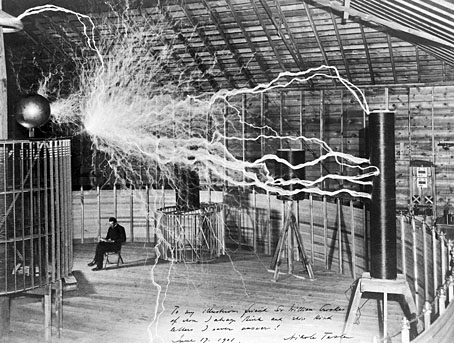
Tesla does the Astro. Hunter Dukes at Public Domain Review examines the promotion of Nikola Tesla’s ideas via this famous photograph.

• Coming soon from Side Real Press: Kokain—The Modern Revue, a magazine produced in Vienna that ran for five issues during 1925. “Original copies are so rare that it scarcely appears in any of the literature relating to the Weimar period and its contents have remained almost entirely ignored and certainly untranslated. Until now.”

• “Magritte had gotten this far in life by refusing to obey anyone, and in a way his disobedience proved that he understood Surrealism better than the leader of the Surrealists.” Jackson Arn reviewing Magritte: A Life by Alex Danchev.

• “Go as far into your dream as possible and find your own unique voice.” Meredith Monk (again) talking to Elizabeth Aubrey.

• Coming soon from Strange Attractor: City of the Beast: The London of Aleister Crowley by Phil Baker.

• At Spoon & Tamago: The natural world springs to life in kirie paintings by Tamami Kubota.

Antonia Mufarech on why sunflowers are Ukraine’s national flower.

• At Dennis Cooper’s: Etienne-Louis Boullée’s unbuildable tombs.

• Mix of the week: I Can’t Go For That by The Ephemeral Man.

• New music: Triumph Of The Oak by The Lord.

• RIP Philip Jeck.

Tesla (1997) by Jimi Tenor | Tesla (2011) by They Might Be Giants | Tesla Coil (2016) by Xhei

Weekend links 607

cadmus.jpg

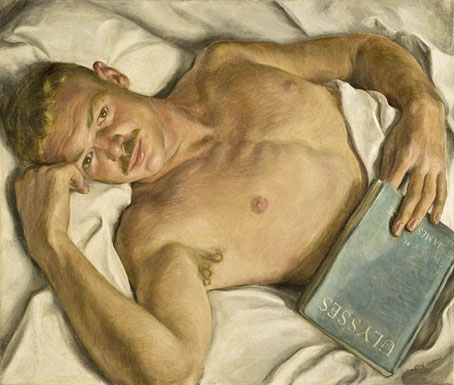
Jerry (1931) by Paul Cadmus.

• “I wanted to photograph naked young men as opulently and as attentively as those professional ladies appearing in Playboy-type magazines.” RIP James Bidgood, photographer and director of no-budget gay-porn classic Pink Narcissus. Also in the obituary notices this week: Monica Vitti and John Appleton, composer of electronic music and inventor of the Synclavier sampling keyboard.

• “…the Sola Busca deck is limited in its use for divinatory purposes today, and yet, since its enigmatic imagery irresistibly invites decoding, the deck nonetheless beckons twenty-first century cartomancers into a game of high imagination.” Kevin Dann on the mysteries of the world’s oldest complete Tarot deck.

• “This Missouri company still makes cassette tapes, and they are flying off the factory floor.” Jennifer Billock reports.

He attended to his own talent, not in the interest of bombast or self-aggrandisement, but rather like a faithful watchman. He had the fixity of the great and therefore no need of vanity. He estimated that three shillings would be a reasonable price for Ulysses. A tiresome book, he admitted. At the same time he was dogged by fear that the printing house would be burnt down or that some untoward catastrophe would happen. He assisted Miss Beach in wrapping the copies, he autographed the deluxe editions, he wrote to influential people, he hawked packages to the post office. He knew that the illustrati would change their minds many a time before settling down to a final opinion and that many another would know as much about it as the parliamentary side of his arse.

Edna O’Brien on James Joyce

• At Wormwoodiana: Mark Valentine on The Secret Glory by Arthur Machen, another novel now in its centenary year.

• At Aquarium Drunkard: It Is Not My Music, (1978) an hour-long Swedish TV documentary about Don Cherry.

• At Bandcamp: The transportive psychedelia of Moon Glyph records.

• Mix of the week: Fact Mix 844 by A Psychic Yes.

• Steven Heller’s font of the month is Show.

• At Dennis Cooper’s: Guitar.

Mumblin’ Guitar (1960) by Bo Diddley | Electric Guitar (1979) by Talking Heads | Impossible Guitar (1982) by Phil Manzanera

Weekend links 601

innocents.jpg

The Innocents (1961), one of the great cinematic ghost stories.

• “Out of the many adaptations, Jack Clayton’s [The Innocents] is considered the benchmark. The film celebrated its 60th anniversary this year, having premiered in London on the 24th of November, 1961. Considering the sheer number of competitors to Clayton’s version, it is telling of the film’s qualities that it still stands far and above its many peers. In fact, it is difficult to see James’s story without those stark black-and-white images of the film coming to mind, as well as its stunning central performance by Deborah Kerr. Suffice to say, 60 years on, James’s screen ghosts still haunt.” Adam Scovell on the many adaptations of The Turn of the Screw by Henry James.

• “I wanted to turn sex into art because art makes sense of life.” Jack Fritscher talks to photographer Rick Castro about gay S&M fetishes, Drummer magazine, Robert Mapplethorpe, and his BDSM porn studio, Palm Drive Video.

• “Fela was a very good human resources manager.” Lemi Ghariokwu, creator of over 2,000 album covers, talks to Nathan Evans about his time working for Fela Kuti.

I’ve been approached several times to ‘make an NFT’. So far nothing has convinced me that there is anything worth making in that arena. ‘Worth making’ for me implies bringing something into existence that adds value to the world, not just to a bank account. If I had primarily wanted to make money I would have had a different career as a different kind of person. I probably wouldn’t have chosen to be an artist. NFTs seem to me just a way for artists to get a little piece of the action from global capitalism, our own cute little version of financialisation. How sweet—now artists can become little capitalist assholes as well.

Brian Eno on the fool’s-goldrush du jour

• At Vimeo: The Snail on the Slope, a film of generative processes by Vladimir Todorovic based on the strange science-fiction novel by Arkady and Boris Strugatsky.

• At Dangerous Minds: an exploration of Eight Songs for a Mad King by Peter Maxwell Davies, “one of the most insane pieces of music ever written”.

• “This is how one ought to see, how things really are.” Ido Hartogsohn on Aldous Huxley’s mescaline experiments.

• Always an essential guide: The Wire magazine’s releases of year.

• The end of December brings us Alan Bennett’s diary at the LRB.

• At Dennis Cooper’s: Ryoji Ikeda Day.

Innocenti (1992) by Brian Eno | Innocent Square [excerpt] (2011) by Christian Skjødt Hasselstrøm | First In An Innocent World (2016) by The Pattern Forms

Weekend links 600

window.jpg

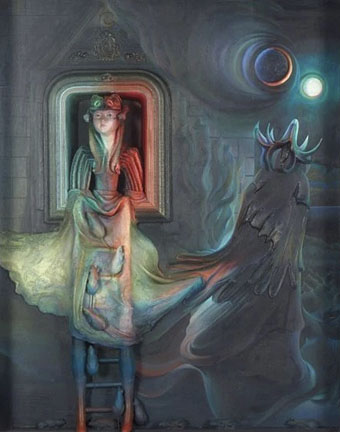
My kind of window. From a collection of machine-learning images by Unlimited Dream Co. Via Bruce Sterling.

• “I will never call myself a queer. That word is one of the things that I detest that has happened, and it’s almost being forced now. For me, you cannot separate that word from the hatred and violence that once accompanied it. When I read it being used in The New York Times, I think, ‘It’s their word and they can fucking have it all they want.’ I will never use ‘queer.’ It’s an ugly word.” John Rechy, still active at the age of 90, talking to Jeff Weiss about hustling, social opprobrium, and his pioneering books.

• “At a time when we are being constantly told that humanity is destroying the planet, it is somehow comforting to see nature not merely outlasting, but triumphing over humanity’s constructions—as nature does in many of Piranesi’s Views of Rome.” Alasdair Palmer on Piranesi’s peerless renderings of Roman ruins.

• “The magical aspect of Get Back is its total refusal to adhere to the standard tropes of music documentaries. There are no talking heads commenting on the Beatles’ greatness, no continual barrage of quick edits and highlights.” Geeta Dayal on Peter Jackson’s resurrection of the Fab Four.

But men are not traditionally meant to be objects of art. “Men look at women,” John Berger wrote. “Women watch themselves being looked at.” When men look at men, however, they break rules. “I didn’t set out to be radical,” says Miller. “But I was at a fair and I had a huge nude on a stand by Michael Leonard. I’d only been open ten minutes and a woman started having a go and saying it’s filth. What I found fascinating is she’d walked past a whole span of female nudes. I think society is just immune to female nudity. People don’t see it. If you take this to the straight world of an art fair, it provokes reactions other dealers don’t get. There isn’t anyone else like me.”

Tony Wilkes talks to Henry Miller, owner of an art gallery devoted to the male form

• “I imagine men with starched collars, horrified by an animal with no hard edges to grab onto, no solidity to venerate. Something low, lateral, creeping.” Fiona Glen on “Devil Fish”, Cthulhu and cephalomania.

• I like glowing things so Brian Eno’s glowing record turntable has an immediate appeal. A shame it’s a very limited production which is almost certainly sold out by now.

• The next release on the Ghost Box label will be A Letter from TreeTops by Pneumatic Tubes.

• At Dangerous Minds: A Sight for Sore Eyes Vol. 1, a visual history of The Residents.

• At Wormwoodiana: Mark Valentine on the supernatural thrillers of Archie Roy.

• Mix of the week: A reflection on 2021 at A Strangely Isolated Place.

Swan River Press looks back over a year of book production.

• New music: Spherical Harmonics by Joseph Hyde.

Octopus’s Garden (1969) by The Beatles | The Kraken (2006) by Hans Zimmer | Kraken (2017) by Dave Clarkson

Weekend links 588

br.jpg

Gerry Barney’s logo for British Rail. A page from the British Rail Corporate Identity Manual (1965).

• RIP Russ Kick, writer, editor, and founder of many websites/blogs such as Rare Erotica, Books Are People Too and (notoriously) the several iterations of The Memory Hole, a space dedicated to keeping visible information that successive US governments would have preferred to remain unseen. I’d known Russ remotely for many years, initially as a reviewer of the Savoy comics in Outposts. Savoy Books later helped find him a publisher for Psychotropedia: A Guide to Publications on the Periphery, a wide-ranging overview of alternative/underground print culture in the late 1990s. In 2004 his information activism gave him a fleeting taste of world-wide attention when he forced the Bush administration to make public the photos of flag-draped coffins returning from Iraq. The scandal put his name on the front pages of newspapers that should have been finding those photos for themselves instead of cheerleading the war. A run of books for Disinformation presented his archival researches for the general reader, then in 2012 he edited The Graphic Canon, a massive three-volume collection of comics and illustrations based on classic works of literature. I was among the many contributors to the latter with an adaptation of The Picture of Dorian Gray, and would have worked on the follow-up collection of crime stories if I hadn’t been busy with other things. I had hoped that we might work together again in the future.

• “‘The new mainstream has attempted to erase the innovations of the avant-garde from jazz history,’ the film declares.” Geeta Dayal reviews Fire Music, a documentary about the jazz innovations of the 1960s.

• I don’t have the hardware to play this but Sable is a new computer game from Raw Fury whose design owes much to the desert landscapes seen in comics by Moebius.

• New/old music: Stealing Sheep and The Radiophonic Workshop reimagine the score for René Laloux’s animated science-fiction film La Planète Sauvage.

• At Spine: Savannah Cordova on how to perfect your book cover’s typography. Having recently designed an all-type cover design this is timely.

• Mixes of the week: Isolatedmix 113 by Sunju Hargun, XLR8R Podcast 714 by Soela, and Holograficzne Widmo ze Bart De Paepe by David Colohan.

• “If it ain’t broke, don’t fix it.” Gerry Barney, designer of the British Rail logo, doesn’t like the green reworking of his design.

• Scottish lord goes blood simple: a teaser for The Tragedy of Macbeth by Joel Cohen and some bloke called William Shakespeare.

• “It’s unmanageable.” Ellen Peirson-Hagger on how the vinyl industry reached breaking point.

Macbeth (1973) by John Cale | Rail (1994) by Main | Logotone (2013) by Steve Moore