Weekend links 651

kleen.jpg

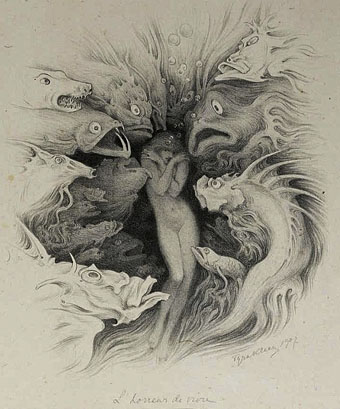
The Horror of Living (1907) by Tyra Kleen. Via

• “Voss suggests Af Klint was a pioneer of abstract painting, a label that fits in some ways – her work certainly isn’t representational in the normal sense – but jars in others. She saw her work as a spiritual calling, supercharged with meaning in ways most of her contemporaries struggled to grasp. Most, but not all. Af Klint socialised and collaborated with other visionary women. Some were artists, others were writers, but all were adherents of the new philosophies sweeping Europe in the late 19th century: spiritualism, Rosicrucianism, theosophy.” Madoc Cairns reviewing Hilma af Klint: A Biography by Julia Voss.

• “I want to insist on an amateur internet; a garage internet; a public library internet; a kitchen table internet. At last, in 2023, I want to tell the tech CEOs and venture capitalists: pipe down. Buzz off. Go fave each other’s tweets.” Robin Sloan looking for new avenues away from the corporate cul-de-sacs of social media.

• “Even when subjects take psychedelics in clinical environments devoid of nature…many of them still emerge with stronger relationships to the natural world.” Simran Sethi on the connections between psychedelic use and eco-activism.

• At A Year In The Country: A Shindig! Selection: From Celluloid Hinterlands to Children of the Stones via The Delaware Road and a Sidestep to the Parallel World of él Records.

• At Public Domain Review: Mighty Mikko: A Book of Finnish Fairy Tales and Folk Tales (1922) by Parker Hoysted Fillmore.

• “When coffee is all gone. It’s over.” Spoon & Tamago gets existential at Tokyo’s Museum of Wonky English.

The “S” Word: Spirtuality in Alternative Music is a book-length study by Matthew Ingram (aka Woebot).

• New music: Does Spring Hide Its Joy by Kali Malone (featuring Stephen O’Malley & Lucy Railton).

• Steven Heller’s font of the month is Geetype.

Spiritual Awakening (1973) by Eddie Henderson | Spiritual Blessing (1974) by Pharoah Sanders | Spiritual Eternal (1976) by Alice Coltrane

Weekend links 650

phillips.jpg

A detail from Tom Phillips’ cover design for Starless And Bible Black (1974) by King Crimson.

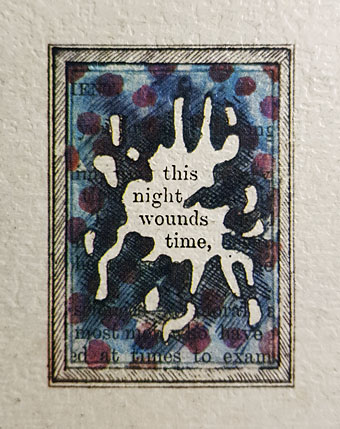
• RIP Tom Phillips. The term “polymath” is often used by monomaths to describe people who are proficient in two areas instead of just one. Tom Phillips was a model polymath, an artist whose work ranged wherever his curiosity took him, from conventionally realist portraiture to abstract painting and computer art, from collage, sculpture and stage design to 20 Sites n Years, a long-term photographic work. When Phillips decided to illustrate Dante’s Inferno he first translated the book himself; the Dante project subsequently evolved into a TV/film production made in collaboration with Peter Greenaway and Raúl Ruiz. As for A Humument, this is the artist’s book by which all others should be judged, a unique reworking of a Victorian novel which now exists in multiple editions and sub-works. Humument extracts became a kind of Phillips signature (you can see one at the top of this post), a series of often cryptic fragments and pronouncements that appeared in prints and paintings while also supplying the libretto for Phillips’ first opera, Irma, one of his many musical compositions. Some years ago I posted a quote by Brian Eno about his former art teacher; those words (from A Year With Swollen Appendices) are worth repeating:

It’s a sign of the awfulness of the English art world that he isn’t better known. Tom has committed the worst of all crimes in England. He’s risen above his station. You can sell chemical weapons to doubtful regimes and still get a knighthood, but don’t be too clever, don’t go rising above your station.

The smart thing in the art world is to have one good idea and never have another. It’s the same in pop—once you’ve got your brand identity, carry on doing that for the rest of your days and you’ll make a lot of money. Because Tom’s lifetime project ranges over books, music and painting, it looks diffuse, but he is a most coherent artist. I like his work more and more.

• “The most radical thing about Ever So Lonely is the instrumental when it breaks down and for eight glorious bars you’re dancing to a classical raga and loving it, whoever you are.” Sheila Chandra again on the fleeting pop career of Monsoon.

• Something to look forward to for next summer: Worlds Beyond Time: Sci-Fi Art of the 1970s, a book by Adam Rowe, curator of 70s Sci-fi Art at Tumblr.

• Mix of the week: Groove Orient: South Asian Elements in Psychedelic Jazz at Aquarium Drunkard.

• “Physicists create a wormhole using a quantum computer.” Natalie Wolchover explains.

Pattern Collider is a tool for generating and exploring quasiperiodic tiling patterns.

• “Infernal Affairs is still Hong Kong’s greatest crime saga,” says James Balmont.

Secret Satan, 2022, the essential end-of-year book list from Strange Flowers.

• Also no longer with us as of this week, comic artist Aline Kominsky–Crumb.

• New music: Violet Echoes by Subtle Energy.

Il Trio Infernale (1974) by Ennio Morricone | Firebird Suite: Infernal Dance Of King Kastchei (Stravinsky) (1975) by Tomita | Infernal Devices (2011) by Moon Wiring Club
The World of John Whitney

whitney1.jpg

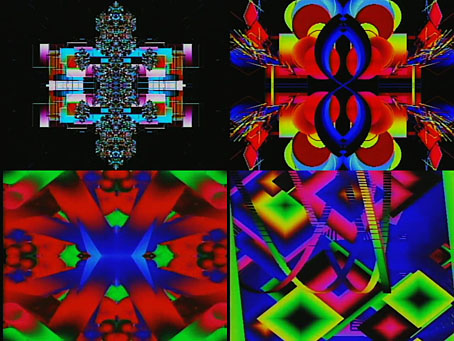
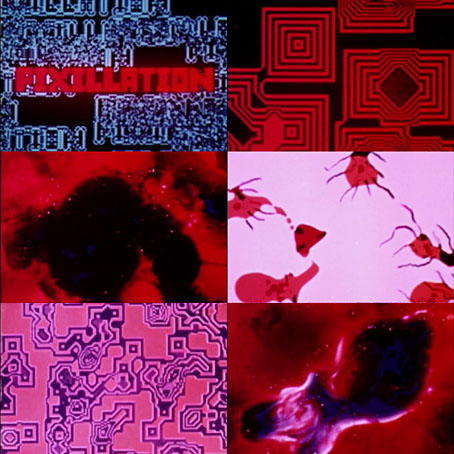
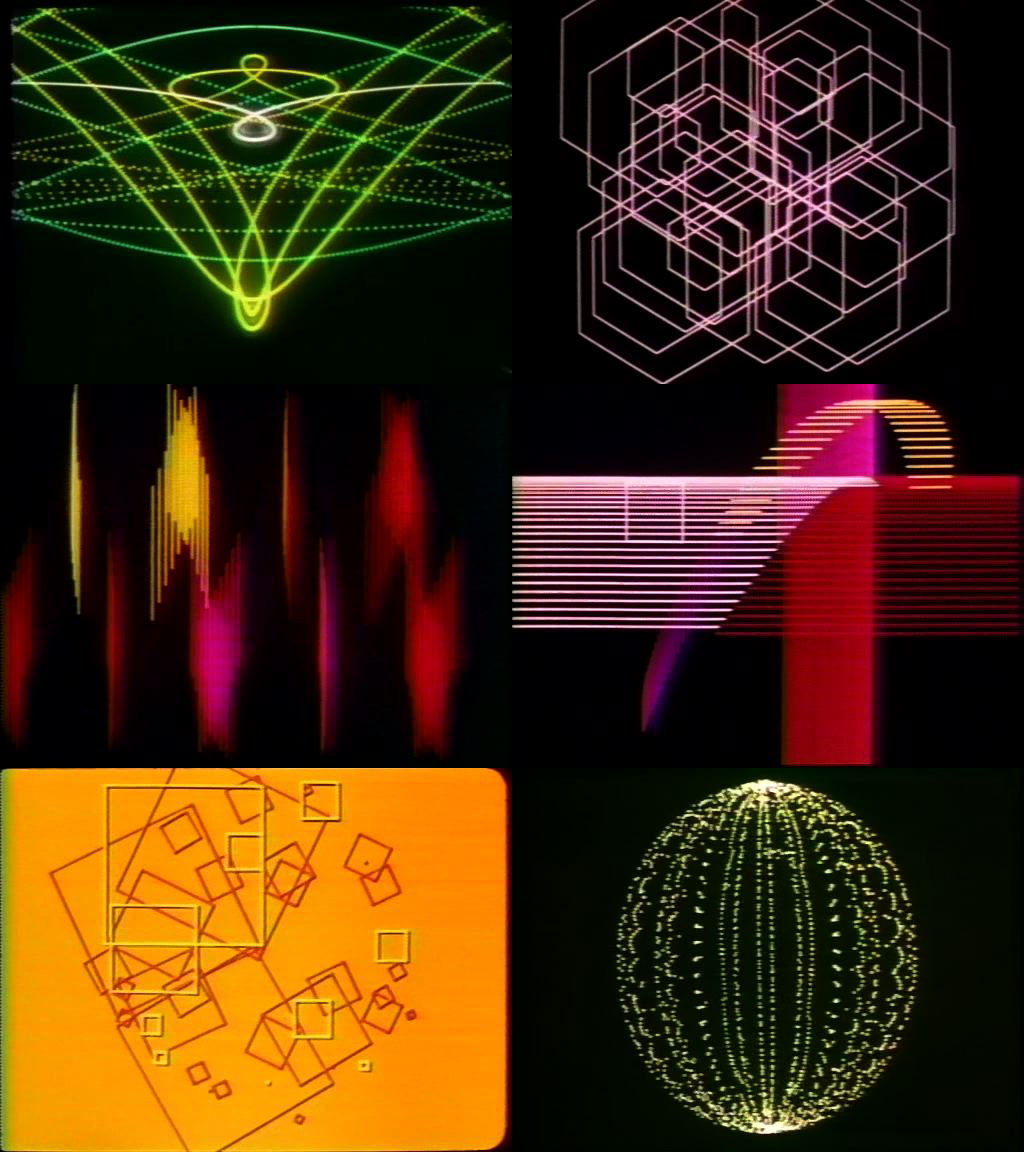
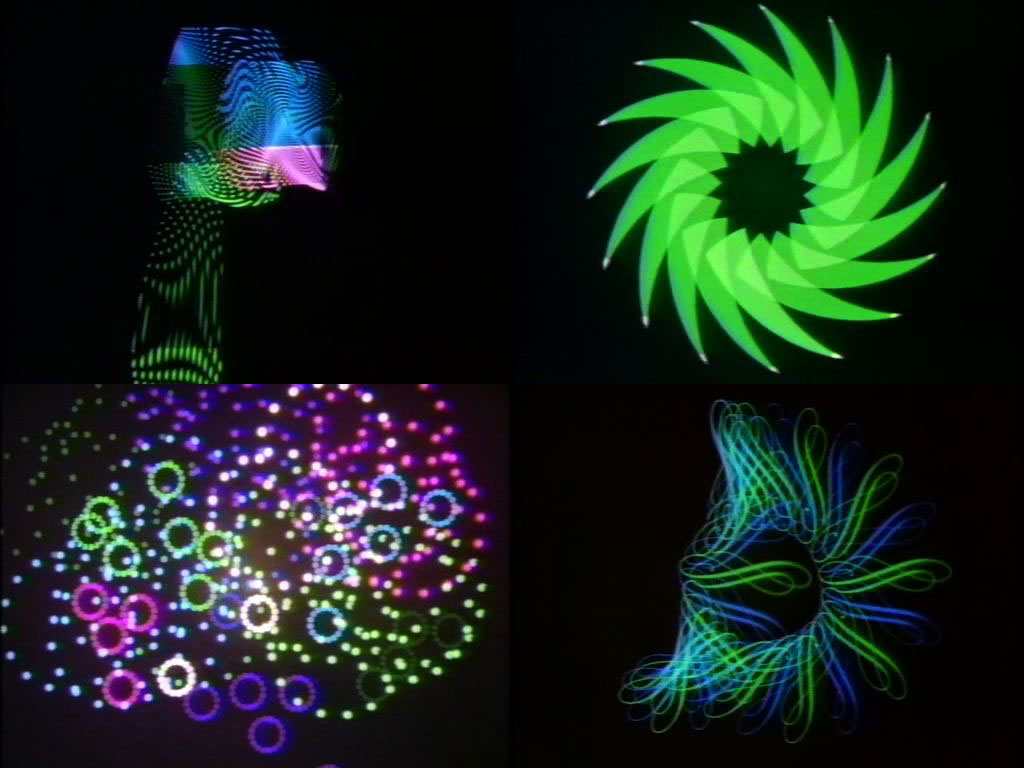
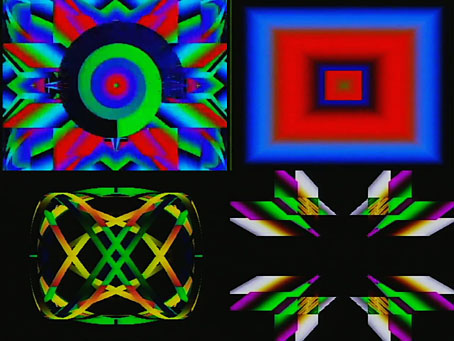
John Whitney’s abstract films haven’t always been easy to see on YouTube, and when they do turn up they’re often poor quality, so this was a welcome discovery, a 38-minute compilation of Whitney shorts taken from a Japanese laserdisc. A couple of the items mentioned in the on-screen contents list are absent from the video. The actual contents are as follows:

Arabesque (1976)
Matrix III (1972)
Matrix I (1971)
Permutation (1968)
Catalog (1961)

whitney2.jpg

Catalog is a showreel of Whitney’s earliest film experiments, a compilation within the compilation. Many of Whitney’s films are among the earliest examples of computer animation, made in the days when creating any kind of computer graphics meant laboriously plotting co-ordinates into a program which would then be fed into a machine the size of a wardrobe; the resulting video output was captured on film by a camera pointed at a monitor, a process you can see in operation in a short demonstration of Whitney’s working methods, Experiments in Motion Graphics (1967). Colour overlays and superimposition transform these simple cathode-ray shapes into things of beauty, with Whitney’s soundtracks being the icing on the cake: Arabesque is accompanied by the santur playing of Manoochehr Sadeghi, while Matrix III features an extract from Terry Riley’s Poppy Nogood And The Phantom Band.

Elsewhere on { feuilleton }
The abstract cinema archive

Weekend links 648

klee.jpg

The Twittering Machine (1922) by Paul Klee.

• “Thinking of ‘writer Twitter’ as more important than writers themselves is an insult to the profession. People have been trading words for money for thousands of years. They will continue to do so after the death of a platform built on manufactured outrage, social hierarchy, unfunny jokes, stale memes, pornography, and spam. I mention this Atlantic essay only because it echoes what so many people are saying in the ether right now, not to pick on its author. The piece reads like a parody of how writers overestimate the importance of Twitter to their work and careers. It’s frankly a little embarrassing. Your work is the product you sell! Not the shitty jokes you tell with people you want to impress.” Freddie deBoer on the kerfuffle du jour. For “writer” see also “artist” or anyone else working at the intersection between commerce and creativity. From what I’ve read this week about potential technical problems at the pestilential birdcage I’d be less sanguine about its immediate survival. Since I retreated from the place as an active user two-and-a-half years ago all I get from it is the inflated subscriber number you see on the right-hand side of this page, a combination of Twitter followers plus email subscribers. The latter currently stand at some 270 individuals so if you’re among that number you can consider yourself part of a more exclusive group. And thanks for subscribing!

• “…the books of the past, besides adding to our understanding, offer something we also need: repose, refreshment and renewal. They help us keep going through dark times, they lift our spirits, they comfort us. Which means that I also strongly agree with the poet John Ashbery, who once wrote, ‘I am aware of the pejorative associations of the word “escapist,” but I insist that we need all the escapism we can get and even that isn’t going to be enough.'” Michael Dirda makes a case for reading classic, unusual and neglected books. Kudos for the mention of Anthony Skene‘s Monsieur Zenith, a character few of Dirda’s readers will have heard of.

• “While Haeckel’s paintings turn the floating phantoms into baroque spectacles of colour and flowing form, Mayer’s medusae are more sober, their tentacles subdued, their umbellate bells transparent.” Kevin Dann on the jellyfish and other “floating phantoms” described in AG Mayer’s Medusae of the World (1910).

• “The passing of time has added potency to the images, giving this interpretation of the Dracula story the feel of a distant fairy tale, a myth emerging from the mists of time, erupting across the world of cinema, its shadow reaching everywhere.” Martyn Bamber on 100 years of Murnau’s Nosferatu.

• At AnOther: Camille Vivier talks about shooting nude models in the treasure-filled home of HR Giger.

• New music: In Concert & In Residence by Sarah Davachi, and Anglo-Saxon Androids by Moon Wiring Club.

• At Spoon & Tamago: Kimono portraits were popular souvenirs for sailors visiting Japan in the 1800s.

• Mix of the week: Saturnalia: Deep Jazz for Long Nights, 1969–1980 at Aquarium Drunkard.

• At Dennis Cooper’s: Clouds.

Dark Clouds With Silver Linings (1961) by Sun Ra | Obscured By Clouds (1972) by Pink Floyd | Firmament (Cloudscape) (1995) by Main

Weekend links 643

wittdorf.jpg

Freundschaftsfoto (1964) by Jürgen Wittdorf.

• “It’s truly astonishing how Laswell collided with vastly divergent musicians and genres while somehow still representing complementary musical spheres.” Yes, indeed. Mixes of the week: Bill Laswell Research Institute: Vol I & II, two 90-minute collections at Aquarium Drunkard dedicated to the career of the indefatigable musician/producer/catalyst.

• “These pieces are created using custom developed software and laser specialised machines resulting in highly detailed laser cut works on layered paper with some works comprising over a thousand individual parts.” Works in paper at Studio Ibbini.

• “The visual history of polyhedra is littered with false starts, poignant failures, and allegories unable to convey the weight of their subject matter.” Noam Andrews explores the history of rendering polyhedral objects in art.

• “When it came to homosexuality, the east was as bourgeois as the west.” Homoerotic art from the communist era by Jürgen Wittdorf (1932–2018) receives a reappraisal.

• More MR James: All of James’ ghost stories in a single volume at Standard Ebooks, the home of free, high-quality, public-domain texts.

• More mixes: A mix for The Wire by NikNak, and XLR8R Podcast 769 by The Sun Ra Arkestra.

• At Spoon & Tamago: Tracing the history of railways in Japan through art.

• At Dennis Cooper’s: Marie Menken Day.

Angeline Morrison‘s favourite albums.

Ghost Train (1961) by Virgil Holmes | Ghost Train (1961) by Electro-Tones | Ghost Train (1962) by The Partners