Weekend links 521

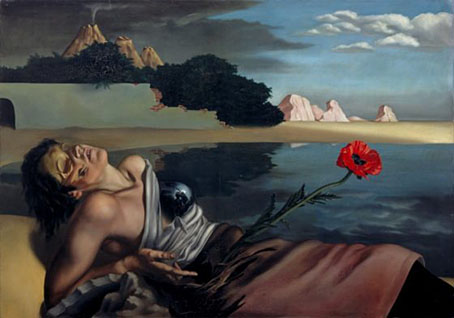
parent.jpg

Au Lion d’or (1965) by Mimi Parent.

• After the recent announcement of Jon Hassell’s health issues it’s good to see he has a new album on the way at the end of July. Seeing Through Sound (Pentimento Volume Two) follows the form of the first volume, Seeing Through Pictures (2018), in reworking elements of earlier recordings into new forms. Not remixes, more reimaginings, and a process that Hassell has been applying to his own work for many years, most notably on his collaboration with Peter Freeman, The Vertical Collection (1997). The latter is an album which is impossible to find today and really ought to be reissued, together with more scarcities from the Hassell catalogue.

• Death of a typeface: John Boardley on Robert Granjon’s Civilité, a type design intended to be the national typeface of France but which fell out of favour. It wasn’t completely forgotten however; I was re-reading Huysmans’ À Rebours a couple of weeks ago, and Civilité is mentioned there as being a type that Des Esseintes chooses for some of his privately-printed books.

• At Plutonium Shores: Kurosawa versus Leone in A Fistful of Yojimbo. Christopher Frayling makes a similar analysis in his landmark study, Spaghetti Westerns (1981), but I didn’t realise that Leone had based so many of his shots on Kurosawa’s film.

• More lockdown art: Seen from Here: Writing in the Lockdown is a collection of new writing edited by Tim Etchells and Vlatka Horvat. A PDF book whose sales will go to support the Trussell Trust, a UK food bank charity.

• The week’s culture guides: Ben Cardew on where to start with the back catalogue of Miles Davis, and Hayley Scanlon on where to begin with the films of Yasujiro Ozu.

• “We can no longer ignore the potential of psychedelic drugs to treat depression,” says Robin Carhart-Harris.

• At Dangerous Minds: Laraaji returns with a new album, Sun Piano, and a preview of the same, This Too Shall Pass.

• Mixes of the week: The Ivy-Strangled Path Vol. XXI by David Colohan, and XLR8R Podcast 647 by The Orb.

Penelope Rosemont on the humorous Surrealism of Mimi Parent.

• At Dennis Cooper’s: Jeff Jackson presents Free Jazz Day.

The Golden Lion (1967) by Lomax Alliance | Dread Lion (1976) by The Upsetters | Gehenna Lion (1982) by Chrome

Weekend links 517

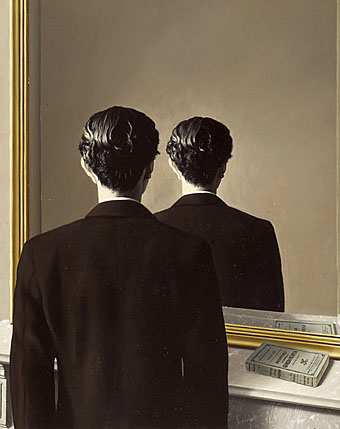
magritte.jpg

Edward James by René Magritte; La Reproduction Interdite (1937).

• “James was filmed in the late 1970s, striding round Las Pozas in a sweater and a tattered dressing-gown, surmounted by parrots (The Secret Life of Edward James can be seen on YouTube). When asked what motivated him, he replied: ‘Pure megalomania!’ He was having his second childhood, he said, though he wasn’t sure the first had ever ended.” Mike Jay on lifelong Surrealist, Edward James (1907–1984), and the concrete fantasia he built in the Mexican jungle.

• “I found the roots of electronic music in a cupboard!” Musician Paul Purgas (one half of Emptyset) on the discovery of early electronic music from India’s National Institute Of Design. Related: Purgas talks about his discovery with Patrick Clarke.

• RIP Phil May. Here’s The Pretty Things in their guise as psych band “Electric Banana” for an appearance in What’s Good for the Goose (1969). A decent moment in an otherwise terrible film.

• Music is a memory machine: David Toop explores how the transmission of music between disparate cultures can be a tool against populism and prejudice.

• Kraftwerk’s remarkable journey, and where it took us: Bob Boilen and Geeta Dayal discuss the tanzmusik of Düsseldorf.

• At Dangerous Minds: Acid Drag & Sexual Anarchy: Fifty years ago The Cockettes turned drag upside down.

Hua Hsu on the secret lives of fungi: “They shape the world—and offer lessons for how to live in it”.

• The great writer who never wrote: Emma Garman on the flamboyant Stephen Tennant.

• Cult 1998 PlayStation game LSD: Dream Emulator is finally playable in English.

Jim Jupp of Ghost Box records talks about the Intermission compilation album.

Jonathan Moodie on psychoactive cinema and sacred animation.

Alex Barrett on where to begin with Akira Kurosawa.

• At Dennis Cooper’s: Skeletons.

Skeleton Makes Good (1982) by Captain Beefheart & The Magic Band | Red Skeletons (1996) by Coil | Kids Will Be Skeletons (2003) by Mogwai

Weekend links 513

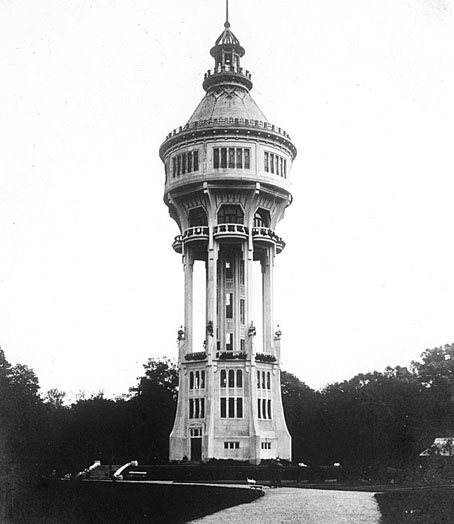
tower.jpg

Water Tower (1914), Margaret Island, Budapest, Hungary.

George Bass on five ways The Year of the Sex Olympics (1968) predicted the way we live now. Nigel Kneale’s TV play will be reissued on DVD next week.

Ballardism (Corona Mix): three new drone pieces by Robert Hampson available as free downloads.

• Grace Jones: where to start in her back catalogue; John Doran has some suggestions.

Hal was the wry and soulful and mysterious historical rememberer. He specialized in staging strange musical bedfellows like Betty Carter and the Replacements or The Residents backing up Conway Twitty. Oh, the wild seeds of Impresario Hal. He was drawn equally to the danger of a fiasco and the magical power of illumination that his legendary productions held. Many years ago he bought Jimmy Durante’s piano along with Bela Lugosi’s wristwatch and a headscarf worn by Karen Carpenter. Some say he also owned Sarah Bernhardt’s wooden leg. He had a variety of hand and string puppets, dummies, busts of Laurel and Hardy, duck whistles and scary Jerry Mahoney dolls and a free ranging collection of vinyl and rare books. These were his talismans and his vestments because his heart was a reliquary.

Tom Waits pens a letter to remember Hal Willner

• The food expiration dates you should actually follow according to J. Kenji López-Alt.

• Blown-up buildings and suffocating fish: the Sony world photography awards, 2020.

• Rumbling under the mountains: a report on Czech Dungeon Synth by Milos Hroch.

Sophie Pinkham on The Collective Body: Russian experiments in life after death.

• Mix of the week: Spring 2020: A Mixtape by Christopher Budd.

Olivia Laing on why art matters in an emergency.

• At Dennis Cooper’s: Bloody.

Blood (1972) by Annette Peacock | Blood (1994) by Paul Schütze | Blood (1994) by Voodoo Warriors Of Love

Weekend links 512

white

Cover art by Tim White for Weaveworld (1987) by Clive Barker.

• Another week leading with obituaries but that’s where we are just now. Among others, we had film maker Bruce Baillie, cartoonist Mort Drucker, lesbian/gay rights activist Phyllis Lyon, film director Nobuhiko Obayashi, artist Tim White, and music producer Hal Willner. Related to the last: Hal Willner’s Vanishing, Weird New York.

Open Door is a new recording by Roly Porter from his forthcoming album, Kistvaen. I designed the CD and vinyl packaging for this one.

• From 1995: Peter Wollen on dandyism, decadence and death in Donald Cammell & Nicolas Roeg’s Performance.

• “Fear, bigotry and misinformation—this reminds me of the 1980s AIDS pandemic,” says Edmund White.

David Lynch wants you to meditate, maybe make a lamp during self-isolation.

• “Weird tale” by Secret Garden author Frances Hodgson Burnett discovered.

• Behind the iron curtain, the final frontier: Soviet space art in pictures.

• Mix of the week: Secret Thirteen Mix 301 by Asher Levitas.

• At Dennis Cooper’s: Raymond Queneau, Party Animal.

Oren Ambarchi Archive at Bandcamp.

Japan’s Tourism Poster Awards.

• Hal Willner produces: Juliet Of The Spirits (1981) by Bill Frisell | Apocalypse (1990) by William S. Burroughs | The Masque Of The Red Death (1997) by Gabriel Byrne

Hazardous design

watts16.jpg

Cover design by Elizabeth Story.

Our present viral moment reminded me that I hadn’t written anything about Peter Watts is an Angry Sentient Tumor, a collection of essays by Canadian science-fiction writer Peter Watts whose interiors I designed for Tachyon last autumn. Watts has a special interest in biology, and several of the pieces in the collection are partly or wholly concerned with pandemics; needless to say, when I was adding a biohazard symbol to one of these pages six months ago I didn’t expect such a situation to be the event that defined the coming year, although for anyone who’s read enough SF (or horror, for that matter), potentialities like this tend to lurk in the back of your mind. Watts’ essays are mostly blog entries—much more substantial ones than the brief things I usually file here—together with a few articles from print sources. The contents range from polemics about police violence and the creeping surveillance state to personal entries covering his late brother, his father’s closeted sexuality, his beloved cats, and a near-fatal experience with a flesh-eating virus. There are also film reviews, scientific speculations and musings/warnings about global calamities, especially the climate variety. His writing is consistently witty, engaging and thought-provoking. The book was a pleasure to read as well as work on.

watts14.jpg

As with other interiors I’ve designed for Tachyon, I took the design cues from the cover, which in this case was the work of Elizabeth Story. The internal graphics are a combination of writhing tentacles and hazard/warning signs, the latter being taken unaltered from public information sets or adapted to suit the content of the piece. In a way they’re a sequel to the Tarot symbols I designed in 2006 based on graphics from the international symbols commonly used in public buildings. The bespoke designs were fun to create, and required some ingenuity in places: how do you show global warming in a simple, wordless symbol? My solution was to put a globe in a frying pan. There are 50 essays in all so the examples shown here represent a fifth of the book.

For an idea of Watts’ writing together with his thoughts about the pandemic, his most recent post is here. He’s not the only person who’s been saying we should expect more events like this one in the future.

watts02.jpg

watts04.jpg

watts05.jpg

Continue reading “Hazardous design”