Pirate Utopia by Bruce Sterling

pirateutopia.jpg

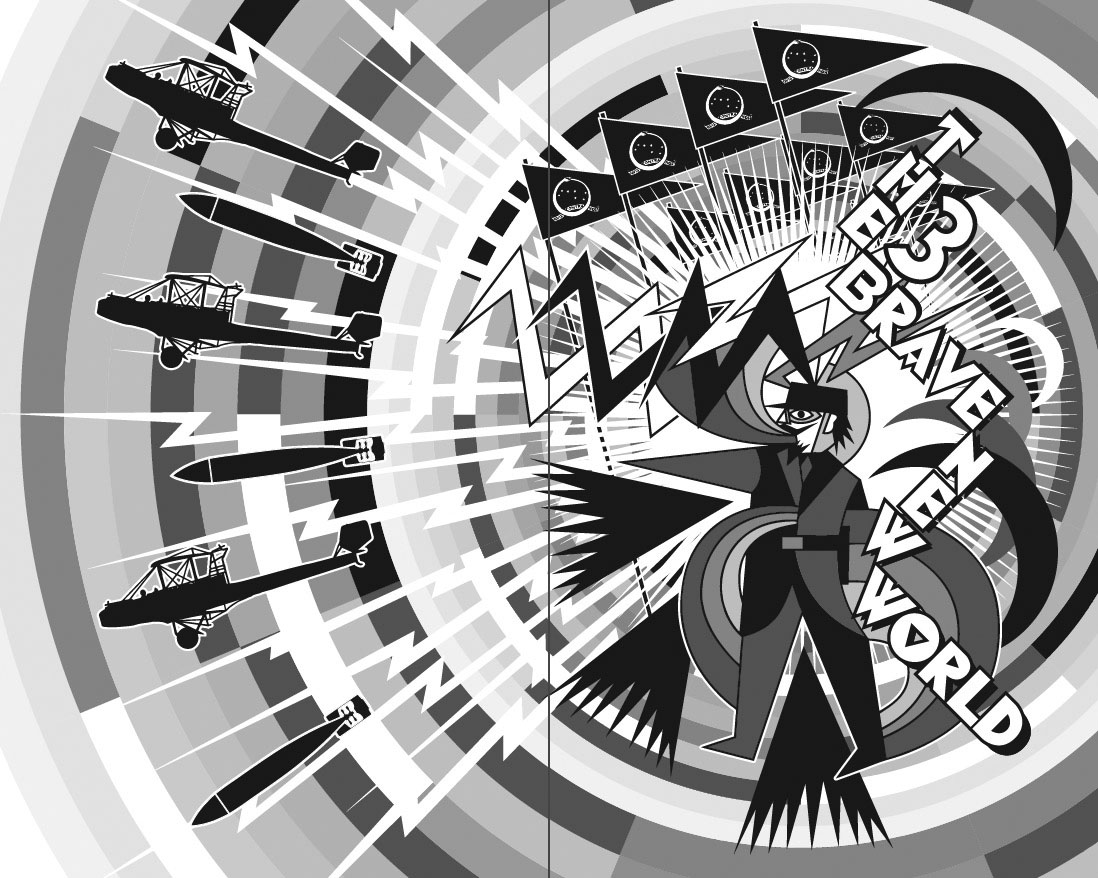
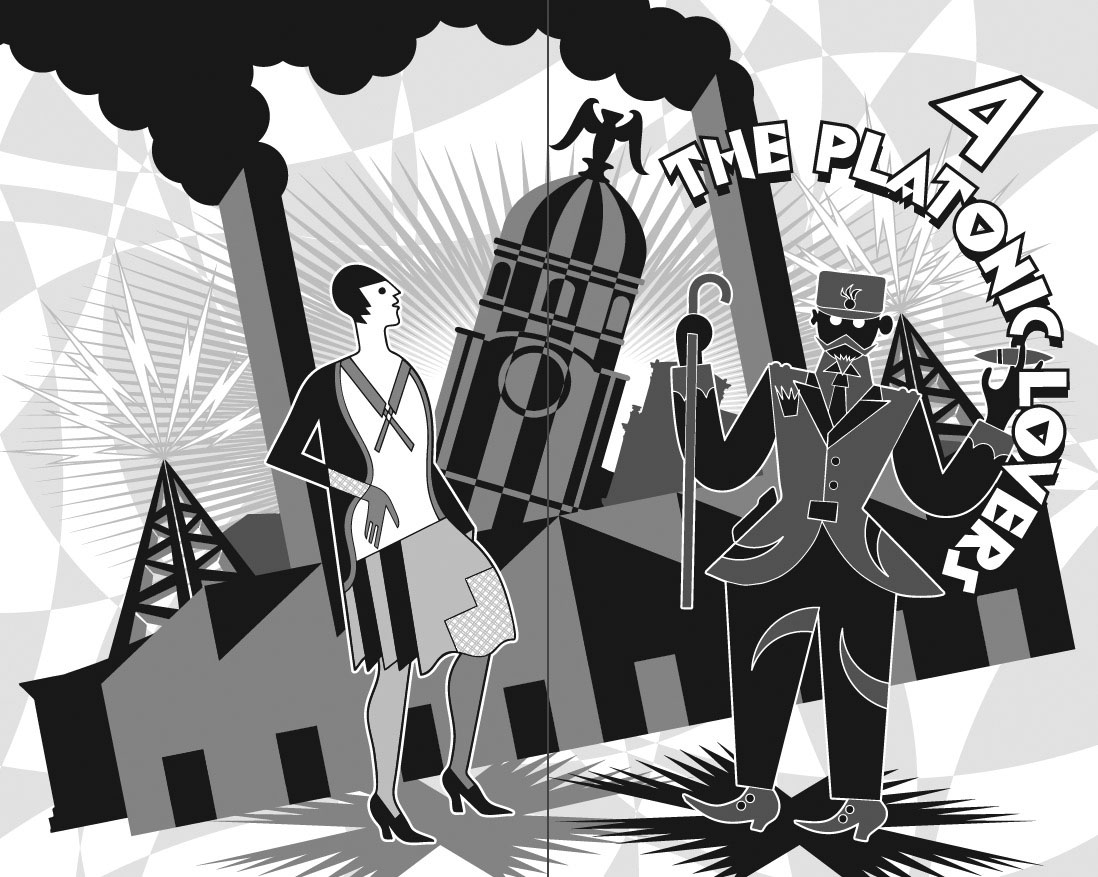
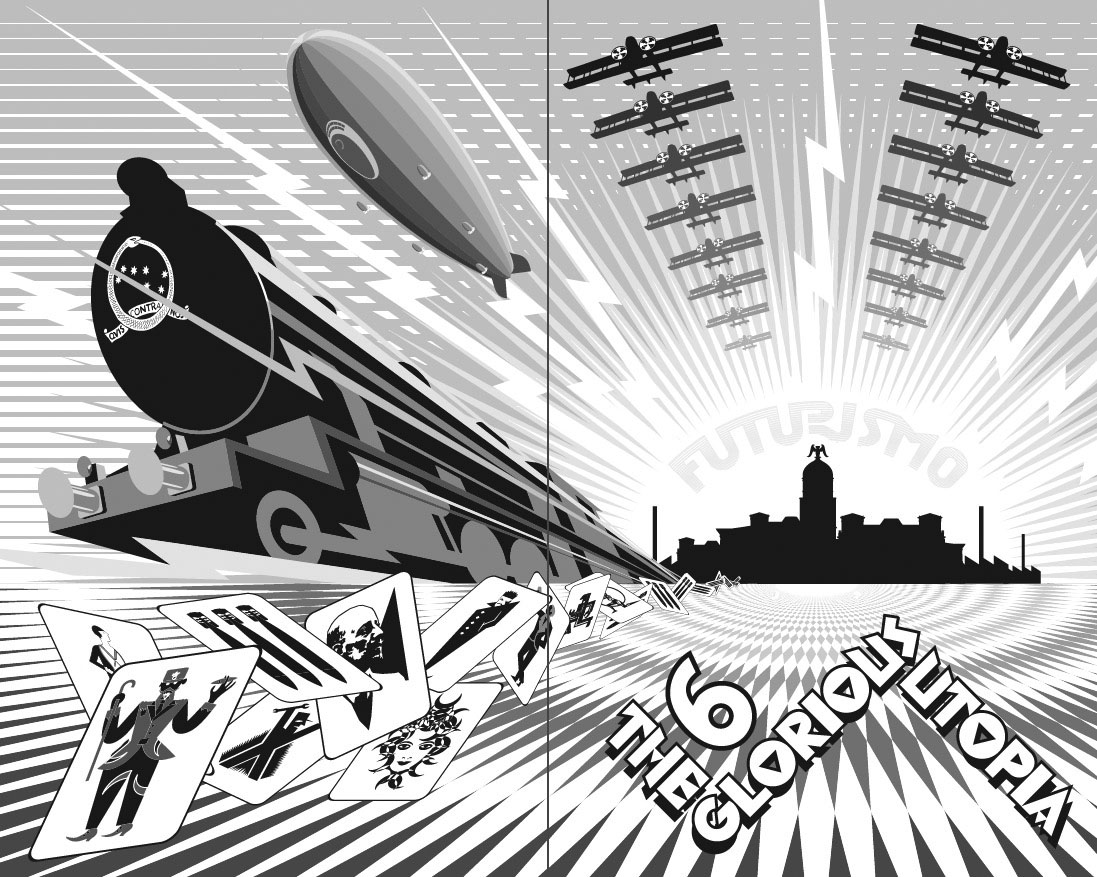
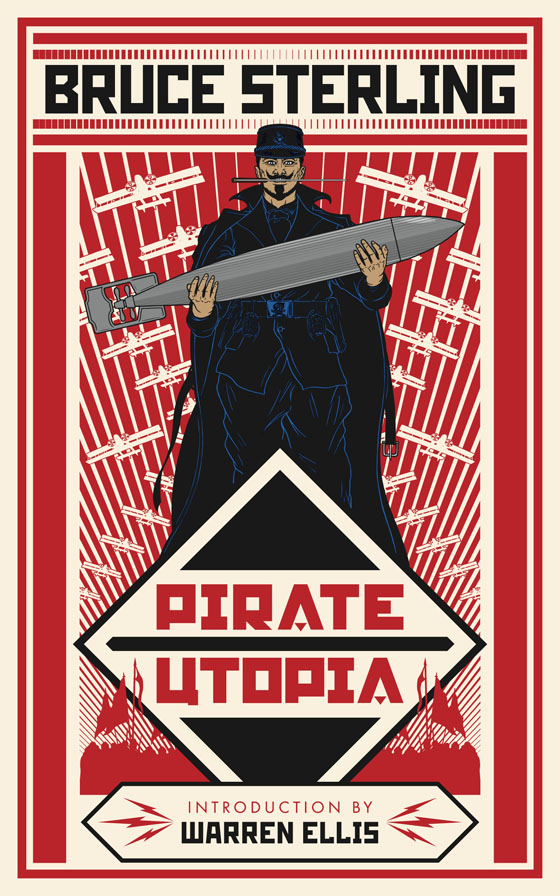
Here at last is the small hardback book I spent most of February and March working on. Pirate Utopia is published this week, and I’m pleased that it’s been very well received, with reviews drawing attention to the illustration and design as well as the text. This is a dieselpunk alternate history which begins in 1920:

WHO are these bold revolutionaries pillaging their confused European neighbours? The Futurists! Utopian outlaws of Italy’s tiny Regency of Carnaro, unlikely scourge of the Adriatic Sea!

It is the end of the Great War, and yet there is unrest in newly formed Carnaro. Carnaro is utterly in thrall to all things new, no matter how impractical or improbable. Futurism unites artists, pirates, propagandists, veterans, scientists, and libertines alike; military innovation and unabashed gratification rule the day. No one will rest until they crush Europe’s communists, capitalists, fascists, and bewildered coastal townsfolk.

But some have theorized that the Soldier-Citizens of Carnaro are not completely sane. At the dawn of mutiny, they are led by on ever-changing, passionate coterie, which may include:

* Lorenzo Secondari, the infamous Pirate Engineer, leader of ferocious Croatian raiders (and theatre enthusiasts)
* Blanka Piffer, staunch patriot and smartly clad Syndicalist manager of a torpedo factory staffed exclusively by women
* The Prophet, charismatic warrior-poet ruthless dictator, and very active proponent of free love
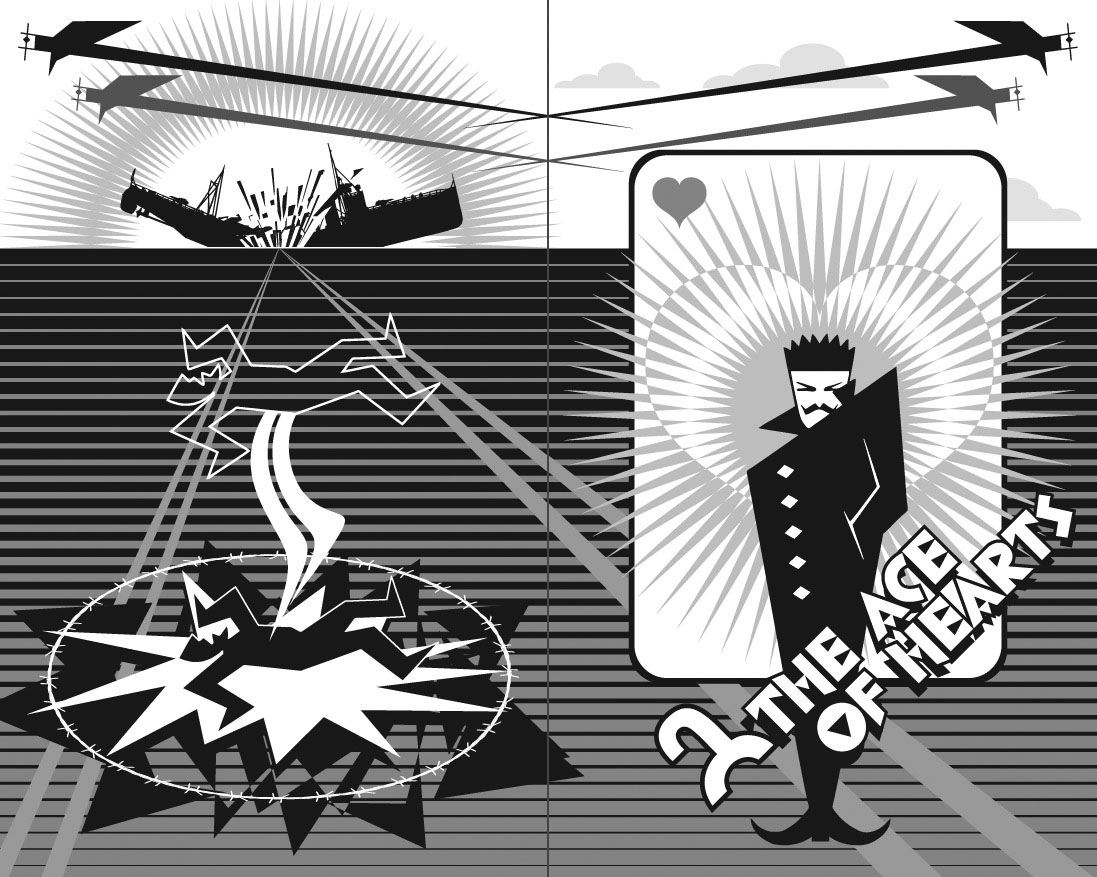
* The Ace of Hearts, dashing aristocrat spy, yogi, drug pusher, and combat pilot
* The Art Witch, the compelling Milanese millionairesse in the inner circle and mysterious, avid occultist

Two infamous Americans have arrived in Carnaro offering a Faustian bargain. Will HP Lovecraft and Houdini betray their own nation, and lead the Futurists to international glory?

No need to emphasis the pertinence of a story of global political turmoil appearing at this point in time. Back in March the traumas of Brexit and the US election were mere possibilities rather than the unavoidable facts they are today. Pirate Utopia doesn’t necessarily reflect the present moment but some of the resonances are, shall we say, suggestive. Bruce Sterling, as noted earlier, is a futurist (as distinct from a Futurist), and had this to say recently about the current state of affairs.
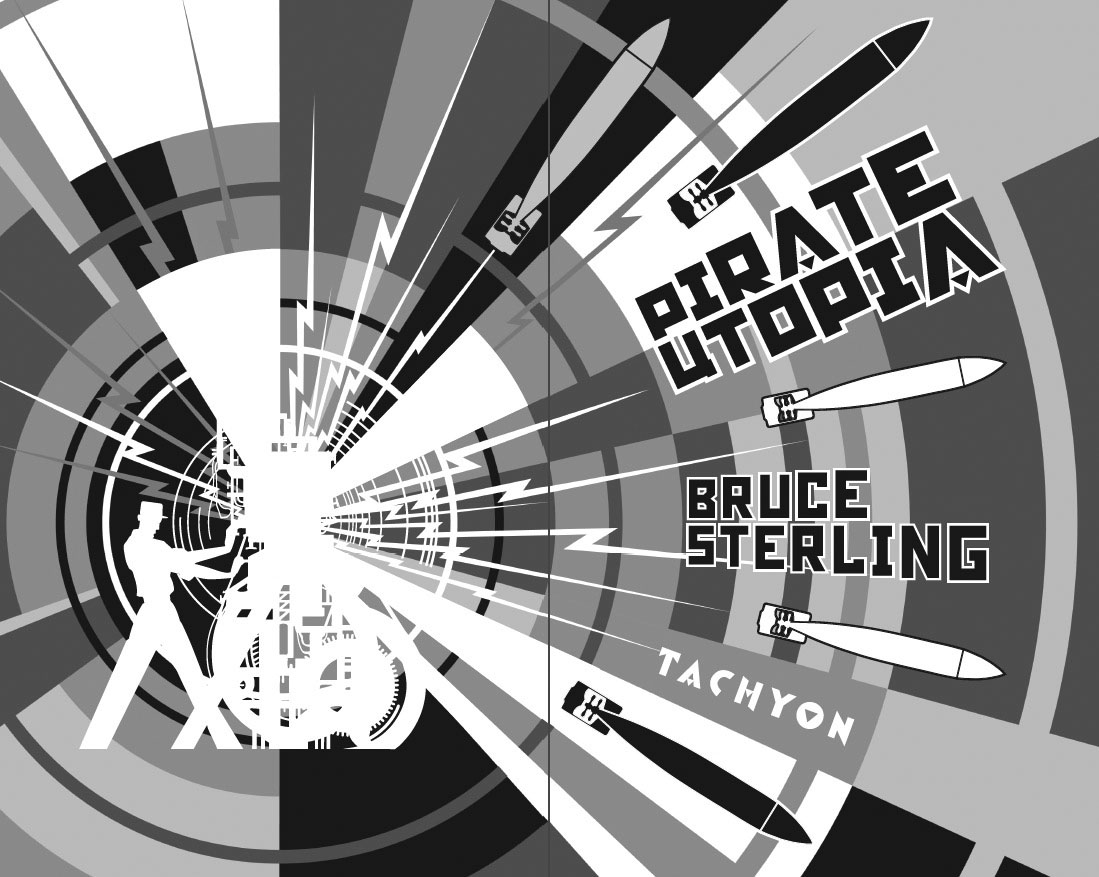
pirate1.jpg

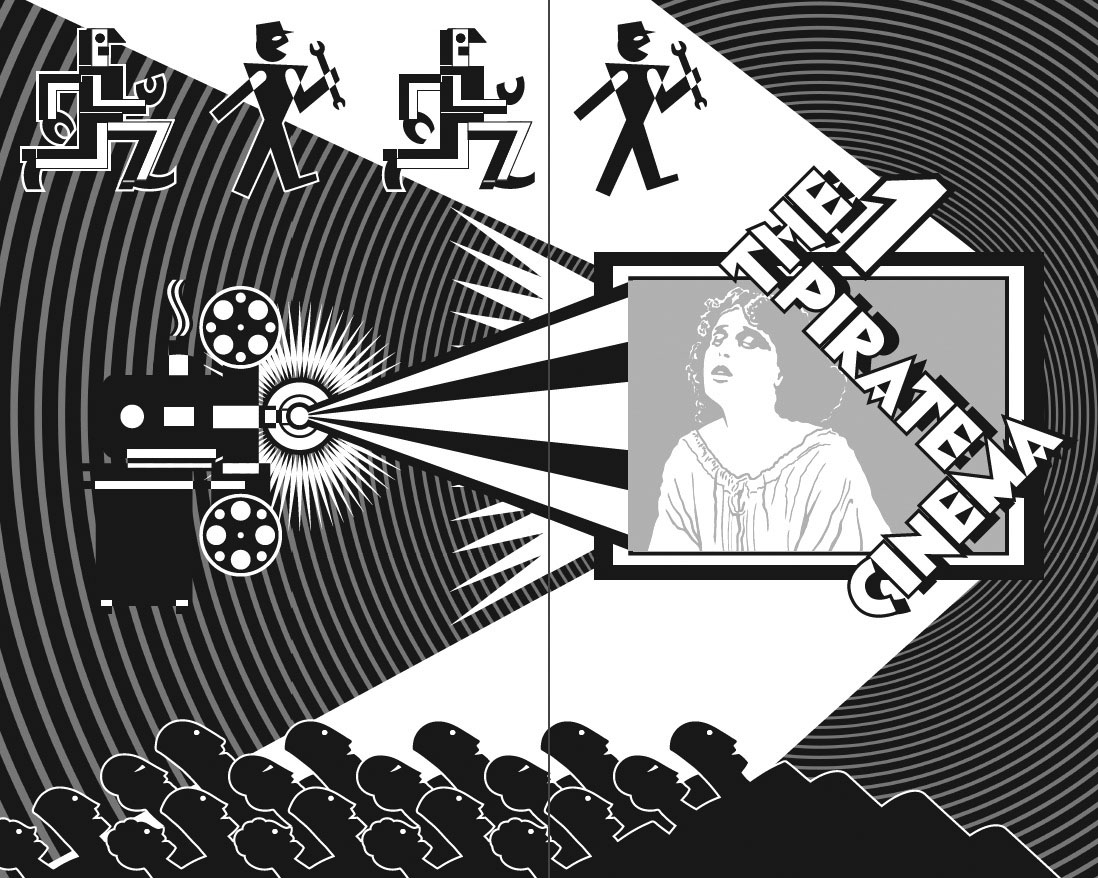
The chapter spreads and other interior graphics run variations of the works of Fortunato Depero and others. Depero was an ideal choice not only because his work tends to the cartoonish—this is a humorous book about serious matters—but much of it is bold and monochromatic, ideal for deployment as black-and-white graphics. Ordinarily I’d write a little more about the art influences, but since I already did so inside the book itself it seems better to encourage those who want to know more to buy a copy. You can, however, see a few more of the page layouts here. A book about Interesting Times for Interesting Times. Join the Futurist Revolution!
pirate2.jpg

pirate3.jpg

pirate4.jpg

pirate5.jpg

pirate6.jpg

pirate7.jpg

Previously on { feuilleton }
Futurismo!

The mystery of trams

quays-black.jpg

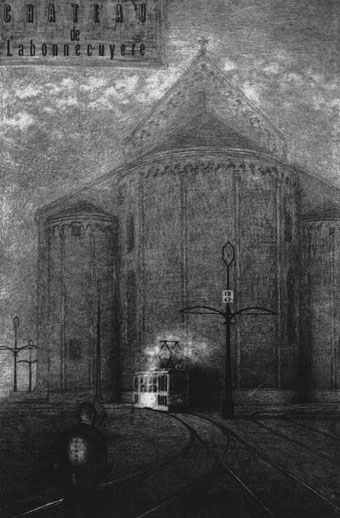
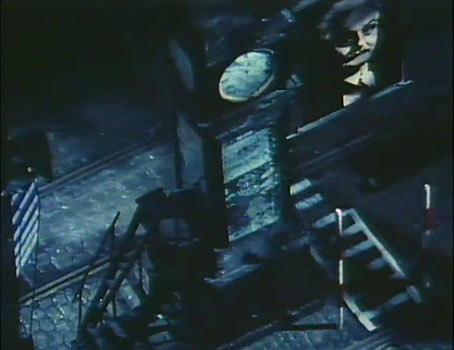
Chateau de Labonnecuyere (c. 1970s) by The Brothers Quay.

Trams are a recurrent feature in the early drawings of the Brothers Quay, and they’ve also appeared in the Quays’ earliest animated films and in some of their designs for the stage. I respond to this fetishisation on the deepest level having been born and raised on the Fylde coast of Lancashire, an area which was for many years the only place in Britain that kept its tramways after the rest of the country had given over the streets to buses and cars. Trams are so ingrained in my consciousness that I still dream about the trams of my childhood, many of which were rattling, streamlined things dating back to the 1930s. Manchester was tramless when I arrived in the city in 1982 but a few years later the council embarked on an ambitious and far-sighted scheme to return trams to the city’s streets. The first routes opened in 1991, and the network has been evolving ever since, pushing out of the centre along disused rail lines.

delvaux1.jpg

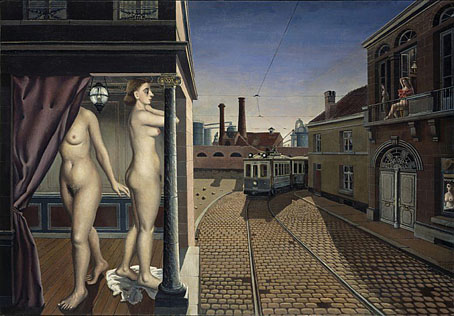
La Rue du Tramway (1938–1939) by Paul Delvaux.

The Quays aren’t alone in being attracted to this form of public transport. Trams haunt a certain type of oneiric European imagination, and I often wonder where the attraction lies. I think it’s something to do with their small scale and the way they remain bounded within the cities they serve. Trains have a romance and mythology of their own but are wide-ranging and far more common, as are buses whose presence on a city street is a reminder that the tram can be replaced. The Quays are Europhiles so they no doubt see the trams of the Continent as another feature of European city life that’s more arresting to American eyes. This post gathers some of the Quays’ uses together with other notable (and favourite) examples.

delvaux2.jpg

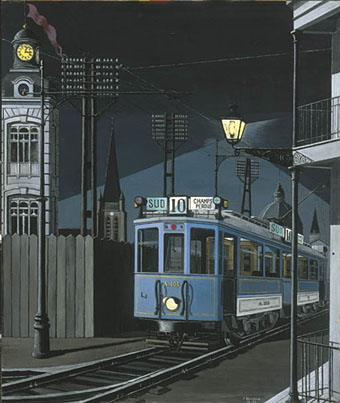
Tram nocturne (1950) by Paul Delvaux.

Several of the examples listed here are Belgian which either means that trams exercise the Belgian imagination more than that of other nations, or I happen to pay more attention to Belgian art. (Probably a little of both.) Paul Delvaux put trams into several paintings but seems to have been the only Surrealist to do so.

tram1.jpg

tram2.jpg

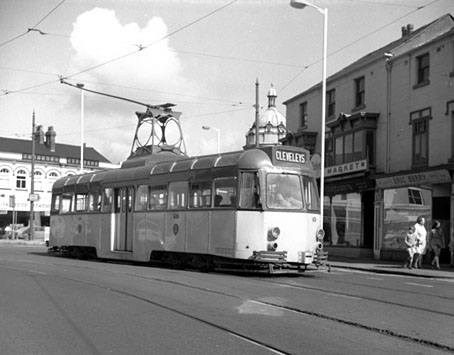
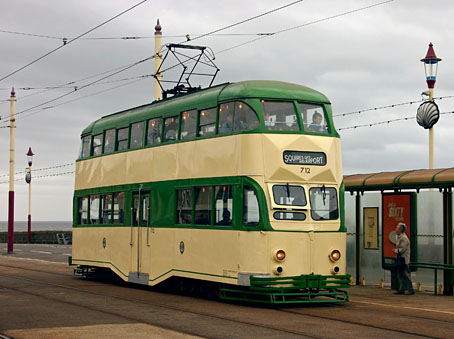
The trams that haunt my imagination are the cream-and-green vehicles that trundled for decades up and down the Fylde coast between Blackpool and Fleetwood. These machines used to run along the line at the end of the street I grew up in so there’s never been a day I can remember when I wasn’t aware of the tram—and of these vehicles in particular—as a viable mode of public transport. Looking at the websites of tram enthusiasts reveals the different names for each generation of Blackpool trams; so I now know that the bow-ended ones (which I always liked) are known as Brush Railcoaches, while the double-deckers are known as Balloons. None of these names were ever used by locals.

schuiten.jpg

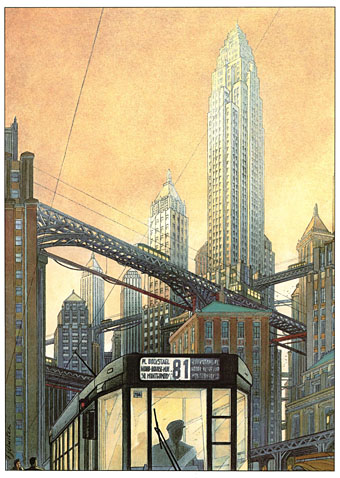
Back to Belgium, and the comics and illustrations drawn by the marvellous François Schuiten are filled with trams. I’ve written at length about the Obscure World mythos of Schuiten and Peeters so rather than repeat myself I’ll point to the mystery of Tram 81, a recurrent and unexplained presence in Schuiten’s work.

nocturna1.jpg

Nocturna Artificiala.

nocturna2.jpg

Nocturna Artificiala.

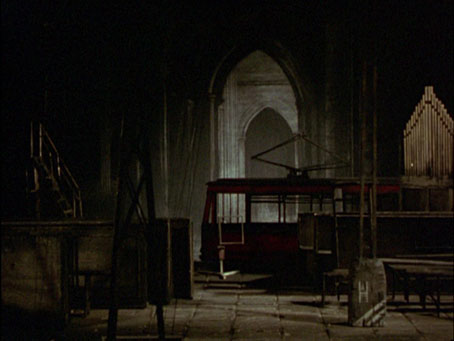
Trams for the Brothers Quay are the small European variety rather than the streetcars seen in some American cities. One of the brothers’ Black Drawings, Chateau de Labonnecuyere, features a pantographed vehicle that glides through their later animated films. The first of these, Nocturna Artificiala (1979), is a wordless masque involving the yearning relationship between the solitary puppet character and an empty, nocturnal tram. The film is an animated extension of Chateau de Labonnecuyere which not only features the drawing itself but also includes a unique moment where the tram glides through the vast cathedral seen in the background.

janacek1.jpg

Leos Janacek: Intimate Excursions.

janacek2.jpg

Leos Janacek: Intimate Excursions.

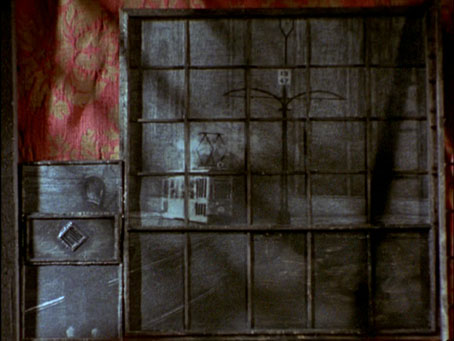
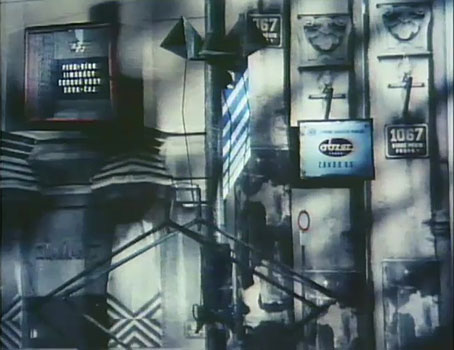
The power-line supports seen in Chateau de Labonnecuyere are a recurrent motif in the Quays’ works. They appear together with the Nocturna Artificiala tram in Leos Janacek: Intimate Excursions (1983), and may be glimpsed among the faded detritus in Street of Crocodiles (1986).

avalon1.jpg

Avalon.

avalon2.jpg

Avalon.

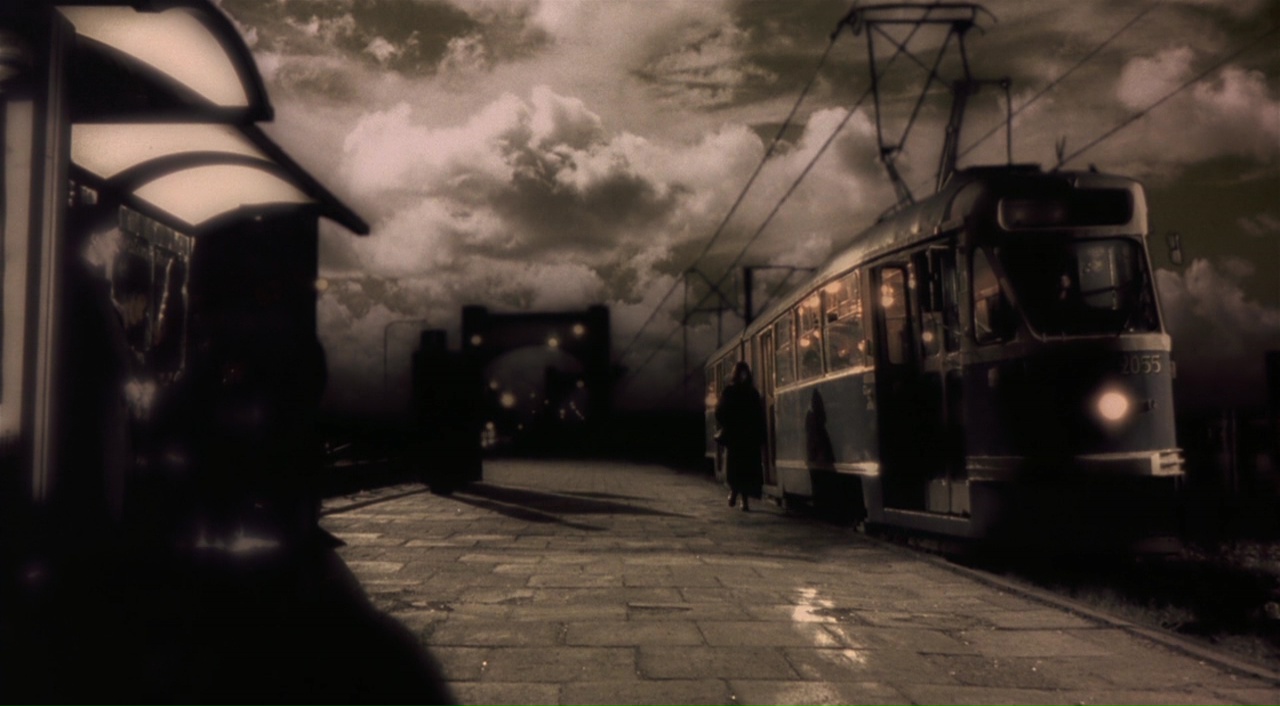
I don’t know what the Quays would make of the science-fiction scenario of Mamoru Oshii’s Avalon (2001) but the recurrent scenes of a nocturnal tram journey would probably appeal, especially since the tram in question is a Polish one. Mamoru Oshii is the director of many SF-oriented animations, not least The Ghost in the Shell (1995). Avalon was a surprise when it appeared (and then seemed to vanish all-too-quickly): a live-action drama concerning the players of a virtual reality game which can have lethal consequences for the contestants. The film was made in Poland with a Polish cast, and the scenes are heavily processed throughout, with everything given a sepia wash. Coming after The Matrix, Dark City et al, the virtual reality aspect wasn’t so much of a surprise but I loved the juxtaposition of a futuristic story in a run-down European setting. And the trams, of course. The dream-like atmosphere of the film’s mundane scenes brings everything back to Delvaux and his tram nocturnes.

I was going to add Tramway (1966) to this list, a short student film directed by Krzysztof Kieslowski, but it’s not especially mysterious. It’s worth a look if you like Kieslowski, however, and may be watched here. If anyone has suggestions for other mysterious trams then please leave a comment.

Elsewhere on { feuilleton }
The Quay Brothers archive

Previously on { feuilleton }
Paul Delvaux: The Sleepwalker of Saint-Idesbald

Weekend links 333

timeout.jpg

Time Out (London), no. 2403. No illustrator or designer credited.

• October isn’t all about the dark, there’s also psychedelia: Ned Raggett reviews a new collection of British psych, Let’s Go Down And Blow Our Minds: The British Psychedelic Sounds of 1967, while Floodgate Companion, a forthcoming collection of art by Robert Beatty, is previewed here.

• Mixes of the week (aside from my own, of course): Samhain Seance 5: Invasion of the Robot Witch by The Ephemeral Man, Thee Finders Kreepers Halloween Spezial, and Secret Thirteen Mix 199 by Blue Hour.

• “No diggin’ ‘ere!” Adam Scovell revisits the ghostly locations of the BBC’s A Warning to the Curious, and presents a short film based on the same.

• Stanley Kubrick’s film of The Shining has lost its shine through endless quotation and over-familiarity, says Anne Billson. Hard to disagree.

Between Ballard’s Ears: in which two short stories by JG Ballard—Track 12 and Venus Smiles—are dramatised in binaural sound.

John Carpenter talks to Adam Woodward about remakes, his love of early synthesisers and why nostalgia works in mysterious ways.

• Next month at the British Library: Brion Gysin: A Centennial Invocation with Alan Moore, Iain Sinclair, Barry Miles and others.

Peter Bebergal on the Fraternity of the Rosy Cross, “a shadowy medieval brotherhood that probably didn’t exist”.

Until The Hunter, a new album by Hope Sandoval and The Warm Inventions, is streaming here.

• San Fran-disco: Geeta Dayal on how Patrick Cowley and Sylvester changed dance music forever.

• A small portion of Bill Laswell‘s vast back catalogue is now on Bandcamp.

• At MetaFilter: The strange history of books bound in human skin.

• Italian composer Fabio Frizzi remembers 50 years of cult horror.

Matthew Cheney on the strange horrors of Robert Aickman.

Jóhann Jóhannsson’s favourite records

Dark Start (1995) by ELpH vs Coil | Darkstalker (2000) by Bohren & Der Club Of Gore | Dark (2012) by Moritz Von Oswald Trio

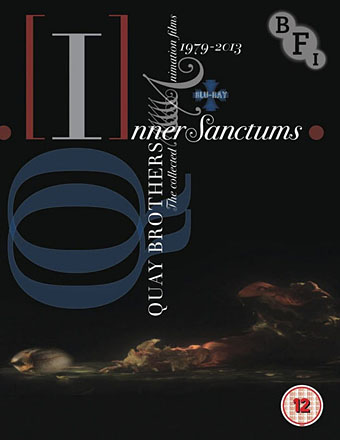
Inner Sanctums—Quay Brothers: The Collected Animated Films 1979–2013

quays.jpg

In previous posts about the Quay Brothers’ films I’ve expressed a hope that we might see a new collection from the BFI that gathers together more of their recent works. That’s what we have now in a 2-disc Blu-ray set that will be released in the UK on 10th October.

quay.jpg

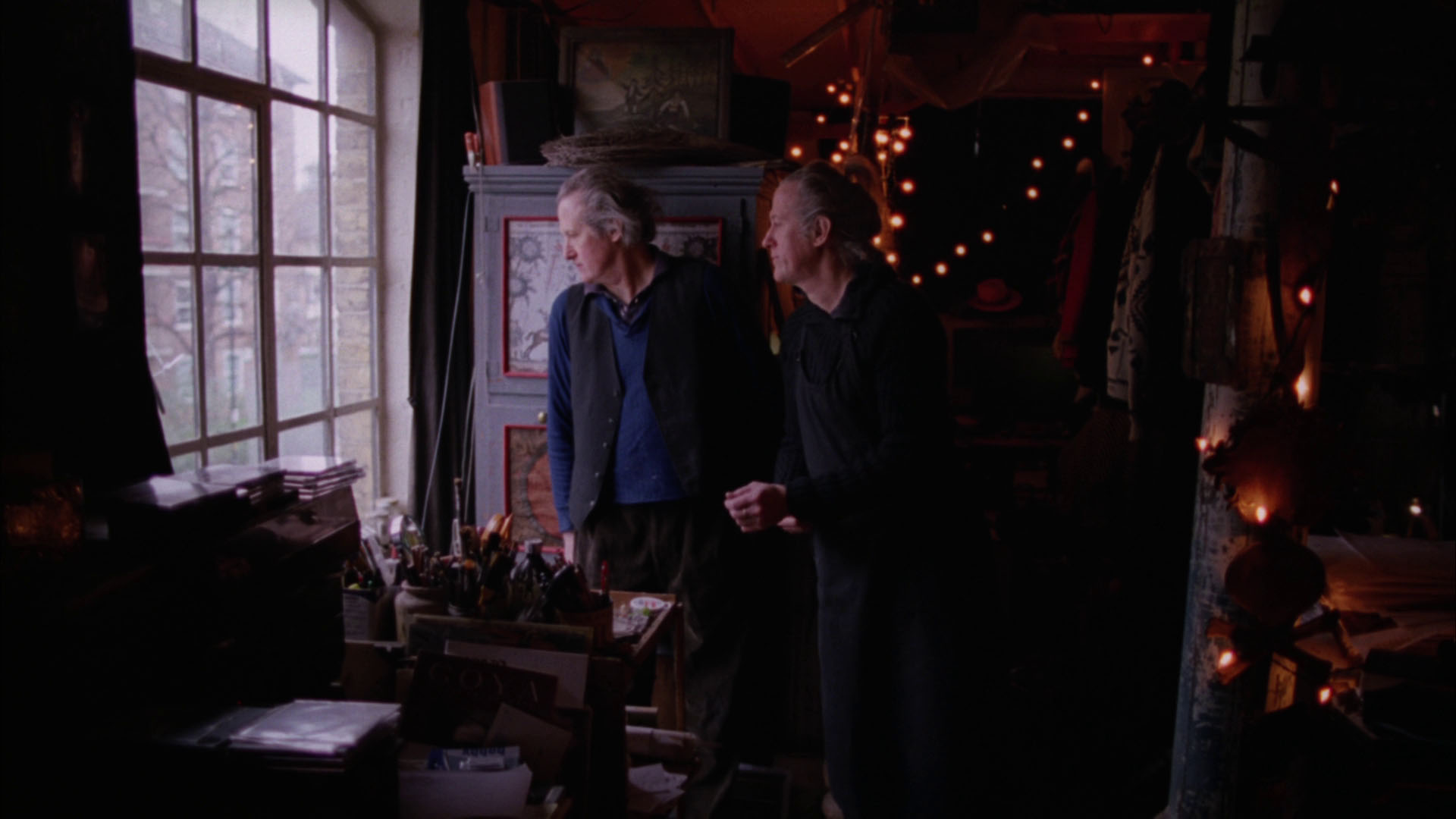
Quay (2015) directed by Christopher Nolan.

The new collection repeats the contents of the earlier BFI DVD set, The Short Films 1979–2003, while adding some of their recent commissions including Maska (2010), Through the Weeping Glass (2011), and Unmistaken Hands: Ex Voto F.H. (2013). Among the extras there’s a short portrait of the brothers, Quay (2015), directed by Christopher Nolan. This shows the Quays at work in their Southwark studio where they discuss the technical details of animation and puppet-making a little more than I’ve seen in other interviews. Nolan’s film is both beguiling and frustrating, the latter for being so inexplicably short. When I first saw Quay announced I thought it might be a feature-length documentary rather than a fleeting glimpse; the Quays have been interviewed regularly over the past few years so they’re not exactly unforthcoming. I’m hoping now that Nolan’s public enthusiasm for the brothers might at least help them to make another feature, a decade having elapsed since The Piano Tuner of Earthquakes (2005).

street1.jpg

Street of Crocodiles (1986).

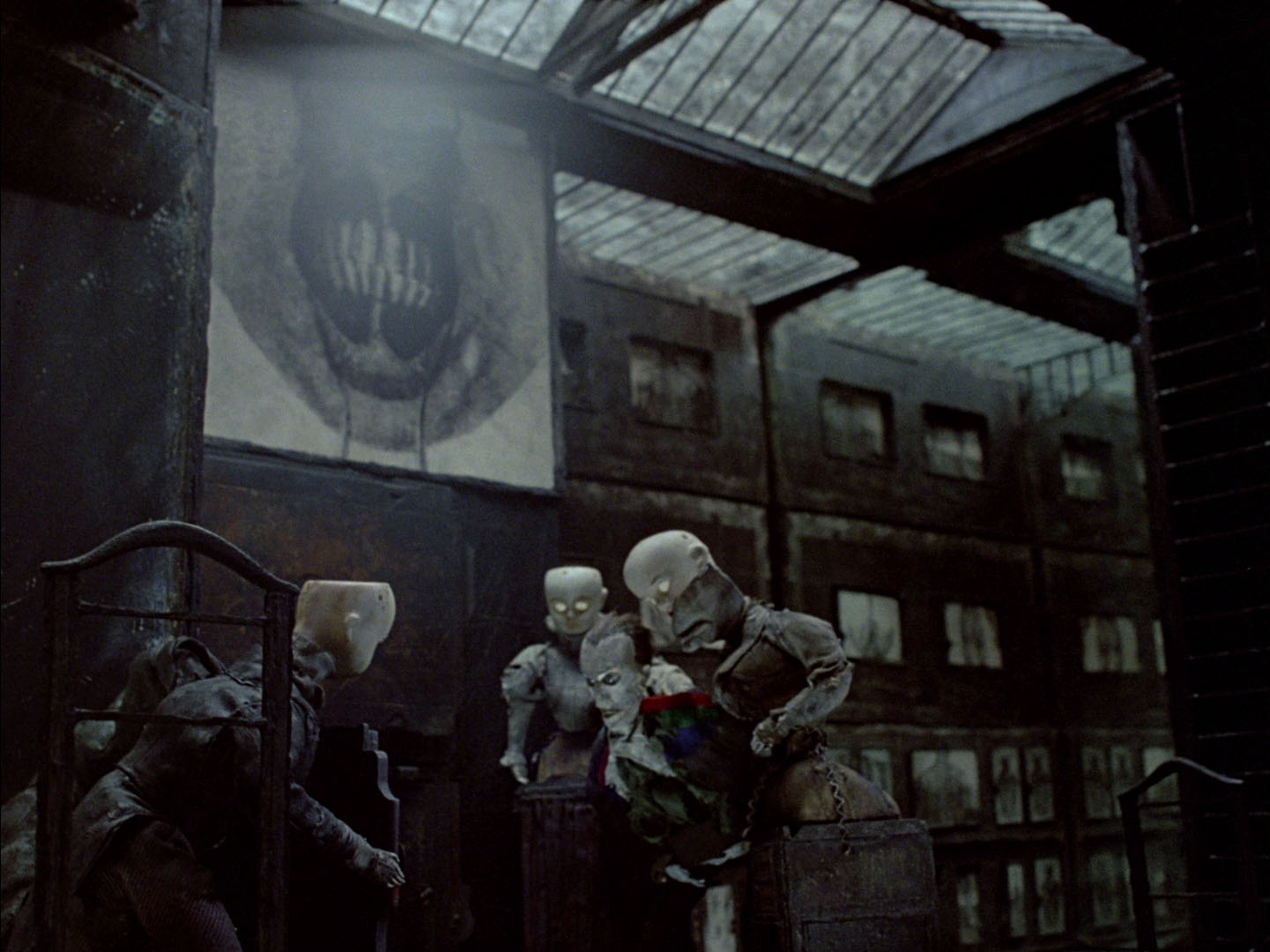
As to the films, seeing them in high-definition is certainly a plus although the earliest ones were all made in 16mm so they don’t gain a great deal. Street of Crocodiles, however, looks superb, and I found myself noticing details that I’d earlier missed despite numerous viewings. I’m disappointed that two early shorts, Igor: The Paris Years (1982) and Leoš Janáček: Intimate Excursions (1983), remain unreleased due to apparent problems with music copyrights. (See this post for YouTube links.) Also uncollected are their other music videos apart from the two produced for His Name Is Alive, together with a handful of other short pieces. (See this post for further links.)

street2.jpg

Street of Crocodiles (1986).

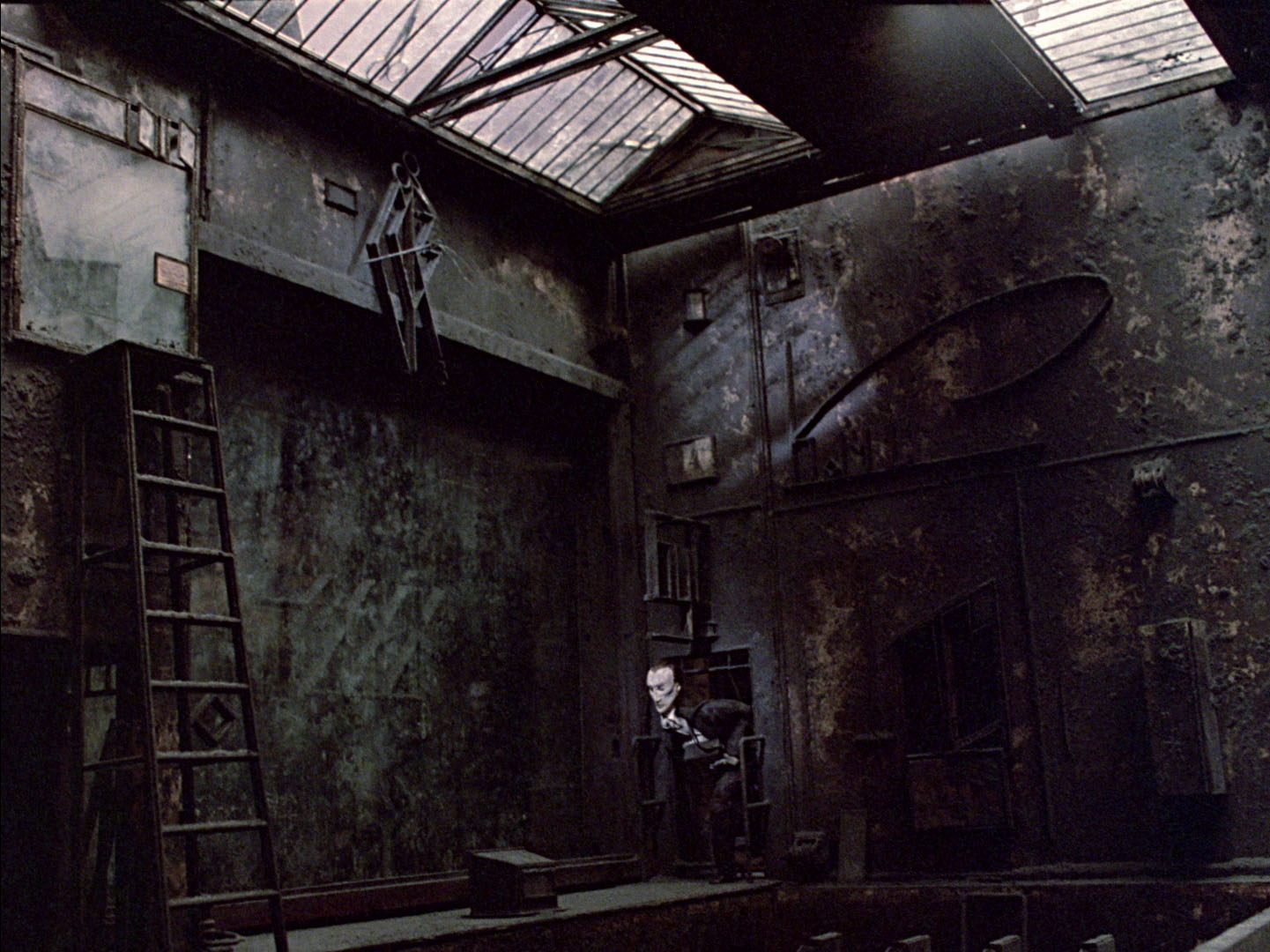
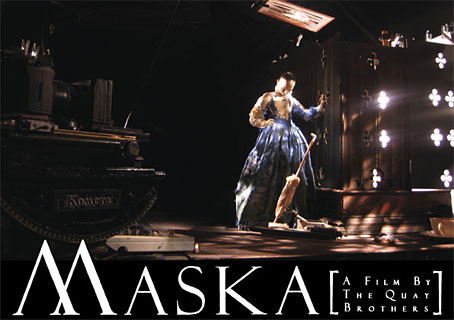
Of the longer films on the second disc, Maska has become a favourite, with its combination of a baroque science-fiction scenario (from Stanisław Lem) and a score by Penderecki. Through the Weeping Glass, a 30-minute documentary about the medical oddities housed in the Mütter Museum in the Quays’ home city of Philadelphia, is a kind of companion piece to The Phantom Museum (2003), a similar study of the Wellcome Collection in London. This is the first film the Europhile Quays have made in the US, and comes with a short documentary showing them at work on the film, and an interview about the production. I’m still getting used to their shift to digital video—I miss the grain and texture of their films—but since I’ve been working digitally myself for many years now I can’t complain if others choose to do the same.

maska1.jpg

The preview discs of the new collection came without the booklet which will be present in the package. This will include an updated Quays Dictionary by Michael Brooke (as featured in the previous BFI collection), and the 2012 “interview” by the deceased calligrapher Heinrich Holzmüller, On Deciphering the Pharmacist’s Prescription for Lip-Reading Puppets. The latter appeared in the catalogue for the Quays’ MoMA exhibition where it was printed at an eye-straining point size. I’m hoping the BFI version will be an improvement.

The Films
Nocturna Artificialia (1979)
The Cabinet of Jan Švankmajer (1984)
This Unnameable Little Broom (1985)
Street of Crocodiles (1986)
Rehearsals for Extinct Anatomies (1988)
Stille Nacht I: Dramolet (1988)
Ex-Voto (1989)
The Comb (1990)
Anamorphosis (1991)
The Calligrapher (Parts I, II, III) (1991)
Stille Nacht II: Are We Still Married? (1992)
Stille Nacht III: Tales from Vienna Woods (1993)
Stille Nacht IV: Can’t Go Wrong Without You (1994)
In Absentia (2000)
The Phantom Museum (2003)
Songs for Dead Children (2003)
Eurydice, She So Beloved (2007)
Alice in Not so Wonderland (2007)
Kinoteka Ident (2008)
Inventorium of Traces (2009)
Wonderwood for Comme des Garçons (2010)
Maska (2010)
Through the Weeping Glass (2011)
Unmistaken Hands: Ex Voto F.H. (2013)

Special features
Introduction by the Quay Brothers (2006, 20 mins)
Quay (2015, 8 mins): a film by Christopher Nolan
Quay Brothers audio commentaries for This Unnameable Little Broom, Street of Crocodiles, Stille Nacht I-III and In Absentia
The Falls [excerpt] (1980, 5 mins)
BFI Distribution ident (1991, 30 secs)
The Summit (1995, 12 mins)
No Bones About It: Quay Brothers (2010, 12 mins)
Behind the Scenes with the Quay Brothers (2013, 31 mins)
Unmistaken Hands: Ex Voto F.H. trailer (2 mins)

Elsewhere on { feuilleton }
The Quay Brothers archive

Weekend links 329

vyletal.jpg

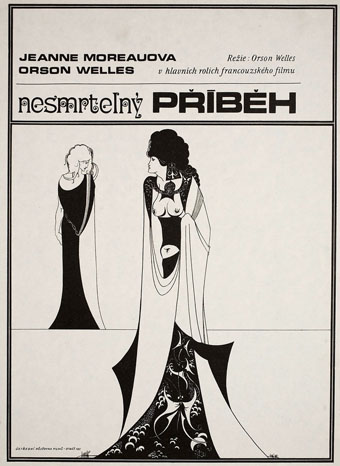
Josef Vyletal borrows figures from Aubrey Beardsley’s Salomé for a Czech poster promoting The Immortal Story (1969) by Orson Welles. Vyletal’s own paintings were often strange and surreal.

Pale Fire is Nabokov’s “great gay comic novel,” says Edmund White. A surprising but not inappropriate reappraisal. White has noted in the past that Nabokov “hated homosexuality” despite having a gay brother and uncle. The portrayal of Charles Kinbote in Pale Fire isn’t unsympathetic if you overlook his being delusional, and possibly insane…

• At Folk Horror Revival: details of the charity donations raised by sales of the Folk Horror Revival books, the first of which featured my David Rudkin essay. A one-day Folk Horror Revival event takes place later this month at the British Museum, London.

• Mixes of the week: The Bug presents Killing Sound Chapter 2: Inner Space, a 2-hour blend of “sci-fi scores, expansive atmospheres and synthesized psychedelia”; Decoded Sundays presents Scanner; Secret Thirteen Mix 197 is by LXV.

Stars Of The Lid unveil a James Plotkin remix of their Music For Twin Peaks Episode #30 Pt. 1. Related: the hype for the new Twin Peaks series gets into gear with a teaser.

• Robert Aickman’s only novel, The Late Breakfasters (1964), is being given its first US publication by Valancourt Books.

• “Don’t dream it, bet it.” Evan J. Peterson on 40 years of The Rocky Horror Picture Show.

• Anna von Hausswolff’s sister, Maria, directs a video for Come Wander With Me / Deliverance.

• RIP Michael O’Pray, film writer and curator of many festivals of experimental cinema.

• Oli Warwick talks to electronic musicians about the influence of the late Don Buchla.

Breakfast In Bed (1969) by Dusty Springfield | Alan’s Psychedelic Breakfast (1970) by Pink Floyd | Another Breakfast With You (2001) by Ladytron