Weekend links 367

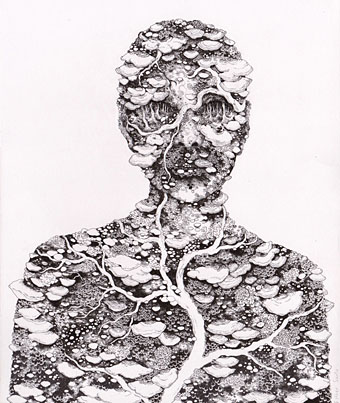
sarto.jpg

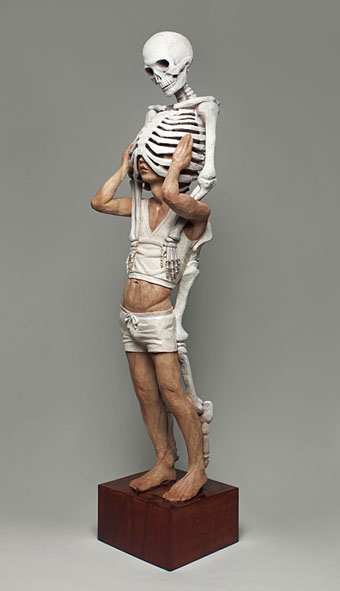
Human Nature by Esther Sarto.

I Feel Love: “Donna Summer and Giorgio Moroder created the template for dance music as we know it”. Bill Brewster on the creation of one of the greatest songs ever recorded.

The Tearoom by Robert Yang “is a (free) historical public bathroom simulator about anxiety, police surveillance, and sucking off another dude’s gun”.

Tim Walker’s Leonora Carrington-themed fashion shoot with Tilda Swinton reaches i-D‘s website at last. More pictures and in better quality.

Joe Dante on the legacy of Nigel Kneale. Related: We Are The Martians: The Legacy of Nigel Kneale, edited by Neil Snowdon.

Beth Comery‘s report on the progress of Gage Prentiss’s planned statue of HP Lovecraft for Providence, RI.

• The Plagiarist in the Kitchen: Jonathan Meades talks food and cooking with John Mitchinson.

• At Dangerous Minds: “Forget Louis Wain’s psychedelic cats, here are his crazy Cubist ceramics”.

• “Court orders Salvador Dalí‘s body be exhumed for paternity test.”

Flash the flesh: Manchester’s gay club heroes – in pictures.

Rick Poynor on the joy and sadness of dust.

MostlyCatsMostly

From The Tea-Rooms Of Mars…To The Hell-Holes Of Uranus: “Beguine”, “Mambo”, “Tango” (1981) by Landscape | I Feel Love (Patrick Cowley Mega Mix) (1982) by Donna Summer | Martian Sperm And Bagpipes (1991) by Helios Creed

Weekend links 364

focusgroup.jpg

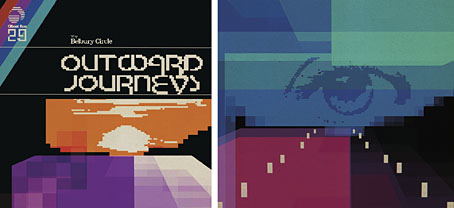
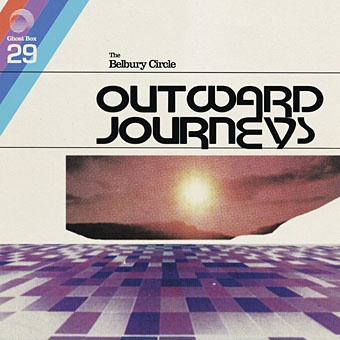
Stop-Motion Happening with The Focus Groop is a new album by The Focus Group (now a Groop, apparently, à la Stereolab), and the next release on the Ghost Box label. Design, as always, by Julian House.

• At Dennis Cooper’s: Sypha presents…Voyager en Soi-Même: a Tribute to JK Huysmans’ Là-Bas. Related: Henry Chapront’s illustrations for a 1912 edition of Huysmans’ novel.

• At the BFI: Graham Fuller on Penda’s Fen and the Romantic tradition in British film; Pamela Hutchinson and Alex Barrett choose 10 great German Expressionist films.

• The Provenance of Providence: Chris Mautner on the Lovecraftian comic series by Alan Moore and Jacen Burrows.

Luke Turner on Sunn O))): the ecstatic doom metallers turning rock concerts into “ritualist experiences”.

• At Dangerous Minds: The homoerotic “needleporn” art of Zachary Nutman.

Conor McGrady on the visual art of Nurse With Wound’s Steven Stapleton.

• Collage and Mechanism: Anita Siegel’s art for Doubleday Science Fiction.

• Mix of the week: My name is Legion: Chapter 1 by The Ephemeral Man.

ChrisMarker.org is asking for small donations to help keep it running.

• 1967 is the year pop came out, says Jon Savage.

Allen Ginsberg’s Howl goes online.

Groupmegroup (1981) by Liquid Liquid | If I Were A Groupie (1995) by Pizzicato Five | Group Four (1998) by Massive Attack

Weekend links 361

f1x-2.jpg

The Future Vol.2 (2016) by f1x-2.

• One of the notable things about the reaction to the original series of Twin Peaks was the way in which Americans were astonished that something so outré could be allowed on television. Here in the UK the response was a little more subdued; we had, after all been spoiled for years by The Prisoner, Sapphire and Steel, and numerous odd and challenging dramas by Dennis Potter and others. Pre-dating all of these was The Strange World of Gurney Slade (1960), a six-part series starring Anthony Newley that was unprecedented in its Surrealism. Andy Murray looks back at the series, and at the rest of Newley’s career.

Andrew Dickson on Peter Ackroyd whose latest book, Queer City: Gay London from the Romans to the Present Day, is published later this month.

Alyona Sokolnikova on a Soviet vision of the future: the legacy and influence of Tekhikia – Molodezhi (Technology for the Youth) magazine.

You know who weren’t cops? All the radicals and queers and artists and dreamers that were there while I grew up, my mom and dad’s old friends from New York and the wider bohemian world, the actors and the drag queens and the dilettantes and the ex junkies and the current junkies, the kind of queer people who wouldn’t get caught dead getting married, the people who actually made the “old New York” of the myth into what it was. They were smart and they were funny and they were tougher than I can imagine and they were possessed of an existential commitment to the idea that life is complicated and so we shouldn’t be quick to judge. They were tolerant, in the true sense, even while they were tireless advocates for actual justice. […] Now we’re Rudy Giuliani, trying to get offensive art pulled off the walls. Now we’re the book burners. Now we’re the censors. Now we attack the ACLU for defending free speech. Now we screech about community morals. Now we’re the prison camp screws. That’s us. Me, I could never be one of the good ones. Never. I can never live up to that ideal. I know I’m not good enough. I know when the judgment day comes, I go down. And so I decline. You can decline, too.

Planet of Cops by Freddie deBoer, or how inflexible morality makes everyone a cop

• Mixes of the week: FACT Mix 601 by Dark Entries, Secret Thirteen Mix 221 by Eli Keszler, and XLR8R Podcast 490 by Ben Lukas Boysen.

• At Dangerous Minds: Punk, Patti Smith, William Burroughs & capitalism: A “conceptual conversation” with RE/Search’s Vale.

Emily Wells on the strange, irreverent worlds of Down Below and The Complete Stories of Leonora Carrington.

Rick Poynor on Mike Halliwell’s montages based on JG Ballard’s The Atrocity Exhibition.

• “Why are the British so scared of cannabis?” asks Professor David Nutt.

Witchcraft and the Gay Counterculture (1978) by Arthur Evans.

• At Dennis Cooper’s: Jacques Rivette Day.

Designing Penguin Modern Classics

Future Dub (1994) by Mouse On Mars | Future Proof (2003) by Massive Attack | Future (2004) by Alva Noto

Weekend links 360

sasaki.jpg

Threshold (2008) by Roku Sasaki.

• A previously unseen interview with Angela Carter from 1979 in which she talks to David Pringle about her evolution as a writer, literary influences and genre fiction.

• Among the highlights in the latest edition of Wormwood there’s Doug Anderson on Panacea by Robert Aickman, a “vast unpublished philosophical work”.

• The London Review Bookshop podcast: Marina Warner and Chloe Aridjis discuss Leonora Carrington.

The prose works, conversely, read like surrealist poetry. They were written according to a compositional method Roussel called le procédé (the procedure), in which a complicated system of puns rather than traditional narrative logic determines the progression of the story. In Locus Solus, the mad scientist Martial Canterel takes his colleagues on a tour of his country estate—“the lonely place” of the title—to show them the bizarre inventions generated by Roussel’s procédé. These include a device that constructs a mosaic made out of human teeth; a water-filled diamond in which a dancer, a hairless cat, and the head of Danton are suspended; and a series of corpses Cantarel has brought back to life with the fluid “ressurectine,” which compels them to act out the most important event of their former lives, to the scientists’ astonishment.

Ryan Ruby on Raymond Roussel, The Accidental Avant-Gardist

• The latest manifestation of paranormal electronica by The Electric Pentacle is entitled Black Ectoplasm.

Sergey Bessmertny‘s account of working as a camera technician on Andrei Tarkovsky’s Stalker.

• City Of Fallen Angels: The Bug vs. Earth. In conversation with Kevin Martin and Dylan Carlson.

• Sex and art by the Grand Canal: Judith Mackrell on Peggy Guggenheim in Venice.

• A Guide Through the Darkened Passages of Dungeon Synth.

• Mix of the week: XLR8R Podcast 489 by Samuel Rohrer.

• The late Mika Vainio/Panasonic live in 1996.

Xan Brooks on Cary Grant’s 100 acid trips.

Resurrection (1968) by Steppenwolf | Resurrection (1975) by Master Wilburn Burchette | Resurrection (1987) by Demons Of Negativity

Weekend links 355

carrington.jpg

Quería ser pájaro (1960) by Leonora Carrington.

• Artist and author Leonora Carrington was born 100 years ago this week. Marina Warner, an advocate of Carrington’s work in the years when the artist was “forgotten” (ie: ignored by those who should have known better), remembered her friend as someone adept at making “visible the invisible”. Elsewhere, Carrington’s centenary was noted by Phantasmaphile (with many links), Strange Flowers and the LRB, the latter being a Leonora Carrington A-Z by Chloe Aridjis.

Geeta Dayal on Ikutaro Kakehashi who died this week. The synthesizers, drum machines, effects units and other gear produced by Kakehashi’s Roland Corporation are inextricably entwined with the development of electronic music in the 1970s and 80s.

• Do we really need a compilation of singles by Can? Not when all the music has been available for years on albums and compilations. Of more interest is Rob Young‘s forthcoming (well…not until next year) biography of the band, All Gates Open.

• Out from Thames & Hudson this week: Vinyl . Album . Cover . Art: The Complete Hipgnosis Catalogue by Aubrey Powell.

• At Dangerous Minds: The Master of Moorcock: The psychedelic sci-fi book covers and art of Bob Haberfield.

Abigail Ward on Queer Noise: the history of LGB music & club culture in Manchester.

FullFathom5, home of “something rich and strange” makes a welcome return.

• At Flickr: Occult Beliefs and Themes in British Popular Culture (1875–1947)

• At I Love Typography: Jamie Clarke on the evolution of chromatic fonts.

• Mix of the week: a mix for The Wire by Patterned Air Recordings.

Invisible Cities (1990) by Invaders Of The Heart | Invisible Architecture (1997) by John Foxx | Invisible (2005) by Monolake