Weekend links 504

maclean.jpg

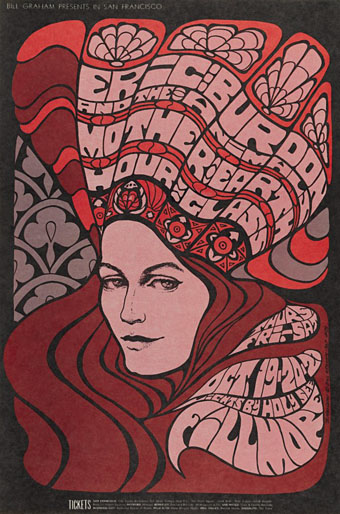
Eric Burdon and the Animals, Mother Earth, Hour Glass; Fillmore Auditorium, October 19-21, 1967 by Bonnie MacLean.

• RIP Bonnie MacLean, another of the original San Francisco poster artists, and the only woman of note in the US psychedelic poster scene. (Not the only woman, however; in Europe we had Marijke Koger.) Related: Bonnie MacLean’s posters at Wolfgang’s. And RIP to illustrator Tom Adams, an artist whose exceptional covers for novels by Agatha Christie are only one part of a long and varied career.

The Litanies Of Satan (1982), the short but uncompromising debut album by Diamanda Galás, is reissued on Galás’s own label later this month. Further albums from her remarkable back catalogue will follow. Related: video of Galás performing The Litanies Of Satan in 1985.

• “Scorsese is amazed that United Artists didn’t touch one frame of Raging Bull, since it’s the first time in his life as a feature director that this has apparently occurred.” In 1981 Derek Malcolm talked to Martin Scorsese about his reasons for making a boxing picture.

“…in a post-AIDS world, its scenes of mass male-on-male decadence evoke a sense of the spiritual: Not to put so blunt a phrase on it, but the majority of the men we see in Cruising‘s bars would likely die within the next decade, victims of a very heterosexual genocide of neglect. These are blurred, melancholic memories locked forever within Cruising‘s celluloid; a phantasmagoria of men whose liberation was not legislatively delivered, but recovered in the privacy of leather bars and cruising joints. The film’s overt sexuality makes it hard to escape a sense of catastrophic loss.”

Jack King on William Friedkin’s Cruising

• The Pet Shop Boys’ eccentric feature film, It Couldn’t Happen Here (1988), is released on blu-ray and DVD in June. The video for You Were Always On My Mind gives an idea of the contents.

• “Orion being one of the brightest constellations makes it a lot of people’s favourites, and he was my favourite as a kid.” Ben Chasny on his history of stargazing.

• “You think the Holy Grail is lost? No. I have it on my piano.” John Boorman talks to Xan Brooks.

• Laura Cumming on the dark and haunting paintings of Belgian Symbolist Léon Spilliaert.

• Mix of the week: XLR8R Podcast 631 by Ondness.

Alistair Ryder chooses 10 great killer plant films.

Howl by John Foxx And The Maths.

• At Dennis Cooper’s: Gleam.

The Litanies Of Satan (1969) by Ruth White | Grail (1971) by Grail | Plants’ Music (1981) by Ippu-Do
Illustrating Zothique

zothique00.jpg

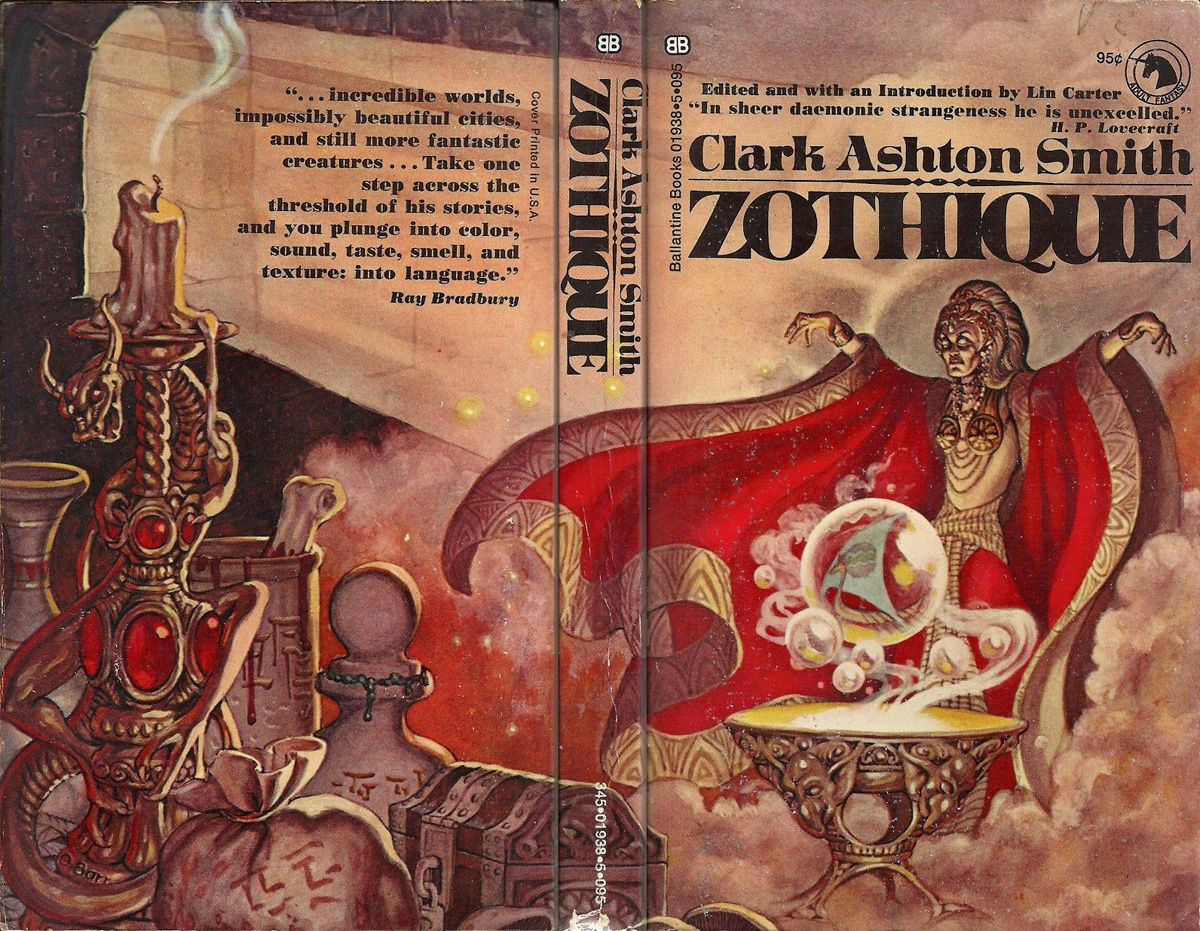
Cover art by George Barr, 1970.

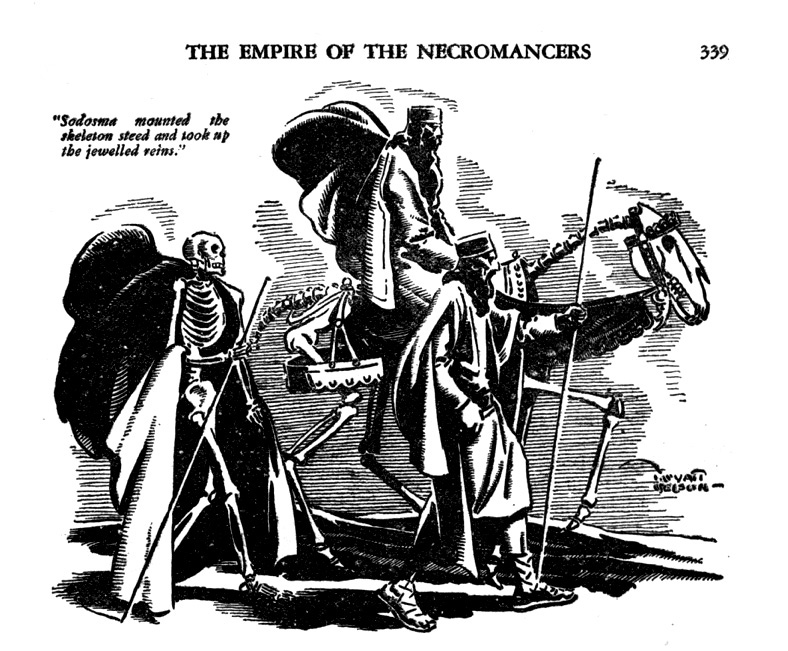
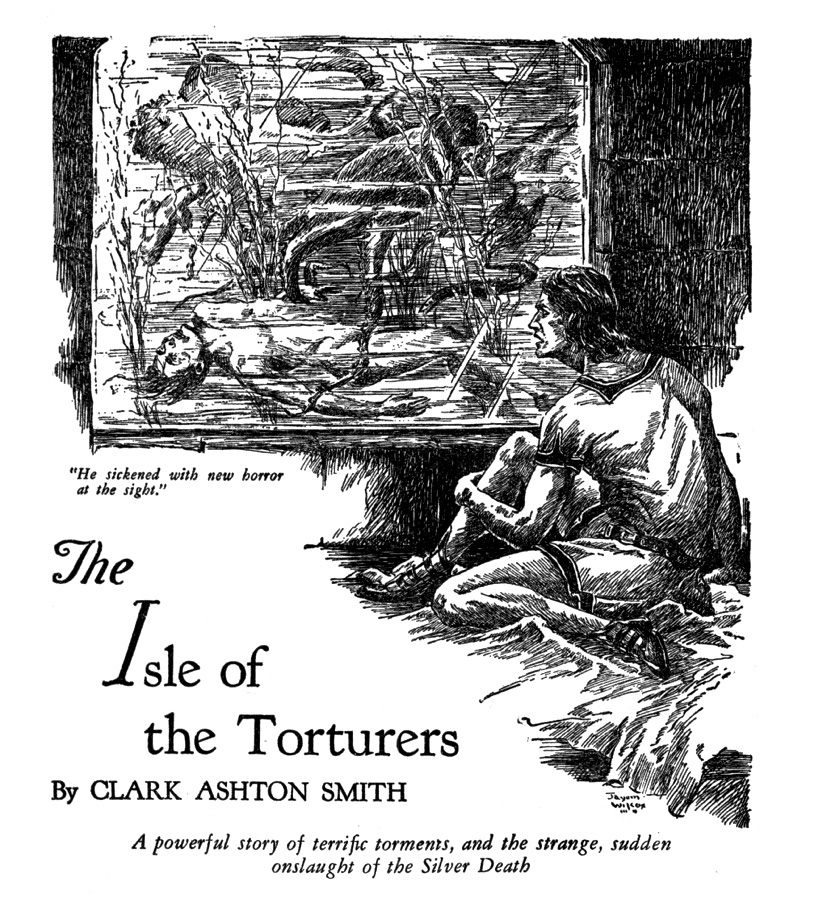
A few years ago I wrote a short piece about Virgil Finlay’s illustrations for a Zothique story by Clark Ashton Smith, The Garden of Adompha, so this post may be regarded as a more substantial sequel. If Smith remains something of a cult author then Zothique is the pre-eminent cult creation from his career as a writer of weird fiction. Most of Smith’s stories can be grouped together according to their location: Atlantis, Hyperborea, Averoigne in medieval France, the planet Mars, and so on. Zothique was a more original conception than his other worlds, being the last continent on Earth in the final years of the planet, an idea which had precedents in earlier novels such as William Hope Hodgson’s The Night Land but which hadn’t been used before as a setting for a cycle of stories. The distant future suggests science fiction but, as with the Zothique-influenced Dying Earth of Jack Vance, science and technology is long-forgotten and sorcery rules the day. The poetry that Smith wrote before he took to writing short stories had a distinctly Decadent quality—”like a verbal Gustave Moreau painting“—and Zothique is a richly Decadent world, with the entire planet in a state of decay along with its barbarous, demon-worshipping peoples.

zothique01.jpg

Weird Tales, September 1932. Art by T. Wyatt Nelson.

All the Zothique stories had their first printings in Weird Tales, a magazine that ran illustrations with most contributions, but unless you’re a pulp collector many of the illustrations have been difficult to see until very recently. One of the pleasures of looking through fiction magazines is seeing how their stories might have been illustrated when they were first published. Popular tales eventually find their way into book collections but their illustrations tend to be marooned in the titles where they first appeared unless the artist is of sufficient merit to warrant a collection of their own.

zothique02.jpg

Weird Tales, March 1933. Art by Jayem Wilcox.

The examples here are all from recent uploads at the Internet Archive which now has a complete run of Weird Tales from 1923 to 1954. The illustrations also run in order of publication with links to the relevant issues, although I agree with Lin Carter’s ordering of the stories. Smith never organised them himself, and the later reprints from Arkham House and others tend to scatter them through separate volumes. When Lin Carter edited the Zothique collection in 1970 he put the stories into an order that follows the very loose chronology running through the cycle.

zothique06.jpg

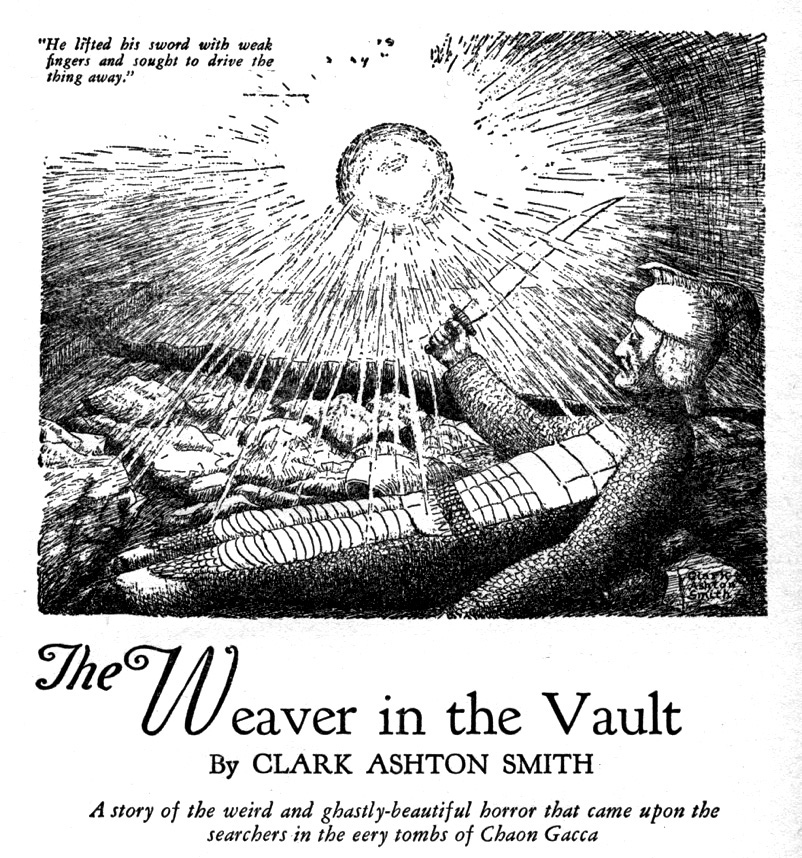
Weird Tales, January 1934. Art by Clark Ashton Smith.

One surprise of this search was discovering that Smith himself had provided illustrations for several of the stories. Some Smith enthusiasts like his drawings and paintings but I’m afraid I’m not among them, his sculpture work is better. It’s doubtful that these would have been printed at all if they weren’t the work of the author.

Continue reading “Illustrating Zothique”

Weekend links 498

mead.jpg

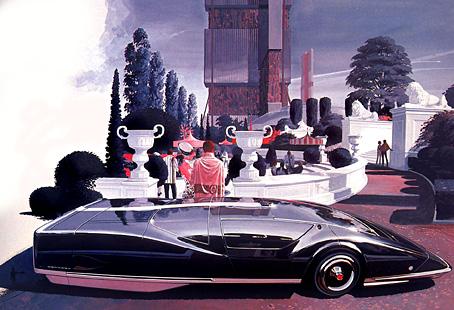
The Sentinel 280, a car design by Syd Mead from 1964.

• “Boris Dolgov did not exist. The man who bore that name may have existed, but there never was a man in the United States with that name until 1956, too late for Weird Tales.” Teller of Weird Tales on the mysterious identity of a magazine artist.

• Saying goodbye to 2019 also meant saying farewell to Vaughan Oliver, Neil Innes and Syd Mead. Related: Vaughan Oliver at Discogs; I’m The Urban Spaceman; a look back at Syd Mead’s vehicle designs.

Lanre Bakare on how ambient music became cool. (Again. This begs the question of when it became uncool, especially when a ten-year-old Brian Eno piece about “the death of uncool” is being quoted.)

Westerners interpreted the peyote experience very differently from the practitioners of the peyote religion, where the focus was “ritual, song and prayer, and to dissect one’s private sensations was to miss the point”. Writers such as Havelock Ellis, who published an essay on his peyote experiences in the Lancet in 1897 (it’s likely that he also administered the substance to his friends W.B. Yeats and Arthur Symons), instead tended to focus on its visual effects. Ellis described “the brilliance, delicacy and variety of the colours” and “their lovely and various textures”. Peyote reached Europe in tandem with the X-ray, cinema and electric lights, Jay notes, and “nothing delighted the eye of the mescal eater so much as the new electrical sublime”.

Emily Witt reviewing Mescaline: A Global History of the First Psychedelic by Mike Jay

Peter Bradshaw takes on the thankless task of ranking Federico Fellini’s feature films.

Geoff Manaugh on when Russia and America coöperated to avert a Y2K apocalypse.

• “Music is an ideal medium for interstellar communication,” says Daniel Oberhaus.

Keith Allison on Karel Zeman, a creator of remarkable cinematic fantasies.

•  Japanese Designer New Year’s Cards of 2020.

• At Dennis Cooper’s: Vera Chytilová Day.

2020 in public domain.

Sentinel (1992) by Mike Oldfield | Sentinels (2001) by Cyclobe | Sentinel (2004) by Transglobal Underground

Weekend links 495

klee.jpg

Angelus Novus (1920) by Paul Klee.

• “Compared to [László] Krasznahorkai’s earlier fiction, Baron Wenckheim’s Homecoming is funnier and more stylistically accessible—despite its length and seemingly endless sentences—but it is also his most unremittingly ruthless work,” says Holly Case. Elsewhere: “Baron Wenckheim’s Homecoming may not bring joy or consolation, but reading it is a mesmerisingly strange experience: a slab of late modernist grindcore and a fiercely committed exercise in blacker-than-black absurdity,” says Sukhdev Sandhu.

Zeitraffer (“Time-lapse“) is an exhibition devoted to Tangerine Dream which opens at the Barbican, London, in January. Also coming in January is a new album, Recurring Dreams, by the current iteration of the group which will be available on CD and double vinyl. I was impressed by the last TD release, Quantum Gate, so I’m looking forward to this even if it is only a reworking of popular pieces from the Virgin years.

• RIP Gershon Kingsley, an electronic music pioneer best known for the silly but fun albums he made with Jean-Jacques Perrey, and for being the composer of that evergreen synthesizer novelty, Popcorn.

The first major study in English of ancient Greek sexuality—especially the way relationships between men were both common and celebrated as a perfect embodiment of love—A Problem in Greek Ethics helped set the stage for the modern-day gay rights movement. But it did so surreptitiously, behind closed doors, as required by the times. Symonds printed it privately in 1883; a print run of just 10 copies reduced the risk that it would fall into the wrong hands. The typesetter complained about the content. Symonds circulated it cautiously, to people he trusted or had reason to think would be discreet. Until now, researchers believed that only five copies survived.

Rachel Wallach on the discovery of a sixth copy of John Addington Symonds’ landmark study

Contagious Magick of the Super Abundance is a book of art by the late Ian Johnstone, former partner of John Balance and cover artist for some of the last releases by Coil.

Dennis Cooper‘s favourite fiction, poetry, non-fiction, film, art, and internet of 2019. Thanks again for the link here!

• At the BFI: Hannah McGill on the umbrellas of cinema, and Jasper Sharp on 10 essential films by Yasujiro Ozu.

• Bobby Krlic, aka The Haxan Cloak, talks to Claire Lobenfield about creating the soundtrack for Midsommar.

Joker and Chernobyl composer Hildur Guðnadóttir: “I’m treasure hunting”.

Joshua Rothman on how William Gibson keeps his science fiction real.

Samantha Rose Hill on Walter Benjamin’s last work.

Scientific phenomena photographs of the year.

The Dream Before (1989) by Laurie Anderson | Angel Tech (1994) by The Grid feat. Sheila Chandra | Angel Tech (1994) by Pete Namlook & Bill Laswell

Weekend links 493

gaycomix.jpg

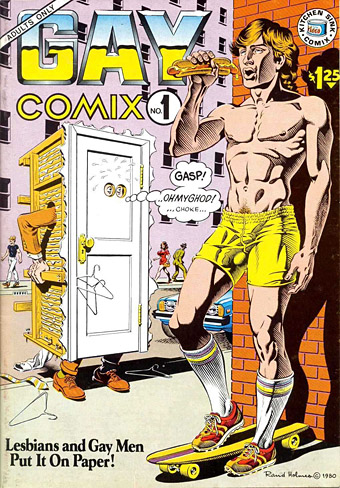
Art by Rand Holmes for Gay Comix No. 1, September 1980.

• In the universe next door, Los Angeles in November, 2019 looks like the drawings in the Blade Runner Sketchbook (1982). The book has been out of print for many years but available online for a while, although seldom in a downloadable form. A recent upload at the Internet Archive remedies this. In addition to the familiar Syd Mead designs for flying cars and street furniture there are some Moebius-like doodles by Ridley Scott, and Mead’s design for Tyrell’s cryogenic crypt, a detail that would have formed part of an unfilmed sub-plot.

• RIP Howard Cruse, comic artist and pioneering editor of the first few issues of Gay Comix in the 1980s. Cruse produced work outside the gay sphere (I first encountered his strips in Heavy Metal) but the stories that he and other artists created for Gay Comix (later Gay Comics) were some of the first by lesbians and gay men chronicling their own lives, as opposed to porn fantasies or the more recent trend of bolting a token sexuality to a superhero. John Seven talked to Cruse about his career in 2007.

• “On the eve of the First World War Stefan George had started recruiting his own twink army…” Well, if you really must have an army… Strange Flowers presents part one of a guide to the city of Vienna.

In Wild Air, 2016–2018: all 72 of Heath Killen’s requests for a list of six interesting things from artists, writers, scientists, ecologists, musicians, historians and others. My answers are at number 55.

• “Satan is a friend of mine”: Sander Bink on a forgotten occult novel, Goetia (1893) by Frits Lapidoth.

• Picturing a voice: Rob Mullender-Ross on Margaret Watts-Hughes and the Eidophone.

• “They broke the rules”: Killian Fox on the film posters of the French New Wave.

• At Dennis Cooper’s: Jan Švankmajer Day.

Ogi No Mato (1976) by Ensemble Nipponia | Rêve (1979) by Vangelis | Blade Runner Esper “Retirement” Edition, Part III (1982)