Weekend links 469

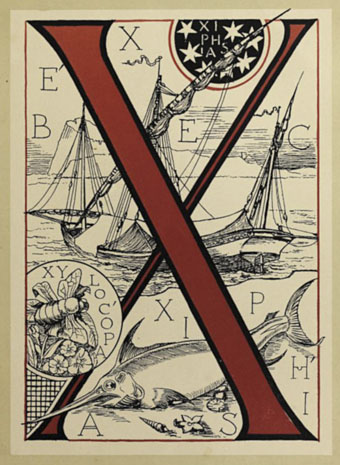
X.jpg

X from Theodore Howard’s ABC (1880) by Theodore Howard.

• “[Parade] has everything: joy and sadness, get-down and wistfulness, mourning and melancholia, group funk and Debussy interludes, echoes of Ellington, Joni, film music, chanson. It’s a perfectly realised whole.” Ian Penman on the enigmas and pleasures of Prince.

• “Mescaline reads like the culmination of a lifetime’s wanderings in the very farthest outposts of scientific and medical history.” Ian Sansom review’s Mike Jay’s history of the psychedelic alkaloid.

• The Day the Music Burned by Jody Rosen: “It was the biggest disaster in the history of the music business—and almost nobody knew. This is the story of the 2008 Universal fire.”

This willing constriction of intellectual freedom will do lasting damage. It corrupts the ability to think clearly, and it undermines both culture and progress. Good art doesn’t come from wokeness, and social problems starved of debate can’t find real solutions. “Nothing is gained by teaching a parrot a new word,” Orwell wrote in 1946. “What is needed is the right to print what one believes to be true, without having to fear bullying or blackmail from any side.” Not much has changed since the 1940s. The will to power still passes through hatred on the right and virtue on the left.

George Packer on what George Orwell’s Nineteen Eighty-Four means today

• Having spent the past week watching Jacques Rivette’s 775-minute Out 1, this interview with Rivette from 1974 was of particular interest.

• At Dangerous Minds: Donald Sutherland as “a sperm-filled waxwork with the eyes of a masturbator” in Fellini’s Casanova.

The Adventures of the Son of Exploding Sausage (1969): the Bonzo Dog Band getting it untogether in the country.

• Dark, velvety dark: Nabokov’s discarded ending to Camera Obscura, introduced by Olga Voronina.

• “Spotify pursues emotional surveillance for global profit”, says Liz Pelly.

• Mix of the week: Then Space Began To Toll by The Ephemeral Man.

• An interview with master of horror manga Junji Ito.

• Announcing the Arthur Machen Essay Prizes.

• RIP film-maker and author Peter Whitehead.

X is for…

X Offender (1976) by Blondie | X-Factor (1981) by Patrick Cowley | X-Flies (1997) by Mouse On Mars

Weekend links 468

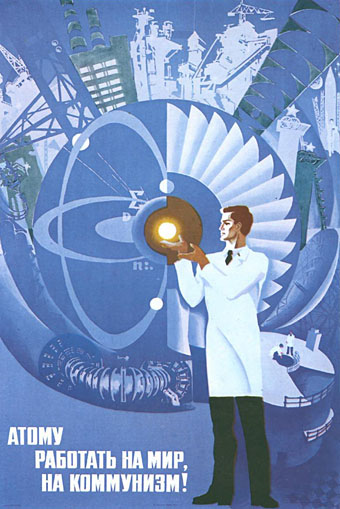
atoms.jpg

“The atom shall work for peace…” Soviet poster promoting the benefits of nuclear power.

• RIP Mac Rebennack aka Dr. John Creaux, The Night Tripper. Dan Auerbach remembers the man whose return to funky form, Locked Down, he produced in 2012. Elsewhere, Michael Hurtt details Mac Rebennack’s pre-Dr. John exploits; some of his music from that period is linked at the end of this post. Entries at YouTube are inevitably skewed to the present but among the older clips you’ll find these: The Doctor and his band in full voodoo regalia miming to Zu Zu Mamou on the Something Else TV show; audio extracts from a Dutch festival performance in 1970, here and here; more quality audio from a 1972 concert in Syracuse, NY; and an hour-long Chicago TV show from 1974 featuring Dr. John, Professor Longhair, The Meters, and Earl King.

• More Tangerine Dream: all the soundtrack music for Vampira (1971), a drama-documentary directed by George Moorse for German TV. Recommended to those who like the group’s Ohr period.

• More Chernobyl: a photo-essay by Tom Skipp featuring survivors of the disaster, and from 2013, Hari Kunzru‘s report from the Exclusion Zone.

• At The Quietus: Lottie Brazier on The Strange World of Stereolab, and Ned Raggett talking to Liz Harris about her Nivhek project.

• The sixth edition of Wyrd Daze—”The multimedia zine of speculative fiction + extra-ordinary music, art & writing”—is out now.

Clark Ashton Smith: The Emperor of Dreams, a DVD of the feature-length documentary by Darin Coelho Spring.

• Moon Wiring Club is back this month with fresh releases at Bandcamp, a YouTube post, and the EVP MVP Mix.

• Once the “Swingingest Street in the World”: Rob Baker on pictures of Carnaby Street 1924–1975.

• New video footage of Coil playing live at All Tomorrow’s Parties, 6th April, 2003.

Dean Hurley explores life after death on Philosophy of Beyond.

Tom Walker on Harry Clarke’s uncanny visions of Ireland.

Alex Barrett on where to begin with Alain Resnais.

• Martin Parr’s Soviet space dog collection.

Dennis Cooper winds you up.

Storm Warning (1959) by Mac Rebennack | Morgus The Magnificent (1959) by Morgus & The 3 Ghouls | Sahara (1961) by Mac Rebennack & His Orch.

Weekend links 467

td.jpg

Artwork by Kuldar Leement (maybe…I’ve yet to see a credit for this). No, it’s the work of Rupert Lloyd.

In Search Of Hades: The Virgin Recordings 1973–1979, is a retrospective box set comprising 16 CDs and 2 blu-ray discs devoted to the first phase of Tangerine Dream’s output on the Virgin label. For enthusiasts of the group’s Virgin recordings (myself among them) this is very welcome, especially for the albums being given the Steven Wilson remix treatment, and the wealth of rare and unreleased material. In addition to several live concerts the box will include the complete Oedipus Tyrannus theatre soundtrack, the overture of which appeared on a compilation in 1975 but has since been unavailable outside bootlegs. Baroque 2 is a taster of the unheard soundtrack. The box itself will be released on 14th June. Related: Edgar Froese interviewed on a US radio station in 1974. Among the topics of discussion are German music of the time, Tangerine Dream’s dissatisfaction with Ohr Records, and their happiness at moving to Virgin.

• “As the witch-burning begins, the image gradually dissolves into a stroboscopic onslaught of neon colours accompanied by rapid, high-pitched ringing and a thundering drone.” Don’t come to Gaspar Noé for social realism. Lux Aeterna is his new thing.

• An ode to the ultimate camp film: Nathalie Atkinson on Boom!, Joseph Losey’s adaptation of a Tennessee Williams play, and (unsurprisingly) one of John Waters’ favourites.

“Adhesive,” a term borrowed from phrenology, was Whitman’s synonym for homosexuality. According to gay studies pioneer William A. Percy, “the term became part of the special vocabulary of the emerging homosexual subculture of the nineteenth century,” which Whitman and his coterie would have understood. Despite Whitman’s private vows to resist temptation, and to be more aloof, he continued to court young men until he died. One of the final photos of Whitman, taken at the Camden docks in 1890, shows the poet with his handsome male nurse Warren Fritzinger. “I like to look at him—he is health to look at: young, strong, lithe,” Whitman told Traubel.

Jeremy Lybarger on Walt Whitman’s boys

Psychedelic Promos & Radio Spots: 8 volumes, over 500 tracks, all free downloads. Hear many of the most popular groups of the late 60s shilling for commercial radio stations.

Hildur Guðnadóttir used only sounds from a nuclear plant in her score for Chernobyl.

• US museums of the week: Poster House, NYC, and The Moogseum, Asheville, NC.

• “Yes, witches are real,” says Pam Grossman, “I know because I am one.”

• Photos by Chas Gerretsen from the set of Apocalypse Now.

• Geeta Dayal on the brainwave music of David Rosenboom.

• Mix of the week: Self-Titled NE285 Mix by Kevin Martin.

• RIP Roky Erickson

Boom Boom (1961) by John Lee Hooker | Boom Stix (1962) by Curley & The Jades | Boom! (1992) by The Grid

Blood And Rockets by The Claypool Lennon Delirium

blood1.jpg

In an overburdened media landscape the words “Terry Gilliam-like animation” could easily mean some hastily-compiled film with a few nods to the collage style that Gilliam popularised in his interludes for the Monty Python TV series. Rich Ragsdale’s music video for The Claypool Lennon Delirium (Les Claypool and Sean Lennon) is much more than this, being a witty and inventive pastiche of the complete Gilliam style, replete with an abundance of sight gags, and familiar touches such as fizzing bombs, clutching hands and chattering heads.

blood2.jpg

The subject of the song is Jack Parsons, the ill-fated Californian rocket engineer whose wild life and entanglement with the West Coast chapter of Aleister Crowley’s Ordo Templi Orientis led to scandal and an untimely death. Parsons’ story is one of the more curious episodes in 20th-century occultism—a pre-Scientology L. Ron Hubbard was also involved in the Crowley shenanigans—but this must be the first time the history has been recounted in the form of a psychedelic ballad. Ragsdale is no slouch with the occult symbolism either, adding a number of Thelemic touches to the inevitable Satanic iconography. As befits the sex-obsessed Parsons the video also contains a fair amount of phallic imagery and boob constellations that somehow evaded the attentions of the YouTube Penis Police. Watch it here. (Thanks to Erik Davis!)

Previously on { feuilleton }
Aleister Crowley: Wandering The Waste revisited
Occult gestures
Konx om Pax
Aleister Crowley: Wandering The Waste
Brush of Baphomet by Kenneth Anger
Rex Ingram’s The Magician
The Mysteries of Myra
Gilliam’s shaver and Bovril by electrocution
Aleister Crowley on vinyl

Weekend links 442

buzzcocks.jpg

Orgasm Addict (1977). Design by Malcolm Garrett; collage by Linder.

• RIP Pete Shelley, Buzzcock and Homosapien. Shelley is celebrated for being in the vanguard of Britain’s punk movement, of course. (Buzzcocks’ Spiral Scratch was the UK’s first independent single.) But he also loved Can, recorded an album of electronic drones (Sky Yen), and in 1983 successfully blended home-computer graphics with his own brand of superior electronic pop music. Related: Malcolm Garrett’s Buzzcocks band logo at Fonts In Use; B’dum, B’dum: Tony Wilson in 1978 talking to Pete Shelley and Howard Devoto about Buzzcocks and Magazine.

• Winter demands ghost stories so Adam Scovell suggests 10 great winter ghost films. Related: Alexandra Heller-Nicholas presents an A–Z of Women’s Horror Filmmaking.

Carey Dunne on the rise of underground LSD guides for psychotherapy. Related: “Psychedelics change the perception of time,” says Shayla Love.

• Ex-Neu! guitarist Michael Rother receives the box-set treatment early next year when the Groenland label reissues his early solo albums.

Jodorowsky, an exhibition devoted to the writer and director, will be staged at El Museo del Barrio, New York, from February next year.

• “From Georges Méliès to Bill and Ted, movie hells remain seriously in hock to the Judeo-Christian playbook,” says Anne Billson.

The Owl’s Legacy, Chris Marker’s 13-part documentary series on Greek culture, receives its debut DVD release.

Topic II (1989), a short film by Pascal Baes of pixilated dancers in the night streets of Prague.

• Mix of the week: Secret Thirteen Mix 274 by Koray Kantarcioglu.

• We are the first humans to hear the winds of the planet Mars.

• Patrick Magee reads The Third Policeman by Flann O’Brien.

• At Dennis Cooper’s: Jean-Louis Trintignant Day.

• Mongolian biker rock: Wolf Totem by The HU.

The Quietus albums of the year.

Hell (2001) by Techno Animal ft. Dälek | Hell’s Winter (2011) by Earth | Hell A (2017) by The Bug vs. Earth