Weekend links 599

achilleos.jpg

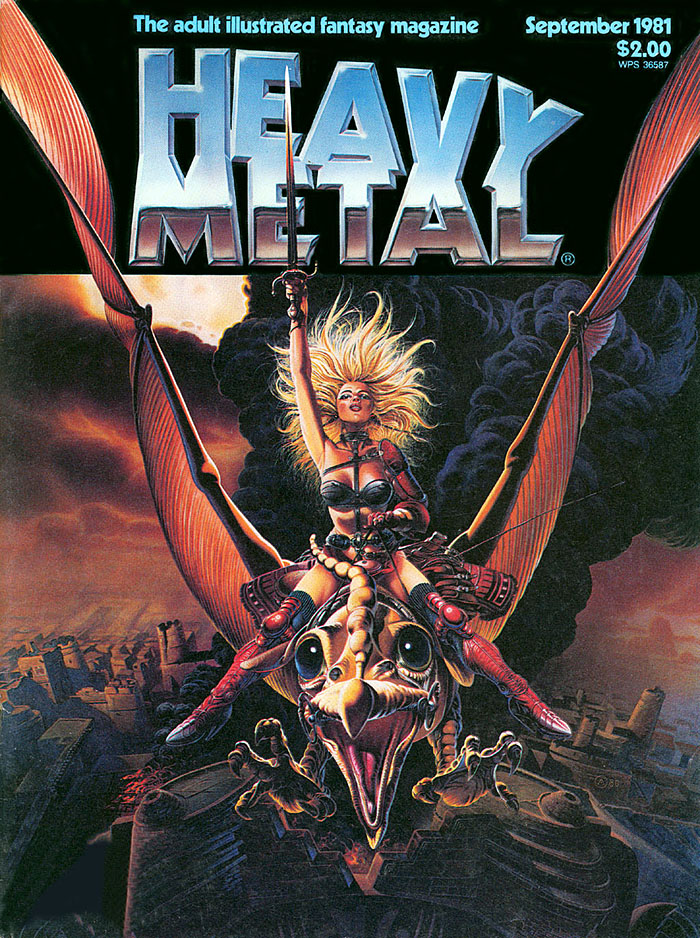
Taarna by Chris Achilleos for Heavy Metal, September 1981. A typical piece by Achilleos, whose death was announced this week, and very typical for a Heavy Metal cover. Achilleos was a prolific illustrator.

• New music: The Truth, the Glow, the Fall (Live At Montreux) by Anna von Hausswolff, from her forthcoming album, Live At Montreux Jazz Festival. The last gig I went to was in October 2019, to see Sunn O))) supported by Anna von Hausswolff. Easily one of the best things I’ve ever experienced. Meanwhile, Anna von Hausswolff has had to cancel a Paris church concert following protests by a rabble of outraged Catholics. Bravo les crétins!

• “…it is easy to forget that Montesquiou—regardless of his own work—was not merely emblematic of Decadence, he was essentially patient zero in its viral spread.” Strange Flowers explores the exquisite life of the bat-obsessed, hydrangea-cultivating Robert de Montesquiou.

• “Kotatsu have been around longer than we imagine. And art history has the proof.” Spoon & Tamago on an old Japanese method for warming a room during winter. Also further evidence that cats always find the warmest place in any house.

Dennis Cooper‘s favourite fiction, poetry, non-fiction, film, art, and internet of 2021. Thanks again for the link here!

The Wire magazine has opened its collection of articles by the late Greg Tate so they may be read by non-subscribers.

• “Neil Bartlett is a gay writer’s gay writer,” says Jeremy Atherton Lin reviewing Bartlett’s latest, Address Book.

• James Balmont on the psychedelic cinema of Nobuhiko Obayashi.

• Steven Heller’s font of the month is Erotique.

Northern lights photographer of the year.

• The Strange World of…Takuroku.

• RIP Robbie Shakespeare.

• Robbie Shakespeare’s bass x 3: King Tubby Meets Rockers Uptown (1974) by Augustus Pablo | Nightclubbing (1981) by Grace Jones | Bass And Trouble (1985) by Sly & Robbie

Prints update

tarot.jpg

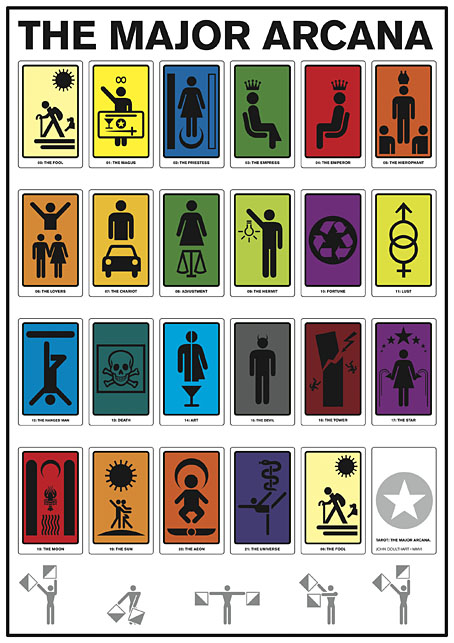
The Major Arcana (2006): a C-type print on Fuji gloss paper. A1 or A2 sizes.

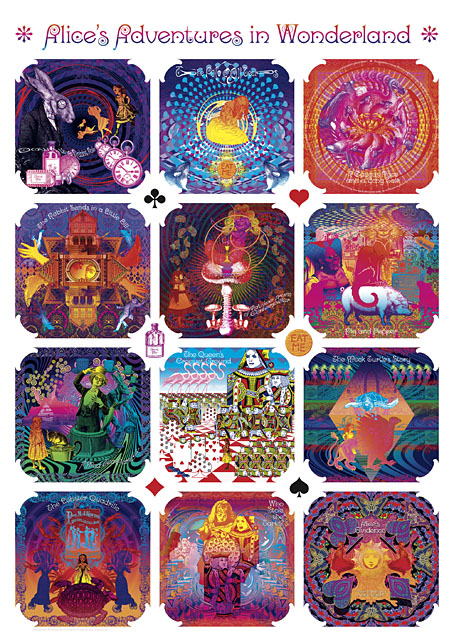
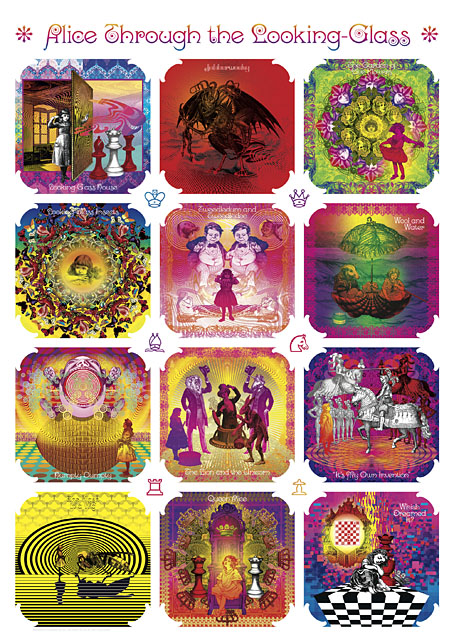
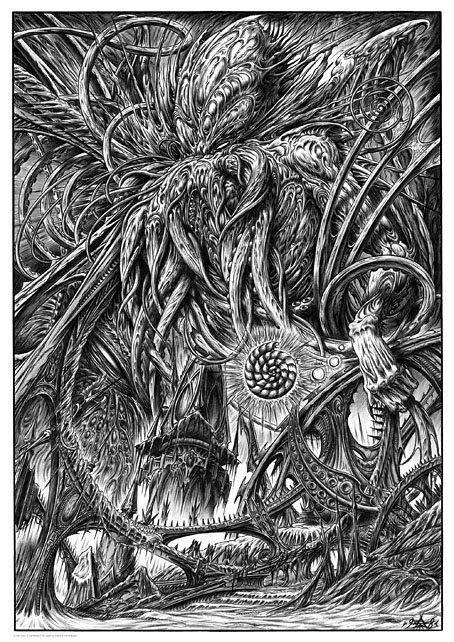
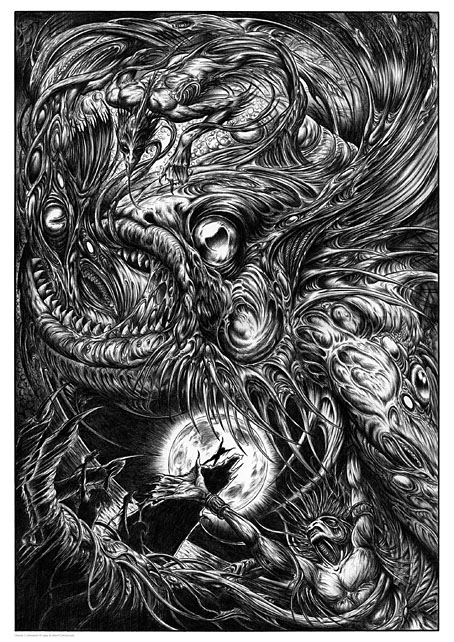
I’m continuing to add artwork to Etsy which will be available as prints in a variety of sizes and papers. I would have done more of this by now but I’m still very busy working through the commissions of the past few months so progress has been slow. The system does actually work as intended, however, with orders being routed automatically to the printer then printed and shipped within 24 hours. The initial setup may take longer than places like CafePress but the benefits are multiple, not only a faster turnaround (and cheaper worldwide postage) but now I can create prints of any size I want, and with a variety of papers and finishes. Most of the items there at the moment are the things I consider “greatest hits” so the latest additions include new poster versions of my psychedelic Alice in Wonderland artwork, together with the International Symbols Tarot poster and yet more Lovecraftiana. Requests are, of course, still welcome.

wonderland.jpg

Psychedelic Wonderland (2009): a C-type print on Fuji gloss paper. A1 or A2 sizes.

looking-glass.jpg

Psychedelic Looking-Glass (2010): a C-type print on Fuji gloss paper. A1 or A2 sizes.

cthulhu.jpg

Cthulhu (1998): a giclée print on Canson Aquarelle rag paper. A3 size.

dagon.jpg

Dagon (1999): a giclée print on Canson Aquarelle rag paper. A3 size.

Previously on { feuilleton }
Prints at Etsy

Weekend links 592

anderson.jpg

Cover art by Gray Morrow; design by Henry Berkowitz, 1967.

• “Dial-a-Poem received more than a million calls before it lost funding and ended in 1971. There were complaints of indecency, claims that the poems incited violence. The FBI investigated…” Ralf Webb on John Giorno’s Dial-a-Poem project which is still active at the US and UK numbers on this page.

• Mixes of the week: Halloween approaches so for those who require themed mixes you can take your pick from these selections by Kaptain Carbon; at The Wire there’s a Halloween-free mix by Kuunatic.

• New music: New Moon by Laetitia Sadier, and The Reinterpretation Of Dreams (Remixed) by Tomoroh Hidari; not-so-new music: Velocity Of Sleep by Kali Malone.

The activist’s whole identity is tied up in him being denied, as opposed to him manifesting. Nobody can give you your freedom. You ARE free. It is your natural state, okay? You can give it all away if you want, but: no. I can’t GIVE you your rights. I can’t give you your freedom. And to go and beg the Man for your rights and BEG the Man for your freedom? LIVE your freedom.

One of Berg’s phrases was “life actor.” “Theatre of the streets.” All of this as theatre. As opposed to in a different arena you would call politics or activism or so on. But using theatre as a way to open doors that might not be opened if someone was approaching it in other ways. Out of that comes this whole sense of “create the reality you want to live in.” Which is a powerful, profound concept. People are trapped in the paradigm: you can’t even think there is an outside of the box. Just that notion of thinking, and living outside that paradigm, was real powerful stuff.

Claude Hayward of the San Francisco Diggers talking to Jay Babcock for the eighth installment of Jay’s verbal history of the hippie anarchists

Joanna Moorhead on the creation of the Mae West lips sofa, a collaboration between Salvador Dalí and Edward James.

• The latest book from Rixdorf Editions is Papa Hamlet by Arno Holz and Johannes Schlaf.

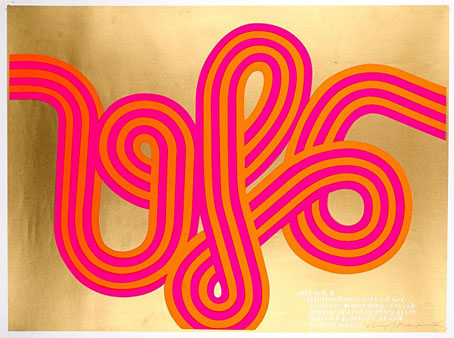
• At Sweet Jane’s Pop Boutique: Op and Pop | Art Forms in Furnishing (1966).

Denis Bovell’s favourite music.

• At Dennis Cooper’s: Coffins.

Love At Psychedelic Velocity (1966) by The Human Expression | Hamlet (Pow, Pow, Pow) (1982) by The Birthday Party | The Art Of Coffins (2002) by Bohren & Der Club Of Gore

Weekend links 591

entangled.jpg

Ghost Box 39. Design, as always, is by Julian House.

Entangled Routes by Pye Corner Audio will be the next album on the Ghost Box label, due for release on 26th November. This will be Pye Corner Audio’s fourth album for Ghost Box, and one which forms the final part of a trilogy of imaginary soundtracks for science-fiction scenarios, “the latest installment of which plays with the idea of mycorrhizal networks and attempts by humans to listen in and communicate”.

• “…for every ten projects I start, nine will probably fall by the way side—they just don’t get made. Nothing happens, you can’t find the tapes, you can’t find the rights holders, the tapes were destroyed, no one’s interested.” Jonny Trunk interviewed at Aquarium Drunkard.

• At Unquiet Things: S. Elizabeth is celebrating the first anniversary of The Art Of The Occult (previously) by giving away a signed copy of her book to one of the commenters on this post.

• “Sand is not only temporary, it is also the most temporised form of matter.” Steven Connor on the dust that measures all our time.

• Mixes of the week: Autumn Hymnal: A Mixtape by Aquarium Drunkard, and In Estonia with Bart de Paepe by David Colohan.

• “Touched by the hand of Ithell: my fascination with a forgotten surrealist.” Stewart Lee on Ithell Colquhoun.

• Skin trade: a playlist of percussion at the outer limits; Valentina Magaletti surveys alternatives to the conventional kit.

• At Wormwoodiana: Mark Valentine reviews The Devil At Saxon Wall by Gladys Mitchell.

• “The Show: Alan Moore brings vaudevillian dazzle to Northampton noir,” says Phil Hoad.

• At Bandcamp: A Guide to the Eclectic Funk Music of Bernie Worrell by John Morrison.

• At Dennis Cooper’s: Spotlight on…Octave Mirbeau The Torture Garden (1899).

• At Spine: Vera Drmanovski on redesigning the novels of Hermann Hesse.

• New music: Music For Psychedelic Therapy by Jon Hopkins.

South To The Dust (1990) by Ginger Baker | Into Dust (1993) by Mazzy Star | Photon Dust (2020) by Pye Corner Audio

Richard H. Kirk, 1956–2021

kirk.jpg

Q: Was the initial idea to be a music group?

Richard H. Kirk: I suppose that depends on how you define “music”. No, the initial idea was to be more of a sound group, just putting sounds together like jigsaw pieces. If the result did sound like music then it was purely coincidental.

From Cabaret Voltaire: The Art of the Sixth Sense (1984) by M Fish & D Hallberry

This was a shock, in part because I tend to think of certain artists as perpetually young even when I’ve been following them for decades. In the case of the not-so-young Cabaret Voltaire it was an easy frame of mind to slip into when Kirk and Mallinder were only photographically visible up to about 1990. After this the group resumed their former obscurity, cloaked by abstract images and Designers Republic graphics.

Oddly enough I’d been running through the early Cabs albums only a couple of weeks ago, and wondering how long Kirk was going to keep the revived group going on his own. I suppose this means that Cabaret Voltaire is now definitely finished, in which case it’s a double RIP. And just a few days ago I was reading a Mark Fisher essay on Joy Division, feeling as frustrated as I always do when Curtis and co. are praised for “channelling” (or whatever) the spirit of William Burroughs when nobody would think to connect Burroughs and Joy Division if you changed the title of the song Interzone to something else. Throbbing Gristle were closer to Burroughs personally than were Cabaret Voltaire but the influence on TG only became really overt when Industrial Records released Nothing Here Now But The Recordings, an album of Burroughs’ tape experiments. The Cabs were more important to me as a youthful reader of Burroughs’ novels for seeming to be broadcasting from inside his texts. Their early albums were disturbed and disturbing (a friend once asked me to switch off their music for this very reason), an unwholesome amalgam of dialogue taped from TV and radio, crude electronics, threatening voices, and songs that were warped into strange new shapes. This is entertainment…this is fun… I’m still amazed that their first album included a cover of No Escape, a song by psychedelic group The Seeds, which didn’t sound out of place despite the weirdness surrounding it.

giorno-burroughs-cabs.jpg

William smiles. Left to right: John Giorno, William Burroughs, Stephen Mallinder, Richard H. Kirk. Photo by Sylvia Plachy from the gatefold interior of A Diamond In The Mouth Of A Corpse (1985), a compilation album released by Giorno Poetry Systems.

Cut-up theory was a constant in the Cabaret Voltaire discography, and in many of Richard Kirk’s solo recordings, with the group starting out as Dada-inspired tape collagists* before they found a way to present their experiments in a musical form. The concept is to the fore in the title of Cabaret Voltaire’s debut album, Mix-Up, and exemplified in the track that opens side two, Photophobia, a reworked version of a Surrealist monologue that dates from the group’s days making recordings in Chris Watson’s attic. Photophobia pulls you into the same queasy dreamspace in which you find yourself when reading Burroughs’ early cut-ups, a catalogue of oneiric splicings—”they’re injecting the rivers with stainless-steel fish…a coelacanth/a body with a shrunken head…”—the phrases being increasingly overwhelmed by rising synthesizer drones and Kirk’s squeaking clarinet. Kirk’s solo debut, Disposable Half-Truths, was a cassette-only release on Industrial Records infused with the Burroughs spirit in both technique and content, offering track titles such as Information Therapy and Insect Friends Of Allah. Cabaret Voltaire continually referred to Burroughs’ speculative essay collection The Electronic Revolution in interviews but it was Kirk who extended the group’s cut-up experiments to film and video. By 1982 they’d accumulated enough of their own video material to release a VHS collection on their own music and video label, Doublevision.

If I’ve concentrated on the early recordings it’s because the post-punk period continues to seem like a miraculous moment, a space of four years when anything was possible musically, a time when Bruce Gilbert and Graham Lewis could record an album as uncompromisingly strange as 3R4 then have it released on 4AD and sold in racks next to albums by label-mates Bauhaus and The Birthday Party. Cabaret Voltaire took advantage of this unique period to warp expectations in their own way, and to extend the boundaries of the possible. Richard H. Kirk’s subsequent career was prolific, releasing a blizzard of albums and singles under a variety of pseudonyms (Discogs lists 42 different Kirk aliases). One of my favourite pieces from his solo recordings is White Darkness from 1993, the last track on a 12-inch single, Digital Lifeforms, credited to Sandoz. There’s a mysterious quality here that I wish he’d explored more often on his later albums instead of letting the rhythms run their course for another seven or eight minutes. The sampled voice maintains a thread of continuity with Kirk’s music before and after, as does the reference to LSD in the Sandoz name, taking us back to Mix-Up and the mescaline experiments described on Heaven And Hell. Psychedelia by other means.

* For a taste of unadorned Cabs-related tape manipulation, see The Men With The Deadly Dreams, a cassette release compiled by Geoff Rushton/John Balance which features contributions from Chris Watson and Richard H. Kirk. Note that the blog post doesn’t give an accurate description of the tape contents.

• At Vinyl Factory: An introduction to Richard H. Kirk in 10 records.
• At The Wire: two interviews with Kirk from the magazine’s archives.

Previously on { feuilleton }
Recoil and Cabaret Voltaire
Pow-Wow by Stephen Mallinder
TV Wipeout revisited
Doublevision Presents Cabaret Voltaire
Just the ticket: Cabaret Voltaire
European Rendezvous by CTI
TV Wipeout
Seven Songs by 23 Skidoo
Elemental 7 by CTI
The Crackdown by Cabaret Voltaire
Neville Brody and Fetish Records