Weekend links 642

wheel.jpg

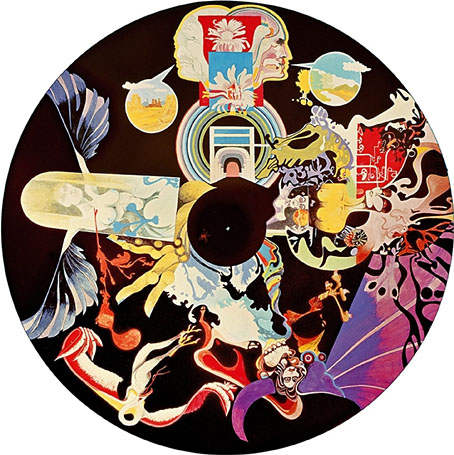
A light wheel. Via.

• “Part of the instrument’s draw is its fallibility. Famously, or perhaps infamously, every Rhodes is different: some freakishly responsive, some with keys that stick like glue, and all with uneven registers, darker corners, and sweet spots.” Hugh Morris on the delicate art of reinventing the Fender Rhodes.

Rambalac’s YouTube channel of first-person walks through Japanese locations is a vicarious pleasure, especially on a big screen. It’s not all city streets but if you like urban meandering then Tokyo walk from day to rainy night – Higashi-Ikebukuro, Mejiro, Ikebukuro is a good place to start.

• At Igloomag: Chang Terhune interviews Stephen Mallinder in a gratifyingly lengthy piece which covers Mallinder’s recent solo recordings and collaborations, his work with students on his sound-art course, and (unavoidably) the late Richard H. Kirk and Cabaret Voltaire.

What I think might be a useful approach—perhaps impractical, but bear me out—I think that if we were to reconnect magic and art as a starting point, because they’re practically the same thing anyway, make art the product of your magical experiments, the way that Austin Spare did for example, then that would give magic an enormous sense of purpose and I think it would also lend art the vision that it seems to be lacking at present. A lot of modern art seems rather empty and hollow conceptualism that lacks any real vision or substance or power. A linking of magic and art would help both of those fields. Then, once you’ve done that, maybe linking art and science. There’s plenty of work already done in that regard.

Alan Moore talking to Miles Ellingham about the usual concerns plus his new story collection, Illuminations

Wheels of Light: Designs for British Light Shows 1970–1990 is a book by Kevin Foakes (aka DJ Food) which will be published later this month by Four Corners Books. The author talks about his book here.

• “The Sandjak of Novi Pazar always sounded as if it were a title, like the Sultan of Zanzibar or the Dame of Sark…” Mark Valentine on discovering outdated maps in forgotten books.

• “My brief was to find tracks that had been left by the wayside or disregarded.” Lenny Kaye on 50 years of his influential garage-rock compilation Nuggets.

• Mixes of the week: XLR8R Podcast 768 by Lawrence English, and King Scratch (Musical Masterpieces from the Upsetter Ark-ive) by Aquarium Drunkard.

• At Dennis Cooper’s: Spotlight on Shirley Jackson The Haunting of Hill House (1959).

• Steven Heller’s font of the month is Slag.

• This Wheel’s On Fire (1968) by Julie Driscoll, Brian Auger & The Trinity | Cosmic Wheels (1973) by Donovan | Wheels On Fire (1985) by Haruomi Hosono
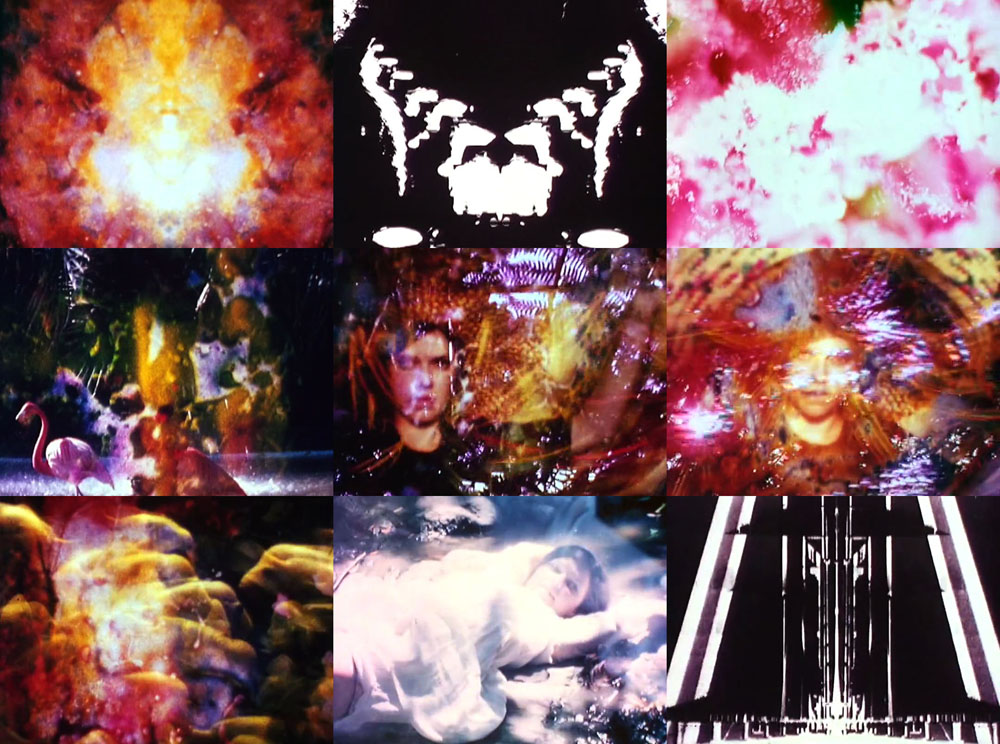
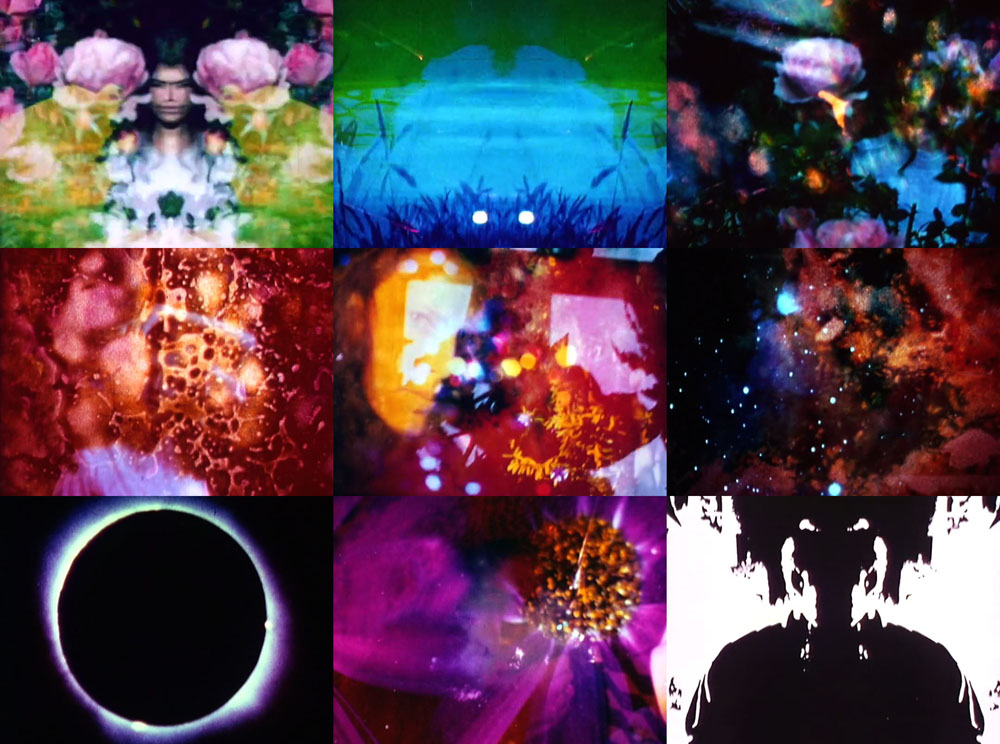
OM I, a film by Myron Ort

ort1.jpg

As should be evident from the stills, OM I is yet another example of psychedelic cinema, and a very good one at that. Myron Ort’s 20-minute silent film (add your own soundtrack) originates with experiments the director made in the late 60s and early 70s using hand-painted stock combined with optical printing.

ort2.jpg

The film isn’t wholly abstract—the raw material includes shots of people and animals, together with heavily processed military footage—but the processing creates a kaleidoscopic feel by mirroring many of the shots, one of those simple tricks that’s always effective. (For a more recent example of mirrored psychedelia, see the monochrome mushroom freakout in A Field in England.) There’s a lot more like this at Myron Ort’s Vimeo page including two sequels to OM I, and a related film Ommo, which runs hand-painted raw material through the optical printer to delirious effect.

Elsewhere on { feuilleton }
The abstract cinema archive

Weekend links 624

griffiths.jpg

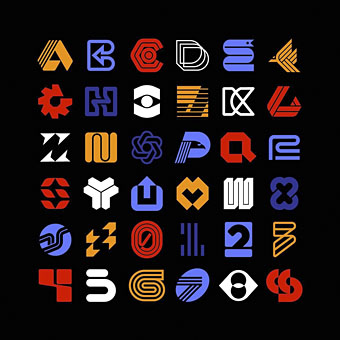
An alphabet designed by Ben Griffiths. Via.

• “From the cellular to the galactic, via Paleolithic cave markings to the trace impressions left by drone photography on our mind’s eye, incorporating dancing plagues, communist psychedelic witches, hyper-sexual fungi, chthonic descents, and skyward ascents, The Neon Hieroglyph weaves together a series of painterly and poetic considerations on a feminized history of the rye fungus Ergot, the chemical basis of LSD.” Coming soon from Strange Attractor: The Neon Hieroglyph, a book, LP and folio of prints by Tai Shani.

• “3rd From The Sun was the last album of Chrome’s imperial phase, and it cemented their status as one of the most inhuman and superhuman rock bands that America ever produced. More people need to recognize.” Agreed. (previously)

• “People often say, ‘How can you be so disciplined?’ It’s easy. Otherwise, I would have to go work for somebody else!” John Waters (again). Also here.

I’ve always thought that literature should be entertaining as well as instructive—a very old-fashioned idea but one that I adhere to. When I set out to write in this way—particularly in this way, a political way, if you want to call it that—I intend to make a donation, to try to give something. There doesn’t seem to me to be any point in giving more misery or exacerbating unhappiness through some kind of hyper-intellectual, pyrotechnical writing about unhappiness and the shit that we all find ourselves in. That’s been done plenty. I think first of all that it doesn’t need to be done any more and second of all there’s a kind of reactionary aspect to it which is that the emphasizing of misery without any anti-pessimism, as you put it, would be simply seduction into inactivity and political despair. In other words, to do politics at all on any level, especially on a revolutionary or on an insurrectionary level, there has to be some anti-pessimism—I won’t say optimism because that sounds so fatuous, futile; but anti-pessimism is a nice phrase. And there’s a deliberate attempt at that in the writing. Then again it’s a matter of my personality, I guess, inclined towards the notion of the healing laugh to some extent. We have an anarchist thinker in America, John Zerzan, who wrote an essay against humour which maybe is one of the things I was reacting against. Even if irony is counter-revolutionary which I think it might be to a certain extent I don’t see any way in which you could say that laughter itself is counter-revolutionary. This doesn’t make any sense to me unless you mean to get rid of language and thought altogether, which is just another form of nihilism. So as long as you’re going to accept culture on some level you’re certainly going to have to accept humour. And as long as you’re going to have to accept humour you might as well see humour as potentially revolutionary.

Peter Lamborn Wilson aka Hakim Bey, who died last month. Many of Wilson’s writings are available at The Anarchist Library. From 2008: A poem for Leonora Carrington

• “It’s such a fundamental question,” says Midori Takada, “why do humans need to make rhythm, and the space that structure creates?”

• “14 Warning Signs That You Are Living in a Society Without a Counterculture” by Ted Gioia.

• A trailer for Earwig, the new film from Lucile Hadžihalilović, based on a story by Brian Catling.

• New music: Aura by Hatis Noit, and Warmth Of The Sun by Pye Corner Audio.

• At Dennis Cooper’s: Spotlight on…SE Hinton Rumble Fish (1975).

• “Hear tracks from the 1980s Peruvian electronic underground”.

Intermittent Eyeball Fodder at Unquiet Things.

West Tulsa Story (1983) by Stewart Copeland | Kála/Assassins Of Hakim Bey (1997) by Coil | Neon Lights (2000) by Señor Coconut Y Su Conjunto

Undead visions

discs.jpg

“…dreams come through stone walls, light up dark rooms, or darken light ones, and their persons make their exits and their entrances as they please, and laugh at locksmiths.”

Carmilla by Joseph Sheridan Le Fanu

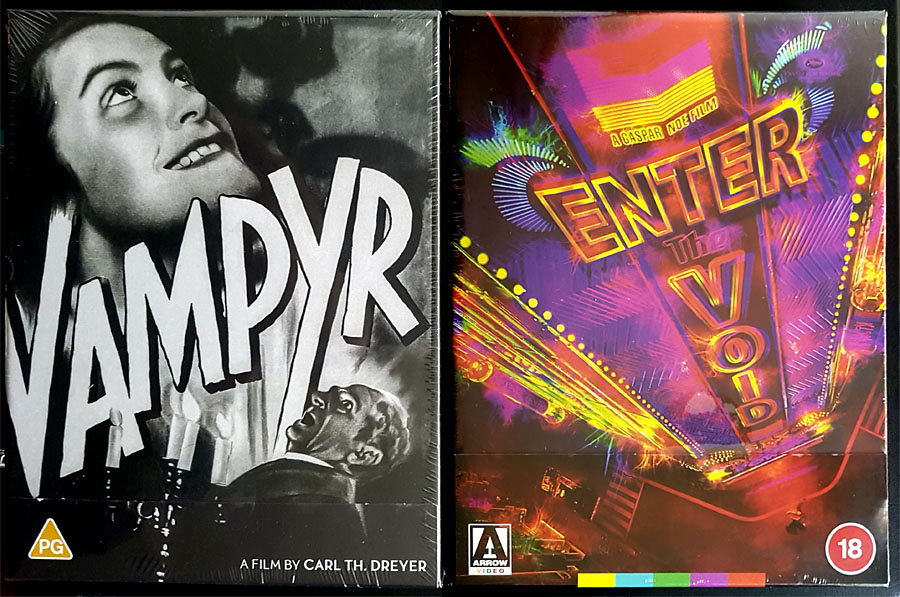
In the (delayed) mail this week: a film in which one of the characters dreams he’s being buried alive in a sequence where we experience the burial from his point of view; and a film in which the main character is shot dead in the first 15 minutes, after which we journey with him into the afterlife, passengers inside his posthumous awareness, travelling through walls and laughing at locksmiths.

(Those aren’t the only coincidental connections between the two films. Playwright and screenwriter David Rudkin wrote about Vampyr for the BFI Film Classics series, while Rudkin’s most well-known TV play, Penda’s Fen, was directed by Alan Clarke, who Gaspar Noé credits as an influence. In Enter the Void the Clarke-like mobile camera doesn’t just follow people around but takes to the air…or the ether.)

I already had a German blu-ray of Noé’s chef d’oeuvre but, you know…cult film plus quality Arrow package with lots of new extras in an iridescent case. Support the artists and outlets you value. As for Vampyr, I’m looking forward to seeing this in a much better print than the poor transfer I watched years ago. Carl Dreyer photographed his adaptation of Sheridan Le Fanu’s Carmilla through a layer of muslin to enhance its dream-like atmosphere, the kind of treatment that warrants high-definition. Another viewing may also compel me to finally broach the collection of Dreyer films that I bought in a sale a while ago and have yet to watch. I’ve no problem sitting through all manner of dour European dramas but every time I look at that brick of Danish gloom I think “maybe later”, and end up choosing something else. Maybe later is now.

Previously on { feuilleton }
Enter the Void
David Rudkin on Carl Dreyer’s Vampyr

Weekend links 619

schulze.jpg

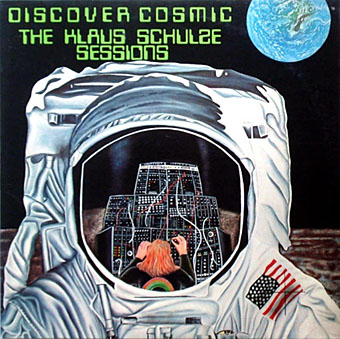
A Moog on the Moon by P. Praquin, 1977. And a space helmet reflection to add to the list being accumulated by 70s Sci-Fi Art.

• RIP Klaus “Quadro” Schulze. I’ve owned many of his solo albums over the years, and while they’re historically important for the part they played in developing the kosmische sound in the 1970s I’ve never been very enthusiastic about the music. The albums I prefer are the ones where he was working with others, whether as a drummer in Ash Ra Tempel, an inadvertent member of the fake Cosmic Jokers supergroup, or part of the genuine Cosmic Couriers supergroup that made Tarot. The Tonwelle album credited to “Richard Wahnfried” benefits considerably from the presence of Manuel Göttsching and Michael Schrieve (also a rumoured Carlos Santana); I recommend it. For a taste of the synth-doodling Schulze, here he is in analogue heaven.

• Next month, Luminous Procuress, a film by Steven Arnold (previously), is released for the first time on blu-ray by Second Run: “Exploding out of San Francisco’s vibrant late-60s counter-culture, Luminous Procuress is a psychedelic odyssey of unabashed hedonism. The only feature film by artist, mystic and polymath Steven Arnold, the film celebrates gender-fluidity and pan-sexuality in a voyeuristic phantasmagorical journey towards spiritual ecstasy.”

• “Whereas [Bernard] Herrmann worked predominantly with strings and [John] Carpenter with synths, Anderson wanted to evoke a similar atmosphere with guitars.” Greg “The Lord” Anderson talks to Dan Franklin about making an album of night music.

I am troubled by how often people talk about likability when they talk about art.

I am troubled by how often our protagonists are supposed to live impeccable, sin-free lives, extolling the right virtues in the right order—when we, the audience, do not and never have, no matter what we perform for those around us.

I am troubled by the word “problematic,” mostly because of how fundamentally undescriptive it is. Tell me that something is xenophobic, condescending, clichéd, unspeakably stupid, or some other constellation of descriptors. Then I will decide whether I agree, based on the intersection of that thing with my particular set of values and aesthetics. But by saying it is problematic you are saying that it constitutes or presents a problem, to which my first instinct is to reply: I hope so.

Art is the realm of the problem. Art chews on problems, turns them over, examines them, breaks them open, breaks us open against them. Art contains a myriad of problems, dislocations, uncertainties. Doesn’t it? If not, then what?

Jen Silverman on the new moralisers

• “The website is colorful and anarchic, evoking the chaotic sensory experience of exploring a crammed, dusty shop.” Geeta Dayal explores the Syrian Cassette Archives.

• New music: The Last One, 1970 by Les Rallizes Dénudés; Untitled 3 by Final; Blinking In Time (full version) by Scanner.

• Why was erotic art so popular in ancient Pompeii? Meilan Solly investigates.

• You’ve been reframed: Anne Billson explores the history of split-screen cinema.

• At Spoon & Tamago: Japanese era names illustrated as logos.

• Mix of the week: XLR8R Podcast 745 by Wilted Woman.

Fun type

Split, Pt. 4 (1971) by The Groundhogs | Split Second Feeling (1981) by Cabaret Voltaire | Splitting The Atom (2010) by Massive Attack