Weekend links 505

brown.jpg

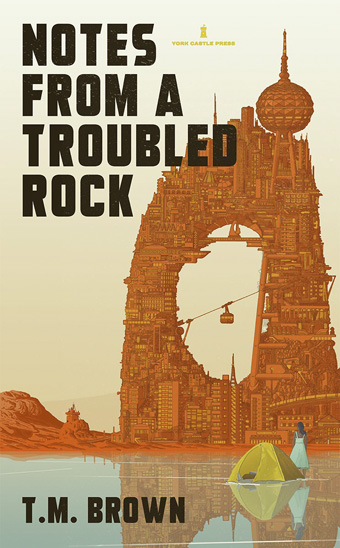
An imaginary book cover by Toby Melville-Brown.

• At the Internet Archive (for a change): Directory 1979, a collection of John Cooper Clarke’s poetry designed by Barney Bubbles; 25 issues of Wrapped in Plastic, the magazine devoted to all things David Lynch; and Cinefantastique, 1970–2002, the magazine about special effects in cinema whose making-of articles were often the first such analyses published anywhere. No contents list for the latter, unfortunately, but the covers shown here give an idea of the main features.

• “Physicist Andreas Schinner recounted a rumor that the Voynich manuscript can be ‘pure poison’ for a scholarly career, because when studying the manuscript there’s ‘always an easy option to make a ridiculous mistake.'” Jillian Foley on the strange quest to decipher the Voynich manuscript.

• At the BFI: Stephen Puddicombe examines six mysterious paintings on film, and Anna Bogutskaya selects ten examples of Lovecraftian cinema. Regarding the latter, I deplore the omission of Huan Vu’s Die Farbe (2011).

• In The Driver’s Seat: Neil Fox on the demented fun of Nicolas Winding Refn’s streaming site for cinematic obscurities, ByNWR.

• “Feed your head”: Akim Reinhardt on the progress of a White Rabbit from Charles Lutwidge Dodgson’s novel to Grace Slick’s song.

• Mixes of the week: Marshland: The Andrew Weatherall Mix, and Music’s Not For Everyone, hours of Weatherall mixes at NTS.

Borderland, an album of music by Fordell Research Unit based on The House on the Borderland by William Hope Hodgson.

• At Dangerous Minds: Thirteen-year-old Mariangela and her adventurous pop album, produced by Vangelis, 1975.

• Heavy Metal, Year One: Kory Grow on the inside story of Black Sabbath’s groundbreaking debut.

• “Theire Soe Admirable Herbe”: How the English Found Cannabis by Benjamin Breen.

Derek Jarman and friends in Dungeness: unseen pictures.

Closing periods at Flickr.

Heavy Rock (1976) by Sound Dimension | Heavy Denim (1994) by Stereolab | Heavy Soul (2002) by The Black Keys

Weekend links 501

ashman.jpg

Cover art by Michael Ashman, 1979.

• RIP Terry Jones, not only a writer, actor and director but also a presenter of the BBC’s short-lived Paperbacks series in 1981, a programme that included Angela Carter among its guests. Related: The Box (1981), a short film directed by Micky Dolenz, based on a play by Terry Jones and Michael Palin.

• “[David] Lynch in a suit and tie that echoes the formal dress of Twin Peaks’ FBI Agent Cooper, presses a small capuchin monkey, called Jack Cruz, to confess to the murder of Max.” What Did Jack Do?

• The week in Ghost Box: Flying Lotus and Julian House collaborate on a promo for the Moog Subsequent 25 synthesizer, while at Grave Goods Jim Jupp answers questions from beyond.

Bruce Sterling: “This is an essay about lists of moral principles for the creators of Artificial Intelligence. I collect these lists, and I have to confess that I find them funny.”

• A campaign to protect and maintain Derek Jarman’s Prospect Cottage.

• Winners of the Wiki Loves Monuments 2019 photo competition.

• Mix of the week: Sehnsucht by The Ephemeral Man.

• Susan Schulten on Emma Willard’s Maps of Time.

• At Dennis Cooper’s: Roland Topor’s Brains.

• At Strange Flowers: 20 books for 2020.

Beat Box (1984) by Art Of Noise | Glory Box (1994) by Portishead | Black Box (1995) by Scorn

Weekend links 496

kemeny.jpg

Fahrenheit 451 (1966) poster by György Kemény.

• “The novel is constantly assailed by people wanting to conscript it to their own ends. (Other art forms are not similarly burdened; someone yelling ‘What about global warming?’ between numbers at a Keith Jarrett concert would be recognized to have made a category error.)” Jonathan Clarke on the demands that literature should nurture empathy.

• The first three features by Alejandro Jodorowsky—Fando y Lis (1968), El Topo (1970) and The Holy Mountain (1973)—return to Britain’s cinema screens in January (well…two of them return; I’m not sure that Fando y Lis has ever been shown in cinemas over here). All three films will be given overdue blu-ray releases by Arrow in March.

• “What distinguishes Oulipo from other language games, is that its methods have to be capable of producing valid literary results.” Tony White reviews The Penguin Book of Oulipo: Queneau, Perec, Calvino and the Adventure of Form, edited by Philip Terry.

But from a present-day perspective, it is also remarkable the extent to which cafés, busy conduits for knowledge and sentiment, resembled later digitally connected systems. The larger establishments offered not just a huge selection of newspapers, domestic and foreign, but also reference material—maps, dictionaries, encyclopaedias, language lexicons, address books—for writers struggling with their research, or merely trying to settle an argument. The combination of hard facts and caffeinated opinion firing through the steamy analogue ether constituted a local area network of extraordinary reach. In the pre-digital era, the Viennese café offered the greatest possible concentration of current knowledge—for the price of a mélange.

From the Strange Flowers guide to Vienna, part 2

• “People like Edmund Wilson and Isaiah Berlin, they have to love Zhivago to prove that good writing can come out of Soviet Russia. They ignore that it is really a bad book.” Jennifer Wilson on Vladimir Nabokov’s fighting spirit.

• Master animator Richard Williams died in August so here again is the exceptional adaptation of A Christmas Carol made by his studio in 1971.

• Hearing a person: Annea Lockwood remembers her partner, composer Ruth Anderson, whose death was announced last week.

• The London Review of Books has relaunched its website. The paywall is currently down until mid-January so dig in.

Live In Paris by Pharoah Sanders, a previously unreleased ORTF concert recording from 1975.

• Unrising sun: Amos Chapple’s photographs of the polar nights of Murmansk.

Mary McNamara on the rescuing of 200 historic Hollywood backdrops.

• Mix of the week: XLR8R Podcast 623 by Aida.

• At Dennis Cooper’s: Sandy Dennis Day.

The Desert Is A Circle (1970) by Shades Of Joy | The Desert Is A Circle (1971) by Paul Horn | Holy Mountain (1994) by Axiom Ambient

Weekend links 495

klee.jpg

Angelus Novus (1920) by Paul Klee.

• “Compared to [László] Krasznahorkai’s earlier fiction, Baron Wenckheim’s Homecoming is funnier and more stylistically accessible—despite its length and seemingly endless sentences—but it is also his most unremittingly ruthless work,” says Holly Case. Elsewhere: “Baron Wenckheim’s Homecoming may not bring joy or consolation, but reading it is a mesmerisingly strange experience: a slab of late modernist grindcore and a fiercely committed exercise in blacker-than-black absurdity,” says Sukhdev Sandhu.

Zeitraffer (“Time-lapse“) is an exhibition devoted to Tangerine Dream which opens at the Barbican, London, in January. Also coming in January is a new album, Recurring Dreams, by the current iteration of the group which will be available on CD and double vinyl. I was impressed by the last TD release, Quantum Gate, so I’m looking forward to this even if it is only a reworking of popular pieces from the Virgin years.

• RIP Gershon Kingsley, an electronic music pioneer best known for the silly but fun albums he made with Jean-Jacques Perrey, and for being the composer of that evergreen synthesizer novelty, Popcorn.

The first major study in English of ancient Greek sexuality—especially the way relationships between men were both common and celebrated as a perfect embodiment of love—A Problem in Greek Ethics helped set the stage for the modern-day gay rights movement. But it did so surreptitiously, behind closed doors, as required by the times. Symonds printed it privately in 1883; a print run of just 10 copies reduced the risk that it would fall into the wrong hands. The typesetter complained about the content. Symonds circulated it cautiously, to people he trusted or had reason to think would be discreet. Until now, researchers believed that only five copies survived.

Rachel Wallach on the discovery of a sixth copy of John Addington Symonds’ landmark study

Contagious Magick of the Super Abundance is a book of art by the late Ian Johnstone, former partner of John Balance and cover artist for some of the last releases by Coil.

Dennis Cooper‘s favourite fiction, poetry, non-fiction, film, art, and internet of 2019. Thanks again for the link here!

• At the BFI: Hannah McGill on the umbrellas of cinema, and Jasper Sharp on 10 essential films by Yasujiro Ozu.

• Bobby Krlic, aka The Haxan Cloak, talks to Claire Lobenfield about creating the soundtrack for Midsommar.

Joker and Chernobyl composer Hildur Guðnadóttir: “I’m treasure hunting”.

Joshua Rothman on how William Gibson keeps his science fiction real.

Samantha Rose Hill on Walter Benjamin’s last work.

Scientific phenomena photographs of the year.

The Dream Before (1989) by Laurie Anderson | Angel Tech (1994) by The Grid feat. Sheila Chandra | Angel Tech (1994) by Pete Namlook & Bill Laswell

Weekend links 490

stoer.jpg

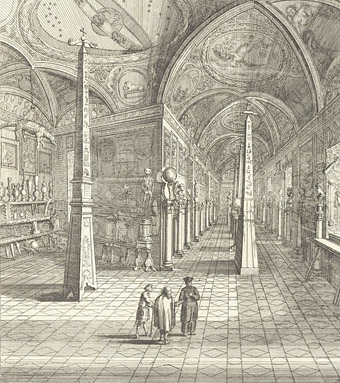
An engraving from The Geometric Landscapes of Lorenz Stoer (1567).

• Curtis Harrington’s cult horror film, Night Tide (1961), receives a lavish blu-ray reissue from Powerhouse in January. The limited edition will include an extra disc of Harrington’s early short films which encompass Poe adaptations and also Wormwood Star, his portrait of occult artist (and actor in Night Tide) Marjorie Cameron.

• “He was the first American representative of an electronic sound that was largely coming from Europe, from bands like Kraftwerk, or producers like Giorgio Moroder and Pete Bellotte…” Jude Rogers on Patrick Cowley.

Clive Hicks-Jenkins examines Hans Poelzig’s and Marlene Moeschke’s work on Paul Wegener’s 1920 film of The Golem. Wegener’s film is released this month in a restored blu-ray edition by Eureka.

• “Conrad was uncompromising in his beliefs until the end, sticking to his ideals with tenacious fervor.” Geeta Dayal on Tony Conrad: Writings, edited by Constance DeJong and
Andrew Lampert.

• At Dennis Cooper’s: 47 dead films. One of the films, Hu-Man (1975), a French science-fiction drama starring Terence Stamp, isn’t as dead as was assumed.

• The Danske Filminstitut has made a collection of Danish silent films available to watch for free online.

• The Last Time I Saw John Giorno, an Extraordinary Performance Poet by Mark Dery.

• “Like looking through butterfly wings”: Ira Cohen’s Mylar chamber—in pictures.

Callum James reviews the Early Poetical Works of Aleister Crowley.

• Drawing the Gaze: Revisiting Don’t Look Now by Jesse Miksic.

• Mix of the week: FACT Mix 745 by Visible Cloaks.

Mind Warp (1982) by Patrick Cowley | Go-Go Golem (1986) by Golem Orchestra | Night Tide (1995) by Scorn