The art of Henk Bremmer, 1871–1956

bremmer3.jpg

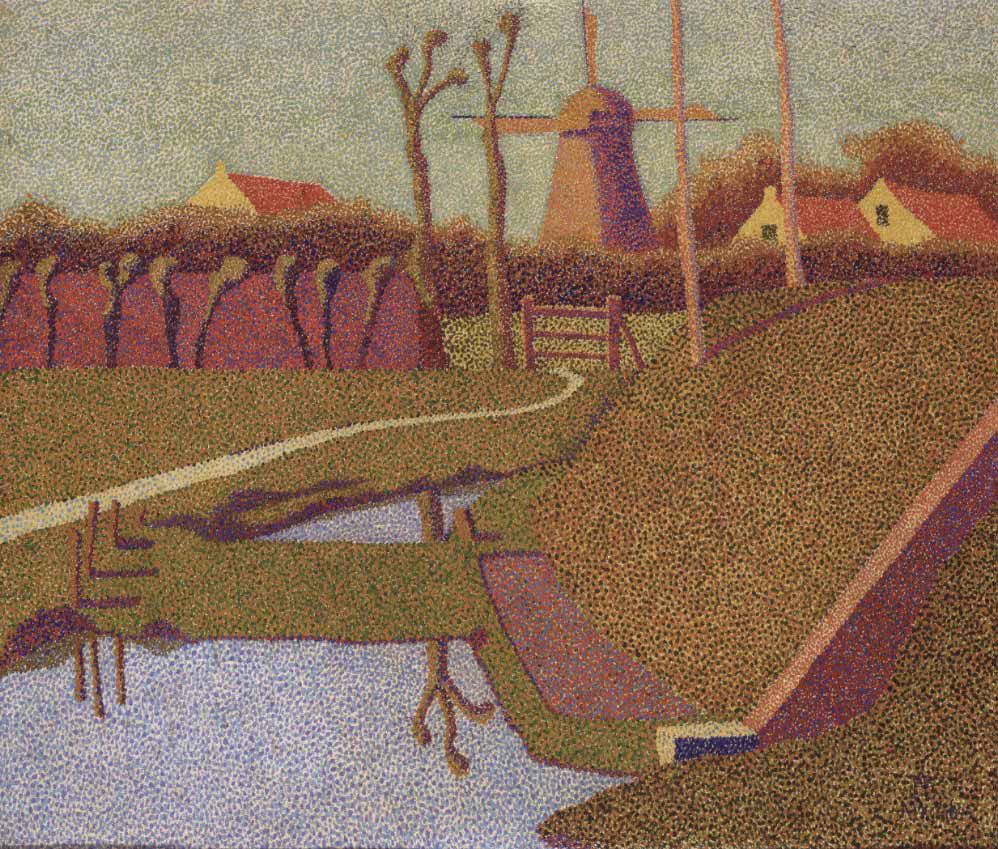
Landscape with Mill (1894; Museum De Lakenhal, Leiden).

This week’s post is another by Sander Bink about a Dutch artist whose work may be unfamiliar to those outside the Netherlands. As before, Henk Bremmer was an artist whose work I hadn’t seen until now. My thanks again to Sander for the post.

* * *

Hendricus (Henk) Bremmer was a Dutch painter, art critic, collector and art dealer. Nowadays he is mostly known for his role in forming the collection of what has become the Kröller-Müller Museum. He was enough of an authority on Dutch Modernist art from the early twentieth century to be known as “de Kunstpaus”—”the Pope of the Arts”. Bremmer was an early and important advocate of Mondriaan’s work, but the Bremmer landscapes I will focus on here are much more Modernist than those being made by Mondriaan at about the same time. Although Bremmer’s paintings from the 1890s and from around 1900 are seen as early examples of Dutch pointillism, readers of this blog will probably appreciate them for their Symbolist qualities. They are usually not seen as such but to me the Symbolist affinities are quite clear. That Bremmer was acquainted with Symbolist theory is apparent from his being an avid reader of the French Symbolists and a great admirer of Huysmans’ À rebours.
bremmer2.jpg

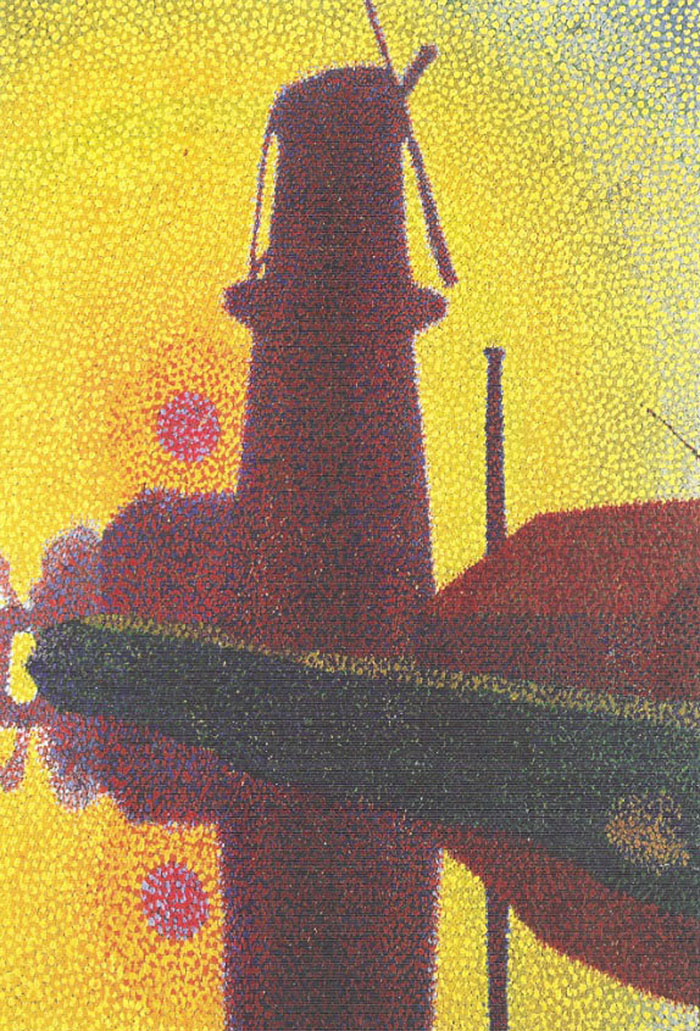
Windmill (1894; private collection).

In the 1890s Bremmer was friends with Dutch (Decadent-Symbolist) writers and painters such as Henri Borel, Henri van Daalhoff, Jan Toorop and Johan Thorn Prikker. When Josephin Péladan, the High Priest of Symbolism, visited the Netherlands in 1892 he stayed with Bremmer and invited him to exhibit at his Rose+Croix shows in Paris. The exhibition never materialised but one can easily understand the mystical qualities Péladan must have appreciated in Bremmers paintings. Like many Dutch intellectuals of the period Bremmer was strongly influenced by Spinoza’s mysticism. But whatever the source of his art, the landscapes here depicted can be considered “Symbolist landscapes”, like those being painted in France by Alphonse Osbert or Charles Filiger.
Continue reading “The art of Henk Bremmer, 1871–1956”

Weekend links 514

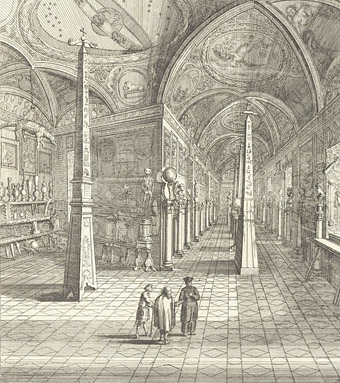
kircher.jpg

Athanasius Kircher welcoming two guests to the Collegio Romano, a detail from the frontispiece to his Romani Collegii Societatis Jesu Musaeum celeberrimum (1678).

Opium (1919) by Robert Reinert: “A Chinese opium dealer takes revenge on Westerners who have corrupted his wife.” With Werner Krauss and Conrad Veidt a year before their pairing in The Cabinet of Doctor Caligari.

Aubrey Beardsley at Tate Britain: in which the gallery thinks that 7 minutes is enough to give us a taste of a major exhibition that we can’t otherwise see.

Joe Pulver (RIP): His Highness in Yellow. A memorial piece that includes artist Michael Hutter talking about his paintings of Carcosa.

Court Mann on the strange history of Robert Smithson’s Spiral Jetty, 50 years old this month.

• “Invisible Little Worms”: Athanasius Kircher’s Study of the Plague by John Glassie.

Sophie Monks Kaufman on why literary lesbians are having a moment on screen.

• Photographer Ryan McGinley: “I was taught to believe in Satan. It scared me.”

• At Dennis Cooper’s: Ellen Burstyn Day, and the ghostly novels of WG Sebald.

Dorian Lynskey on where to start with Nina Simone’s back catalogue.

• Wie funktioniert ein Synthesizer? (1972). Bruno Spoerri explains.

• Banham avec Ballard: On style and violence by Mark Dorrian.

John Boardley on the most dangerous book in the world.

Improvisation for Sonic Cure by Ryuichi Sakamoto.

• The Strange World of…JG Thirlwell.

Diet Of Worms (1979) by This Heat | Stomach Worm (1992) by Stereolab | Heartworms (1998) by Coil

Weekend links 509

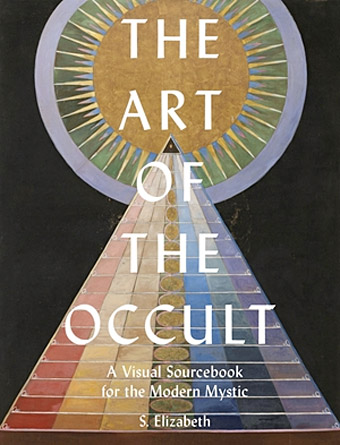
occult.jpg

The Art of the Occult: A Visual Sourcebook for the Modern Mystic by S. Elizabeth. The book will be published in September by White Lion Publishing, and includes some work of mine.

• “The structure of the film as a memory palace consists of scenes intercutting different movies, depicting similar situations lived by the same actors in similar locations and, yes, similar sexual positions building over the course of its run-time.” Memory Palace: on Ask Any Buddy and the Golden Age of Gay Porn. Caden Mark Gardner writes on a kaleidoscopic, experimental archive piece of gay pornography. • Related: Paul P., the artist making dreamy paintings from vintage gay erotica.

• At Dennis Cooper’s: Spotlight on…Terry Southern The Magic Christian (1959), and Bill Hsu presents…High Anxiety: tense, dark films from 2010-2019 (for fans of Robert Aickman and Brian Evenson).

Green (1986) by Hiroshi Yoshimura, a welcome reissue of an album of minimal electronica. More green: The Green Fog by Guy Maddin has been on Vimeo for a while.

• Mixes of the week: Time is on our hands by Beautify Junkyards, and Textural Hominini Cognition by The Ephemeral Man.

• How John Waters and Mink Stole made Pink Flamingos, and Mink Stole on the inside story of John Waters’ greatest films.

Viktor Wynd: “I was offered a mummified arm—but I didn’t have €2,000 on me”.

• At Dangerous Minds: the solitary Surrealism of Gertrude Abercrombie.

Cats and Domino

Webcam in Italia

The Green Chinese Table (1988) by Seigen Ono | Green Water (1996) by Coil | Green Evil (1997) by Paul Schütze

Weekend links 506

caligari.jpg

• The late David Roback was a musician who would have been called “enigmatic” for his refusal of the interview treadmill, preferring instead to let his music speak for itself. I wouldn’t label myself a “fan” (a word I dislike at the best of times) but over the years I’ve collected just about everything that Roback was involved in, from the early Rain Parade albums (he co-wrote my favourite song of theirs, No Easy Way Down), to Opal (his collaboration with Kendra Smith and others), and Mazzy Star (with Hope Sandoval), the group whose songs perfected the somnolent blend of blues, country and rock that Roback had been aiming at all along. Some concerts:

Mazzy Star, The Black Sessions, Maison De La Radio, Paris, October 25, 1993
Mazzy Star at the The Metro, Chicago, November 12, 1994
Mazzy Star, KROQ Radio, Los Angeles, December 10, 1994

• “Like other early-modern architects, Lequeu’s drawings explore analogies between bodies and buildings and the erotic, multisensory dimensions of architectural design. In his annotations, he often describes in compulsive detail not only how buildings look but also how they feel, smell, and even taste.” Meredith Martin on the architecture of Jean-Jacques Lequeu.

• “She talks avidly about using pigs’ heads, plastic doll parts, fake blood, and real blood, recollecting with relish a performance where she transformed into a Statue of Liberty that projectile-vomited gore onto the audience…” Geeta Dayal on the performance art of Johanna Went.

Schütte teases out the many ambiguities in these concepts: trains, autobahns, radioactivity, men-machines. All have distinct negative connotations within Germany in particular. Yet Kraftwerk proposed a positive view. Their rigorous determination to deny autobiography forced listeners to focus on the ideas and the music, where apparent contradictions—local/global,  human/machine, past/future—were resolved in a sparkling, crystal-clear sound-world. This was not submission but interaction: as they said, “we are playing the machines, the machines play us”.

Jon Savage reviews Kraftwerk by Uwe Schütte

• “…it was clear that Miles wasn’t sure what he wanted…but he knew what he didn’t want. He didn’t want anything like what he had done before.” John McLaughlin on the recording of Bitches Brew by Miles Davis.

• “His panels are littered with figures standing on the edge of crowds, watching.” Toby Ferris on the paintings of Pieter Bruegel.

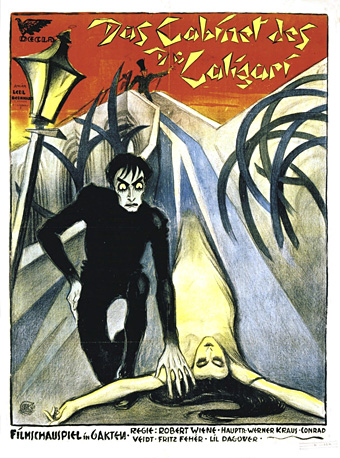
Alex Barrett on 100 years of The Cabinet of Dr. Caligari.

A Boy Called Conjuror by Teleplasmiste.

• At Dennis Cooper’s: Fires.

Smithsonian Open Access

• Picture P. Brueghel “Winter” / Solaris (1972) by Edward Artemyev | The Dream Dance Of Jane And The Somnambulist (1981) by Bill Nelson | St. Elmo’s Fire (1998) by Uilab

The poster art of Josef Vyleťal

vyletal11.jpg

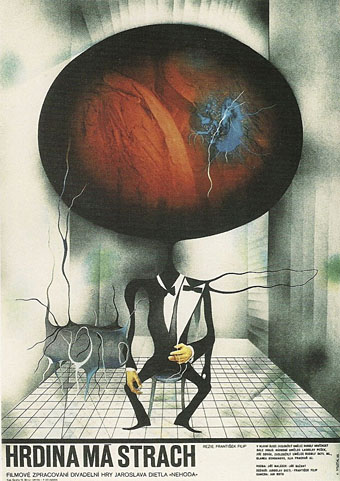
The Hero is Afraid (1965).

Film posters by Czech artist Josef Vyleťal (1940-1989) have appeared here in the past, but after watching Juraj Herz’s gloomily Gothic Beauty and the Beast (1978) at the weekend—a film for which Vyleťal not only created a poster but also provided the title sequence and paintings seen within the film—I thought the artist deserved a post of his own.

Josef Vyleťal was a prolific poster artist and designer—the Terry Posters website states that he created 115 designs for the cinema—who also worked as a book illustrator. Between commercial assignments he produced paintings in a macabre Surrealist style that filtered into his commercial work, the Herz titles included. The absence of barriers between private obsessions and commercial imperatives is what makes the film posters created by Czech and Polish artists so attractive, as well as so surprising to Anglophone viewers. There’s no sense of these works being produced by committee, of a gaggle of marketing executives fretting over details behind the scenes. Some of Vyleťal’s interpretations are so extreme and uncompromising by Hollywood standards it’s impossible to imagine even an adventurous chain like Alamo Drafthouse commissioning them, never mind a risk-averse studio. One of the designs I singled out for an earlier post is an ideal example, a poster for Alfred Hitchcock’s The Birds which dispenses with any visual reference to the film in favour of a liberal borrowing of the bird-headed figures from Max Ernst’s The Robing of the Bride. It’s a commonplace when discussing the films of Jan Švankmajer to situate the director in the history of Czech Surrealism which remained a clandestine movement during the Communist years. But Vyleťal’s paintings demonstrate a confidence that the average Czech filmgoer could accept Surrealist imagery when being tempted by the latest fare from Hollywood.

vyletal07.jpg

The Naked Eye (1966).

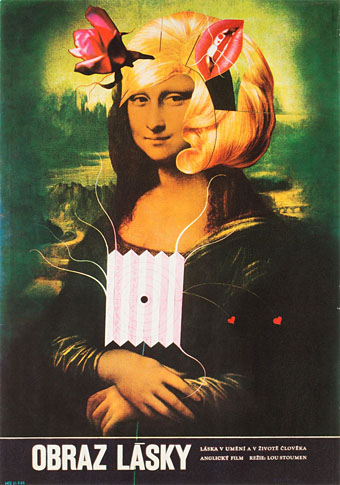
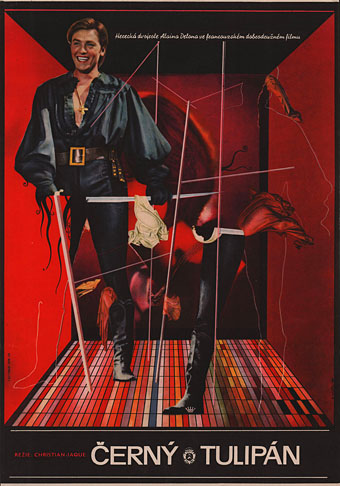
Given my own tastes for Surrealist imagery many of the examples shown here tend in this direction. Vyleťal was a versatile artist who utilised a number of different styles, including collage and a bold graphic style of black shapes on coloured backgrounds. In addition to borrowing from Ernst he also borrowed (or swiped) figures from Aubrey Beardsley on at least two occasions (see below). Most of the examples here are collages augmented by or combined with paint, collage being a quicker solution when faced with deadlines. Terry Posters has many more examples.

vyletal13.jpg

The Black Tulip (1967).

vyletal01.jpg

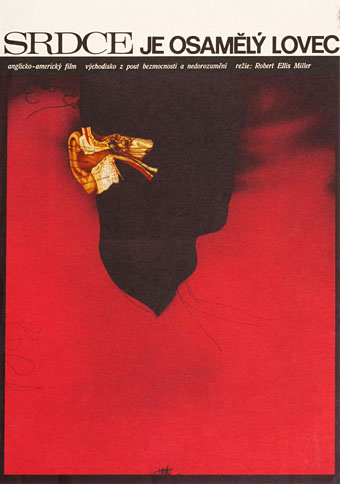
The Heart is a Lonely Hunter (1968).

vyletal12.jpg

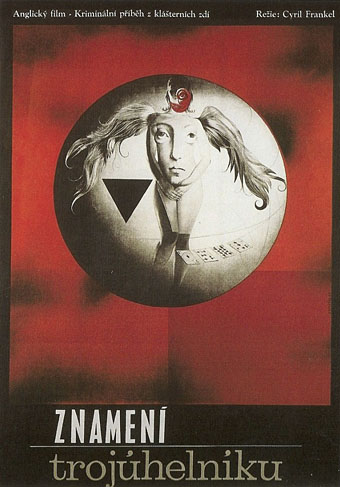
The Trygon Factor (1968).

Continue reading “The poster art of Josef Vyleťal”