Spare things

spare-cthulhu.jpg

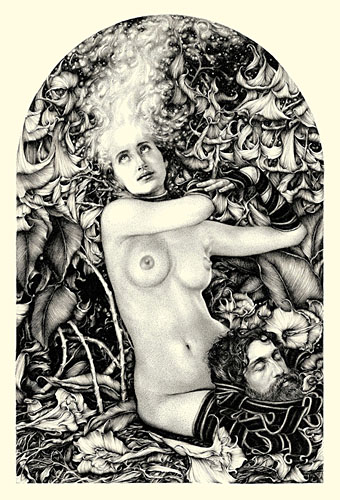
Cthulhu Cultus: The Sun is Sick (no date) by Austin Osman Spare.

I’ve been telling people about this drawing for years but I’ve not posted it here before. Spare produced this piece after Kenneth Grant gave him some of HP Lovecraft’s stories to read. I’ve never seen it dated but it’s probably from the mid-50s when Kenneth and Steffi Grant were corresponding with Spare and commissioning new artworks. What’s notable for me is that this is probably the first Lovecraft-derived drawing that wasn’t either a magazine or book illustration, or something done for one of the horror fanzines.

coc.jpg

The Call of Cthulhu (1987) by John Coulthart.

Lovecraft aficionados have never seemed aware of Spare’s drawing since Lovecraft studies tended until very recently to remain fixed on popular media and the often parochial world of genre fandom. When I came to draw the swamp scene for The Call of Cthulhu in 1987 I borrowed the faces from Spare’s pillar for the column in the centre of the picture.

bulldogbreed.jpg

Bulldog Breed.

While we’re on the subject, and in the spirit of showing how all the obsessions here connect in one way or another, Phil Baker’s excellent biography of Austin Spare notes a surprising reference to the artist that predates Man, Myth and Magic via the psychedelic music scene. Bulldog Breed were a short-lived London group, one of many being promoted by the Deram label in the late 1960s. The group’s one-and-only album, Made In England, was released in 1969. The cover art is dreadful but the final song is a number entitled Austin Osmanspare [sic], a paean to the artist that turns AOS into a typical character from British psychedelia: an eccentric, oddly named, Victorian type with a sinister and mysterious glamour. According to Baker one of the band members had an aunt who knew Spare. It’s not a bad song, and the choice of magus gave them an edge over the Beatles who went for the more obvious Aleister Crowley. “They said he was before his time…”

Previously on { feuilleton }
Dreaming Out of Space: Kenneth Grant on HP Lovecraft
MMM in IT
Intertextuality
Abrahadabra
The Occult Explosion
Murmur Become Ceaseless and Myriad
Kenneth Grant, 1924–2011
New Austin Spare grimoires
Austin Spare absinthe
Austin Spare’s Behind the Veil
Austin Osman Spare

Weekend links 249

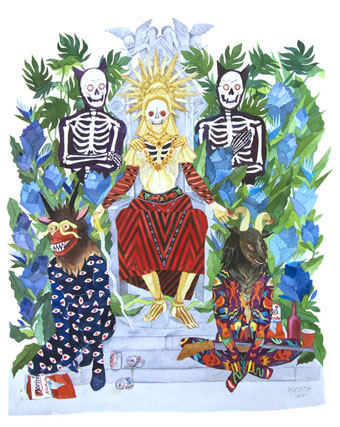
ulrich.jpg

The Philosophers (Homage to Courbet) by Christopher Ulrich. Another great tip from Full Fathom Five.

• “Mushrooms are the only psychedelic drugs that I take, and I don’t take them very often. But I would trust them. Once you’ve done them a few times it’s very easy to feel a sense of entity. You can feel that there is a characteristic in this level of consciousness which almost seems…playful? Or aware, or sometimes a bit spooky.” Alan Moore discussing art and psychedelics in Mustard magazine. Related: “Psychedelics not linked to mental health problems or suicidal behavior: A population study.”

• “Leonora Carrington transcended her stolid background to become an avant-garde star,” says Boyd Tonkin. At the BBC Chris Long looks at Leonora Carrington’s journey from Lancashire to Mexico. The Carrington exhibition at Tate Liverpool opened on Friday.

A Savoyard’s First Brush with Censorship, Clara Casian’s proposed documentary film about Savoy Books, is looking for Kickstarter funding.

Warner suggests that there are four characteristics that define a veritable fairy tale: first, it should be short; second, it should be (or seem) familiar; third, it should suggest ‘the necessary presence of the past’ through well-known plots and characters; fourth, since fairy tales are told in what Warner aptly calls ‘a symbolic Esperanto’, it should allow horrid deeds and truculent events to be read as matter-of-fact. If, as Warner says, ‘the scope of a fairy tale is made by language’, it is through language that our unconscious world, with its dreams and half-grasped intuitions, comes into being and its phantoms are transformed into comprehensible figures like cannibal giants, wicked parents or friendly beasts.

Alberto Manguel reviewing Once Upon a Time: A Short History of Fairy Tale by Marina Warner

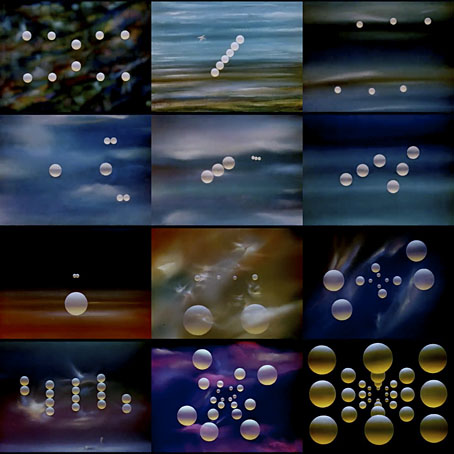
De Natura Sonorum (1976) by Bernard Parmegiani: a free download at AGP of the original vinyl recording, something I overlooked several years ago.

• At Dangerous Minds: Real Horrorshow!: Malcolm McDowell and Anthony Burgess discuss Kubrick and A Clockwork Orange.

Meeting Bernard Szajner, a short film about the French electronic musician by Tom Colvile, Nathan Gibson & Abdullah Al-wali.

• Dismembrance of the Thing’s Past: Dave Tompkins on John Carpenter’s The Thing.

That Battle Is Over, a new song by Jenny Hval.

Mushroom (1971) by Can | The Mushroom Family (2010) by The Time And Space Machine | Growing Mushrooms Of Potency (2012) by Expo ’70

Falk-Ulrich Rogner album covers

duul00.jpg

All The Years Round (7-inch single, 1972).

I mentioned earlier that Falk-Ulrich Rogner’s cover art for Amon Düül II was worthy of a post so here you are. Amon Düül II were slightly ahead of the pack in the German music scene of the 1970s, starting earlier and (arguably) finishing their prime period earlier. They were also closer in musical style and group ethos to the psychedelic/early prog groups in Britain and America, especially Hawkwind with whom they shared a record label and a bass player. Other German groups were often psychedelic to some degree but Amon Düül II went all-out for a German take on psych rock, with extended guitar-heavy jams played against oil-on-water projections.

Falk-Ulrich Rogner was one of the longer lasting members of the group’s shifting personnel, playing organ and electronics, writing lyrics and creating artwork that’s a perfect match for what I always think of as Amon Düül II’s Gothic Surrealism: a blend of lyrics and themes running through songs titled like Max Ernst paintings: Flesh-Coloured Anti-Aircraft Alarm, Archangel’s Thunderbird, Stumbling Over Melted Moonlight, Green Bubble Raincoated Man. The cover art is generally a collage of photographs, old paintings and other graphics, a familiar technique for psychedelic album covers. What gives Rogner’s work an edge is the way he blends multiple collages together by either photographic exposure or the photographing of projected transparencies. This has the effect of softening hard edges and transitions, and makes the resulting images all the more hallucinatory and dream-like. Effects like this are easy to achieve today with Photoshop but in the early 1970s they required a considerable effort.

duul01.jpg

Phallus Dei (1969).

At first glance the cover of the gloriously titled debut album looks like a painting but it’s a photograph of a tree silhouette juxtaposed against some vague collage business. This doesn’t really communicate the lysergic intensity of the music within which may explain why the cover was changed to something more typically psychedelic for its UK release.

duul02.jpg

The back cover inaugurates a pattern of placing the band on the back of the album, a reversal of the usual state of affairs even today.

duul03.jpg

The first CD release of Phallus Dei on the Mantra label featured what may be another Rogner photomontage, one that I’ve not seen anywhere else.

Continue reading “Falk-Ulrich Rogner album covers”

Weekend links 248

baylay.jpg

The Dreamers (2013) by Kate Baylay, from Seven Gothic Tales by Isak Dinesen.

• RIP composer and musique-concrète pioneer Tod Dockstader. “I didn’t have the money for electronic sounds…I had to have things like bottles, or anything that would make a noise. It didn’t matter what it was; if it sounded interesting, or I could make it interesting, I’d go for it.” Geeta Dayal talked to Dockstader for Wired in 2012. Dockstader’s film credits included Fellini’s Satyricon and Tom and Jerry cartoons. He also wrote the story for one of the latter, Mouse into Space, in 1962. Ubuweb has some early Dockstader recordings.

• “…anyone who has ever sat in a cafe, or in the bath, with a paperback owes a debt to Aldus and the small, cleanly designed editions of the secular classics he called libelli portatiles, or portable little books.” Jennifer Schuessler on Aldus Manutius, and the roots of the paperback.

• “At Chernobyl, we made ‘the world’s first radioactive nature preserve.’ We made black rain. We made the Red Forest, which was green when the day began, and is dead.” Mary Margaret Alvarado reviews The Long Shadow Of Chernobyl by Gerd Ludwig.

Prison was often the fate of those caught circulating samizdat in the Soviet Union—not only the “high” samizdat such as Solzhenitsyn, but the crude and lowly joke books as well. The official rationale for the prohibition was in context no less reasonable than the rationale given more recently for condemning Charlie Hebdo or R. Crumb. There is always a perception that the very serious project of perfecting society is being undermined. But society will not be perfected, and it is a last resort of desperate perfecters to go after the subtle-minded satirists who understand this.

Justin EH Smith on why satire matters

• “You have to do your research, and you’ll find treasures that you couldn’t even have begun to sit down and draw until you saw them in front of your eyes,” says Annie Atkins, graphic designer behind The Grand Budapest Hotel.

The Tales of Hoffmann: exclusive materials from the making of Powell and Pressburger’s masterpiece. The film will be released on Blu-ray by the BFI later this month.

• The illustrated score for Irma, the opera offshoot of Tom Phillips’ A Humument, is now available from Lulu.

Mellifluous Ichor From Sunless Regions, a free album of Hauntological electronica by The Wyrding Module.

Kraftwerk at the controls: what the group’s live instrument setup looks like today.

• Booze, Blood and Noise: The Violent Roots of Manchester Punk by Frank Owen.

• Mix of the week: 14th February 2015 by The Séance.

Vintage logo designs

Transmission (1979) by Joy Division | Radioactivity (William Orbit mix, 1991) by Kraftwerk | Bellstomp/Pond Dance (Mordant Music remix, 2012) by Tod Dockstader

The Kosmische Tarot

geitner-tarot-box.jpg

Revelation of the weekend has been the discovery that there are two sets of (for want of a better term) Krautrock Tarot cards. The first, Walter Wegmüller’s Zigeuner Tarot, is familiar for being included in the Tarot concept album released on the Kosmischen Kuriere label in 1973. The album was credited to Wegmüller but he only advised on the symbolism and acts as MC/narrator. Wegmüller’s cards are detailed and somewhat original, but their drawing is from the enthusiasm-over-technique school which goes against the grain of the rest of the album design and the accomplishment of the musicians.

mythos.jpg

Dreamlab (1975) by Mythos. Design by Peter Geitner.

As noted a few days ago, the designer of the Tarot album was Peter Geitner working under the direction of a pair of very hands-on label bosses, Rolf-Ulrich Kaiser and Gille Lettmann. The story of Kaiser’s rise and fall has been recounted in some detail over the years (see here and here). Given the colourful saga, and the cast of notable musicians, writers and artists, I’m surprised to have seen no mention of the second Tarot set that Peter Geitner designed and illustrated in 1975 while the Kosmische Musik empire was imploding. One illustration (The Lovers) was even used as cover art for the Dreamlab album by Mythos.

geitner-tarot-back.jpg

Card back for the Sternenmädchen’s Wahrsagespiel.

Sternenmädchen’s Wahrsagespiel (Star Girl’s Fortune Telling Game) is a specialised set of the Major Arcana presented as a spin-off from Gille Lettmann’s Sternenmädchen persona as featured on the Gilles Zeitschiff album; the back of the 22 cards features the photo of Gille from the album cover. I’ve said that Geitner illustrated the cards but some of the drawings may have originated as sketches by Gille Lettmann; information is scant but I’ve seen mention of her having been a textile or fashion designer. What’s most striking to me about these designs is how psychedelic they all are, more so than any of the Kosmische Musik album covers even though they maintain the cosmic themes of the record label. Many of those involved with the Kosmische empire were taking LSD at the time so this isn’t very surprising but psychedelia of this intensity was an outmoded thing by the mid-70s. Also of interest is the renaming of the cards which push the attributions away from medieval tradition and into the cosmos. I’ve not been able to find examples of all 22 designs but a list of the cards follows, together with examples of variable quality. The set was printed by AGM Müller but has never been reissued so it now commands high prices. (Many thanks to Jeff for drawing my attention to these!)

Continue reading “The Kosmische Tarot”