Eurydice…She, So Beloved, a film by the Brothers Quay

eurydice.jpg

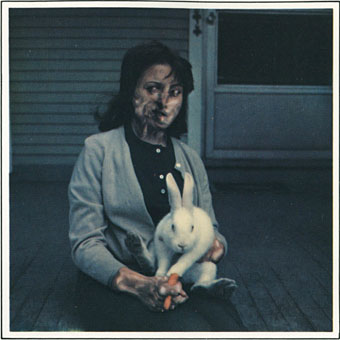
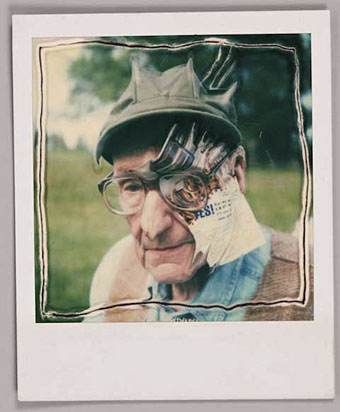
Another recent short from the Quays that’s yet to be given a wider release, Eurydice…She, So Beloved (2007) is an opera/dance piece subtitled “Film ballet in homage to the 100th anniversary of Claudio Monteverdi’s Orfeo“. Orfeo (Simon Keenlyside) sings an aria while Hermes (Kenneth Tharp) rouses Eurydice (Zenaida Yanowsky) from her sleep in a suitably Stygian and rather industrial Underworld. Watch it here.

Elsewhere on { feuilleton }
The Quay Brothers archive

Weekend links 259

bennett.jpg

The Endlessness (2012) by Emma Bennett.

• “Clearly if you’re familiar with The Arcades Project by Walter Benjamin you’ve got a leg up on what Rivette and company are up to. […] Like all Rivette works, it’s obsessed with the interrelationship between theater and life—reality and fantasy.” David Ehrenstein makes Jacques Rivette’s Out 1 sound even more intriguing. The 729-minute film is being reissued later this year.

• “It’s all your artistic friends. They frighten me…they seem evil, somehow—somehow unhealthy. And when you’re with them, dear, you change…” Steven Cordova reviews To the Dark Tower (1946), the debut novel by gay writer Francis King.

• “Sex isn’t a subtext in The Bloody Chamber, but the text itself. (Carter would explain that she was only making explicit a ‘latent content’ that is ‘violently sexual.’)” Laura Miller on Angela Carter’s re-told fairy tales.

Yet, as a citizen, and especially as an artist, [Chimamanda Ngozi] Adichie refuses to censor herself. “There is already enough silencing in public discourse,” says Adichie, and this is certainly true when the topic is race, and especially when the conversation is in America. It is our addiction to comfort that demands our silence regarding certain truths. Too often in America, Adichie claimed, “the goal of public discourse is comfort, not truth.” Comfort, Adichie said, also demands “international digestibility,” a reduction of complicated stories to a simple narrative. In the lecture, Adichie also warned of the silencing that is sometimes a product of social media outrage.

Kay Iguh on Chimamanda Ngozi Adichie’s Arthur Miller Freedom to Write Lecture at the PEN World Voices Festival

• New books: The Strangers and Other Writings by Robert Aickman, and Murderous Passions: The Delirious Cinema of Jesús Franco by Stephen Thrower & Julian Grainger.

• The world is rediscovering Mad Max and George Miller’s prowess for action cinema so Anne Billson posted a transcript of her 1985 interview with the director.

• Mixes of the week: Dmytro Fedorenko presents artists from Ukrainian record label Kvitnu, and The Ivy-Strangled Path Vol. VII by David Colohan.

Assault on Precinct 13 goes disco: The End (John Anthony’s New Scratch Mix) (1983) by “John Carpenter” (The Splash Band).

John Coltrane talked to Frank Kofsky for an hour in November 1966.

• Sleazy Cinema: A guide to Peter Christopherson‘s music videos.

Six hours of women in electronic music.

The weird world of Alfred Kubin.

Giallo Magic Orchestra

Blood (1972) by Annette Peacock | Blood On The Moon (1981) by Chrome | Blood From The Air (1986) by Coil

Owls and flowers

1: The pattern

pattern.jpg

A plate design by Christopher Dresser.


2: A novel by Alan Garner

garner.jpg

The Owl Service (1967). Cover design by Kenneth Farnhill.


3: A Granada TV serial

granada.jpg

The Owl Service (1969). Eight episodes, written by Alan Garner, directed by Peter Plummer.


4: A diversion

clockwork.jpg

Chapter 8 of The Owl Service.

hills.jpg

Gillian Hills as Alison in The Owl Service.

aco.jpg

Gillian Hills (left) as Sonietta in A Clockwork Orange (1971).


5: A single by Pram

pram.jpg

The Owl Service (2000) by Pram. Cover art by Mary Jo Bole.


6: Ghost Box

belbury.jpg

The Owl’s Map (2006) by Belbury Poly. Design by Julian House.

Track 1: Owls And Flowers

advisory.jpg

As The Crow Flies (2011) by The Advisory Circle. Design by Julian House.

Track 11: Learning Owl Reappears


7: A group

owlservice.jpg

The Owl Service.


8: A Folio Society edition

hopes.jpg

The Owl Service (2013) by Alan Garner, illustrated by Darren Hopes.


9: Twelve audiological pathways

ayitc.jpg

In Every Mind: Transmission Resonances, Volume 1 (2015) by A Year In The Country.

Transmission Resonances: Volume 1 takes as its wellhead the continuing reverberations of the 1969 cathode ray version of Alan Garner’s The Owl Service.

It pushes open the attic door from whence the scratching descends and travels to places that surprised, intrigued and even delighted our good selves when it was being shaped on our own particular audiological potters wheels.

Previously on { feuilleton }
To Kill a King by Alan Garner
Red Shift by Alan Garner

Weekend links 258

stalenhag.jpg

Simon Stålenhag‘s SF artwork will be published in book form if funding is secured. In the future everything will be crowdfunded for 15 minutes.

• Mixes of the week: FACT Mix 494 is a fantastic dub selection by Colleen; Secret Thirteen Mix 151 is by Sally Dige; Stephen Mallinder‘s return to the doom-laden Industrial music of the 1980s suits the post-election mood. Mallinder’s mix is helping promote Industrial Soundtrack for the Urban Decay, a documentary by Amélie Ravalec.

• “…it felt more like real life to me than the average hour-long television show.” Sopranos creator David Chase on what he enjoyed about Twin Peaks. Related: Twin Peaks Tarot cards.

Sound & Song in the Natural World edited by Tobias Fischer & Lara Cory. A book about animal music and communication with a 60-minute CD of field recordings.

• “The psychedelic renaissance has already begun, and for the most part I welcome it,” says Erik Davis in a wide-ranging interview with Sean Matharoo.

• It rumbles on: Brown Pundits on “An Embarrassment at PEN”. A useful collection of stories, reactions and polemic from the past two weeks.

Fanny and Stella: The Shocking True Story, a play by Glenn Chandler about Victorian London’s scandalous pair of cross-dressing men.

• Artist Charles Ray causes a problem for the Whitney Museum of American Art with his sculpture of a naked Jim and Huckleberry Finn.

• “Don’t believe Orson Welles,” says his biographer Simon Callow, “especially when he calls himself a failure.”

• A return to Adolph Sutro’s Cliff House features several photos I’d not seen before.

• More Tarot: Arcana: The Tarot Poetry Anthology is looking for funding.

• At Dangerous Minds: The ancient magic of the record label.

Foreign Movie Posters

Tarot (Ace of Wands theme, 1970) by Andy Bown | Distant Dreams (Part Two) (1980) by Throbbing Gristle | The Devil In Me (1982) by Stephen Mallinder

Weekend links 257

tarot.jpg

The Nine of Swords by Pamela Colman Smith, and the same card from The Ghetto Tarot, a Haitian deck created by photographer Alice Smits and Haitian art group Atis Rezistans.

Almost four months after the murders in Paris, Charlie Hebdo continues to be problematic, to use a common epithet. The “p” word occurs with such frequency in current discussions about offence—and those discussions so often seem like a secular version of old religious arguments, with Manichean forces pitted against each other, and the same schisms, heresies and witch hunts—that I’ve taken to translating “problematic” as “sinful”. Charlie Hebdo is nothing if not a heretical text even if many of those pronouncing on its heresies have never read a copy. Back in January I was confident that we’d be seeing a great deal of equivocation (if not outright victim-blaming) when people began to look closely at the magazine, or at least read hasty appraisals of its contents. You didn’t have to be a psychic to predict any of this because the equivocations are merely the current manifestation of a familiar syndrome. This week’s authorial objections about PEN America honouring Charlie Hebdo have led to a reiteration of the grumblings we heard in January: “Yes, of course, we condemn the violence but…” But, what? “But, it’s a sinful publication…”(This piece by one of the PEN objectors in the LRB is typical.) Publication liberties, which in the UK are more constrained than in the US, are apparently best championed for the virtuous (the responsible, the respectful, etc), not the sinful. In 1963 “Yes, but…” equivocations about freedom of speech were being deployed in the letters page of the Times Literary Supplement with worthies such as Victor Gollancz and Edith Sitwell wondering why it was necessary to defend a deplorable book like The Naked Lunch; in 1992 I sat in a courtroom watching a judge make similar comments when grudgingly overturning an obscenity ruling against David Britton’s Lord Horror novel. The same judge then upheld the obscenity charge against Britton & Guidio’s Meng & Ecker comic which he regarded as trashier fare, “luridly bound” and containing “pictures that will be repulsive to right-thinking people”.

So much for old arguments. Jodie Ginsberg at Index on Censorship goes into some detail about the PEN kerfuffle in a piece entitled “I believe in free expression, but…”; Justin EH Smith for Harper’s says:

I heard from [friends and equals] countless variations on the banality that “violence is always wrong.” How did I know that this judgment, though perfectly true in itself, was only a banality, the expression of a sentiment that had little to do with pacifism? By the clockwork predictability of the “but” that always followed.”

Kenan Malik, who writes a great deal about these issues (his new book is The Quest for a Moral Compass: A Global History of Ethics) posted a statement from Jo Glanville from English PEN, and a lengthy piece by Leigh Phillips. This affair will rumble on.

• More sinful material: Samuel R. Delany’s Hogg is a novel so transgressive/offensive that it took 26 years to find a publisher. You seldom see any mention of the book when Delany’s work is being discussed, especially in prudish SF circles, but Dennis Cooper’s blog ran a retrospective feature about it this week. Caveat lector. Related: Stories for Chip: A Tribute to Samuel R. Delany is looking for crowdfunding.

• “[Judy] Oppenheimer relates that Jackson kept a library of over two hundred books on witchcraft, and her interest in the subject was not purely academic.” Martyn Wendell Jones on Shirley Jackson.

The Satyr and Other Tales, a collection by Stephen J. Clark, the title story of which is “inspired by the life and ethos of sorcerer and artist Austin Osman Spare”.

• Mixes of the week: Bacchus Beltane 2: The Mists of Avalon by The Ephemeral Man, and The Ivy-Strangled Path Vol. VI by David Colohan.

Boy and his SIR: BDSM and the Queer Family, a photo series by Kevin Warth, and Xteriors II, a photo series by Desiree Dolron.

• The Quest for Stenbock: David Tibet talks to Strange Flowers about his obsession with the eccentric Count.

Dark Star: HR Giger’s World is a documentary about the artist by Belinda Sallin.

1 in 3 Impressions, a free EP of Moog music by M. Geddes Gengras.

The rise and fall of the codpiece

Blade Runner Reality

Some Weird Sin (1977) by Iggy Pop | Sin In My Heart (1981) by Siouxsie and The Banshees | It’s A Sin (1987) by Pet Shop Boys