Weekend links 455

brocken.jpg

• At Expanding Mind: Tarot expert Mary Greer talks with Erik Davis about Tarot artist Pamela Colman Smith, the Golden Dawn, the art of illustration, Jung’s active imagination, Smith’s musical visions, and the recent study of Smith’s life and work, Pamela Colman Smith: the Untold Story.

• Almost five years have passed since the last album from Earth (if you discount the Bug vs. Earth collaboration Concrete Desert) but the band will release a new album, Full Upon Her Burning Lips, in May. Cats On The Briar is a taster.

• Charles Bramesco on Sergei Bondarchuk’s astonishing 7-hour adaptation of War and Peace. I watched the whole thing last weekend: all superlatives are justified.

• The History of the Future: James Conway on leaving Australia for a life in Berlin and publishing. Related: Where is Rixdorf?

• At Spoon & Tamago: Keisuke Aiso‘s artworks, including the Ubume sculpture that became the face of the Momo Challenge hoax.

• Mixes of the week: Secret Thirteen Mix 282 by Tourist Gaze, and Big Sister’s Scratchy Singles Vol 1 by radioShirley.

• Alexander Rose on the 26,000-Year Astronomical Monument Hidden in Plain Sight.

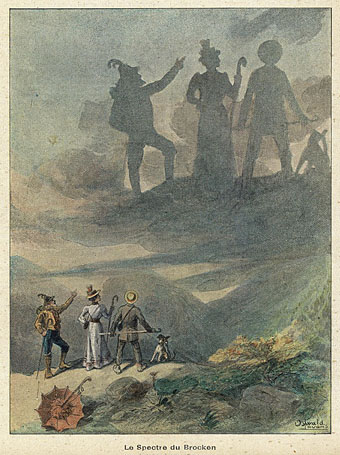
• Rebecca Cole and Janise Elie go in search of the Brocken spectre on Burley Moor.

• M. John Harrison: Critical Essays, edited by Rhys Williams and Mark Bould.

• Forest of Resonating Lamps – One Stroke, Cherry Blossoms by teamLab.

• Tour de France: Jonathan Meades selects 13 exercise-bike Classics.

• At Greydogtales: The Cthulhu Mythos for Beginners.

• The Black Tower (1987), a short film by John Smith.

• At Dennis Cooper’s: Jean Rollin Day.

• Ishmael Reed doesn’t like Hamilton.

• Babylonian Tower (1982) by Minimal Compact | The Tower (Black Advance) (2007) by Mordant Music | The Tower (Empty Fortress) (2007) by Mordant Music
Weekend links 454

ewerswunderwald.jpg

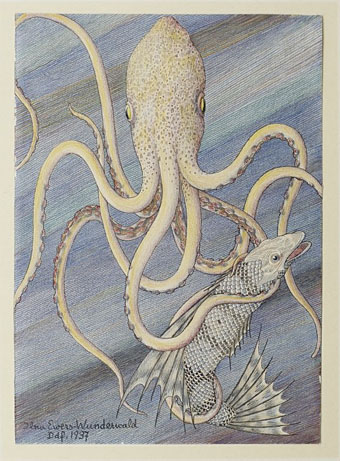
Octopus and Pike (1937) by Ilna Ewers-Wunderwald.

• At Expanding Mind: writer and avant-garde publisher Tosh Berman talks with Erik Davis growing up in postwar California, hipster sexism, the hippie horrors of Topanga canyon, his impressions of family friends like Cameron and Brian Jones, and his charming new memoir Tosh, about growing up with his father, the remarkable underground California artist Wallace Berman.

• At Haute Macabre: A Sentiment of Spirits: Conversations with Handsome Devils Puppets.

• “We felt a huge responsibility.” Behind the landmark Apollo 11 documentary.

Jarman’s work was a statement that conservatism did not, or at least should not, define the perception of Britishness. His vision extended all of the way back to the likes of William Blake, John Dee and Gerard Winstanley, the radicals, mystics and outcasts of English history. His era, on the other hand, looked inwards and pessimistically so. The outward world was solely a free market. Our projected national identity was little else but the retread of colonial fantasies, a faux benevolence to the world that handily discarded the violence and tyranny that built it. Jarman saw through this imaginary landscape, often skewering it in his films.

Adam Scovell on the much-missed radicalism of Derek Jarman

• Director Nicolas Winding Refn: “Film is not an art-form any more.”

• Mix of the week: Secret Thirteen Mix 281 by Blakk Harbor.

• At Greydogtales: Hope Hodgson and the Haunted Ear.

• Hans Prinzhorn’s Artistry of the Mentally Ill (1922).

• Michael Rother‘s favourite albums.

• Renaissance metal

• Puppet Theatre (1984) by Thomas Dolby | Puppet Motel (1994) by Laurie Anderson | Maybe You’re My Puppet (2002) by Cliff Martinez

The art of James Marsh

marsh14.jpg

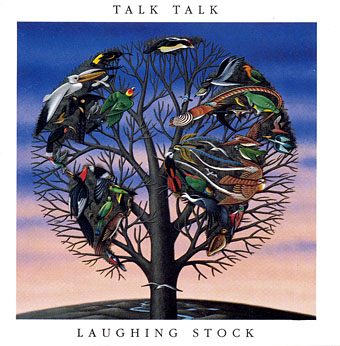
Laughing Stock (1991).

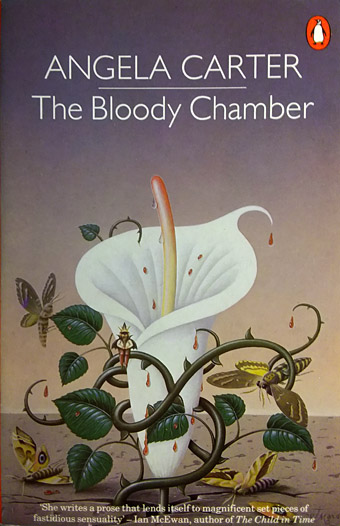
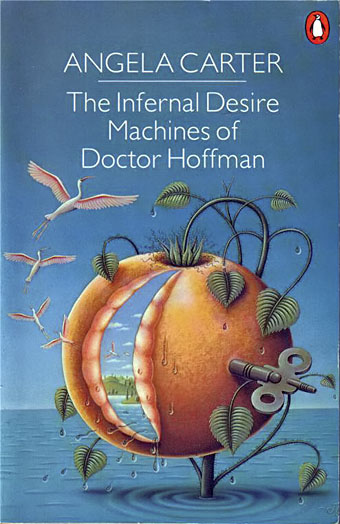
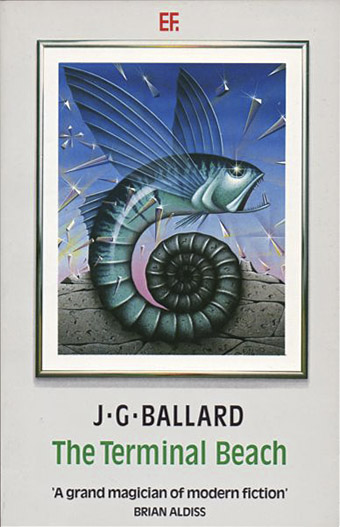
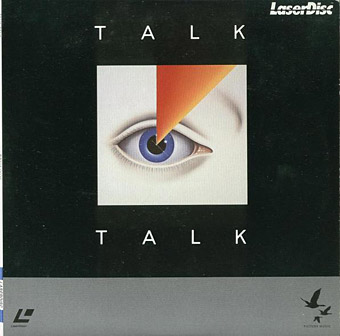
The paintings of James Marsh came to mind this week following news of the death of Talk Talk singer Mark Hollis. Marsh’s art was a feature of all the Talk Talk releases, singles as well as albums, but his work was equally prominent throughout the 1980s on a range of book covers, particularly the series he produced for Angela Carter and JG Ballard. The hard-edged, post-Surrealist style favoured by Marsh was a popular one in the 70s and 80s (among British illustrators, Peter Goodfellow and the late John Holmes worked in a similar manner), and I’ve often had to look twice to see whether a cover is one of his. But while the Magritte-like visual games may be replicated elsewhere, Marsh has a preoccupation with animals—birds and butterflies especially—that sets his paintings apart.

marsh15.jpg

The Bloody Chamber (1981).

I never saw Mark Hollis discuss Marsh’s work but the use of the paintings across all the Talk Talk releases has given the group’s output a coherent look lacking in many of their fashion-chasing contemporaries. The consistency also meant that the cover art was unlikely to overly influence prior perception of their music; there was little warning in 1988 of the musical gulf separating The Colour Of Spring from Spirit Of Eden until stylus met vinyl. Mark Hollis was remembered this week by Rob Young who interviewed him in 1998 when his one and only solo album was released. More from James Marsh’s prolific career may be seen at his website.

marsh12.jpg

The Infernal Desire Machines of Doctor Hoffman (1982).

marsh01.jpg

The Terminal Beach (1984).

marsh04.jpg

Talk Talk (laserdisc, 1984).

Continue reading “The art of James Marsh”

Weekend links 453

mccarthy.jpg

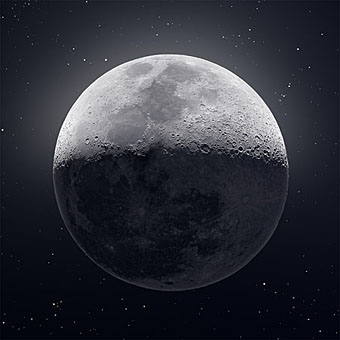
The Moon photographed by Andrew McCarthy.

• Top twenties of the week: Anne Billson on 20 of the best (recent) Japanese horror films, and Britt Brown‘s suggestions for 20 of the best New Age albums. (I’d recommend Journey To The Edge Of The Universe as the best from Upper Astral.) Related to the latter: Jack Needham on lullabies for air conditioners: the corporate bliss of Japanese ambient.

• At Expanding Mind: Erik Davis talks with writer and ultraculture wizard Jason Louv about occult history, reality tunnels, his John Dee and the Empire of Angels book, Aleister Crowley’s secret Christianity, and the apocalyptic RPG the West can’t seem to escape.

• “It’s like someone looked at the vinyl revival and said: what this needs is lower sound quality and even less convenience.” Cassette tapes are back…again. But is anyone playing them?

• Mixes of the week: Secret Thirteen Mix 280 by O Yuki Conjugate, Bleep Mix #53 by Pye Corner Audio, and 1980 by The Ephemeral Man.

• The fifth edition of Wyrd Daze—”The multimedia zine of speculative fiction + extra-ordinary music, art & writing”—is out now.

• Midian Books has a new website for its stock of occult publications and related esoterica.

• Mark Sinker on three decades of cross-cultural Utopianism in British music writing.

• At Dennis Cooper’s: Nastassja Kinski Day.

• Utopia No. 1 (1973) by Utopia | Utopia (2000) by Goldfrapp | Utopian Facade (2016) by John Carpenter

Weekend links 452

nordine.jpg

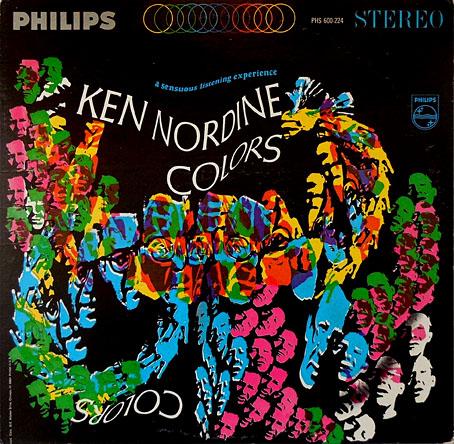
Colors (1967) by Ken Nordine.

• “The Do was the thing”: a lengthy chat with Chuck Gould of the San Francisco Diggers. The second interview from Jay Babcock’s oral history of the Diggers.

• Sticking it to the Man: Revolution and Counterculture in Pulp and Popular Fiction, 1950–1980 edited by Andrew Nette and Iain McIntyre.

• Adrian Shaughnessy‘s Krautrock Top Ten. (People who know me well won’t be surprised to hear that I own everything on this list.)

See “queer” as a term has become an umbrella that accommodates not only the type of sex you have and with whom, but also how you identify the sex you have, how you identify your personality, your aura, the ineffable je ne sais queer that may or may not be related in any way to your sexuality, or even the way you present yourself to the world, but simply some deeply held, internal feeling. You don’t actually need to share a common oppression or a common romantic or sexual behavior.

[…]

The reason I mind is because queer, in functioning as a catchall, serves to obscure what it is about my life, my community, my partners, that I needed to learn to be proud of in the first place. Because for me and all the other lesbians I know, figuring out your sexuality is hard enough, but the real work is in accepting yourself, demanding acceptance from others, being willing to walk away when that acceptance is denied.

Lesbians are women, and women are taught that we’re supposed to be sexually available objects of public consumption. So we spend a lot of time saying “No.” No, we won’t fuck or partner with men; no, we won’t change our minds about this; no, this body is a no-man’s land. Lesbian, straight or bi, women are punished whenever we try to assert a boundary. Queer as a catchall term makes it really hard for lesbians to assert and maintain this boundary, because it makes it impossible to name this boundary.

Jocelyn Macdonald on how the increasing dilution and commodification of “queer” as a label does little to serve the interests of the people to whom it was applied in the first place

• Two sets of live electronica from last year: Pye Corner Audio at The State51 Factory, and Tangerine Dream at Dekmantel.

• “LSD can get deep down and reset the brain—like shaking up a snow globe,” says Amanda Fielding.

• Ewan Wilson on the impossible architecture of video games.

• Mix of the week: Secret Thirteen Mix 279 by Marcos Cabral.

• RIP Betty Ballantine, Bruno Ganz and Ken Nordine.

• At Dennis Cooper’s: They will never exist.

• Cosi Fanni Tutti‘s favourite records.

• She Comes In Colors (1967) by Love | Colors (1969) by Pharoah Sanders | Balthus Bemused By Color (Mix II) (1988) by Harold Budd