Weekend links 485

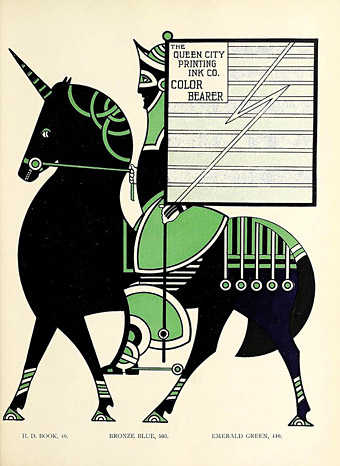
jansson.jpg

Art by Augustus Jansson for the Queen City Printing Ink Company (c.1906).

• Much of my music listening for the past couple of weeks has been the compositions and soundtracks of the late Jóhann Jóhannsson, so these links are pertinent: Jóhannsson and ensemble live at KEXP in 2010, and a memorial performance of Virdulegu Forsetar from last year.

• “[Her] approach to making electronic music was hard work, too, but it was less about controlling sounds and more about surrendering to them.” Geeta Dayal on Éliane Radigue whose Chry-Ptus has been reisssued by Important Records.

• Safe From Harm: Tim Murray on how Coil helped AIDS awareness on VHS. The video in question, The Gay Man’s Guide to Safer Sex, may be viewed at the Internet Archive.

• In the LRB podcast Ian Penman and Jennifer Hodgson discuss Penman’s new collection of essays, It Gets Me Home, This Curving Track.

• “A land of fog and emotional nightmares.” Oliver Wainwright on why Britain booted out the Bauhaus.

• Mapping Scotland’s Grim History of Witch-Hunting by Feargus O’Sullivan.

• Long-Haired Stars & the End of the World: John Boardley on comets.

• My Will by Minimal Compact, a new version of an old song.

• La Danse Des Comètes (1970) by Nino Nardini | Kohoutek-Kometenmelodie 1 & 2 (1973) by Kraftwerk | Cometary Wailing (Valley Plateau) (1981) by Bernard Xolotl

Weekend links 484

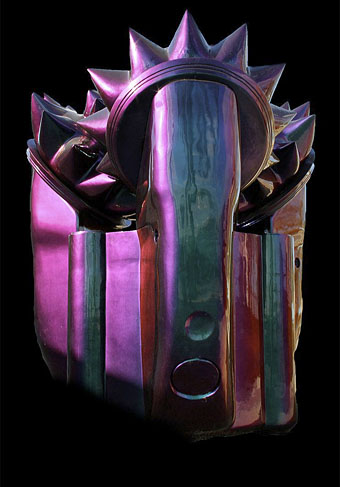
qadiri.jpg

Alien Technology (2014) by Monira Al Qadiri.

• “William S. Burroughs wrote, in a long, zigzag ode: ‘You can hear metal think in the electromagnetic fields of Takis sculpture.'” Geeta Dayal on the sound sculptures of the late Panayiotis Vassilakis (1925–2019), better known as Takis.

• “Everything about this song is mysterious, from the creation to the lyrics to where it played on the radio…” David Browne on The Unsolved Case of the Most Mysterious Song on the Internet.

• Moebius made many illustrations of Jimi Hendrix. Related: Giraud-Moebius pour le disque: 33 tours et plus dans les étoiles.

• London arts venue the Horse Hospital (where some of my work was exhibited a couple of years ago) is fundraising again.

• Sam Gafford: Number One—The Larch: John Linwood Grant remembers the late author, editor and friend.

• Mixes of the week: Cosmique Français by Tarotplane, and Secret Thirteen Mix 297 by Rosa Damask.

• More Magma: the group in live performance in 2009 playing the end of De Futura.

• At Dennis Cooper’s: The Horror Films of Terence Fisher Day.

• Pye Corner Audio performs at the state51 Factory.

• A demo of Colour Me In by Broadcast.

• RIP Malcolm Whitehead.

• Alien Activity From The 45th Parallel (1978) by Cellutron & The Invisible | Alien (1981) by Ende Shneafliet | Alien Loop (2014) by Mica Levi

Weekend links 483

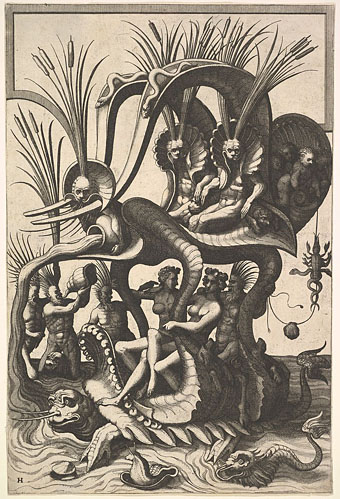
doetecum.jpg

Fantastic Sea Carriage (1556) by Johannes van Doetecum the Elder.

• I’ve grown increasingly tired of Kubrick-related micro-fetishism (despite contributing to it myself with previous posts) but this piece at Film and Furniture about the history of David Hicks’ Hexagon carpet design is a good one.

• “In hindsight, we can see how rarely one technology supersedes another…” Leah Price on the oft-predicted, never arriving death of the book.

• From Rome To Weston-Super-Mare: Eden Tizard on Coil’s Musick To Play In The Dark.

“It is,” the editor of the London Sunday Express had written nine years earlier, sounding like HP Lovecraft describing Necronomicon:

the most infamously obscene book in ancient or modern literature….All the secret sewers of vice are canalized in its flood of unimaginable thoughts, images and pornographic words. And its unclean lunacies are larded with appalling and revolting blasphemies directed against the Christian religion and against the name of Christ—blasphemies hitherto associated with the most degraded orgies of Satanism and the Black Mass.

Regarded as a masterpiece by contemporary writers such as TS Eliot and Ernest Hemingway, celebrated for being as difficult to read as to obtain, Ulysses had been shocking the sensibilities of critics, censors, and readers from the moment it began to see print between 1918 and 1920, when four chapters were abortively serialized in the pages of a New York quarterly called The Little Review. Even sophisticated readers often found themselves recoiling in Lovecraftian dread from contact with its pages. “I can’t get over the feeling,” wrote Katherine Mansfield, “of wet linoleum and unemptied pails and far worse horrors in the house of [Joyce’s] mind.” Encyclopedic in its use of detail and allusion, orchestral in its multiplicity of voices and rhetorical strategies, virtuosic in its technique, Ulysses was a thoroughly modernist production, exhibiting—sometimes within a single chapter or a single paragraph—the vandalistic glee of Futurism, the decentered subjectivity of Cubism, the absurdist blasphemies and pranks of Dadaism, and Surrealism’s penchant for finding the mythic in the ordinary and the primitive in the low dives and nighttowns of the City.

Michael Chabon on the US trial of James Joyce’s Ulysses

• Mix of the week: Through A Landscape Of Mirrors Vol. III—France II by David Colohan.

• Another Not The Best Ambient And Space Music Of The Year Post by Dave Maier.

• Sarah Angliss and friends perform Air Loom at Supernormal, 2019.

• Out next month: The World Is A Bell by The Leaf Library.

• Amy Simmons on where to start with Pier Paolo Pasolini.

• At Dennis Cooper’s: Candy Clark Day.

• Uccellacci E Uccellini (1966) by Ennio Morricone | Liriïk Necronomicus Kahnt (1978) by Magma | Ostia (The Death Of Pasolini) (1986) by Coil

Weekend links 482

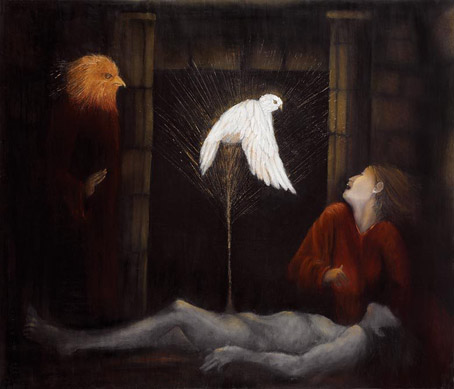
pacheco.jpg

Hades II (2004) by Ana Maria Pacheco.

• I’ve been reading a lot of Angela Carter over the past few weeks so the news of her house in Clapham being awarded a blue plaque was coincidental but also timely. Related: Angela Carter Online, and The Holy Family Album (1991), “a sacrilegious take on the history of Christian painting and iconography” written and narrated by Carter. Also, we’re still some distance from Halloween but take this as a precursor: Vampirella (1976), Angela Carter’s first radio play for the BBC, starring Anna Massey as a vampire countess.

• In May this year the Dark Entries record label announced the discovery of more tapes from Patrick Cowley’s pre-disco years in the 1970s. A selection from the archive, Mechanical Fantasy Box, will be released next month, together with a book of the same name reprinting Cowley’s homoerotic journal from the period.

• More Magma (there’s always more Magma): Warren Hatter on 7 essential albums from their sprawling discography. Related: Magma on film in 1972, appearing in Moi y’en a vouloir des sous, a short but typically intense performance.

• Out in November: Paul Wegener’s adaptation of Gustav Meyrink, Der Golem, wie er in die Welt kam (1920), receives a substantial blu-ray release from Eureka.

• Joe Banks’ forthcoming space-rock exegesis, Hawkwind: Days of the Underground, now has its own website.

• Mix of the week: The Stations Of Summer by Cafe Kaput.

• Photos of London’s abandoned Underground stations.

• At Dennis Cooper’s: Alan Boyce grows invisible.

• Gudrun Gut‘s favourite albums.

• Tanz Der Vampire (1969) by The Vampires Of Dartmoore | Ketch Vampire (1976) by Devon Irons | Vampires (1999) by Pet Shop Boys

Weekend links 481

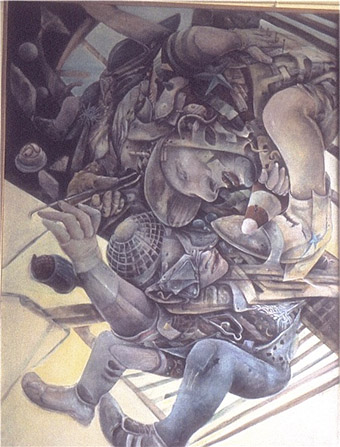
gaussot.jpg

L’Hamestoque (1977) by Christine Gaussot.

• Another announcement from Strange Attractor Press: Of Mud & Flame: A Penda’s Fen Sourcebook edited by Matthew Harle and James Machin will be published at the end of October. Among the contents will be the screenplay of David Rudkin’s cult television play, an item that’s always been impossible to find in print.

• A trailer for Journey to the Beginning of Time (1955), another semi-animated fantasy film by Karel Zeman which will released on disc next month by Second Run.

• “There was craziness in getting lost and dizzy.” Stereolab choose favourite songs from their back catalogue.

• E=MC² (1976), an album of spacey jazz-electronica by Teddy Lasry which has never been reissued.

• “Why do so many book covers look the same? Blame Getty Images,” says Cory Matteson.

• Mix of the week: The Ephemeral Man’s Teapot by The Ephemeral Man.

• Masataka Nakano has been photographing a deserted Tokyo for almost 30 years.

• Beyond the bounds of depravity: an oral history of David Cronenberg’s Crash.

• Woodblocks in Wonderland: The Japanese Fairy Tale Series.

• A new novel by M. John Harrison is always a good thing.

• Hamid Drake‘s favourite music.

• Warm Leatherette (1980) by Grace Jones | Crash (1980) by Tuxedomoon | A Crash At Every Speed (1994) by Disco Inferno