Weekend links 528

durer.jpg

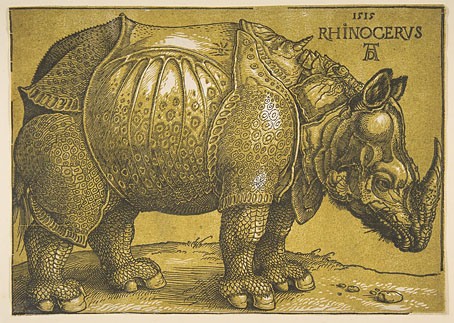
The Rhinoceros (after 1620) by Albrecht Dürer.

• “Today—Tolkien, Lovecraft, Miéville and M John Harrison!” Paul StJohn Mackintosh at Greydogtales explores HP Lovecraft’s lack of interest in fictional worldbuilding. The piece includes one of my book covers (ta!) plus a link to an earlier post I wrote about the cover designs of M. John Harrison’s Viriconium books. Since I’m connected to the thesis I’ll suggest that Lovecraft was resistant to the worldbuilding impulse in part because he was almost always writing horror stories. Having studied the genre at length he was well aware of the need to leave suggestive voids for the reader’s imagination.

• RIP Denise Johnson. All the obituaries mention the big names she worked with, notably New Order and Primal Scream, but being in the pool of Manchester session artists she also appeared on a couple of records by my colleagues at Savoy. Her voice is one of those you first hear on the PJ Proby cover of I’m On Fire, while with friend Rowetta she improvised her way through a Hi-NRG original (and a favourite of Anohni’s), the scurrilous Shoot Yer Load.

• At the BFI: Axel Madsen interviews Fritz Lang in 1967; Serena Scateni on where to begin with Nobuhiko Obayashi; and Roger Luckhurst reviews the spomenik-infested  Last and First Men by Jóhann Jóhannsson.

• “Be more aware of the rest of the world!” says Jon Hassell, talking to Alexis Petridis about a life spent making music.

John Boardley on the Renaissance origins of the printed poster. Worth it for the selection of engraved details alone.

• “What Ever Happened To Chicken Fat?” Jackson Arn on a tendency to over-abundance in Jewish humour.

Erik Davis has a new writing home at Substack that he calls The Burning Shore. Bookmarked.

• Mix of the week: The Ivy-Strangled Path Vol. XXII by David Colohan.

• Garry Hensey on The Strange World of John Foxx.

• At Dennis Cooper’s: Sergei Parajanov Day.

Romantic Rhino (1981) by Ananda Shankar | The Lone Rhinoceros (1982) by Adrian Belew | Blastic Rhino (2000) by King Crimson
Unearthly tones

belbury.jpg

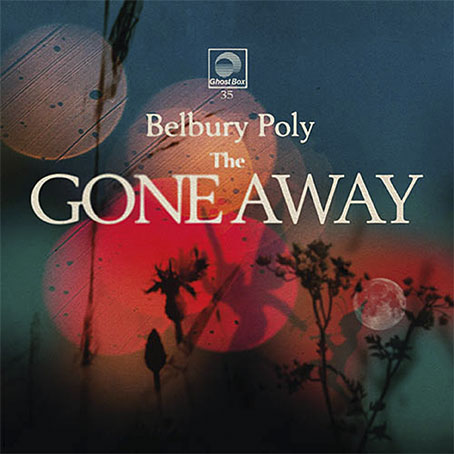
Design, as always, is by Julian House.

“…we shall only be delivered from our afflictions by sayings and doings that are altogether irrational, paradoxical, and magical: the wild songs of fairyland, sung to unearthly tones, are the only medicine for the heartache and the headache of humanity.”

Arthur Machen, A Note on Asceticism (The Academy, 27th May, 1911)

This quote from the Apostle of Wonder, which will appear on the forthcoming album from Belbury Poly, is one I hadn’t seen before; serves me right for not subscribing to Faunus where the piece was reprinted in 2017. It’s been a while since Machen’s name has appeared in association with Ghost Box even though the label originates from the same area of South Wales that was the writer’s birthplace, a detail that gave the early Ghost Box releases additional resonance. One of the attractions of the Ghost Box recordings was the intersection between quotes and titles from weird literature with electronic music derived from library albums and theme tunes from the 1960s and 70s; Witch Cults Of The Radio Age, as Broadcast & The Focus Group memorably put it. It was a beguiling mix which the label’s more recent releases have increasingly diluted: the rear-view musical themes are still in evidence but the weird quotient has been diminished, giving the listener a box without a ghost. (Pye Corner Audio, whose last album was an exploration of subterranean realms, is a notable exception.) I feel uncomfortable drawing attention to this since it’s tantamount to saying “Please don’t change!”. But it’s also the case that a label devoted solely to Basil Kirchin pastiches might never have attracted my attention in the first place.

The description of new Belbury Poly album, The Gone Away, reaffirms the label’s commitment to its weirder side:

The Gone Away’s 11 tracks are inspired by British fairy folklore, especially its recurrent themes of things that always seem on the point of leaving or vanishing. Also there’s the notion of things that can’t be seen head on but are only glimpsed from the corner of the eye. A scorned and neglected corner of folklore, beguiling and bonkers in equal measure. Of course, this being a Ghost Box record, these themes are received through the prism of old TV soundtracks, and the credulous beliefs and childhood obsessions of a pre-digital age.

Anyone who’s read Arthur Machen’s The Shining Pyramid will know that fairy folklore in his stories conceals a darker and more malevolent manifestation of the supernatural. His comment about “unearthly tones” suggests a different point of view. The Gone Away will be released on 28th August.

Previously on { feuilleton }
The White People by Arthur Machen
Ghost Box

Weekend links 526

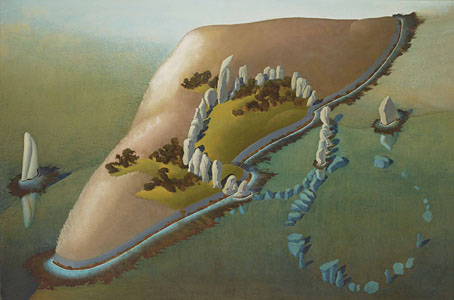
colquhoun.jpg

La Cathédrale Engloutie (1952) by Ithell Colquhoun.

• Many of the recent lists of “where to start with the music of [x]” aren’t filling an urgent requirement, but in the case of Sun Ra—whose discography runs to 95 albums—any guide is a useful one: Sean Kitching chooses 10 recordings from the Ra galaxy. I’m not unacquainted with Sun Ra’s music but there’s so much of it that almost all these suggestions are news. Related: Namwali Serpell on the life and work of a cosmic visionary.

• Coming soon from Strange Attractor, Ithell Colquhoun: Genius of The Fern Loved Gulley by Amy Hale, the first book-length study of the life and work of the British Surrealist and occult artist.

• I doubt I’ll get to see it but I’m pleased to know that the prematurely shuttered Aubrey Beardsley exhibition is returning to Tate Britain. You’ll need a Decadent face-mask.

• And speaking of music lists, Alexis Petridis compiles a ranking of all the songs by a little-known post-punk band from Manchester.

The Last Arcadian (Process Mix): more psychotropic nougat from Moon Wiring Club.

• Kill Me Again… Ken Hollings on Ennio Morricone and the music of the future.

Mervyn Peake‘s visual archive has been acquired by the British Library.

Anitra Pavlico on the fantastic world (and music) of Maurice Ravel.

Stanley Stellar‘s photos of the New York gay scene in the 1980s.

• At Dennis Cooper’s: Fetish.

• RIP Judy Dyble.

Wikidelia

Chelsea Morning (1968) by Fairport Convention | I Talk To The Wind (1968) by Giles, Giles & Fripp feat. Judy Dyble | Morning Way (1970) by Trader Horne

Weekend links 525

mademoiselle.jpg

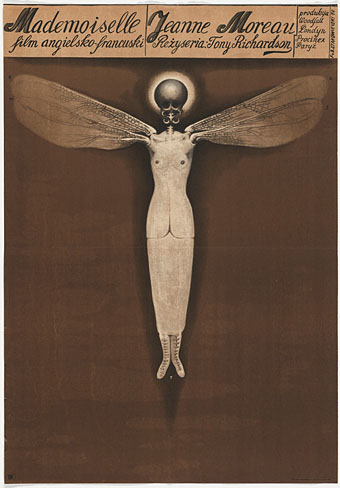
Polish poster by Franciszek Starowieyski, 1970.

• Tony Richardson’s Mademoiselle (1966) is one of those cult films that’s more written about than seen, despite having Jeanne Moreau in the lead role as a sociopathic schoolteacher, together with a screenplay by Marguerite Duras and Jean Genet, plus uncredited script-doctoring by David Rudkin. John Waters listed the film as a “guilty pleasure” in Crackpot but it’s been unavailable on disc for over a decade. The BFI will be releasing a restored print on blu-ray in September.

“While the hurdy-gurdy’s capacity to fill space with its unrelenting multi-tonal dirge is for some the absolute sonic dream, for others it is the stuff of nightmares.” Jennifer Lucy Allan on the pleasures and pains of a medieval musical instrument.

• “I truly believed”: Vicki Pollack of the San Francisco Diggers talking to Jay Babcock for the fifth installment of Jay’s verbal history of the hippie anarchists.

• “If you want to call yourself a composer, you follow every step of the instrumentation.” Ennio Morricone talking to Guido Bonsaver in 2006.

Dutchsteammachine converts jerky 12fps film from the NASA archive to 24fps. Here’s the Apollo 14 lunar mission: landing, EVA and liftoff.

• New music: Suddenly the World Had Dropped Away by David Toop; Skeleton and Unclean Spirit by John Carpenter; An Ascent by Scanner.

Peter Hujar’s illicit photographs of New York’s cruising utopia. Not to be confused with Alvin Batrop‘s photos of gay New York.

• Mixes of the week: XLR8R Podcast 651 by Dave Harrington, and Mr.K’s Side 1, Track 1’s #1 by radioShirley & Mr.K.

Simon Reynolds on the many electronic surprises to be found in the Smithsonian Folkways music archive.

The Gone Away by Belbury Poly will be the next release on the Ghost Box label.

• At Dennis Cooper’s: Ed Emshwiller Day.

Shirley Collins’ favourite music.

Mademoiselle Mabry (1969) by Miles Davis | Hurdy Gurdy Man (1970) by Eartha Kitt | Danger Cruising (1979) by Pyrolator

Weekend links 524

heisler.jpg

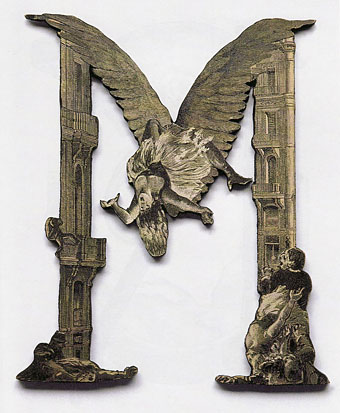
Letter M from Abeceda (1942) by Jindrich Heisler.

• At the BFI: Matthew Thrift chooses 10 essential Ray Harryhausen films. “This is, I can assure the reader, the one and only time that I have eaten the actors. Hitchcock would have approved,” says Harryhausen about eating the crabs whose shells were used for Mysterious Island. Meanwhile, Alfred Hitchcock himself explains the attraction and challenges of directing thrillers.

“Although largely confined to the page, Haeusser’s violent fantasies were even less restrained, his writings littered with deranged, bloodthirsty, scatological scenarios.” Strange Flowers on Ludwig Christian Haeusser and the “Inflation Saints” of Weimar Germany.

• Death, Pestilence, Emptiness: Putting covers on Albert Camus’s The Plague; Dylan Mulvaney on the different design approaches to a classic novel.

• A trailer (more of a teaser) for Last and First Men, a film adaptation of Olaf Stapledon’s novel by the late Jóhann Jóhannsson.

• At Dennis Cooper’s: Spotlight on…James Purdy: The Complete Short Stories of James Purdy.

Al Jaffee at 99: Gary Groth and Jaffee talk comics and humour.

Steven Heller on Command Records’ design distinction.

Czech Surrealism at Flickr.

Sisters with Transistors.

Solitude by Hakobune.

Mysterious Semblance At The Strand Of Nightmares (1974) by Tangerine Dream | Mysterious Traveller (Dust Devils Mix) (1994) by System 7 | The Mysterious Vanishing of Electra (2018) by Anna von Hausswolff