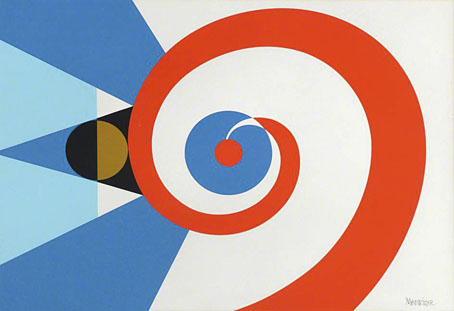
Cosmic background by John Harris.
Three years have passed since the release of Do You Have The Force?, Jon Savage’s compilation of space disco and post-punk recordings. The collection proved popular enough to prompt a follow-up which arrived here last week. I enjoy Mr Savage’s curatorial instincts so a second dose was irresistible even though I already own more of the tracks on the new album than I do with the earlier collection.
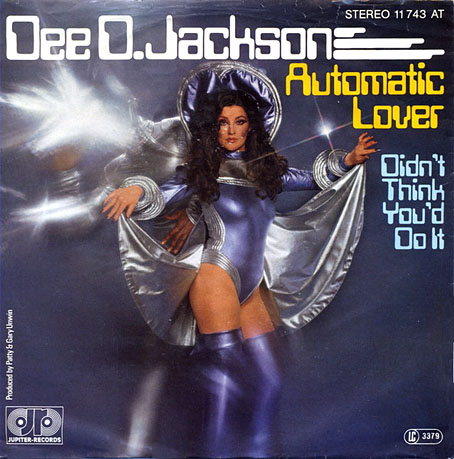
Data 70 for the win. Dee D. Jackson opens the new collection with a pulsing paean to robot sex.
I was thinking recently that the value of the historical compilation album—those collections that contain previously released material—has been diminished considerably by the rise of the internet mix. Before Mixcloud et al the home-made cassette compilation was a youth-culture staple (I made lots of them) but cassette collections seldom travelled beyond their maker’s immediate circle of friends. Official compilations had the advantage of wide distribution, access to quality sources and scarce recordings. The better ones also featured authoritative sleevenotes, an essential thing where those scarce recordings where concerned. One of the drawbacks of the home-made tape was brought to my attention in the late 1980s when a Dutch friend sent me a mix he’d made for a group of acquaintances who staged live art/occult performances. The contents were a soup of dialogue and music recorded from TV layered over borrowings from record-library albums which included a particularly haunting snatch of something that he only remembered as being “music from Ancient Egypt”. I spent the next ten years searching for this whenever I was in a record shop with a decent international section. I did find it eventually (it’s the funeral music from this) but without persistence and a chance discovery I might never have known what it was. One thing we don’t lack today is information, so the chances of being nonplussed in this manner are much more remote. The erosion of the former strengths of the compilation album have only placed more emphasis on the person of the compiler; all those Back To Mine collections have turned out to be models for the future.
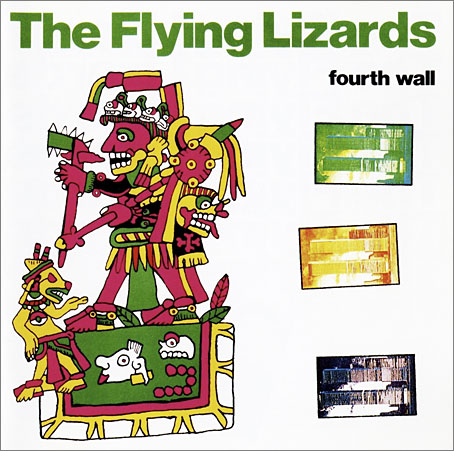
Do You Have The Force? Volume 2 follows the form of Savage’s earlier collection by starting out in the disco/dance zone before sliding in the second half into the post-punk world, an area conterminous with disco yet seen at the time as being in opposition to any rock and pop that was regarded as too commercial, too trivial, etc. I’ve never been someone who needed to reappraise disco, there was more than enough in its cosmic and futuristic excursions to engage my interest at its peak of popularity. Not being a club-goer, however, the good stuff wasn’t always easy to find so I’m still learning from collections such as these. The post-punk material is home territory by comparison. The contents of the new album include yet more Cabaret Voltaire (I’d probably have chosen the uptempo Sluggin’ Fer Jesus instead of Red Mask), the beatless Beachy Head by Throbbing Gristle (the closest TG get to Eno’s On Land), and Monochrome Days by Thomas Lear & Robert Rental. The latter is from Lear & Rental’s The Bridge, a one-off collaboration released on Throbbing Gristle’s Industrial Records, and a cult album round these parts. If you’re familiar with Savage’s tastes, all the above are the kinds of inclusions you’d expect. Less predictable was another number from Fourth Wall, the second album by The Flying Lizards, which follows the Fourth Wall track that Savage included on Volume 1. I bought Fourth Wall when it was released in 1981, in part because Robert Fripp was credited among the players and I was curious to know what Fripp was doing with such an eccentric bunch. (This, if you’re equally curious.) David Cunningham’s Lizards are best known for their off-beat cover versions, the most popular of which, Money, was a surprise chart success in 1979. But Cunningham was (and still is) an experimental musician, and Fourth Wall showed much more of this side of his group, juxtaposing short looped pieces and other weirdness with a handful of original songs. Patti Palladin does most of the singing, also co-writing a huge favourite of mine, Hands 2 Take, that (once again) I would have chosen over Savage’s selections even though it’s not electronic enough for the album as a whole. But that’s one of the benefits of the compilation: it compels you to follow somebody else’s inclinations instead of your own. Biggest surprise of all has been Soft Space on the disco side, an electronic instrumental credited to Soft Machine. If you’re familiar with Soft Machine’s early albums, which evolved from psychedelic pop in the late 1960s to jazz-rock improvisation in the 1970s, then nothing prepares you for this piece, a one-off synthesizer composition recorded in 1978 by keyboard player Karl Jenkins. And that’s another benefit of the compilation album: an introduction to discographic anomalies that you’ve been missing all these years.
Will there now be a third volume? There’s more than enough musical material for another collection along the same lines so we’ll have to wait and see. Volume 2 is out now on Caroline True Records.
Previously on { feuilleton }
• Talking time: Cabaret Voltaire interviews
• Do You Have The Force?