Weekend links 310

monogenis.jpg

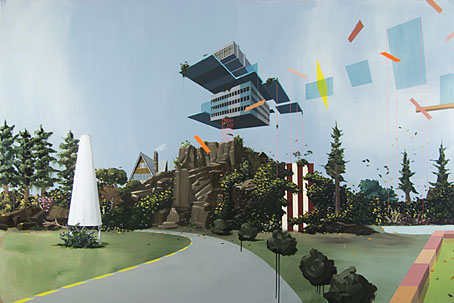
Parkland (2012) by Dean Monogenis.

• “The Story Behind the Planet’s Most Influential Road Map of ‘Weird Music’“. Gustavo Turner investigates the enduring influence of The Nurse With Wound List. Related: A Discogs list of links to all the NWWL discographies, and a recommended listening guide by Ultima Thule.

Tokyo Melody: Un film sur Ryuichi Sakamoto (1985) by Elizabeth Lennard features Sakamoto at work on Illustrated Musical Encyclopedia, together with Akiko Yano, Haruomi Hosono and Yukihiro Takahashi.

• “We wanted to fuse the aesthetics, histories and values of witchcraft, the traditional ideas with a contemporary edge,” says editor and creative director of Sabat magazine, Elisabeth Krohn.

There is a very seductive and very dangerous demon: the demon of generalities. He captivates man’s thought by marking every phenomenon with a little label, and punctiliously placing it together with another, similarly carefully wrapped and numbered phenomenon. Through him a field of human knowledge as changeable as history is turned into a neat little office, where this many wars and that many revolutions sleep in folders – and where we can pore over bygone ages in complete comfort. This demon is fond of words such as “idea”, “tendency”, “influence”, “period”, and “era”. In the historian’s study this demon reductively combines in hindsight the phenomena, influences and tendencies of past ages. With this demon comes appalling tedium – the knowledge (utterly mistaken, by the way) that, however humanity plays its hand or fights back, it follows an implacable course. This demon should be feared. He is a fraud. He is a salesman of centuries, pushing his historical price list.

Vladimir Nabokov in a previously unpublished lecture, On Generalities

• More Tom Phillips: 20 Sites n Years, a film by Jake Auerbach & David Thorp about the artist’s long-term urban photography project, is showing at Camberwell College of Arts next month.

• Mixes of the week: Sass In Pocket by Abigail Ward, Near Mint, 17th May 2016 by Robin the Fog & Hannah Brown, and Secret Thirteen Mix 184 by Andi Stecher.

• Grey Dog Tales talks to Brian J Showers of Swan River Press about horror and supernatural fiction.

• “Magic mushrooms lift severe depression in clinical trial.” But their use is still illegal in the UK.

• “Your brain does not process information, and it is not a computer,” says Robert Epstein.

Cliff Martinez’s theme for Nicolas Winding Refn’s forthcoming The Neon Demon.

Diamanda Galás, Still Wild and Primal, Returns to the New York Stage.

Janae Corrado on the photography of Joel-Peter Witkin.

Alastair Gee on gay home movies from the 1940s on.

People Laugh At Me (Coz I Like Weird Music) (1980) by The Instant Automatons | Weird Caravan (1980) by Klaus Schulze | Call It Weird (1983) by Xymox
Weekend links 309

witch.jpg

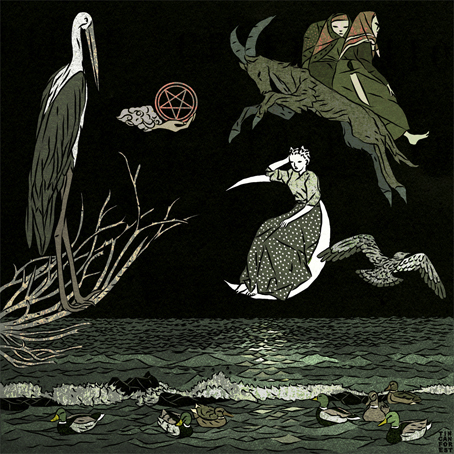
From What is a Witch, “an illuminated manifesto on witchcraft” by Pam Grossman and Tin Can Forest.

• “The other strand of influence for me from dance music was a production house called Savoy in Manchester, England. They were a super underground publishing house that printed cartoons and comic books, and they also released a series of underground dance records. And they were always being shut down by the police and all their stuff was being confiscated, because it was considered ‘anti-society’ in England.” Anohni giving a shout to my colleagues at Savoy Books in a new interview.

Belladonna of Sadness (1973), a feature-length animated film by Eiichi Yamamoto, has been restored, and is being given a premier release in the US. There’s a review here and a trailer here. No news as yet of a UK release but Finders Keepers has the soundtrack album.

Alejandro Jodorowsky talks to Daniel Kalder about his new novel, Albina and the Dog-Men, while Jodorowsky’s comic-book collaborator, Ladrönn, talks to Smoky Man about their new graphic novel, The Sons of El Topo.

Pretty little watercolours these are not. Made by bulldozers and dynamite instead of a paintbrush and easel, the works—often sited on baking sandscapes—fuse minimalism and modern industrial aesthetics to evoke the otherworldly structures of ancient civilisations, from Stonehenge to Mayan temples and the Egyptian pyramids.

Alex Needham on America’s land artists. A few years ago I tracked down some of the structures he describes using Google Maps.

• In every dream home a heartache: High Rise director Ben Wheatley on adapting Ballard, practical special effects and ’70s parenting.

Tom Phillips: From Prequel To Sequel, an exhibition of pages from A Humument at Shandy Hall Gallery.

• From fresh food to magic mushrooms: Michael Pollan probes the medicinal uses of psychedelic drugs.

• “Let’s not forget graphic design is an artistic discipline,” says Jonathan Barnbrook.

Supervert discusses censorship and related matters at SomethingDark.

• “I’ve sung gospel music when in great despair,” says Diamanda Galás.

• Mix of the week: FACT Mix 550 by James K.

Boy Club is a new gay magazine.

Gospel Trane (1968) by Alice Coltrane | The Gospel Comes To New Guinea (1981) by 23 Skidoo | Gospel Train (1990) by African Head Charge

Shadowland covers

shadowland01.jpg

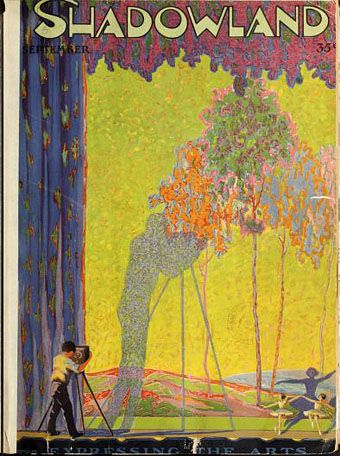
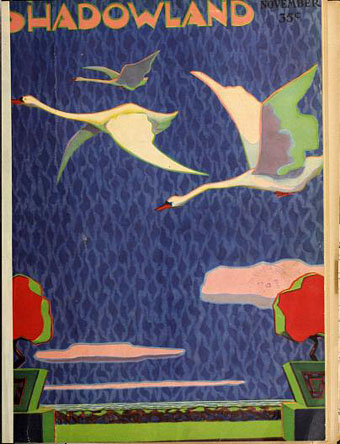
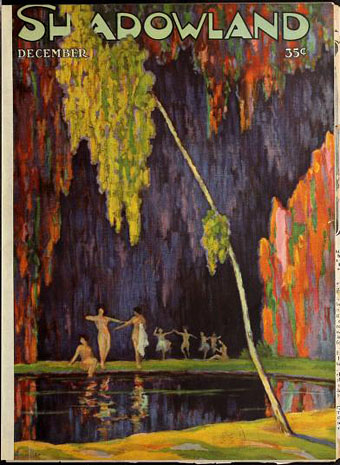
Not the horror magazine, this is an earlier American title that ran from 1919 to 1923. Shadowland covered the arts in general with a preference for stage and film. The thing that immediately sets it apart from other film magazines of the period is the cover art by AM Hopfmuller; many of the paintings resemble theatre backdrops or backgrounds for animated films. The Internet Archive doesn’t have a complete run, unfortunately—the examples here are from volumes 1, 7 and 8—but more of Hopfmuller’s work may be found on other sites. The magazine interiors are also worth a browse for their colour plates and art photographs. (Thanks to Kristian for the tip!)

shadowland02.jpg

shadowland03.jpg

Continue reading “Shadowland covers”

Weekend links 291

brooks.jpg

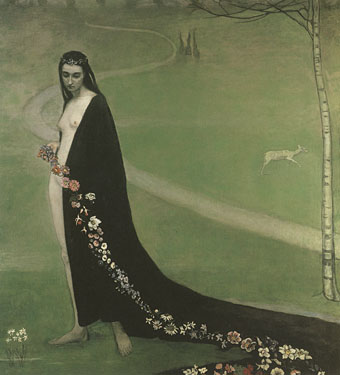
Femme avec des fleurs (1912) by Romaine Brooks.

• This week’s anniversary of the Charlie Hebdo murders was noted by some of those who defended the magazine last year. “I don’t write about Charlie Hebdo in France,” said Robert McLiam Wilson, “they have plenty of people who can do that. But I’ll do almost anything I’m asked to do in the anglosphere. Why? Well, two reasons. Because none of the other Charlie people bothers to do it. And because, really, that’s where all the bullshit lives.” A year on, and the bullshit-mongers seem to have fallen silent, what with knee-jerk outrage being a short-lived affair, and the Bataclan massacre having demolished one of the main criticisms, namely that the magazine wouldn’t have been attacked if the artists and writers had shown some respect. “[Charlie Hebdo‘s] real crime is not racism but its challenge to what has become an unbreakable commandment for many contemporary liberals: ‘Thou shalt not cause offence’,” says Kenan Malik. At Literary Hub Adam Gopnik explored the same issue in a foreword for Stéphane Charbonnier’s Open Letter.

• “Immersion in the past is no escape from the present, but it supplies a constant corrective to the narrative spit out daily by media, advertising, politics, and all those other forces that attempt to mould our thinking like jelly in a pan.” Luc Sante (again) talking to Simone Wolff about his books, Low Life and The Other Paris.

• “…throwing a lot of money behind vintage equipment? Well, that’s just a millionaire’s game. Dave Grohl can do that, but David Bowie doesn’t care about that. Just stick a microphone in front of him and he’s really happy.” Tony Visconti talking to Allyson McCabe about the music business and producing Bowie.

• “Nico Hogg’s photography captures the transformation of urban London,” says George Kafka who talks to Nico about a collection of his work, Sign & Signifiers, which I designed late last year.

• At Strange Flowers: James Conway talks to Cassandra Langer about her recent biography of artist Romaine Brooks (1874–1970).

• At Dangerous Minds: Godzilla, girls and guns, the science-fiction art of Noriyoshi Ohrai. There’s more at Pinterest.

• Mixes of the week: XLR8R Podcast 420 by Andrey Pushkarev, and Secret Thirteen Mix 172 by Julien Bayle.

• Alan Moore’s magnum opus, Jerusalem, will be published later this year. Gosh Comics has a teaser.

New York Public Library makes 180,000 high-res images available online.

Prints of darkness: macabre vintage posters

Scarfolk Television is coming

Godzilla (1977) by Blue Öyster Cult | Giant Robot / Machines in the Modern City / Godzilla (1992) by Praxis | Free-Bass (Godzillatron Cush) (1995) by Axiom Funk

Oz magazine online

oz1.jpg

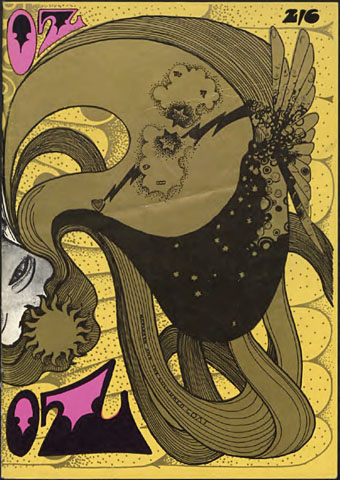
Oz 4. Cover art by Hapshash and the Coloured Coat.

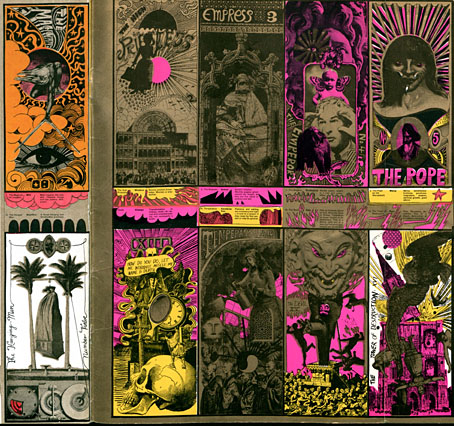
From a television series out of time to a magazine very much of its time. The Prisoner and Oz magazine are exact contemporaries: issue 4 of Oz (June 1967) would have been on sale when Patrick McGoohan and co. were busy turning Portmeirion into The Village. In the past anyone interested in Oz had to either scour eBay for expensive paper copies or content themselves with the incomplete scans made available several years ago. But no longer, thanks to the University of Wollongong and editor Richard Neville who have made the entire run available as downloadable PDFs. These are much better quality than the previously available copies, and they also have poster inserts available as separate downloads. The wonderful set of Tarot designs created by the late Martin Sharp for issue 4 were faded and torn in the old scans so it’s a real pleasure to see this and other artwork looking so good.

oz2.jpg

Tarot designs from Oz 4 by Martin Sharp.

Continue reading “Oz magazine online”