Weekend links 631

desgoffe.jpg

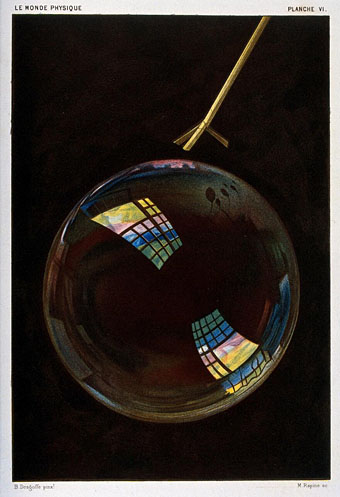
Soap Bubble (1882) by Alexandre-Blaise Desgoffe. Via.

• “…there is not now, has never been, and will never be a single Platonic form of the paragraph to which all others must conform.” Richard Hughes Gibson on the history of the paragraph.

• At Spoon & Tamago: imaginary covers by international illustrators for The Tokyoiter, a New Yorker-style magazine about the Japanese capital.

• New music: tick tick tick by Stephen Mallinder, and A Vibrant Touch by Aleksandra Slyz.

The Kat had a cult following among the modernists. For Joyce, Fitzgerald, Stein, and Picasso, all of whose work fed on playful energies similar to those unleashed in the strip, he had a double appeal, in being commercially nonviable and carrying the reek of authenticity in seeming to belong to mass culture. By the thirties, strips like Blondie were appearing daily in roughly a thousand newspapers; Krazy appeared in only thirty-five. The Kat was one of those niche-but-not-really phenomena, a darling of critics and artists alike, even after it stopped appearing in newspapers.

Amber Medland on George Herriman, EE Cummings and Krazy Kat

35mm.online: Polish feature films, documentaries and animations, all free to view.

• At Dennis Cooper’s: Spotlight on…Georges Bataille Erotism: Death and Sensuality.

• Inside the Espai Corberó, the home/gallery of the late Xavier Corberó.

Strange Attractor Journal Five.

• RIP Claes Oldenburg.

Krazy Kat (1928) by Frankie Trumbauer & His Orchestra | Krazy Kat (1949) by Artie Shaw | Krazy Kat (1975) by Teddy Lasry

Weekend links 628

eckman-lawn.jpg

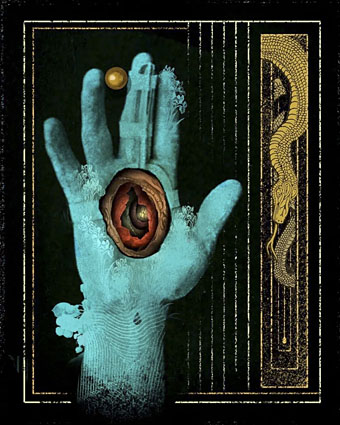
Collage art by Alex Eckman-Lawn at Unquiet Things.

• “…I love those niches and fringes in the creative world. I believe they deserve our support. But in most instances, this support must be driven by our generosity, philanthropy, and commitment to our core values—and not merely by profit seeking. Because as soon as profit maximization enters the picture, these outliers on the distribution curve don’t make the cut.” Ted Gioia explores the myth of “the Long Tail”.

• “Here we were, an Italian, an Englishman and an American in Munich, three foreigners in a foreign land—it was an accident we got together in the first place.” Pete Bellotte talking to Jude Rogers about the recording of I Feel Love by Donna Summer, a cult item in these quarters. Most of the history is very familiar but I didn’t know that Bellotte is a Mervyn Peake obsessive.

The radical, revolutionary homoerotic art of Sadao Hasegawa. Writing about the artist in 2007 I said that “a decent collection of his work for a western audience is long overdue”; we finally have such a thing courtesy of Baron Books.

• At Wormwoodiana: Undefined Boundary: The Journal of Psychick Albion, a magazine by the creators of the Coil zine, Man is the Animal, that “aims to celebrate the visionary, psychedelic and numinous in Britain”.

Dennis Cooper’s favourite fiction, poetry, non-fiction, film, art, and internet of 2022 so far. Thanks again for the link here!

• New music: Devotional by The Lord + Petra Haden, Dreamtides by Field Lines Cartographer.

Fall Into Sleep by K Of Arc.

Psychic Fire (1975) by Master Wilburn Burchette | The Psychic (1995) by David Toop | Psychic Wounds (2020) by Trees Speak

The Rejected Sorcerer

borges1.jpg

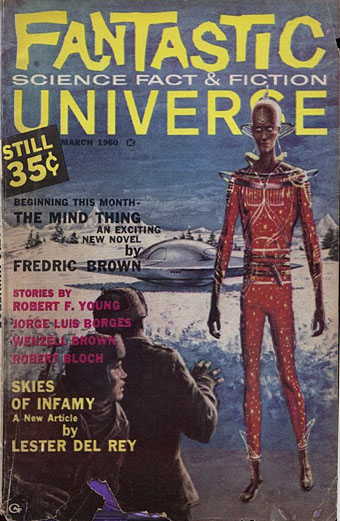
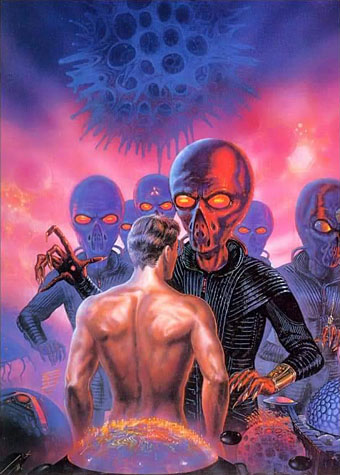
Cover art by Ed Emshwiller.

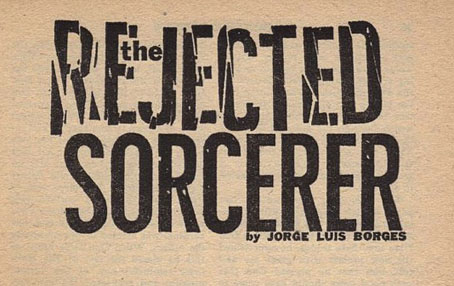
More Borges. While checking the details of yesterday’s post I discovered this oddity, an American SF magazine that published a two-page Borges story in March 1960, and put the author’s name on the cover even though few of the magazine’s readers would have heard of him at the time. The issue, which turned out to be the final one, lacks an editorial page so there’s no indication as to how the story found its way there. The story itself concerns an encounter in modern-day Spain between two men, one of them an established magician (in the occult sense), the other a neophyte hoping to gain similar powers. The piece is as much a moral fable as a work of fantasy, and as such appears out of place in a magazine with flying-saucer artwork on its exterior and a Virgil Finlay illustration inside (not for the Borges, unfortunately).

borges2.jpg

I thought at first that I might not have read this one before, the title wasn’t familiar but the story was one I recognised immediately. I was also surprised to find that I have it in four different collections under different titles, and with two of the printings appearing at first to disguise the author. In Black Water: An Anthology of Fantastic Literature (1983), edited by Alberto Manguel, the story appears as The Wizard Postponed, with the writer given as “Juan Manuel”; in The Book of Fantasy (1988), an updated version of the Antología de la Literatura Fantástica edited in 1940 by Borges, Adolfo Bioy Casares and Silvina Ocampo, the same piece appears as The Wizard Passed Over, with the author credited as “Don Juan Manuel”. The latter turns out to be the original author, a medieval Spanish writer, although “original” here is a debatable term when the story is Manuel’s adaptation of a piece he found in a book of Arabian tales. Borges rewrote this together with several other short reworkings which appear in the Etcetera section at the end of A Universal History of Infamy, its third appearance on my shelves (once again as The Wizard Postponed).

The fourth appearance is in the Collected Fictions (1998), or the cursed volume as I tend to think of it. I often feel bad about traducing the efforts of translator Andrew Hurley every time Borges is mentioned here but this story provides a good example of why his work is so unsatisfying to readers familiar with the stories from older editions. In its original Spanish the story is El brujo postergado, a short title for which The Wizard Postponed or The Wizard Passed Over would seem like reasonable analogues. Hurley expands this to The Wizard That Was Made to Wait, a lumbering, graceless phrase that’s typical of the lumbering gracelessness elsewhere in Collected Fictions. These tin-eared translations are the ones approved by the Borges estate so they’re present in all the reprints of the past 20 years. Fortunately for readers, most of Borges’ books were widely reprinted in English translations that the author approved, and some of which he even assisted with. Reject the conjurations of maladroit sorcerers, that’s my advice.

Previously on { feuilleton }
The Immortal by Jorge Luis Borges
Borges on Ulysses
Borges in the firing line
La Bibliothèque de Babel
Borges and the cats
Invasion, a film by Hugo Santiago
Spiderweb, a film by Paul Miller
The Library of Babel by Érik Desmazières
Books Borges never wrote
Borges and I
Borges documentary
Borges in Performance

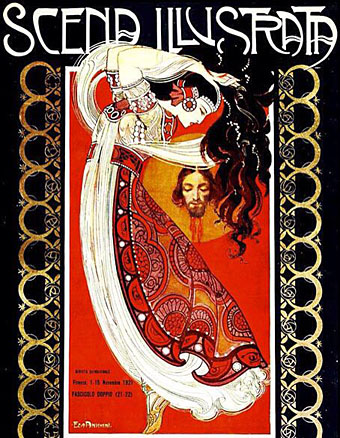
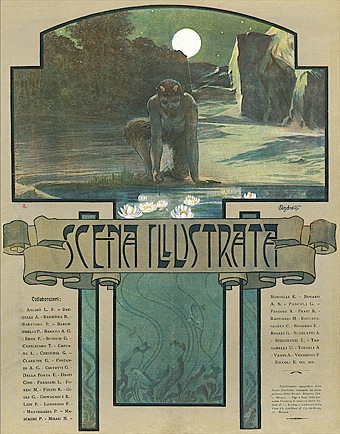
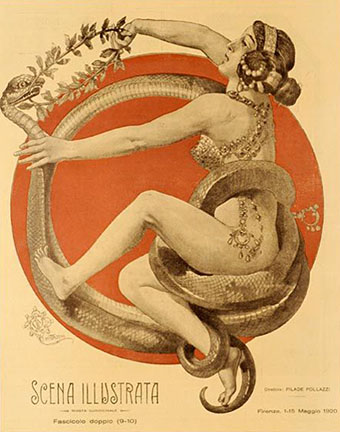
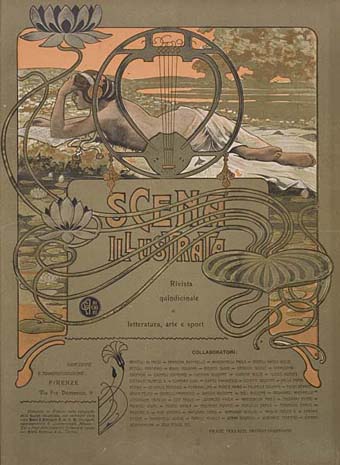
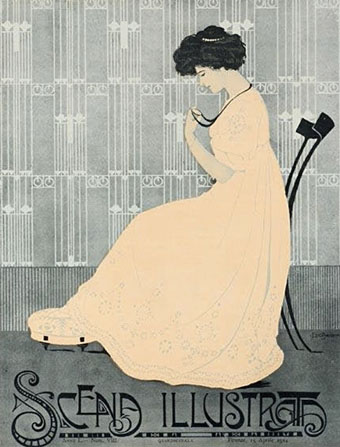
Scena Illustrata covers

si06.jpg

Art by Ezio Anichini, one of the magazine’s regular illustrators.

Scena Illustrata, an Italian culture magazine launched in 1884, was a prime exponent of the variant of Art Nouveau that Italians call stile Liberty. Or it was on its covers… To date there isn’t a substantial archive of back issues so I can’t say how much of the cover style was carried through to the interior. But since this was a fortnightly magazine there are many covers to be found. The examples here inevitably concentrate on the two decades either side of 1900 although a few are later; elements of the stile Liberty persisted into the 1920s, as did versions of that marvellous logo design.

si13.jpg

si03.jpg

si04.jpg

si11.jpg

Continue reading “Scena Illustrata covers”

Led Zeppelin IV: Jimmy Page versus Little Bo-Peep

lz4.jpg

Background graphics by Aubrey Beardsley, 1893.

You’d think by now that everything would be known about an album with a Godzilla-sized cultural footprint like Led Zeppelin IV. I certainly thought so until last week when I turned up the source of something that the more obsessive Zepp-heads have been pondering for years. If this puts a bustle in your hedgerow then read on.

symbols.jpg

Led Zeppelin’s fourth album has been around now for half a century which means there really is a lot known about every detail of its production. Mysteries that used to confound friends of mine when we were teenagers have long been solved, questions such as what the hell the four symbols assigned to each member of the group actually signified; not only do we know the origin and meaning of those symbols, the enigmatic “Zoso” sigil chosen by Jimmy Page has an entire website dedicated to its various manifestations. We know where the photo on the cover was taken (Birmingham), and why the sleeve is devoid of identification (Page was annoyed with the press reaction to the previous album); we know that the hermit painting inside the gatefold is based on the Tarot card by Pamela Colman Smith, and we also know a great deal about the writing and recording of Stairway To Heaven. Erik Davis logged much of this in his 33 1/3 study of the album, and while he examines the band symbols in some detail he doesn’t say much about the rest of the hand-written inner sleeve beyond this comment:

Is there a meaning to the nifty Arts and Crafts typeface that Page lifted for the Stairway To Heaven lyrics on the other side of the sleeve? Or just a vibe?

The source, if not the meaning, of this script has been intriguing Zeppelin fans for many years, but I wasn’t aware of this until I happened to be reading the Wikipedia entry about the album and found myself equally intrigued. The game was afoot, Watson.

soh1.jpg

It makes them wonder: the hand-lettered lyrics.

A persistent question you see in fan circles is “What font was used to create X?” People will ask this question even when the design is a one-off, like Syd Mead’s logo for Tron, or something that’s obviously been lettered by hand. Led Zeppelin IV is an album guaranteed to raise the “What font?” question because the lyrics of the group’s most famous song, Stairway To Heaven, cover an entire side of the inner sleeve. On one of the fan forums I was reading someone was eager to identify “the font” because they wanted to apply the words to a bedroom wall. Many more people must have copied out those lyrics since 1971; I once had to do this myself for a female friend who was so besotted with Jimmy Page that she wanted the lyrics in a frame on her own bedroom wall.

tracks.jpg

According to the Wikipedia entry, Page revealed the source of the lettering to be an issue of The Studio, the British art and design magazine which helped launch Aubrey Beardsley’s career and did much to develop and promote the Art Nouveau style in the 1890s. I’m very familiar with The Studio, many posts here refer to it, and I happen to have a complete collection of issues downloaded from the journal archive at Heidelberg University. Seeing the magazine mentioned in this context immediately made me want to find the design that Page had adopted, but before I started flicking through thousands of pages I looked around to see if any of the Zepp-heads had tried searching for the magazine themselves. Evidently not; all the discussion I’ve seen about the inner sleeve tends to recycle the Wikipedia entry, nobody seems to have bothered looking for copies of the magazine. Okay then…

Continue reading “Led Zeppelin IV: Jimmy Page versus Little Bo-Peep”