Weekend links 170

macarthur.jpg

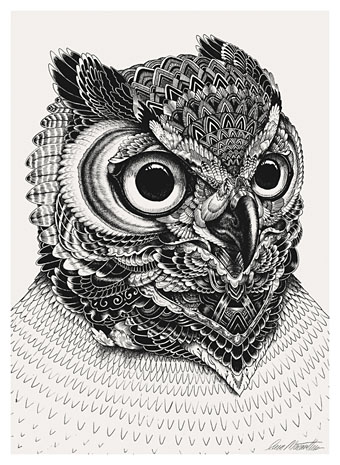
Owl portrait by Iain Macarthur.

• “Ghost Box is a glance through a window seeing something running alongside our version of reality. Like, what if Paul McCartney had made records with the Radiophonic Workshop?” Ghost Box designer and Mr Focus Group, Julian House is interviewed.

• “…that book with the girl with the hatchet in her head…” Dave Tompkins remembers Denis Gifford’s A Pictorial History of Horror Movies (1973), a formative influence of mine, and that of many other people, it seems.

Salvador Dalí’s 1946 illustrated edition of Macbeth. Related: From Macbeth to the Wizard of Oz: New exhibition explores the erotic side of witchcraft.

I do not want to live in a world where the government and a select few conservative feminists get to decide what we may and may not masturbate to, and use the bodies of murdered women or children as emotional pawns in that debate. It is supremely difficult to achieve radical ends by conservative means. Feminists and everyone who seeks to end sexual violence should be very cautious when their immediate goals seem to line up neatly with those of social conservatives and state censors.

Laurie Penny on the recent Tory policy of attempting to limit online pornography.

The Facebook page for The Wicker Man has details of the pursuit for a complete print of the film. A Blu-ray edition will be released in October.

Anne Billson visited the Hotel Thermae Palace in Ostend, the columnated location of Daughters of Darkness.

Kenneth Anger on how he made Lucifer Rising. The ICA in London is screening his films this weekend.
krenkel.jpg

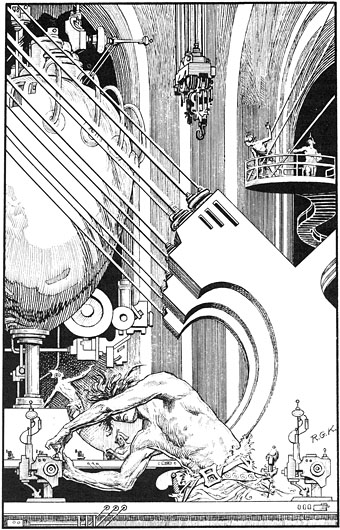
Roy Krenkel illustrates Tales of Three Planets by Edgar Rice Burroughs, 1964.

The Electric Banana Blows Your Mind: The soundtrack library alter ego of The Pretty Things.

• Mix of the week: an ambient (in the 90s’ sense of the word) DJ set by Surgeon.

Bernie Krause shares the happiest sounds he’s heard in nature.

• RIP Walter De Maria, sculptor and musician.

Sexodrome by Asia Argento with Morgan.

• Metabolist: Identify (1980) | Curly Wall (1980) | Ymuzgo/Pigface (1981)
Weekend links 169

anderson.jpg

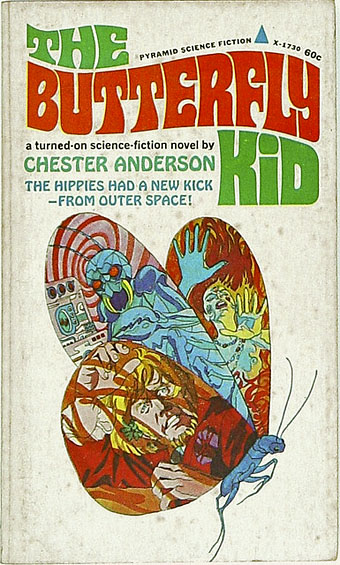
Cover illustration by Gray Morrow, 1967. One of the less exploitative examples from a collection of hippy book covers.

• Ten Photographs by Alain Resnais: Mise en scène of Memory, Aesthetics of Silence by Ehsan Khoshbakht. In the comments to that post someone shows an old Penguin book with cover photos by Chris Marker. This confirms that the “C. Marker” whose name I found on the back of another Penguin book was indeed Monsieur Chat.

• There’s more (there’s always more…): Cornelius Castoriadis interviewed by Chris Marker in 1989, the complete footage of an interview edited down for Marker’s TV series L’héritage de la chouette (The Owl’s Legacy). Watch the series itself at YouTube.

• “A generation of innovators want to change the way we have sex and consume porn, but Google, Apple, and Amazon won’t let them,” says Andrea Garcia-Vargas. Related: Sam Biddle on how Tumblr is pushing porn into an internet sex ghetto.

• Mix of the week: the Chop Quietus Mix, “a jagged journey all the way from Broadcast to the uneasy thrum of Suicide, kosmische flavours from Popol Vuh and Cluster, Alexander Robotnik and many more.”

Strange Flowers looked back at The Student of Prague: “the first art film, the first horror film and the first auteur film”, and now a century old.

Clive Hicks-Jenkins talked to animator Barry Purves about the pleasures and difficulties of creating animated films for adults.

• Mazzy Star released a song, California, from their new album which arrives in September. Can’t wait.

Suzanne Ciani, “American Delia Derbyshire of the Atari Generation” explains synthesizers, 1980.

Christer Strömholm‘s photos of Parisian transgender communities in the 1950s.

What are These Giant Concrete Arrows Across the American Landscape?

• How Kiyoshi Izumi built the psych ward of the future by dropping acid.

Alan Moore: The revolution will be crowd-funded.

Fuck Yeah Mazzy Star

• Suzanne Ciani: Lixiviation | The First Wave—Birth Of Venus (1982) | The Eighth Wave (1986)

Weekend links 168

bell.jpg

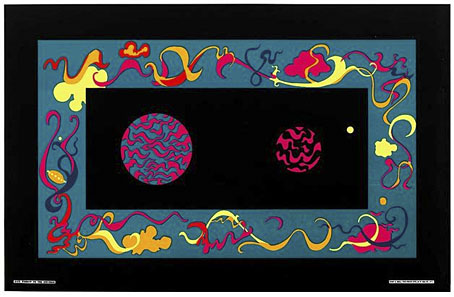
Window to the Universe (1967) by Roberta Bell. From Summer of Love: Psychedelic Posters from SCMA currently showing at the Smith College Museum of Art, Northampton, MA.

Sympathy for the Shoggoth: China Miéville’s Revolution of the Weird Tale, an essay by Christina Scholz which features one of my Cthulhu pictures among its embellishments. Related: “‘New Strange’ stories hold a chilling mirror to life” says Rick Kleffel discussing Robert Aickman and others. And speaking of Aickman (so to speak), Reese Shearsmith has recently recorded Aickman’s Cold Hand in Mine for Audible.

• An erotic alphabet book from the Soviet Union circa 1931, created to promote adult literacy. Who says porn can’t be educational?

Angelystor is a new 39-minute composition by Phil Legard which he describes as “often heavy, Saturnine and melancholic”.

• James Ward’s postcards of the Post Office Tower. Related: film of the revolving restaurant at the top of the Tower in 1967.

•You Might Never Find Your Way Back: Shirley Jackson’s Hangsaman by Nicholas Rombes.

satty.jpg

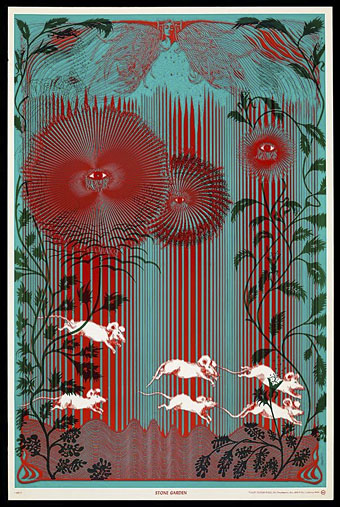
Stone Garden (1967) by Wilfried Sätty.

High Over Blue is “a mind-warping 20-minute freakout” by Moon Duo.

• Queer Visual Splendour: Jon Macy discusses his erotic comics.

The Origin of the Pilcrow, aka the Strange Paragraph Symbol.

• Mix of the week: the Kranky 20th Anniversary Mixtape.

Ten Amazing Cheeses and their Literary Counterparts.

PingMag looks at the past and present of Ginza.

Mind Gardens (1967) by The Byrds | The Garden (1981) by John Foxx | The Toy Garden (2006) by Helios

Weekend links 166

foxxbelbury.jpg

The Julian House cover art for the forthcoming collaboration between John Foxx and Belbury Poly (here renamed) has been revealed. Single no. 9 in the Ghost Box Listening Centre Study Series is now available.

• In addition to new Ghost Box records there’s more Hauntological (for want of a better term) cinema on the way this summer with the DVD/BR release of Ben Wheatley’s A Field in England. The potted description at Movie Mail is “a monochrome psychedelic trip into magic and madness set during the English Civil War”. Julian House has made a trailer. Meanwhile at Fangoria, there’s a PIF mixtape from The Advisory Circle. This accompanies an interview with John Krish, director of the most bizarre of the UK’s many strange and alarming public information films from the 1970s.

• More mixes: The hour-long OH/EX/OH show for The Geography Trip on Chorlton FM. “Expect slumber / tension / euphoria in almost equal measures.” It’s marvellous. At Self-Titled mag there’s DJ Food with O Is For Orange: Boards of Canada, Broadcast, The Books, etc.

Tangiers is a computer game based on the fiction of William Burroughs. Jim Rossignol talked to Alex Harvey about the development of the project.

walpurgisnacht.jpg

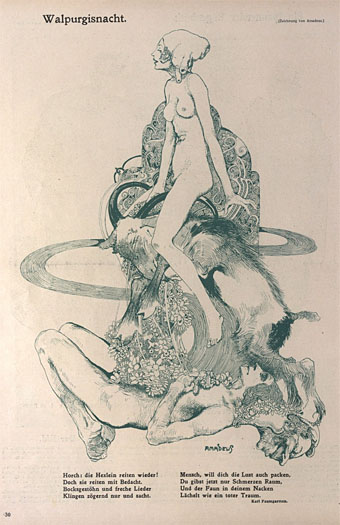
Walpurgisnacht (1917) by Amadeus. A drawing that could easily be from the late 1960s. If anyone knows the full name of the artist, please leave a comment. Via Beautiful Century.

Rebecca J. Rosen asks “What would the night sky look like if the other planets were as close as the moon?”

• The mystery of Charles Dellschau and the Sonora Aero Club.

The Surreal Cave Paintings Of Stockholm’s Metro Stations.

• At 50 Watts: More strange art from Marcus Behmer.

Ry Cooder in 1970. Directed by Van Dyke Parks!

The Post Office Tower: now you see it…

• At Little Augury: 99 Meninas.

Sartori In Tangier (1982) by King Crimson | City Of Mirage (2010) by John Foxx

Richard Matheson, 1926–2013

matheson1.jpg

The Incredible Shrinking Man.

Of Richard Matheson’s many books I’ve only read I Am Legend so can’t say much about his fiction other than to confirm (as everyone else does) that none of the three adaptations so far have managed to do it justice. Of his work for film and television there’s too much to say, it’s so copious and indelibly memorable. Here’s a list of five favourite Matheson creations.

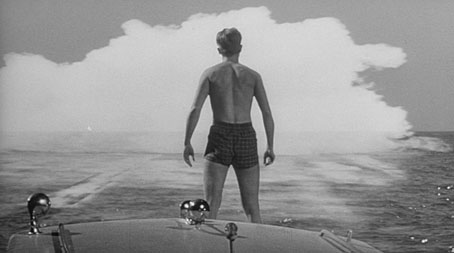
The Incredible Shrinking Man (1957)

JG Ballard frequently referred to this as one of his favourite science fiction films, not because of the SF element, which is never properly explained, but because of its inadvertent Surrealist qualities. For my part, every time I watched this I was always impatient to get to the later scenes where the unfortunate Scott becomes trapped in the cellar, and his own house becomes an increasingly alien and hostile environment. The ending where he accepts his condition is very Ballardian.

matheson2.jpg

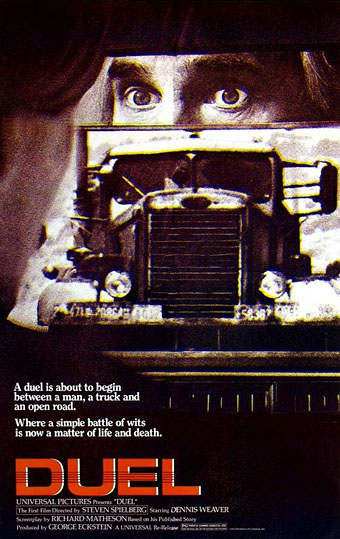
Duel (1971)

A sweating and manic Dennis Weaver is pitted against an anonymous truck driver who remains unseen but for a few shots of an arm and some boots. The lethal game of cat-and-mouse was famously directed by Steven Spielberg, his second feature, and one that’s a lot more impressive than some of his subsequent films. Watch it on YouTube.

matheson3.jpg

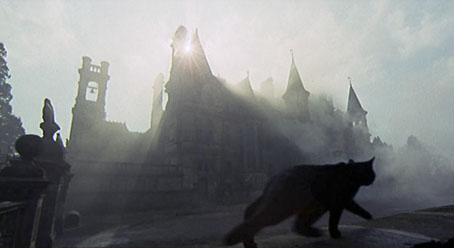
The Legend of Hell House (1973)

Matheson’s take on Shirley Jackson’s The Haunting of Hill House—four investigators in a haunted mansion—with the gain ramped up 100%. The film starts off quietly but is very soon into full-on hysteria; director John Hough finds so many eccentric camera angles you could actually calm down after this by watching a Terry Gilliam film. Meanwhile Roddy McDowell chews the scenery as though over-acting is going out of fashion. Bonuses are a grown-up Pamela Franklin (Flora in Jack Clayton’s superb The Innocents), and a great score from Radiophonic synthesists Brian Hodgson and Delia Derbyshire. Watch the trailer.

matheson4.jpg

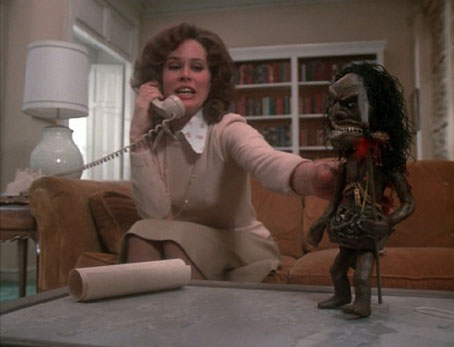
Trilogy of Terror (1975)

A three-story TV movie in which Karen Black took all the leading roles. No one remembers the first two stories but everyone who’s seen this remembers the third, Amelia (based on a Matheson short story, Prey), in which Ms Black is hunted in her apartment by a Zuni fetish doll. It’s on YouTube!

matheson5.jpg

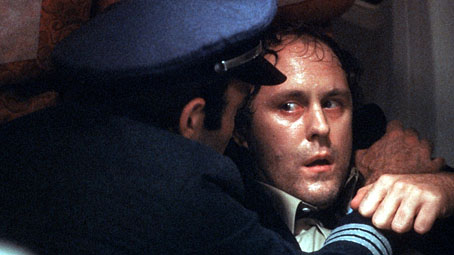
Nightmare at 20,000 Feet (1983)

Sorry, Shatnerphiles, but the superior version of this story is the one from Twilight Zone: The Movie. John Lithgow is a much better actor than William Shatner, the gremlin on the wing of the plane is a fearsome creature that’s seriously destructive (not, as Matheson lamented of the original, “a surly teddy bear”), and the whole sequence is directed by George Miller fresh from Mad Max 2. The original Twilight Zone episode wasn’t bad but it can’t compete with Miller pulling out all the stops. Watch it here.

Previously on { feuilleton }
New York City abandoned