Weekend links 407

alonso.jpg

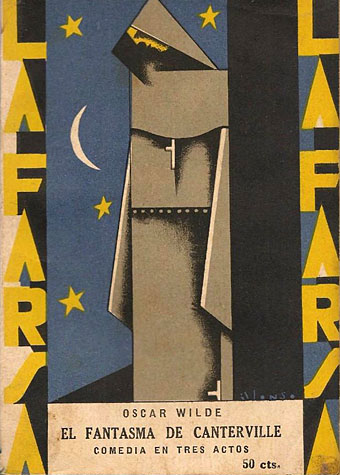
Cover art by Alonso for a 1929 Spanish edition of The Canterville Ghost by Oscar Wilde.

• Major music news of the week is the announcement, after a hiatus of nine years, of a new Jon Hassell album. Listening To Pictures (Pentimento Volume One) will be released on Hassell’s new label, Ndeya, in June. Meanwhile, Paul Schütze has a new album (also his first in a long while), The Sky Torn Apart, released at the end of this month by Glacial Movements. For those impatient for new sounds, Red Goddess (of this men shall know nothing) by Hawthonn is out now, and very good it is too.

Ghost Story (1974): a British film directed by Stephen Weeks, and starring (among others) Marianne Faithfull, Penelope Keith, Murray Melvin and (in a rare appearance) Vivian MacKerrell, the real-life model for Withnail from Bruce Robinson’s Withnail and I. Also from 1974, a TV adaptation of Oscar Wilde’s The Canterville Ghost starring David Niven.

Nandini Ramnath on how an Indian film distributor in London (Mehelli Modi of Second Run DVD) is helping rescue forgotten classics from obscurity.

Simon Reynolds explains why he thinks Boards of Canada’s Music Has the Right to Children is the greatest psychedelic album of the ’90s.

• At I Heart Noise: an interview with Dylan Carlson about his forthcoming solo album, Conquistador.

• At Dennis Cooper’s: David Ehrenstein presents…Donald Cammell Day.

• Photos by David Graham of Mexico City’s “gay subway”.

Circuit Des Yeux‘s favourite albums.

The Gospel of Filth: a book list.

Fountain Of Filth (1974) by Devo | The Heart’s Filthy Lesson (1995) by David Bowie | Filthy/Gorgeous (2004) by Scissor Sisters

Weekend links 406

tac.jpg

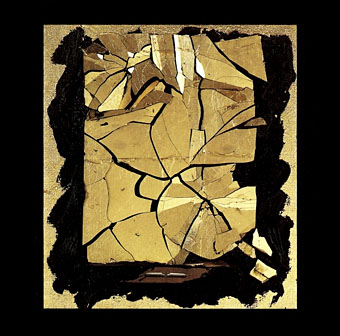
Ways Of Seeing will be the next release by The Advisory Circle on the Ghost Box label, and with metallic gold cover art by Julian House.

• “The structure came to Argento while he was tripping on some good acid, a fevered dream logic piecing everything together. […] ‘People came running out, screaming, telling people in the queue “Don’t go in! Don’t go in! It’s all witches!” It just made everyone in line want to get in even more… it was amazing.'” Ben Cobb talks to Dario Argento about the making of a horror masterpiece, Suspiria.

• Mixes of the week: The Wire Playlist by Mary Halvorson, XLR8R Podcast 535 by Sofie, and Out of the Wood Show 93 by Robin The Fog.

• Death by Balloon: Chris Mautner on the horrifying and hilarious world of comic artist Junji Ito.

Look, any honest estimation of the new translation, by Michael Hofmann, of Alfred Döblin’s Berlin Alexanderplatz from NYRB Classics is bound to begin with duteous piety, lauding it, since it is a one-and-done masterpiece that’s basically impossible to oversell, as (why not) the single biggest event in publishing in a lifetime, a crucial refurbishment of something English-language readers have been missing out on for a century, and a long-missing piece of Modernism’s ponderous jigsaw. All of which is the case of course. But when we’re talking about a dense, all-but-untranslatable Weimar-era novel, whose only point of reference for Anglophone audiences until now has been Rainer Werner Fassbinder’s meticulous fifteen-hour adaptation from 1980 (one heck of a tease) it feels important to attempt a slight rescue from its own forbidding reputation, because Alexanderplatz is less a book than a living thing, and one that joyously resists the dust heap of bourgeois literary scholarship with its every line.

JW McCormack on the new translation of Alfred Döblin’s Modernist classic

Section 28 protesters 30 years on: “We were arrested and put in a cell up by Big Ben”.

Angelique Kidjo talks reinventing Talking Heads’ Remain In Light on new LP.

• The hidden lives of gay men in the Middle East: photographs by Hoda Afshar.

Al Pacino’s journey with Wilde’s Salomé.

Tenebrous Kate

• Are You Seeing (1969) by Ora | Seeing Out The Angel (1981) by Simple Minds | Sine Seeing (2014) by The Advisory Circle

Weekend links 403

pennington.jpg

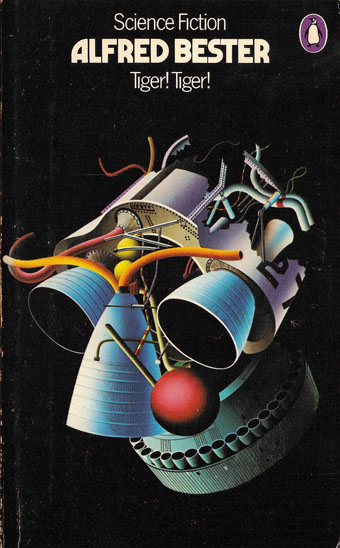
Cover art by Bruce Pennington, 1974. Via Clark Ashton Smith vs Bruce Pennington.

Garçons de Joie. Prostitution masculine à Paris 1860-1960 is an exhibition running at Galerie Au Bonheur du Jour, Paris, until May. The catalogue is expensive (and seems to be in French throughout) but features a substantial amount of rare homoerotic art.

• In the latest Expanding Mind podcast Erik Davis talks to Burt Shonberg biographer Spencer Kansa about LA bohemia, psychedelic art, Marjorie Cameron, gumshoe biography, and his new book Out There: The Transcendent Life and Art of Burt Schonberg.

Gregg Anderson on 20 years of Southern Lord’s dark and heavy art. Related: Earth’s Dylan Carlson announced a new solo album, Conquistador, and single, Scorpions In Their Mouths.

Without any formal training, Smith began to paint and draw his strange visions of sentient plants, grotesque creatures from other dimensions, and throbbing alien landscapes. Eventually commissioned to provide illustrations for Weird Tales, he became one of Lovecraft’s most voluminous correspondents (though never as voluminous as Lovecraft himself). Over the next 10 years, they filled one another’s mailboxes with effusive admiration for each other’s stories and poems. With Lovecraft’s adulatory wind at his back, Smith never strayed far from the Long Valley, and sat home to produce more than a hundred bizarre, linguistically challenging, often unforgettable stories and novelettes for the pulp magazines between 1925 and 1936. Unsurprisingly, Smith’s spurt of fictional creativity didn’t survive the death of Lovecraft in 1937, and while that rich burst of stories may not have earned Smith much money or fame, it caused an almost episteme-shifting earthquake in the brains of the young, aspiring writers lucky enough to read him.

Scott Bradfield on Clark Ashton Smith

Psychomagic, An Art That Heals will be Alejandro Jodorowsky’s next feature film if the crowdfunding is successful. Many rewards are available, large and small.

• At The Quietus this week: Val Wilmer on Sun Ra, and The Strange World of…Cocteau Twins.

• Spectacular images from Chicago’s turn-of-the-century design bible (The Inland Printer).

The shop that buys your dead uncle’s porn collection.

• Mix of the week: FACT mix 642 by Mokira.

Cafe Bohemian (1959) by The Enchanters | Genius Of Love (1981) by Tom Tom Club | A Scandal In Bohemia (1986) by United States Of Existence

Derek Jarman: Know What I Mean…

dj1.jpg

The recent news from the BFI about their forthcoming collections of Derek Jarman films sent me to YouTube once more in search of a documentary I’d been hoping to see again. Derek Jarman: Know What I Mean… is the film in question, and was posted a few months ago by director Laurens Postma on his own YouTube channel. Postma produced a number of arts features for Channel 4 (UK) in the 1980s, one of which, Six Into One: The Prisoner File, a documentary about the making of Patrick McGoohan’s The Prisoner, has been mentioned here already. The Jarman film was made in 1988, and I think was the first lengthy television examination of Jarman’s career. It’s still one of the best since the later documentaries tended to be either shortish interview sessions or posthumous works such as Derek (2008) by Isaac Julien and Bernard Rose.

dj2.jpg

Postma’s film captured Jarman shortly after he’d moved to his cottage at Dungeness, a relocation that was a kind of semi-retirement even though his films were becoming more visible as a result of funding and screening from Channel 4. This was also the period when he was becoming more vocally political thanks to what seemed at the time to be the unending reign of the iniquitous Margaret Thatcher. The Tories of the day had recently announced the now-infamous Section 28 of the 1988 Local Government Act (discussed in the film as both Clause 28 and—confusingly—Clause 29, the labels by which the amendment was first known), a ruling that forbid councils from promoting homosexuality, especially in schools. The late 80s saw the peaking of anti-gay bigotry in Britain, a reaction against the growing freedoms of the 1970s and, inevitably, the menace of AIDS which was still being regarded as “the gay plague”. Jarman had recently been diagnosed as HIV+, something he discusses here with typical good cheer although the conversation is generally more about art than his health, and about the way his own works were always related to gay sexuality. Jarman was one of many gay artists who welcomed their sexual identity as fixing them in the position of outsiders, and it’s notable how many of his films are concerned with outsider figures. When discussing The Tempest (1979) he compares Prospero’s island to gay sexuality, an uncharted enclave and a home to outcasts where different rules apply. This was still a common view among gay men and lesbians in the 1980s—Jarman’s friends in Coil used to say similar things in their interviews—and very different from today’s drive towards conformity and social assimilation. Postma’s film ends with Jarman on the beach at Dungeness, the perfect zone for a lifelong outsider, midway between the land and the sea.

(Note: the Winston Churchill referred to in the film is the grandson of the famous Prime Minister. Winston Churchill Jr. was an MP in the Thatcher government who tried to bring in a bill banning the public exhibition of “explicit homosexual acts” following Channel 4’s TV broadcast of Jarman’s Sebastiane.)

Previously on { feuilleton }
David Tibet meets Derek Jarman
Shooting the Hunter: a tribute to Derek Jarman
Derek Jarman’s landscapes
Derek Jarman album covers
Ostia, a film by Julian Cole
Derek Jarman In The Key Of Blue
The Dream Machine
Jarman (all this maddening beauty)
Sebastiane by Derek Jarman
A Journey to Avebury by Derek Jarman
Derek Jarman’s music videos
Derek Jarman’s Neutron
Mister Jarman, Mister Moore and Doctor Dee
The Tempest illustrated
In the Shadow of the Sun by Derek Jarman
Derek Jarman at the Serpentine
The Angelic Conversation
The life and work of Derek Jarman

Weekend links 399

quays.jpg

• “In the mid-Seventies the influential stop-motion animators, Stephen and Timothy Quay, embarked on a series of dark graphite drawings, conceived as imaginary film posters. They kept their first autonomous art project hidden for decades, allowing only a few glimpses to transpire in some of their animation classics such as Noctura Artificialia and Street of Crocodiles. In hindsight, the Black Drawings can be considered as a blueprint for their future work. This book offers a first in-depth exploration of this important graphic series that reveals many of the themes and techniques that would come to life in their celebrated animation films.” Quay Brothers: The Black Drawings 1974—1977 is a book by Edwin Carels and Tommy Simoens.

• The first of the BFI’s forthcoming blu-ray boxes of Derek Jarman films is now available for preorder. In addition to what I presume will be an uncensored presentation of Sebastiane (1976) the set also includes the digital premiere of In the Shadow of the Sun (1980) an “alchemical” blending/transmutation of Jarman’s early Super-8 films with a score by Throbbing Gristle. Related: Adam Scovell on another of the films in the set, Jubilee (1978), and one that Jarman disliked even though it incorporates many of his obsessions, especially in the punk-baiting sequences derived from Shakespeare and Elizabethan metaphysics.

• Mixes of the week: FACT mix 638: Circuit des Yeux, XLR8R Podcast 528 by Huxley Anne, Secret Thirteen Mix 246 by Hiro Kone, and drone works from Abby Drohne. And since the untimely death of composer Jóhann Jóhannsson was announced a few hours ago, a return to his sombre mix for FACT from 2015.

Nabokov’s ambitions weren’t interpretive. He “held nothing but contempt for Freud’s crude oneirology,” Barabtarlo explains, and in tracking his dreams he wasn’t turning his gaze inward. For him, the mystery was outside—far outside. Nabokov had been reading deeply into serialism, a philosophy positing that time is reversible. The theory came from JW Dunne, a British engineer and armchair philosopher who, in 1927, published An Experiment with Time, arguing, in part, that our dreams afforded us rare access to a higher order of time. Was it possible that we were glimpsing snatches of the future in our dreams—that what we wrote off as déjà vu was actually a leap into the metaphysical ether? Dunne himself claimed to have had no fewer than eight precognitive dreams, including one in which he foresaw a headline about a volcanic eruption.

Daniel Piepenbring reviewing Insomniac Dreams by Gennady Barabtarlo

• Gavin Stamp 1948—2017: a eulogy to the late architectural writer by Jonathan Meades. One of Stamp’s more offbeat assignments was providing illustrations for the George Hay Necronomicon in 1978.

Embassy of the Free Mind is the name of the new online library whose digitisation of rare occult volumes was financed by author Dan Brown.

• At Dangerous Minds: Meet Princess Tinymeat, the obscure genderbending trashglam post-punk goth offshoot of Virgin Prunes.

• “Why are film-makers obsessed with the story of doomed British sailor Donald Crowhurst?” asks Jonathan Coe.

• “Asian music influenced Debussy who influenced me—it’s all a huge circle,” says Ryuichi Sakamoto.

• At Spoon & Tamago: The birds of Tokyo beautifully illustrated by Ryo Takemasa.

Mark Pilkington is In Wild Air

Professor Yaffle

The Sun’s Gone Dim And The Sky’s Turned Black (2006) by Jóhann Jóhannsson | The Great God Pan is Dead (2008) by Jóhann Jóhannsson | A Pile of Dust (2016) by Jóhann Jóhannsson