Weekend links 447

exercise.jpg

Physical Training for Business Men (1917).

• At Expanding Mind: Erik Davis concludes his discussion with religious scholar Diana Pasulka about anomalous cognition, 2001 monoliths, disclosure, future truths, absurd Christianity, and her book American Cosmic.

• This year the LRB wouldn’t let non-subscribers read Alan Bennett’s 2018 diary but they have a recording of Bennett reading entries here.

• “Glen thought it was very good PR for us to be heavily involved in the druids.” Tom Pinnock talks to the Third Ear Band.

• Rebecca Fasman on the forgotten legacy of gay photographer George Platt Lynes.

• Laura Leavitt on John Cleves Symmes Jr.‘s obsession with a hollow Earth.

• David Parkinson recommends 12 essential Laurel and Hardy films.

• Paul Grimstad on the beautiful mind-bending of Stanisław Lem.

• Mix of the week: Secret Thirteen Mix 277 by Sigillum S.

• The endlessly photogenic Chrysler Building.

Energy Flow by Ryuichi Sakamoto.

195 Gigapixel Shanghai

Solaris: Ocean (1972) by Edward Artemyev | The Sea Named Solaris (1977) by Isao Tomita | Simulacra II (2011) by Ben Frost & Daníel Bjarnason

Weekend links 446

pca.jpg

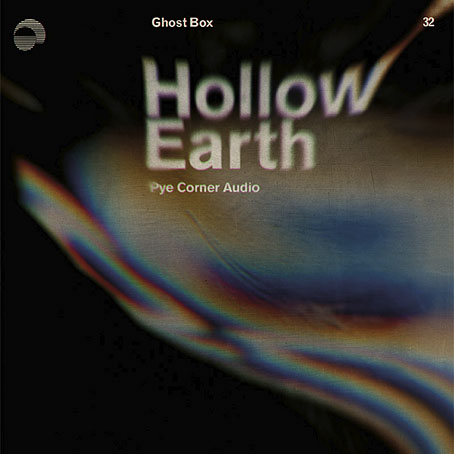
The Ghost Box label releases a new album by the excellent Pye Corner Audio in February (previews are here). The spectral design, as ever, is by Julian House.

• “In October 1966, Phyllis Willner arrived on motorcycle in San Francisco as a teenage Jewish runaway from Jamaica, Queens. She quickly fell in with the Hell’s Angels, the San Francisco Mime Troupe and, most crucially, the Diggers, who were just getting their street radical thing together in the Haight-Ashbury. The next two years would be eventful: many extraordinary highs, some really terrible lows.” Jay Babcock talks to Phyllis Willner about her involvement with “the executive branch of the hippie movement”, the Diggers.

• At Expanding Mind: Erik Davis talks with religious scholar Diana Pasulka about UFOs, scientific believers, book encounters, elite cabals, studying weirdness, and her new book American Cosmic: UFOs, Religion, Technology.

• Kenneth Anger is now 91 but he still appears hale, and looks even more magus-like than ever. This short film by Floria Sigismondi finds him reminiscing in the antiquated confines of the Chateau Marmont hotel on Sunset Boulevard.

David Wojnarowicz did not write dark fantasy. He wrote real life. In The Waterfront Journals he brilliantly captures electric tales from the mouths of strangers, those he described as “junkies, prostitutes, male hustlers, truck drivers, hobos, young outlaws, runaway kids, criminal types”, whose lives echo his own ostracized existence. He was thirteen when he was first paid for sex and sixteen when he started “turning tricks” regularly. His mother kicked him out of the house. By the time Wojnarowicz came out to friends in New York, he was in his early twenties. He was on the cusp of finding his voice as a writer and his confidence as an artist. It was the mid-1970s. AIDS was about to tear through the gay community.

Lara Pawson reviews three books by artist and writer David Wojnarowicz

John Banville reviews Kafka’s Last Trial by Benjamin Balint: “A scrupulous study of the squabble between Germany and Israel over Kafka’s papers, and the two women caught in the middle.”

• A sitting with the diva of the diode: electronic musician Suzanne Ciani in conversation with Christine Kakaire.

• Mixes of the week: Secret Thirteen Mix 076 by KK Null, and XLR8R Podcast 574 by SHXCXCHCXSH.

Cassie Packard on the colorful and clairvoyant history of aura photography.

Edward Gorey’s Children’s Books Illustrations, Revisited.

Alison Flood on the fascination of miniature books.

Magic Hollow (1967) by The Beau Brummels | Hollow Stone (1972) by Khan | Through Hollow Lands (For Harold Budd) (1977) by Brian Eno

Weekend links 444

guillou.jpg

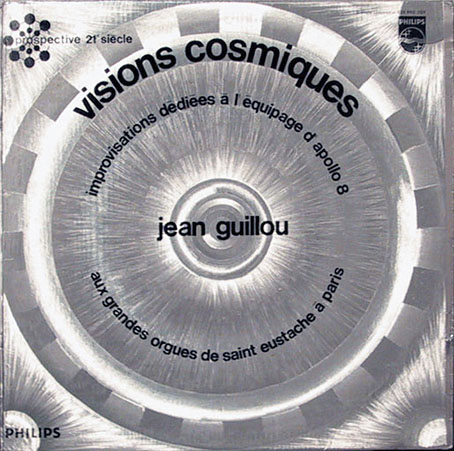
Visions Cosmiques—Improvisations Dédiées À L’équipage D’Apollo 8 (1969) by Jean Guillou. No designer credited.

• 50 years ago this weekend Apollo 8 was on its way to the Moon. Jean Guillou’s album of organ improvisations took the mission as its inspiration although his turbulent music seems more suited to the near-disaster of Apollo 13 than the weightless drift of space travel. The album has been out-of-print for decades but may be heard in full here and here. Related: the Discogs listing for the Philips’ Prospective 21e Siècle series of avant-garde music. Most of the other albums in this series remain unreissued, and are now very collectible, not least because of their metallic “Heliophore” sleeves.

• Christmas cheer be damned: the spook season extends from Halloween to the end of the year. At These Unquiet Things, Sarah Chavez offers a list of favourite seasonal vampires, witches and ghosts. For those who prefer something televisual that isn’t more MR James, The Lorelei (1990) is a feature-length supernatural drama written by Nick Dunning. And speaking of the unavoidable James, Sarah K Marr presents an annotated analysis of A Warning to the Curious embellished with her excellent photos of the area of the Norfolk coast where the story is set.

• At Bandcamp: Voltaic Liturgies: “A symbiosis of flesh, machinery and umbral cosmic mysticism” by Primitive Knot and The Wyrding Module; and In The Sunshine We Rode The Horses by Rowan : Morrison (Rowan Amber Mill with Angeline Morrison): “The album explores themes of our beautiful natural surroundings, and how the pursuit of profit guides us to learn ‘the cost of everything and the value of nothing’, paving the way for the scarring of the landscape with fracking, HS2, retail parks, and so on…”

• “Influential Manga Artist Gengoroh Tagame on Upending Traditional Japanese Culture”. Tagame is also a prolific gay porn illustrator, a part of his career the headline avoids although it is acknowledged in Anne Ishii’s interview.

• Mixes of the week: Dream Perception Mix by Moon Wiring Club, Strange Great Snow: A Conjuror’s Hexmas by Seraphic Manta, December’s Reverie by Cafekaput, and Secret Thirteen Mix 275 by CoH.

• On the Scary Thoughts podcast: Erik Davis on philosophical pessimism, cosmic horror, police procedurals, serial killers, gnostic notions, and Louisiana as featured in the first season of True Detective.

• Manuscripts, letters and other documents by HP Lovecraft are now digitised and available for browsing at Brown University Library.

• William Hope Hodgson—The Essex-born Master of Horror: a biographical essay by Peter Berresford Ellis.

• The best ambient releases of 2018 according to FACT.

• At Dennis Cooper’s: Donald Sutherland Day.

Sandspiel

Rocket USA (1977) by Suicide | Ticket To The Moon (1981) by Electric Light Orchestra | From Ape to Apollo (1994) Thomas Fehlmann

Weekend links 443

gorey.jpg

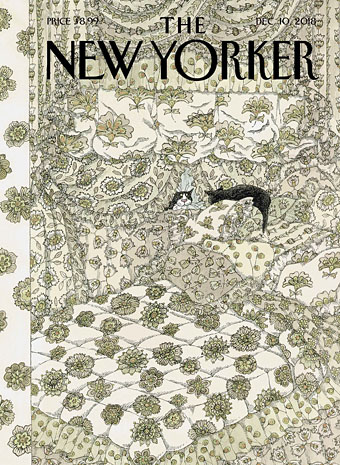
• Yet more Gorey: Mark Dery’s biography of the artist prompted The New Yorker to unearth a piece of cover art that Edward Gorey submitted 25 years ago. In the same magazine Joan Acocella reviews Dery’s book and examines Gorey’s life and art. At Expanding Mind, Erik Davis talks with Mark Dery about Surrealism, the gay voice, Penny Dreadfuls, and the occult and Taoist influences in Gorey’s work.

Moving Through Old Daylight: Mark Fisher, Jim Jupp & Julian House of Ghost Box Recordings, and Iain Sinclair in conversation at the Roundhouse, Camden, London, 5 June 2010. Topics under discussion included Nigel Kneale, TC Lethbridge, John Foxx, BBC Radiophonic Workshop, alchemies of sound, the homogenisation of culture, imagining space and the impersistence of memory.

• “A radical retelling of our relationship with the cosmos, reinventing the history of astronomy as a new form of astrological calendar.” The Space Oracle by Ken Hollings.

There was a deliberate, almost prickly quality to Fisher’s writing and thinking that is rare nowadays, when criticism is more likely to involve open-minded rationalizing than steadfast refusal. He was not one to frolic in ambiguity or irony. “Just because something is current doesn’t mean it is new,” he writes in K-Punk, as he wonders if a time traveller from the nineties would find any contemporary music as radical as post-punk or jungle had once seemed to him. When everything is cheerfully “retro,” Fisher argued, we lose our grasp on history—and, without a sense of why the past happened the way it did, our anything-goes embrace of “happy hybridities” is an empty gesture. “What pop lacks now is the capacity for nihilation, for producing new potentials through the negation of what already exists,” he writes.

Hua Hsu on Mark Fisher’s K-Punk

• At Wormwoodiana: Mark Valentine on The Wind Protect You (1946), a novel by Pat Murphy which Mark describes as a forgotten precursor of Watership Down.

• “At once tiny and huge: what is this feeling we call ‘sublime’?” Sandra Shapshay explores the Romantic aesthetic.

Dennis Cooper‘s favourite fiction, poetry, non-fiction, film, art, and internet of 2018. Thanks again for the link here!

• Mixes of the week: XLR8R Podcast 572 by Nastia, and FACT Mix 683 by Casino Versus Japan.

A Child’s Voice (1978) by David Thomson, an overlooked ghost story starring TP McKenna.

• Jean Cocteau’s Orphée returns from the underworld via BFI blu-ray next month.

Rated SAVX: The Savage Pencil Scratchbook

Orpheus (1967) by The Walker Brothers | Orpheus (1987) by David Sylvian | Overture To Orpheus (2003) by Colin Booth

Born to be Posthumous: The Eccentric Life and Mysterious Genius of Edward Gorey

dery.jpg

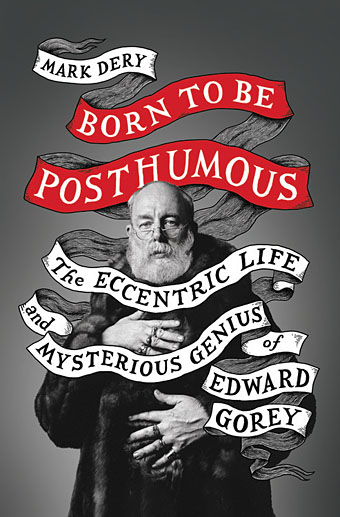
Cover design by Jim Tierney; photo by Richard Corman.

When so many current biographies are recounting the lives of those about whom we’ve already heard a great deal (see the new biography of Oscar Wilde by Matthew Sturgis), a book exploring the career of a previously undocumented yet worthwhile figure is especially welcome. Such is the case with Born to Be Posthumous, Mark Dery’s life of the elusive Edward Gorey: artist, writer, illustrator, book designer, book creator, bibliophile, theatre designer, cat lover and balletomane.

gorey5.jpg

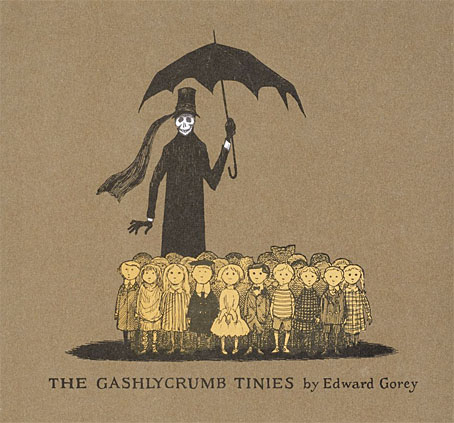
The Gashlycrumb Tinies (1963).

Gorey’s small books have long been one of the more curious fixtures of American culture: many of them look like children’s books but aren’t (unless the child is Wednesday Addams); others look like comic books but they aren’t comics either. The books are sometimes (but not always) Surrealist fables; or brief accounts of irreducible mystery; or sombre inexplicabilities; or camp ripostes to the pieties of Victorian morality; infrequently spiced with black humour and with lurches into outright horror. Gorey delivered his miniature tales in an idiosyncratic drawing style that combines a cartoon-like stylisation with the density of shading found in old wood engravings, a blend that would prove influential as his popularity grew. As Dery notes in his book’s introduction, without Edward Gorey’s work there would be no Lemony Snicket, while Tim Burton would be a skeletal shadow of his present self. (Given the latter’s current output, this might do him some good. But I digress.)

gorey4.jpg

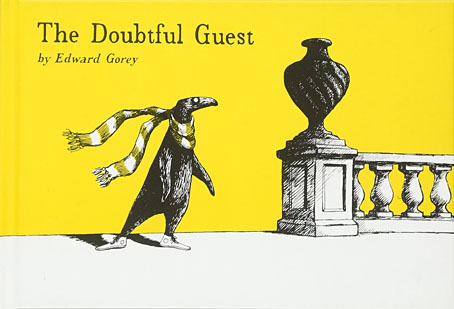
The Doubtful Guest (1957).

In Britain, however, Gorey remains a cult rather than cultural figure, still overshadowed by better-known contemporaries such as Maurice Sendak and Charles Addams. Until the publication of the Amphigorey story collections Gorey’s books were produced in small editions with such a limited availability you were more likely to encounter his art on the cover of another author’s book than within the pages of his own. I became aware of Gorey’s work by gradual osmosis. The first substantial piece I read about him was his entry in Philip Core’s Camp: The Lie that Tells the Truth (1984), in which Core’s mention of an art style “recollecting Victorian engravings” marked Gorey as an artist to be investigated. Two years later he received a longer entry in The Penguin Encyclopedia of Horror and the Supernatural edited by Jack Sullivan. (Camp and horror: how many other artists sit so easily in both worlds?) But Gorey is absent from many books about 20th-century illustrators, and despite the sequential nature of his work you won’t find him in histories of comic art.

gorey6.jpg

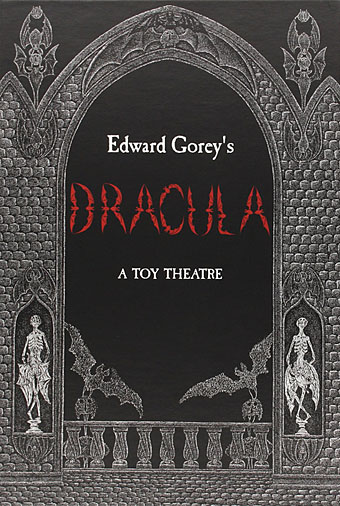
Edward Gorey’s Dracula: A Toy Theatre (1979).

In a way it’s fitting that the work of a man who was adamant in his determination to avoid being pinned down should be so difficult to find. But it’s also a shame that the work of an ardent Anglophile should be hard to find in the country that fuelled his imagination. Among Gorey’s literary favourites Dery lists Jane Austen and Agatha Christie together with Ronald Firbank, Saki, and EF Benson’s Mapp and Lucia novels. (The latter trio are all present in Core’s book on camp, which no doubt makes Gorey camp to the core. Whether he would have approved of being labelled as such is another matter.) I wasn’t surprised by the mention of Saki when so many of Saki’s story titles (The Secret Sin of Septimus Brope) sound like Gorey books, while many of the stories themselves are like Gorey scenarios in prose. Not all Gorey’s work is camp or comic, however; the 32 drawings that comprise the wordless masterpiece of The West Wing (1963) are closer to David Lynch or the “strange stories” of Robert Aickman, the latter an author that Gorey illustrated on several occasions. Dery emphasises how Gorey’s love of silent cinema contributed to The West Wing and other pieces, especially the serials of the Surrealists’ favourite filmmaker, Louis Feuillade.

Continue reading “Born to be Posthumous: The Eccentric Life and Mysterious Genius of Edward Gorey”