Weekend links 601

innocents.jpg

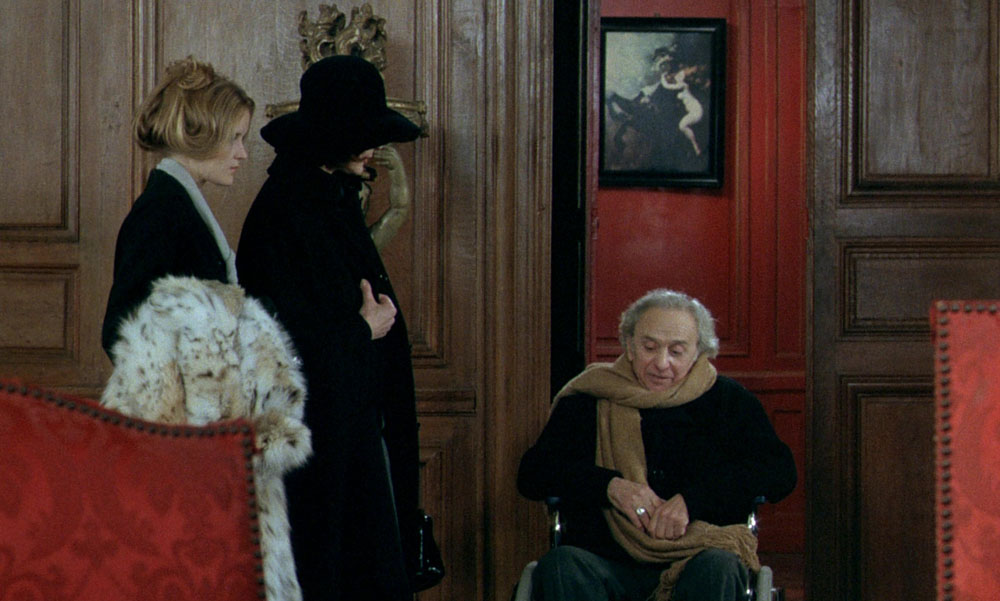
The Innocents (1961), one of the great cinematic ghost stories.

• “Out of the many adaptations, Jack Clayton’s [The Innocents] is considered the benchmark. The film celebrated its 60th anniversary this year, having premiered in London on the 24th of November, 1961. Considering the sheer number of competitors to Clayton’s version, it is telling of the film’s qualities that it still stands far and above its many peers. In fact, it is difficult to see James’s story without those stark black-and-white images of the film coming to mind, as well as its stunning central performance by Deborah Kerr. Suffice to say, 60 years on, James’s screen ghosts still haunt.” Adam Scovell on the many adaptations of The Turn of the Screw by Henry James.

• “I wanted to turn sex into art because art makes sense of life.” Jack Fritscher talks to photographer Rick Castro about gay S&M fetishes, Drummer magazine, Robert Mapplethorpe, and his BDSM porn studio, Palm Drive Video.

• “Fela was a very good human resources manager.” Lemi Ghariokwu, creator of over 2,000 album covers, talks to Nathan Evans about his time working for Fela Kuti.

I’ve been approached several times to ‘make an NFT’. So far nothing has convinced me that there is anything worth making in that arena. ‘Worth making’ for me implies bringing something into existence that adds value to the world, not just to a bank account. If I had primarily wanted to make money I would have had a different career as a different kind of person. I probably wouldn’t have chosen to be an artist. NFTs seem to me just a way for artists to get a little piece of the action from global capitalism, our own cute little version of financialisation. How sweet—now artists can become little capitalist assholes as well.

Brian Eno on the fool’s-goldrush du jour

• At Vimeo: The Snail on the Slope, a film of generative processes by Vladimir Todorovic based on the strange science-fiction novel by Arkady and Boris Strugatsky.

• At Dangerous Minds: an exploration of Eight Songs for a Mad King by Peter Maxwell Davies, “one of the most insane pieces of music ever written”.

• “This is how one ought to see, how things really are.” Ido Hartogsohn on Aldous Huxley’s mescaline experiments.

• Always an essential guide: The Wire magazine’s releases of year.

• The end of December brings us Alan Bennett’s diary at the LRB.

• At Dennis Cooper’s: Ryoji Ikeda Day.

Innocenti (1992) by Brian Eno | Innocent Square [excerpt] (2011) by Christian Skjødt Hasselstrøm | First In An Innocent World (2016) by The Pattern Forms

Short films by Gérald Frydman

frydman01.jpg

Scarabus.

After writing about Gérald Frydman’s animated short Scarabus (1971) last year it’s taken me all this time to get round to watching the other films on his Vimeo channel, most of which are also animations. Scarabus was of interest for its deftly-crafted Surrealism, and there’s more of the same in some of these later films, especially Agulana. As with another Belgian director, Raoul Servais, Frydman directs all his films but doesn’t always animate them himself, hence the variety of art styles.

frydman02.jpg

Agulana (1976) is a kind of sequel to Scarabus with human figures being menaced and oppressed in a transforming environment. The Magritte quotient in films such as this raises the question of whether Magritte-ness (for want of a better term) is a quality unique to René Magritte or a component of the general Belgian character. Jonathan Meades insists on the latter in an excellent film of his own about Belgium.

frydman03.jpg

Alepha (1980) is more Surrealism, which in this case brings to mind the animated films of Piotr Kamler. Naked figures drift over landscapes filled with ambulatory spheres, vast spikes and other structures. Where Kamler favoured electronic soundtracks by Luc Ferrari and Bernard Parmegiani, Frydman has regular collaborator Alain Pierre provide a score of electronic drones.

frydman04.jpg

La Photographie (1983) is the first of two short films set in the 19th century. This one is little more than an anecdote, with a bored family forced to remain motionless while their photograph is taken, a process that lasts for the entire duration of the film. Outside the studio we see a Jules Verne wonderland of new inventions—dirigibles, rapid transport, electric light, typewriters and so on—where the frenetic activity contrasts with the inertia of the photographic process.

frydman05.jpg

Le Cheval de Fer (1984) is another photographic anecdote, this time concerning the wager prompted by an argument about whether a horse’s legs left the ground when it was galloping (and if so, at what point). The argument was famously settled by Eadweard Muybridge who invented a system to photographically record animal locomotion, thus paving the way for cinema, and for film animation.

frydman06.jpg

Les Effaceurs (1991) is Surrealism of a dark and disturbing kind with people urgently trying to scrub away their facial features.

Also on Frydman’s channel is La Sequence Silverstein (2000), a short science-fiction scenario which he wrote but didn’t direct. This one is live action and with dialogue in unsubtitled French. It not bad but I prefer the animations.

Previously on { feuilleton }
Raoul Servais: Courts-Métrages
Scarabus, a film by Gérald Frydman
L’Araignéléphant
Le labyrinthe and Coeur de secours
Chronopolis by Piotr Kamler

Weekend links 600

window.jpg

My kind of window. From a collection of machine-learning images by Unlimited Dream Co. Via Bruce Sterling.

• “I will never call myself a queer. That word is one of the things that I detest that has happened, and it’s almost being forced now. For me, you cannot separate that word from the hatred and violence that once accompanied it. When I read it being used in The New York Times, I think, ‘It’s their word and they can fucking have it all they want.’ I will never use ‘queer.’ It’s an ugly word.” John Rechy, still active at the age of 90, talking to Jeff Weiss about hustling, social opprobrium, and his pioneering books.

• “At a time when we are being constantly told that humanity is destroying the planet, it is somehow comforting to see nature not merely outlasting, but triumphing over humanity’s constructions—as nature does in many of Piranesi’s Views of Rome.” Alasdair Palmer on Piranesi’s peerless renderings of Roman ruins.

• “The magical aspect of Get Back is its total refusal to adhere to the standard tropes of music documentaries. There are no talking heads commenting on the Beatles’ greatness, no continual barrage of quick edits and highlights.” Geeta Dayal on Peter Jackson’s resurrection of the Fab Four.

But men are not traditionally meant to be objects of art. “Men look at women,” John Berger wrote. “Women watch themselves being looked at.” When men look at men, however, they break rules. “I didn’t set out to be radical,” says Miller. “But I was at a fair and I had a huge nude on a stand by Michael Leonard. I’d only been open ten minutes and a woman started having a go and saying it’s filth. What I found fascinating is she’d walked past a whole span of female nudes. I think society is just immune to female nudity. People don’t see it. If you take this to the straight world of an art fair, it provokes reactions other dealers don’t get. There isn’t anyone else like me.”

Tony Wilkes talks to Henry Miller, owner of an art gallery devoted to the male form

• “I imagine men with starched collars, horrified by an animal with no hard edges to grab onto, no solidity to venerate. Something low, lateral, creeping.” Fiona Glen on “Devil Fish”, Cthulhu and cephalomania.

• I like glowing things so Brian Eno’s glowing record turntable has an immediate appeal. A shame it’s a very limited production which is almost certainly sold out by now.

• The next release on the Ghost Box label will be A Letter from TreeTops by Pneumatic Tubes.

• At Dangerous Minds: A Sight for Sore Eyes Vol. 1, a visual history of The Residents.

• At Wormwoodiana: Mark Valentine on the supernatural thrillers of Archie Roy.

• Mix of the week: A reflection on 2021 at A Strangely Isolated Place.

Swan River Press looks back over a year of book production.

• New music: Spherical Harmonics by Joseph Hyde.

Octopus’s Garden (1969) by The Beatles | The Kraken (2006) by Hans Zimmer | Kraken (2017) by Dave Clarkson

Weekend links 599

achilleos.jpg

Taarna by Chris Achilleos for Heavy Metal, September 1981. A typical piece by Achilleos, whose death was announced this week, and very typical for a Heavy Metal cover. Achilleos was a prolific illustrator.

• New music: The Truth, the Glow, the Fall (Live At Montreux) by Anna von Hausswolff, from her forthcoming album, Live At Montreux Jazz Festival. The last gig I went to was in October 2019, to see Sunn O))) supported by Anna von Hausswolff. Easily one of the best things I’ve ever experienced. Meanwhile, Anna von Hausswolff has had to cancel a Paris church concert following protests by a rabble of outraged Catholics. Bravo les crétins!

• “…it is easy to forget that Montesquiou—regardless of his own work—was not merely emblematic of Decadence, he was essentially patient zero in its viral spread.” Strange Flowers explores the exquisite life of the bat-obsessed, hydrangea-cultivating Robert de Montesquiou.

• “Kotatsu have been around longer than we imagine. And art history has the proof.” Spoon & Tamago on an old Japanese method for warming a room during winter. Also further evidence that cats always find the warmest place in any house.

Dennis Cooper‘s favourite fiction, poetry, non-fiction, film, art, and internet of 2021. Thanks again for the link here!

The Wire magazine has opened its collection of articles by the late Greg Tate so they may be read by non-subscribers.

• “Neil Bartlett is a gay writer’s gay writer,” says Jeremy Atherton Lin reviewing Bartlett’s latest, Address Book.

• James Balmont on the psychedelic cinema of Nobuhiko Obayashi.

• Steven Heller’s font of the month is Erotique.

Northern lights photographer of the year.

• The Strange World of…Takuroku.

• RIP Robbie Shakespeare.

• Robbie Shakespeare’s bass x 3: King Tubby Meets Rockers Uptown (1974) by Augustus Pablo | Nightclubbing (1981) by Grace Jones | Bass And Trouble (1985) by Sly & Robbie

Weekend links 598

lucier.jpg

The Wire, July 2004. Illustration and design by Non-Format. Christopher Cox’s interview with Lucier is available to read here.

• “I went into experimental overdrive. Lyrical motifs became literal imagery. A hammer shattering a plate of glass. A lyrical maze of geometric tunnels and formations.” Chris Mosdell talking to Aquarium Drunkard about writing lyrics for Yellow Magic Orchestra and others (you can hear his voice on YMO’s Citizens Of Science), plus the recording of his own debut album, Equasian.

• At Public Domain Review: “…this short, odd book confronts a question that has vexed naturalists for thousands of years: how do we account for the precipitation of animals?” Odd Showers; or, An Explanation of the Rain of Insects, Fishes, and Lizards (1870) by George Duncan Gibb.

• “…few writers on our list could have functioned in the culture that, today, sees literature as a profession for which you prepare like any other: going to the right school, meeting the right people.” Francine Prose on her encounters with the literary strange.

• “Where was glass first fashioned? How was it worked and coloured, and passed around the ancient world?” Carolyn Wilke presents a brief scientific history of glass.

• RIP Antony Sher and Alvin Lucier. In 1969 Lucier was sitting in a room different to the one you are in now. Elsewhere: Alvin Lucier at Ubuweb.

• New/old music: Zeitgeist: Ambient Music from 2012 to 2020 by Marco Simioni & Mattia Saviolo.

James Balmont on five unmissable films from the Japanese New Wave movement.

• At Spoon & Tamago: Illuminated paintings of Tokyo after dark by Keita Morimoto.

• Mixes of the week: XLR8R Podcast 724 by Laura BCR, and Isolatedmix 115 by HVL.

• At Strange Flowers: part two of James Conway’s Secret Satan end-of-year list.

• “Jony Ive’s first major design since leaving Apple isn’t what you’d expect.

• At Dennis Cooper’s: Yasuzo Masumura Day.

Glass (1968) by Sagittarius | Glass (1979) by Joy Division | Glass (2009) by Bat For Lashes