Weekend links 267

morgan.jpg

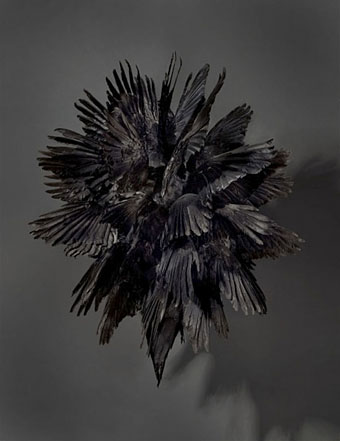
Black Fever (2010) by Polly Morgan.

• “She was something of an Auntie Mame figure for me. We spent years haunting secondhand bookstores in Berkeley, Los Angeles, and New York, talking for hours over ever more bizarre dishes of Chinese Hakka cuisine in a hole-in-the-wall eatery at Stockton and Broadway in San Francisco, watching Kenneth Anger flicks and the surrealistic stop-motion puppet masterpieces of Ladislas Starevich, which Tom Luddy would screen for us at the Pacific Film Archive, over and over again until our eyeballs nearly fell out.” Steve Wasserman remembers Susan Sontag.

California Dreams is “the first career-spanning compendium of Mouse’s work; it includes his recent landscapes and figurative paintings. Taken as a whole, the work is a weird, gilded, space-age, flame-licked way to chart the rise of late-twentieth-century youth culture”. Jeffery Gleaves on the psychedelic art of Stanley Mouse.

• “Not only does moral preoccupation corrupt the artfulness of fiction, but fiction is an inefficient and insincere vehicle for moralizing,” says Alice Gregory, joining Pankaj Mishra to address the question: “Do Moralists Make Bad Novelists?”

Nabokov’s posthumously published Lectures on Literature reprints a corny magazine ad that Nabokov liked to show to his students at Cornell, as an example of a certain kind of sunny American materialism and kitsch (or poshlost, in Russian): it’s an ad for flatware featuring a young housewife, hands clasped, eyes brimming as she contemplates a place setting. Nabokov titled it “Adoration of Spoons,” and it undoubtedly played a significant role in his creation of the suburban widow Charlotte Haze. From such strangely endearing trash was a masterpiece born.

John Colapinto reviewing Nabokov in America by Robert Roper

• “How many typefaces is too many typefaces?” asks Adrian Shaughnessy. “What happens to our ability to discriminate and exercise good judgment when we have a near-infinite number of possibilities?”

• At BUTT: a clip from one of the more dreamlike scenes in Wakefield Poole’s gay porn film, Bijou (1972). Poole’s “sensual memoir”, Dirty Poole, is published by Lethe Press.

John Banville reviews The Prince of Minor Writers, selected essays of Max Beerbohm edited by Phillip Lopate.

• My thanks once again to Dennis Cooper for featuring this blog on his list of cultural favourites.

• More Moogery: Sarah Angliss, Gazelle Twin and Free School in the Moog Sound Lab.

• Mix of the week: XLR8R Podcast 394 by Francesca Lombardo.

Atlas Obscura gets to grips with the enormous Devil’s Bible.

Feel You, a new song by Julia Holter.

Spoonful (1960) by Howlin’ Wolf | Spoon (1972) by Can | Spoon (2013) by Mazzy Star
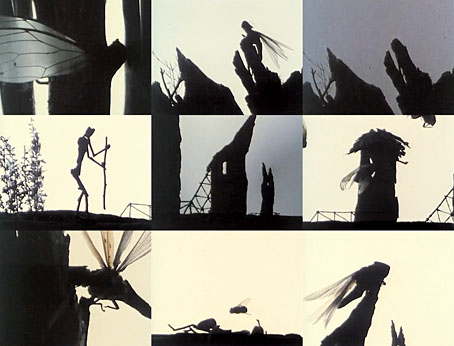
Shadowland, a film by Anthony Lucas

shadowland.jpg

I forget who recommended this to me but the tip was probably a result of my recent work with silhouettes on Ishbelle Bee’s book covers. Shadowland (1988) is a short student film which, for the most part, concerns the conflict between stick-figure humans and an army of giant winged insects. It’s not quite a silhouette work in the manner of Lotte Eisner since the figures and decor all show some solidity. Everything is in shadow, however, hence the title. Watch it here.

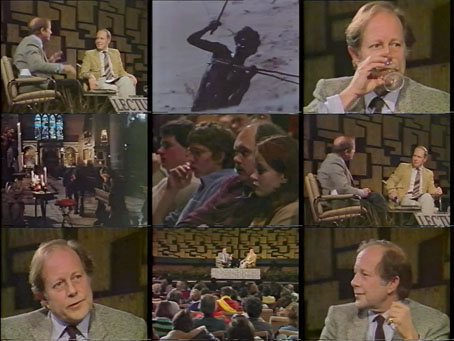
The Nicolas Roeg Guardian Lecture, 1983

roeg.jpg

More Roegery. The recent BBC documentary about Nicolas Roeg has yet to appear on YouTube but this Guardian Lecture appeared there a few days ago. Roeg was in the news in 1983 following the release of Eureka, a film with a solid reputation today but one which the distributors weren’t happy with at the time. There’s no mention of these problems in this 37-minute interview with the late Philip Strick which ranges throughout Roeg’s career, and even includes some mention of his ill-fated plan to direct Flash Gordon for Dino De Laurentiis. It’s too short, of course, as these things always are, and Roeg has always been a somewhat rambling interviewee, but for Roeg-philes it’s worth a watch. The documentary I’d really like to see again is Nothing As It Seems: The Films of Nicolas Roeg, made the year before by Paul Joyce, and featuring contributions from two key collaborators: Donald Cammell and Paul Mayersberg.

Previously on { feuilleton }
Beyond the Fragile Geometry of Space
Canal view

Beyond the Fragile Geometry of Space

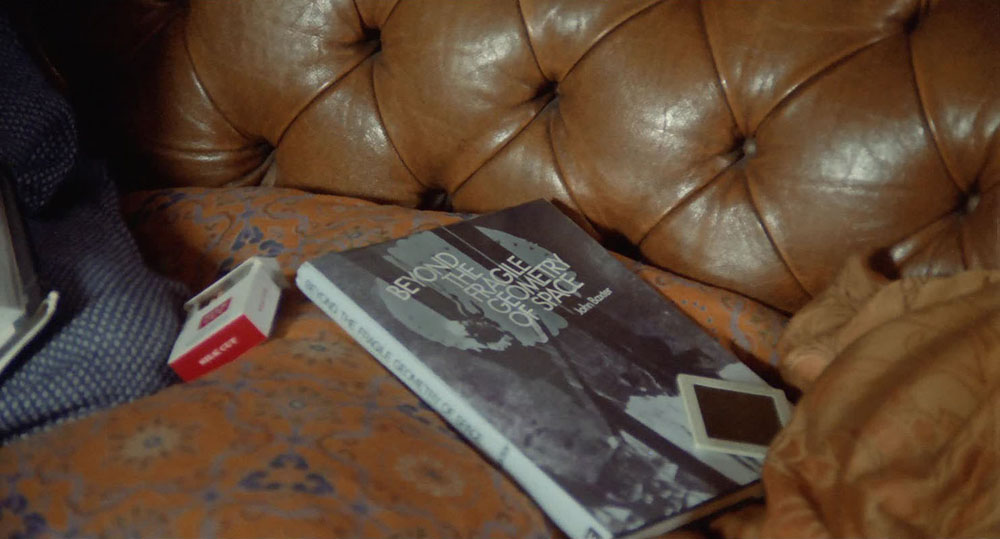
1: A fictional book by a fictional character.

beyond1.jpg

Don’t Look Now (1973): written by Allan Scott & Chris Bryant, directed by Nicolas Roeg. In the published screenplay Laura Baxter is described consulting a book written by her husband, John, but no title is given.


2: An architectural proposal for Venice.

beyond3.jpg

Beyond the Fragile Geometry of Space. Studio 6 (Tutors Eamonn Canniffe and Renata Tyszczuk) – University of Sheffield School of Architecture: Exhibition at Sylvester Works Sheffield (Location, exhibition now closed). The studio projects dealt with the possibilities for the northern edge of Venice of the proposal to build a ‘sublagunare’ underground rapid transit system between Marco Polo Airport and the island. Stretching from the Sacca della Misericordia to the Arsenale the projects were developed as a group masterplan with a series of individual interventions, each of which dealt with the down-at-heel historic fabric or proposed new islands for transport, museological or environmental uses. As an ensemble the projects in effect create a new facade to the city, opposite to David Chipperfield’s extension to the cemetery on the island of San Michele.


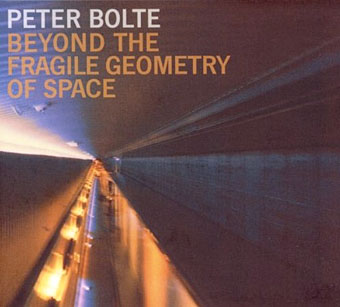
3: A jazz album by Peter Bolte.

beyond2.jpg

Beyond the Fragile Geometry of Space (2007).


4: A mix by cat_dentures.

beyond4.jpg

Beyond the Fragile Geometry of Space (2011) at 8tracks.

Previously on { feuilleton }
Canal view
Petulia film posters

Weekend links 266

dune.jpg

Spine and cover art by John Schoenherr for the first American edition of Dune, 1965.

• “[Herbert] had also taken peyote and read Jung. In 1960, a sailing buddy introduced him to the Zen thinker Alan Watts, who was living on a houseboat in Sausalito. Long conversations with Watts, the main conduit by which Zen was permeating the west-coast counterculture, helped turn Herbert’s pacy adventure story into an exploration of temporality, the limits of personal identity and the mind’s relationship to the body.” Hari Kunzru on Frank Herbert and Dune, 50 years on. Related: “To save California, read Dune,” says Andrew Leonard. There’s a lot more Dune cover art at ISFDB.

• “Embedded in Adam’s footage were several dark forms, human-ish in outline, unidentifiable but unmistakable, visible within the leaves or the shadows.” Holloway is a short film by Adam Scovell based on the book by Robert Macfarlane, Dan Richards and Stanley Donwood.

The Library of the Lost: In Search of Forgotten Authors by Roger Dobson; edited and with an introduction by Mark Valentine. Roger and Mark were my first publishers in 1988 when their Caermaen Books imprint produced the large-format edition of The Haunter of the Dark.

• “…over the years he created a series of ‘Pharmacies’: rows of glass bottles filled not with medicines to cure the body…but objects to stimulate the mind.” Clare Walters reviews Joseph Cornell: Wanderlust, an exhibition at the Royal Academy, London.

• “The sound machines we build today are invariably one-offs, made from salvaged parts, with all the precariousness of a prototype.” Sarah Angliss on the art of making music machines.

Mission Desire is a new single by Jane Weaver whose video is “set to scenes from Marie Mathématique – the French 1960s mini-series about Barbarella’s younger sister”.

• Ghost signs, ginnels and hidden details: an alternative guide to Manchester by Hayley Flynn aka Skyliner.

• “I want to be despised,” says John Waters who has a new art exhibition at Sprüth Magers, London.

Sonic Praise, an album of “Krautprogbikermetal” by Ecstatic Vision.

• The Evolution of the Great Gay Novel: an overview by Rebecca Brill.

• At Bibliothèque Gay: more homoerotic drawings by Jean Cocteau.

Wyrd Daze Lvl2 Issue 3 is a free download.

Nicolas Winding Refn: vinyl collector.

Art With Naked Guys In It

Caladan (2011) by Roly Porter | Giedi Prime (2011) by Roly Porter | Arrakis (2011) by Roly Porter