Weekend links 297

floridxfauna.jpg

Crimson Metallic Emergent Skull Crystal Pendant by Kristen Phillips aka Floridxfauna.

The Noise-Arch Backup at the Internet Archive is 30GB of mp3s from noise-arch.net, a collection of cassette-based releases and artwork: “material represented includes tape experimentation, industrial, avant-garde, indy, rock, diy, subvertainment and auto-hypnotic materials…” 30GB is an intimidatingly large amount of material so it’s better to browse The Noise-Arch Archive, a selection of 468 releases.

• The week in erotica: Claire Voon on Ancient Erotic Dreams and Explicit Scenes in the New York Public Library Collection; Melanie Porter on Great Grandporn: Hardcore Pornography of the Silent Era; Cathy Camper on The Comics of Dale Lazarov: Illustrated Explorations of Sexual Inventiveness.

Void Beats/Invocation Trex by Cavern of Anti-Matter (Holger Zapf, Joe Dilworth & Tim Gane) was released this week. The opening number is Tardis Cymbals. Tom Furse condensed the 73-minute album into a 17-minute mini-mix.

Indeed, if you had to “place” ­Williams—put him alongside writers with whom he had something in common—it would be with the mystical autodidacts, the backstreet Rosicrucians more than with the pipe-smoking, tweedy Inklings. To that extent, the only unsatisfactory thing about Grevel Lindop’s book is its title. True, Williams went to Oxford when war broke out and became friends with the famous circle around C. S. Lewis. But he was not an Inkling in spirit. He was not at home in Oxford, and his arrival, far from consolidating the Inklings, actually broke them up by bewitching Lewis, and making Lewis neglect the central friendship of his life, that with ­Tolkien. Another scholar of Old English literature, C. L. Wrenn, said that meeting Williams made you realize why inquisitors thought they had the right to burn people. Tolkien agreed: “Williams is eminently combustible.”

Certainly, Williams’s books had an influence on the Inklings. Lindop is right to say that the central plotline of Many Dimensions suggests the story of The Lord of the Rings. In the Williams novel, it is a stone of great power, rather than a ring, but it has the same effect on those who bear it: They become its possession, not its possessor.

AN Wilson reviews Charles Williams: The Third Inkling by Grevel Lindop

• Russ Fischer recommends five films by Andrzej Żuławski (RIP). Possession (1981) is still the easiest to find, and a good place to start. I enthused about On The Silver Globe (1977–87) last year.

England’s Hidden Reverse: A Secret History of the Esoteric Underground by David Keenan has been published in a revised and expanded edition by Strange Attractor.

The Preservation Man (1962): Artist and collector Bruce Lacey (RIP) filmed by Ken Russell for the BBC’s Monitor.

Barry Adamson: “I’ve been called the outsider’s outsider”.

• At Dangerous Minds: Six degrees of Marty Feldman.

• Mix of the week: FACT mix 536 by Not Waving.

• The Alan Clarke page at the BFI shop.

Umberto Eco (RIP): Porta Ludovica

Possessions (1980) by The Residents | Possessed (1992) by The Balanescu Quartet | Possessed (2001) by Sussan Deyhim & Shirin Neshat
High-Rise posters

highrise.jpg

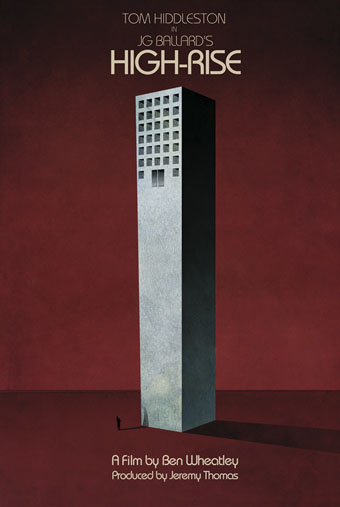
An early promotional poster from 2014 by Jay Shaw.

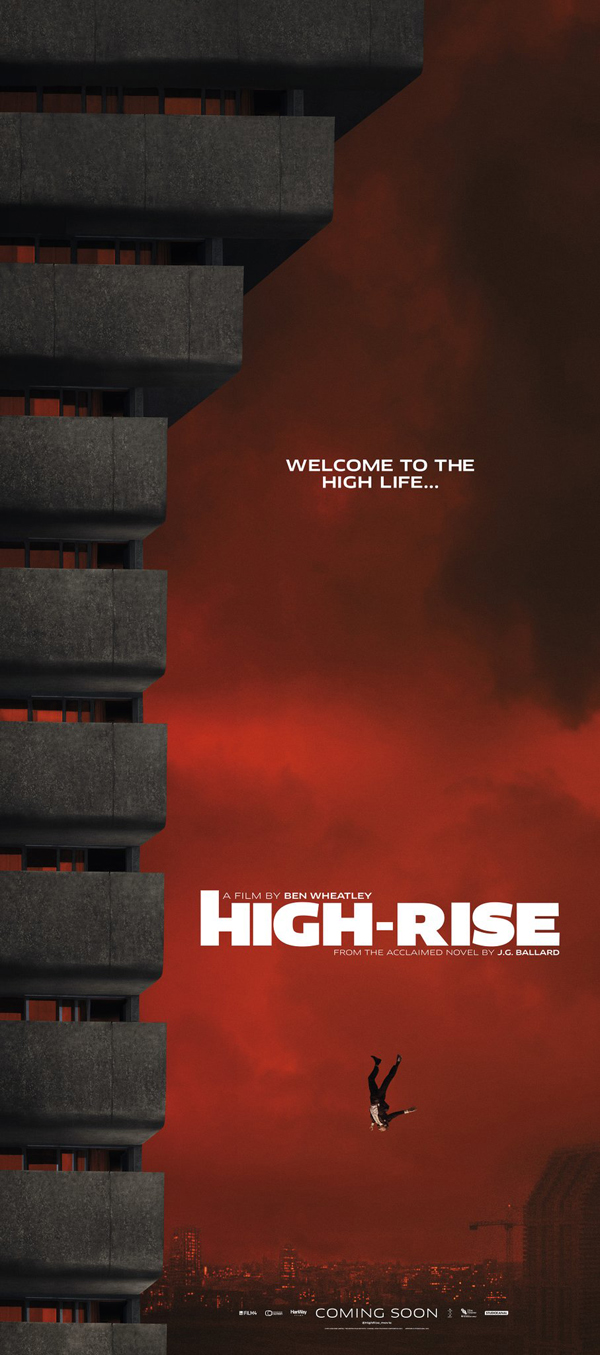
Ben Wheatley’s film of the novel by JG Ballard approaches. As is my custom, I’ve been avoiding the trailers of this and any other film of interest but the posters are increasingly impressive. Ben Wheatley and fellow Brit filmmaker Peter Strickland (whose The Duke of Burgundy was produced by Wheatley’s Rook Films) have distinguished themselves not only by the quality of their films but also by caring about the designs used to advertise their work. Last month I linked to a story about the dire state of the US poster world where design-by-committee is the order of the day. The designs for Wheatley’s films have been a welcome riposte to this trend. Can the film live up to its posters? Find out in March.

highrise1.jpg

The first poster shows the doomed jeweller heading earthwards for his rendezvous with a parked car. Easy to imagine this design giving a Hollywood marketing committee the vapours.

Continue reading “High-Rise posters”

Weekend links 296

invisiblecreature.jpg

Mars (variant design): one of three new posters for NASA by Invisible Creature.

• “If the point of Sade’s work was to marry sexual frustration and release to the practice of interpersonal violence, he could confidently gaze out on the landscape of our popular culture and declare it a fait accompli.” Hussein Ibish on The United Sades of America.

• Gravitational Waves Exist: The Inside Story of How Scientists Finally Found Them by Nicola Twilley. Sean Carroll explains the importance of the discovery.

• Another This Heat interview: Bruce Tantum interrogates Charles Bullen and Charles Hayward about being a group ahead of their time.

The English word comes ultimately from Greek magike (in which the original Persian word is spliced with tekhne, “art”), while the Persian magos “one of the members of the learned and priestly class” ultimately derives from magush, “to be able, to have power”, from which we may also derive the word “machine”. So my social hierarchy is your magic, and my magic might be your craft—or even your machinery. My religion is your magic. Your religion is my fairy lore. Or your religions might be a mass of fakery and trickery and foolery. Hence in making magic into an intellectual discipline, I theorize based on my observations, which might not be mine but those of others, heritable observations. But because what I do looks very like empiricism, as I examine materials for the tricks or fooleries, or for the real alterations, checking my results against descriptions of previous experiments, what I do feels like science, feels like the template for Baconian empiricism and its great instauration.

Diane Purkiss reviewing The Book of Magic: From Antiquity to the Enlightenment, edited by Brian Copenhaver

• The Strange World Of…The Residents: Sean Kitching talks to The Residents’ resident artist, Homer Flynn.

• At Strange Flowers: film of Natalie Barney in 1962 reminiscing about Oscar Wilde and Marcel Proust.

• From Battleship Potemkin to Baker Street: Ian Christie on Sergei Eisenstein’s trip to London.

• Mixes of the week: Krautrock Mix by Tarotplane, and Mix #15 (Transversales) by Jon Brooks.

• From Rock en Stock (France, 1973): Can and Agitation Free in live performance.

• Twenty classic British folk-horror stories: a selection by Kai Roberts.

Immemory: a Flash version of Chris Marker’s CD-ROM.

Cronenberg Valentines

Static Gravity (1980) by Chrome | Zero Gravity (2001) by Monolake | Gravity (2013) by Roly Porter

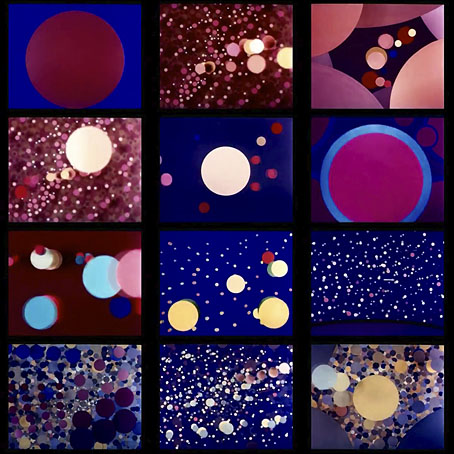
An Optical Poem by Oskar Fischinger

fischinger.jpg

Oskar Fischinger’s only successful collaboration with a Hollywood studio was this 7-minute animation made for MGM in 1937. As with some of Fischinger’s earlier films, a piece of classical music is illustrated with dancing shapes of cut-out paper. The music in this instance is Liszt’s Second Hungarian Rhapsody, and this short was one of the films that brought Fischinger’s to Walt Disney’s attention when the Disney studio was planning a similarly abstract sequence for Fantasia. Fischinger worked on the Toccata and Fugue opening but his early efforts for Disney were dismissed as “too dinky” by the man responsible for a ubiquitous anthropomorphic mouse.

Elsewhere on { feuilleton }
The abstract cinema archive

Can soundtracks

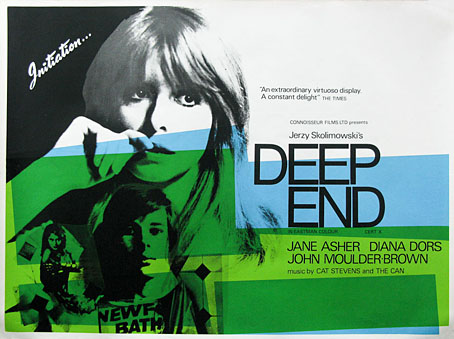
deepend.jpg

Trailer for Deep End (1970). Music: Mother Sky.

I’ve been listening to a lot of Can over the past week, and thinking—not for the first time—about their erratic soundtrack career. Their soundtrack music is very familiar from their second album, Soundtracks, and the recent Lost Tapes collection which unearthed a few pieces that were previously only available in films or TV episodes. Much less familiar is the films and TV episodes themselves so here’s a look at some of the available material. Deep End and Alice in the Cities are both acclaimed (and highly recommended) feature films available on DVD. Everything else in this collection has been less visible outside Germany.

Update: Added Das Millionenspiel.

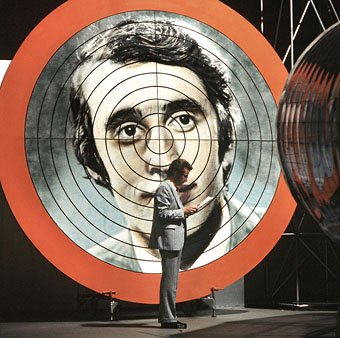
millionenspiel.jpg

Das Millionenspiel (1970). Music: Millionenspiel.

A film for German television based on a science-fiction story (The Prize of Peril, 1958) by Robert Sheckley about a reality-TV manhunt game. IMDB has Irmin Schmidt listed as the uncredited composer but the theme was a Can production.

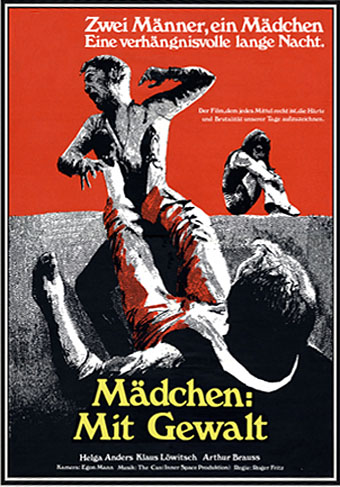
madchen.jpg

Trailer for Mädchen mit Gewalt (1970). Music: Soul Desert and Desert.

deadlock.jpg

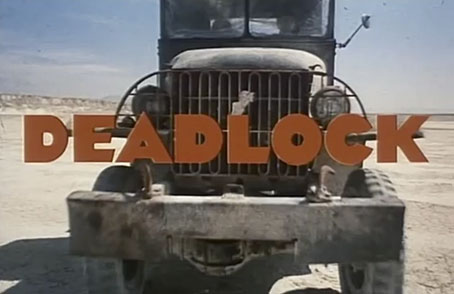
Trailer for Deadlock (1970). Music: Deadlock and Tango Whiskeyman.

Another of the strange Westerns (or Western-like films) that flourished in the early 70s.

Continue reading “Can soundtracks”