Weekend links 349

burgess.jpg

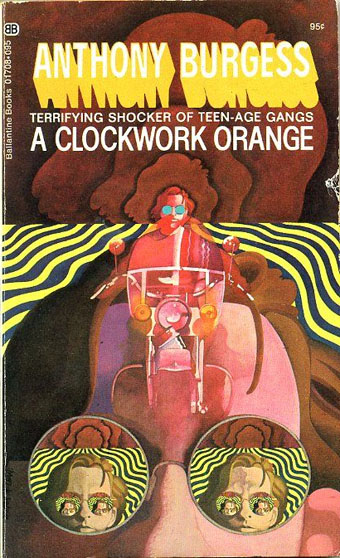
• Before Stanley Kubrick fixed an image of Alex and his droogs in the popular imagination, artists could get away with playing on the threat of biker gangs as Wilson McLean does in this vaguely psychedelic cover from 1969. (McLean’s interpretation may possibly derive from a 1965 edition.) LibraryThing has a collection of Clockwork Orange covers from around the world which run the gamut of cogs, orange hues and variations on David Pelham’s famous Penguin design from 1972. Meanwhile, AL Kennedy celebrates 100 years of Anthony Burgess by examining the writer’s career as a whole, although the web feature still manages to get a photo of Malcolm McDowell in there.

• “Even bad books can change lives,” says Phil Baker reviewing The Outsider by Colin Wilson and Beyond the Robot, a Wilson biography by Gary Lachman. I wouldn’t call The Outsider a bad book but Wilson’s more wayward opinions (and later works) are best treated with scepticism.

• “Murtaugh refers to his subject’s ‘pervasive sense of doom’ and Welch himself speaks of ‘the extraordinary sadness of everything.'” David Pratt reviewing Good Night, Beloved Comrade: The Letters of Denton Welch to Eric Oliver, edited by Daniel J. Murtaugh.

• At The Quietus this week: Tinariwen bassist Eyadou Ag Leche is interviewed by Richie Troughton, Jane Weaver unveils a new song from her forthcoming album, Modern Kosmology, and Danny Riley explores the strange world of Ben Chasny.

• “A micro-history of cultural gatekeeping: once told by the censors what we may read, then by critics what we should, we are now told merely what we can read.” Ben Roth writing against the use of “readability” as a literary value.

• Yayoi Kusama’s amazing infinity rooms are at the Hirshhorn Museum and Sculpture Garden, Washington DC, until May. For the rest of us, Peter Murphy’s panoramic photo is still online.

• More music: my friends Watch Repair have become visible enough to be interviewed by an Argentinian website. The group’s Bandcamp page recently made three new releases available.

• Yet more music: They Walk Among Us, a new song and video by Barry Adamson, and Anymore, a new song and video by Goldfrapp.

• Earth and The Bug announce Concrete Desert, a collaborative album inspired by Los Angeles and the fiction of JG Ballard.

• Bad Books for Bad People: Episode 7: The Incal – Epic French Space-Opera Comics.

• Mixes of the week: FACT Mix 589 by Aisha Devi, and Secret Thirteen Mix 212 by Qual.

Eduardo Paolozzi‘s forays into fashion and furnishings.

Cooking with Vincent [Price]

Moroccan Tape Stash

• Tin Toy Clockwork Train (1986) by The Dukes Of Stratosphear | Clock (1995) by Node | Clockwork Horoscope (2009) by Belbury Poly
L’outrageant Lord Horror

shoah1.jpg

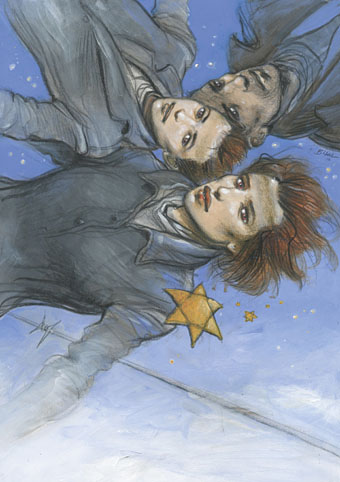
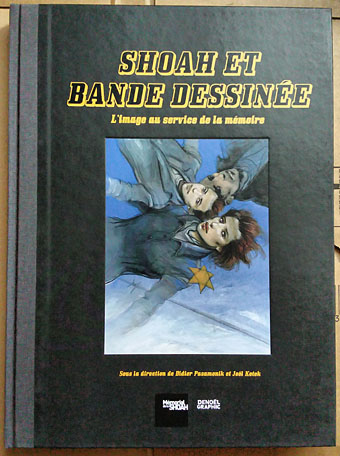
Cover art by Enki Bilal.

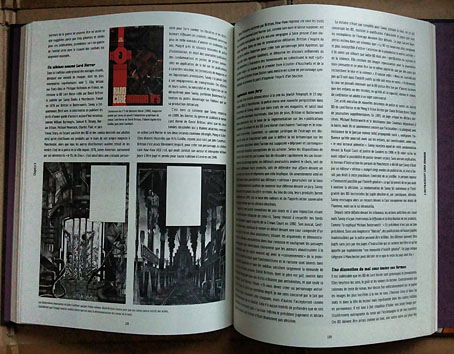
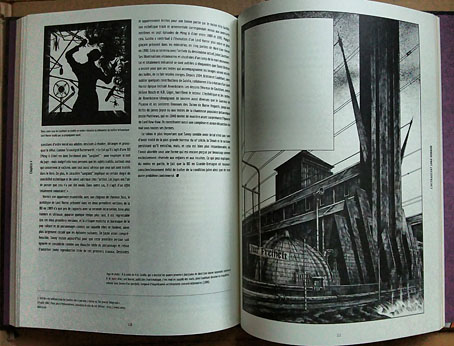
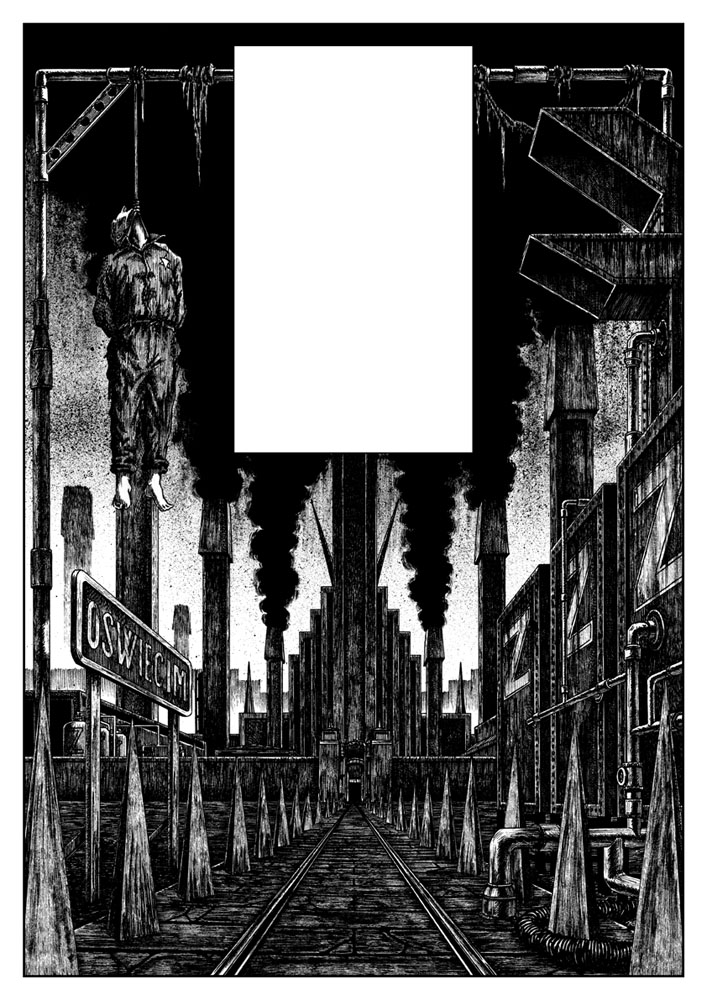
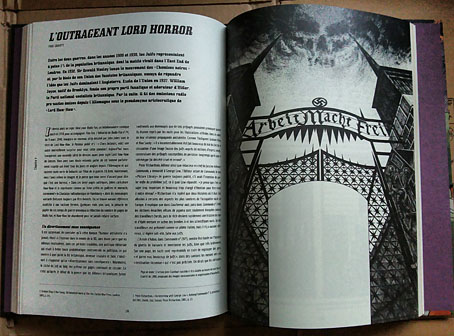
Arriving in the post this week was the catalogue for the Shoah et bande dessinée exhibition which is currently running in Paris at Mémorial de la Shoah. I’ve mentioned previously that the exhibition includes some of my pages from my first collaboration with David Britton/Savoy, the death-camp issue of the first Lord Horror series, Hard Core Horror, but until the catalogue arrived I wasn’t sure how that work would be presented. Consequently, I’m surprised to find the comic and Britton’s wider Lord Horror project given a section of its own in the catalogue, with a lengthy appraisal by British comics historian Paul Gravett. The text is French throughout so I can’t follow Gravett’s piece very well but it looks to be an expansion of earlier pieces he’s written about the Savoy comics and their troubled history.

shoah2.jpg

The book itself is a solid production that I’m pleased to find following the hardback “album” format used by Continental comics. Denoël Graphic, a publisher of bandes dessinées, is the publisher. Among the other artists represented are Will Eisner and Art Spiegelman (of course), plus many French artists whose work I hadn’t seen before. The exhibition runs throughout the year to 30th October, 2017.

shoah3.jpg

shoah4.jpg

Previously on { feuilleton }
Exhibitionism

Isles of the Dead

iod_leipzig.jpg

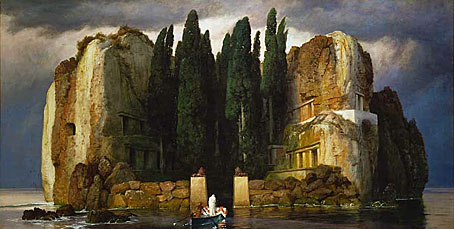
The Isle of the Dead (version five, 1886) by Arnold Böcklin, Leipzig, Museum der bildenden Künste.

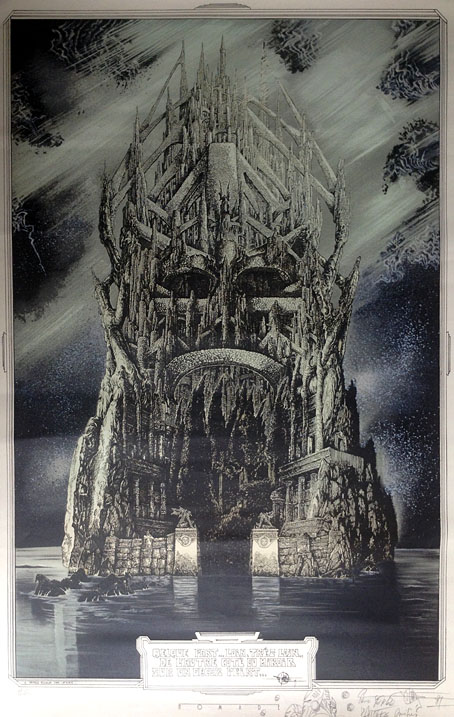
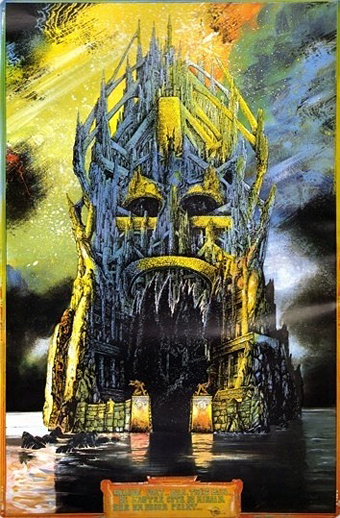
Reading old comics recently turned up the page below by Philippe Druillet which I didn’t remember having seen before. The drawing is from Gail, one of Druillet’s Lone Sloane stories (but not one included in the Six Voyages of Lone Sloane), and shows the entrance to a typically sinister Druillet city modelled on one of Arnold Böcklin’s Isle of the Dead paintings. (Druillet’s original was in black-and-white but was later coloured.) This derivation manages to keep all of Böcklin’s details while cleverly turning the cypresses into a fanged mouth.

isle1.jpg

Philippe Druillet (1976).

isle2.jpg

Böcklin’s cemetery isle has been the subject of several posts here, being one of my favourite paintings and also an object of fascination for its continuing influence in a variety of media: novels, films, music and, of course, comics. Druillet quotes from other artists in his Lone Sloane stories—notably Escher and Grandville—so the Böcklin quotation wasn’t too much of a surprise. Toteninsel.net, the website devoted to works influenced by The Isle of the Dead, turned up a few more comic-related examples, some of which are featured below. What’s notable about the examples at Toteninsel is that they’re all from European artists; that’s not to say there isn’t an example to be found in American comics but European comic art seems much more aware of Symbolist painting.

Continue reading “Isles of the Dead”

Weekend links 343

carrington.jpg

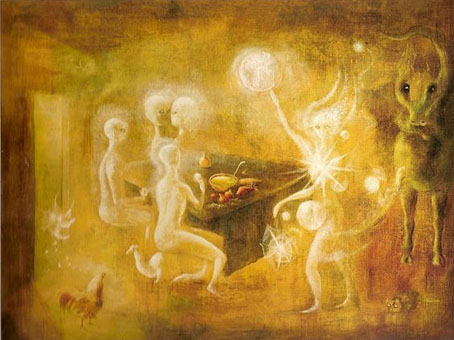
Sidhe, the white people of the Tuatha Dé Danann (1954) by Leonora Carrington.

• January brings a wealth of recommended-reading lists for the new year, together with the feeling that many of those lists are merely clones of each other. Not so the recommendations at Strange Flowers which also includes links to forthcoming events such as this exhibition of Symbolist art at the Guggenheim, New York.

Some Ceremonies are Better than Others, an exhibition of sound objects and drawings by Matthias König & Ibrahim R. Ineke inspired by Arthur Machen’s The White People, at The Bries Space, Borgerhout, Belgium, from 21st January. Previously: Ineke’s comic-strip adaptation of the Machen story.

• “These must-reads explore Dada, Futurism, Surrealism, and the art of opposition,” says Carol Cooper. One of the titles under discussion is the Bruce Sterling book I designed and illustrated last year, Pirate Utopia. Sterling talked to Wired about the book and its relation to the present moment.

RIP Mark Fisher, a cultural theorist whose death was announced just as extracts from his latest book, The Weird and the Eerie, were beginning to appear. One of those extracts is at The Quietus. Related: Fisher’s k-punk blog and its earlier incarnation.

James Cargill (ex of Broadcast) announces a debut release by his new group, Children of Alice. Related: Jonathan Miller’s 1966 TV film of Alice in Wonderland rescored with Broadcast songs.

We are the Martians: the Legacy of Nigel Kneale, a collection of Kneale-related essays and appreciations edited by Neil Snowdon, is finally appearing in print from PS Publishing.

• Pursuing paths hauntological, The Electric Pentacle offers “an unholy stew of library music, Kosmische, arcane ritual electronica, modular synthesisers and shortwave radio”.

• Mixes of the week: The Ivy-Strangled Path Vol. XVI by David Colohan, and Low Visibility Across Sunken Village by The Geography Trip.

• “With Reflection, [Brian Eno] offers generative music for a turbulent time,” says Geeta Dayal.

Anna Biller, director of The Love Witch, talks to New Jack Witch about her film.

• The story behind Gay Bob, the world’s first out-and-proud doll.

Alice (1969) by Jon Plum | Alice (1982) by The Sisters of Mercy | Alice (2009) by Sunn O)))

Exhibitionism

bilal.jpg

Art by Enki Bilal.

My work is featured in two very different exhibitions over the next few weeks, so different, in fact, that they’re almost at opposite poles to each other.

hch5.jpg

Hard Core Horror 5 (1990).

The first, Shoah et bande dessinée, takes place at Mémorial de la Shoah, Paris, and opens on 19th January. This is an exhibition of comic-book art dealing with the Holocaust, and will include three of my pages from the death-camp scenes in the final issue of the Lord Horror series, Hard Core Horror (created with David Britton in 1990, and published by Savoy). This is one instance where the term “comic” is particularly inappropriate, unlike the more neutral French designation, bande dessinée. I haven’t yet seen a list of all the other artists being represented but I was very pleased to see a drawing by Enki Bilal being used to promote the event. Bilal was one of several French comic artists whose work I discovered in the pages of Heavy Metal/Metal Hurlant in the 1970s, and it was the example of the artists there that kept me interested enough in the comics medium to attempt something of my own a few years later. The exhibition will run until 30th October, 2017, and will feature a printed catalogue.

alice1.jpg

The second event, Alice’s Adventures in the Underground, has already been mentioned here, and takes place at the Horse Hospital, London, at the beginning of February:

“Feed your head…” An evening discourse on all things Wonderland, with John Coulthart, Andy Roberts, Nikki Wyrd and Jake Fior (facilitator).

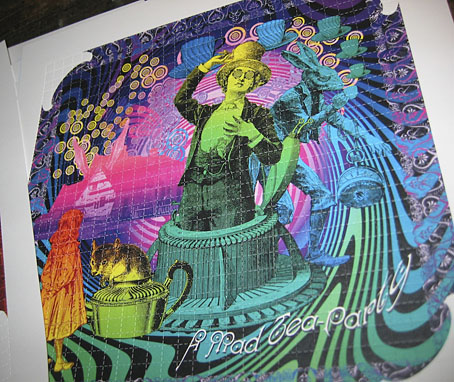
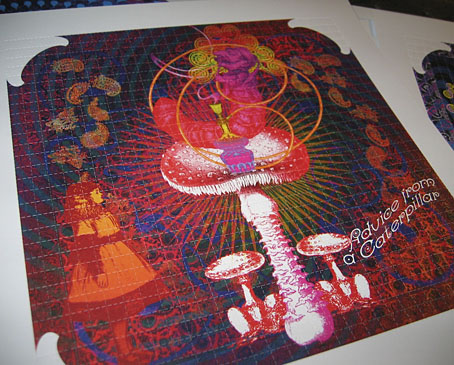
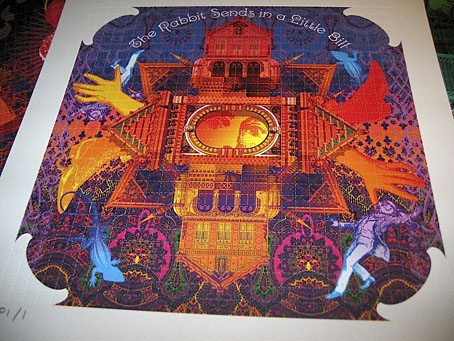
This event marks the opening of a three day exhibition hosted by the Horse Hospital, featuring John Coulthart’s psychedelia-themed ‘Alice’ artwork, printed for the first time as (drug-free) blotter art. John’s depictions of the twelve chapters of ‘Alice’s Adventures in Wonderland’ view the 1860s through the iridescent lens of the 1960s; Victoriana refracted through a psychedelic prism. Come along for a discussion of the links between psychedelic art and music, and the persistent fascination of Lewis Carroll’s books. There will be talk of many things, not only cabbages and kings, but far more than you can possibly imagine before breakfast. Signed blotter prints will be on sale.

Psychedelic artists – particularly in the 60s – and many other outsider creative types (before and since that influential decade), have drawn their inspiration from the well of imagery found within the ‘Alice’ books. As well as John’s artwork, there will be Alice themed creations by other artists on show. In addition, the Psychedelic Museum will be holding its second pop-up museum display, with particular focus on the 60s counterculture.

alice2.jpg

This show came about after an offer from Paul at Blotter Art to produce a series of blotter prints from my psychedelic Alice series. The first set of sheets are shown here, and I’m very pleased with the print quality after having been a little worried that the paper might not reproduce the colour and detail to the best effect. As noted above, signed sheets will be on sale (either as singles or a series of 12) during the event and afterwards via the Blotter Art website. People often ask about signed prints but most of my print sales are through CafePress which doesn’t allow this; so here’s a rare opportunity to get something spoiled by my signature. In addition to my work there should be Alice-themed art by other artists filling out the space. This exhibition will run to 4th February. I’m looking forward to it.

alice3.jpg