A Year In The Country: the book

ayitc.jpg

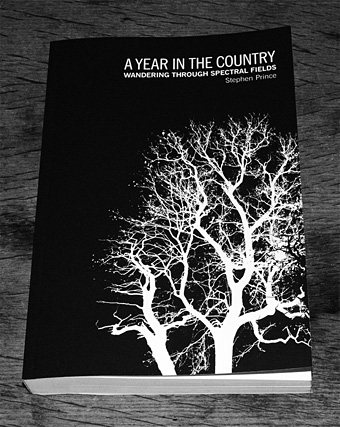
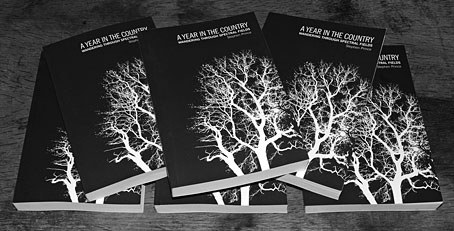
I kept intending to mention this before but the workload has been off the scale this year: all very stimulating but it’s been eating into my spare time. More about all of that later, for now there’s the new book from A Year In The Country’s Stephen Prince which was launched earlier this month in ebook form, and which will be available in print next month.

ayitc2.jpg

The book is a reworking of the Year In The Country website in printed form, hence the subtitle—”Journeys in Otherly Pastoralism, the Further Reaches of Folk and the Parallel Worlds of Hauntology”—and as such is very useful as a guide to the byways which the site has been exploring for the past few years. The folk-horror subgenre isn’t exactly unexplored today—the Folk Horror Revival book to which I contributed ran to 500 pages—but A Year In The Country has always had a broader reach, taking in related works in the music world, in science-fiction film and television, and in offshoots of science fact such as Cold War paranoia and nostalgia for the Space Race. I regard myself as being reasonably au fait with most of this material but there’s still a lot on the website (and now in the book) which I hadn’t come across before. There are no illustrations, unfortunately, but the website has recently been posting the missing pictorial content. A Year In The Country: Wandering Through Spectral Fields will be published on April 10th, and is available for pre-order here.

Previously on { feuilleton }
All The Merry Year Round
The Quietened Cosmologists
Undercurrents
From The Furthest Signals
The Restless Field
The Marks Upon The Land
The Forest / The Wald
The Quietened Bunker
Fractures
Folk Horror Revival: Field Studies

Weekend links 404

bellver.jpg

Magazine illustration of The Fallen Angel (1877) by Ricardo Bellver, a statue for The Fountain of the Fallen Angel in Madrid

• Obituaries of the late Stephen Hawking were obliged to concentrate on the professor’s disabilities and global celebrity while skirting around the trickier questions of what he actually spent the best part of his life thinking, writing and talking about. Roger Penrose was not only a friend of Hawking’s for many years but also one of his equally skilled professional colleagues. Penrose’s piece for the Guardian was notable for the way it provided a succinct but informed summary of Hawking’s work at the forefront of theoretical physics.

Brian Eno has announced a box set of old or previously unheard recordings for his artworks, Music For Installations. (Be warned that the various editions range from expensive to very expensive.)

• Flame 1 is the name of a collaboration between The Bug and Burial. The Quietus has an exclusive preview from the forthcoming album.

• Mixes of the week: XLR8R Podcast 533 by µ-Ziq, and Secret Thirteen Mix 249 by Eva Geist.

• Buy High, Sell Cheap: Elianna Kan interviews Alejandro Jodorowsky.

• At Dangerous Minds: Addams Family comic books from 1974.

• Advanced Creepology: Re-Reading Lolita by Michael Doliner.

• A Quietus list of the 40 best compilation albums of all time.

• At Spoon & Tamago: An anti-decluttering house.

• At Dennis Cooper’s: The Spheres.

Physical (1981) by Olivia Newton-John | (Let’s Get) Physical (1990) by Revolting Cocks | UK Girls (Physical) (2001) by Goldfrapp

Calendrier Magique

/orazi1.jpg

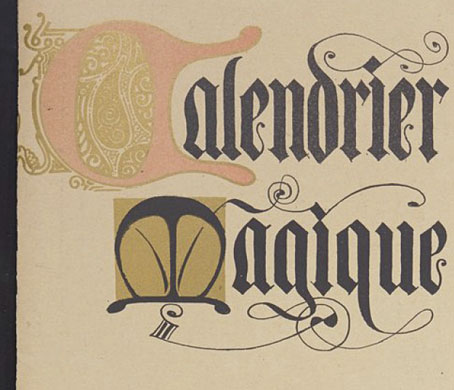
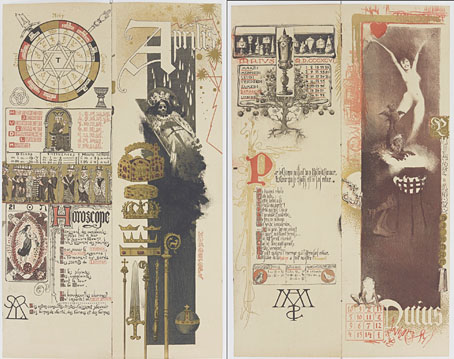
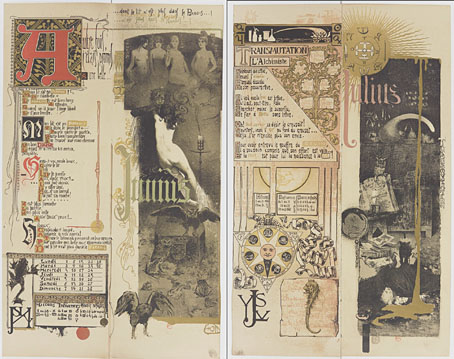
The Calendrier Magique was created in 1895 by Austin De Croze, with pages decorated and illustrated by Manuel Orazi. In addition to being a calendar for the year 1896, the booklet (which was printed in an edition of 777 copies) is also a fascinating bogus grimoire which did the internet rounds a few years ago when scans appeared on a sub-site hosted by Cornell University Library. While it was good to see the pages at all, I’m sure I wasn’t the only one who would have preferred a closer look at the details, something which is now possible thanks to a recent upload at Gallica.

/orazi2.jpg

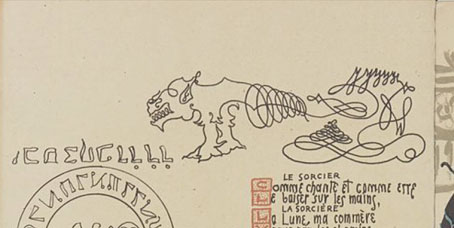
The Gallica copy is also downloadable as a PDF so there’s no need to replicate all the contents here. Something worth noting which did occur to me when I first saw Orazi’s drawings was the striking similarity of the letterform sigils and the doodle-like figure below to the later, more seriously-intended occult art of Austin Spare. Neither Orazi nor the Calendrier Magique receives a mention in Phil Baker’s biography of Spare but a copy of the calendar could have made its way to a London book shop where Spare might have seen it.

/orazi3.jpg

/orazi4.jpg

Previously on { feuilleton }
Typefaces of the occult revival
Manuel Orazi’s Salomé
La belle sans nom

HR Giger’s Passagen

giger1.jpg

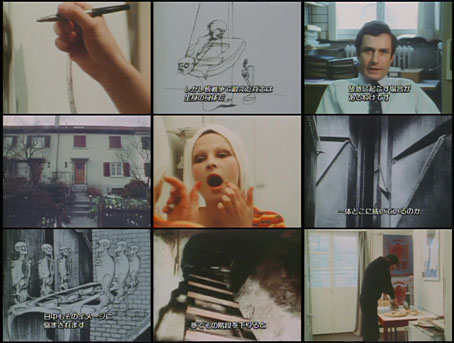
HR Giger’s art books were always very thorough in detailing all the media manifestations of the artist’s work, including film and television appearances. For years this presented tantalising questions, especially regarding the lengthy pre-Alien documentaries that were listed there: what were these films, and when would we get to see them? Giger’s Necronomicon (1976) did finally appear on YouTube a few years ago, and now here’s the second of the pair thanks to an upload of what appears to be a Japanese laserdisc.
giger2.jpg

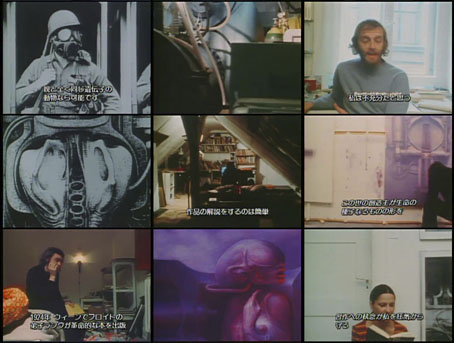
Passagen was made in 1972 by Giger’s friend Fredi M. Murer, their third film collaboration after Heimkiller and High (1967) and Swiss Made 2069 (1968). The latter (which Giger co-directed) is still frustratingly absent from the web, and similarly tantalising for being a 45-minute piece of underground science fiction which features Giger’s first production designs for cinema. Passagen was less ambitious, a 50-minute documentary about Giger’s work made for the German TV station, WDR. As a documentary it functions as a companion to Giger’s Necronomicon, while both films complement the subsequent art books, especially Giger’s Necronomicon (the book) which features many of the paintings seen in the films, together with anecdotes about their origins and inspiration. One of these anecdotes, about the nightmares induced in the young Hans Rudi by a stairway in the hotel next door to the Giger family home, is recounted in Passagen alongside the vertiginous drawings the nightmares inspired. It’s impossible to consider this piece of child psychology, and to watch the artist walking up and down stairs and stepladders, without recalling that Giger died after falling down a flight of stairs in 2014.
giger3.jpg

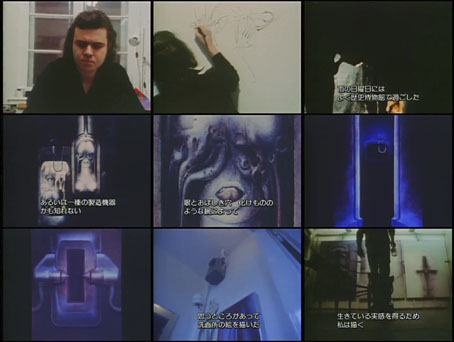
Giger’s Necronomicon is the more interesting of the two documentaries, especially now that the life and work is so well known; the art is taken more for granted, and we also get to see Giger at work on one of his big airbrush paintings. Passagen spends much of its time attempting to contextualise Giger’s drawings and paintings for an unwitting television audience, so a great deal of the running time is given over to newsreel footage of wars, riots, terrorism, atomic explosions and so on. A geneticist discusses the effects of atomic mutation while Giger’s earliest series of pictures, Atomkinder, is shown; psychoanalysts examine his paintings from a psychosexual angle.

Of more interest for Giger aficionados is the presence of his partner at the time, Li Tobler, the subject of several memorable portraits from this period. Among the working shots, the best shows Giger improvising a drawing with the same speed as Philippe Druillet in the Ô Sidarta film. Giger only started using an airbrush in 1972 so most of the works seen here are either early drawings or the paintings in the Passagen and Alptraum series, the style and colouring of which is much closer to the art world of 1972 than anything which would follow. For me the greatest revelation comes early on when Giger picks out a record to play while he’s working. The disc he chooses is just identifiable as Universal Consciousness by Alice Coltrane, an album which had been released the year before. (This isn’t the music heard on the soundtrack, however.) Alice Coltrane’s brand of ecstatic, pan-religious jazz would seem remote from Giger’s own universe but the choice isn’t so surprising if you know that he’d been a jazz enthusiast since the 1950s; in The Book of Alien (1979) his list of influences includes HP Lovecraft, John Coltrane and Miles Davis.

As is evident from the screen grabs, the film is hard-coded throughout with Japanese subtitles. Unlike Giger’s Necronomicon there’s no English overdub either, the soundtrack is in German throughout. I can’t complain when I’ve been waiting so long to be able to see this at all. For those who watched the later film divided into four YouTube clips there’s now a complete version (also Japanese but with English overdub) here.

Previously on { feuilleton }
Heimkiller and High
The Man Who Paints Monsters In The Night
Hans by Sibylle
HR Giger album covers
Giger’s Necronomicon
Dan O’Bannon, 1946–2009
Alejandro Jodorowsky’s Dune
The monstrous tome

Weekend links 402

hodgson.jpg

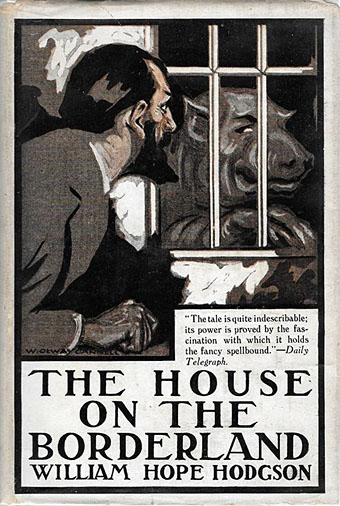
Cover art for the 1921 edition by W. Otway Cannell.

• “An exiled recluse, an ancient abode in the remote west of Ireland, nightly attacks by malevolent swine-things from a nearby pit, and cosmic vistas beyond time and space. The House on the Borderland has been praised by China Miéville, Terry Pratchett, and Clark Ashton Smith, while HP Lovecraft wrote, ‘Few can equal [Hodgson] in adumbrating the nearness of nameless forces and monstrous besieging entities through casual hints and significant details, or in conveying feelings of the spectral and abnormal.’

“‘Almost from the moment that you hear the title,’ observes Alan Moore, ‘you are infected by the novel’s weird charisma. Knock and enter at your own liability.’ The House on the Borderland remains one of Hodgson’s most celebrated works. This new edition features an introduction by Alan Moore, an afterword by Iain Sinclair, and illustrations by John Coulthart.” The long-gestating illustrated edition of William Hope Hodgson’s The House on the Borderland is now available for pre-order from Swan River Press. This is limited to 350 copies so I’d advise anyone interested to order as soon as they can; there’s been a lot of interest in the edition, and with the print run being a small one it’s liable to sell out quickly.

• “Art et Liberté was a movement that came into being in 1938 in Cairo. It was affiliated to Surrealism through contact with André Breton in Paris, and shared Surrealism’s spirit of rebellion and provocation, its desire for dream knowledge and penchant for manifestos.” Marina Warner on the neglected history of Egyptian Surrealism.

• Titan Comics follow their recent collection of Philippe Druillet’s first six Lone Sloane stories with Gail, a book which I don’t think has received an English translation until now.

• Mixes of the week: FACT mix 641 by Alva Noto, a mix by Chris Carter for Bleep/NTS, and Through A Landscape Of Mirrors Vol. I: Sweden by David Colohan.

• 200 years after the first publication of Frankenstein, the city of Bath is to unveil a plaque commemorating Mary Shelley‘s time spent there while writing the book.

• Southern Lord co-founder Gregg Anderson talks to Red Bull Radio about running a record label devoted to avant-garde metal.

• Twelve illustrated dust jackets from Martin Salisbury’s The Illustrated Dust Jacket: 1920–1970.

• At MetaFilter: Links to Hokusai’s drawing guides and similar books.

Canada Modern

Grief (1999) by Tactile | In The Cellar (2005) by Nostalgia | The House On The Borderland (2008) by Electric Wizard