Weekend links 519

minotaure.jpg

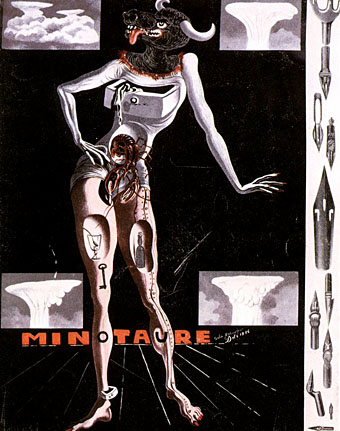
Cover of Minotaure no. 8 (1936) by Salvador Dalí.

• At Dangerous Minds: Irmin Schmidt talks to Oliver Hall about his new album of prepared piano, Nocturne, and also reveals more about the planned release of live recordings by Can.

• “Even the most zealous fan of the genre can learn something new from this book,” says Geeta Dayal in a review of Bring That Beat Back: How Sampling Built Hip-Hop, by Nate Patrin.

• The subject of a previous post but the video was later removed: Italo Calvino in a rare documentary feature for an English audience, on the BBC’s Bookmark in 1985.

• On 9th May, carillonneur Malgosia Fiebig played The Model by Kraftwerk on the bells of the Dom Tower in Utrecht as a tribute to the late Florian Schneider.

• Film footage of Alice Coltrane in her prime is a rare thing so even 17 minutes of TV from 1970 is something special.

• Dan Reynolds on the fantastic alphabets designed by Jean Midolle. See also Luc Devroye’s page.

• Mix of the week: Jon Hassell tribute, part 1: Jon and his collaborators, by Dave Maier.

• Nicolas Winding Refn on some of the films he’s been watching during lockdown.

• At Haute Macabre: Surrealist décor and tiny secret drawers.

• HP Lovecraft dreams of a Providence trolley car in 1927.

• The Museum of Ridiculously Interesting Things

• Xerrox Voyage, a new recording by Alva Noto.

• At Dennis Cooper’s: Jean-Pierre Léaud Day.

• The Model (1979) by Snakefinger | Model (1992) by The Balanescu Quartet | Das Modell (1997) by Rammstein

Abeceda

nezval26.jpg

This week I’ve started working my way through the filmography of Jan Švankmajer, having finally acquired a blu-ray set of his feature films. I’ve also been reading interviews and rewatching some of the documentaries about the man and his work, which in turn prompted me to look up some of his associates and precursors among the Czech Surrealists. Prague was unusual in being a centre for the early development of Surrealism at a time when the movement (for want of a better term) was centred on Paris. André Breton encouraged this, and cultural exchanges took place, with Breton and Paul Éluard visiting Prague, while Vítězslav Nezval and his colleagues journeyed to Paris. The outbreak of war severed the connection but this also had the inadvertent effect of perpetuating the Czech brand of Surrealism by cutting off Prague from the rest of the European avant garde. While Breton and co were forced to flee to the United States and Mexico, the Czech Surrealists went underground, hiding their illicit explorations first from the occupying Nazis, then from the disapproving Communist authorities. It’s always important to bear this in mind when considering Švankmajer’s films and artwork; his Surrealism is a serious motivation with a long history in Czech and Slovak art.

nezval00.jpg

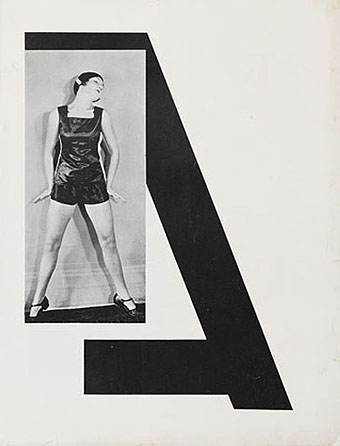
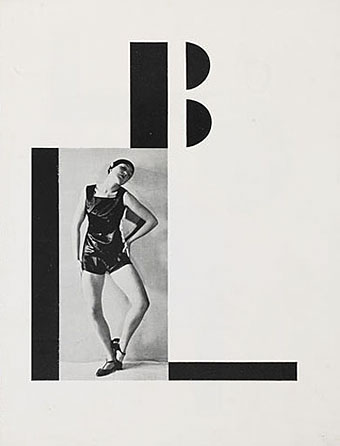
Vítězslav Nezval is best known today for being the author of Valerie and Her Week of Wonders (1935), the source novel for the cult film by Jaromil Jires. Abeceda (1926) is a much shorter work, a Modernist abecedary created by Netzval (who wrote a short verse describing each letter) with Milča Mayerová (who choreographed a series of letterform poses) and Karel Teige (who designed the book and took the photographs). I’ve not seen a complete translation of the verses but I love the page design which is like something the Bauhaus might have produced for the Modernist Children of the Future. The form being used here had a name—Poetism—a Czech variation on similar movements elsewhere such as Constructivism and Futurism but with an intention to create works accessible to all, hence the abecedary. I can imagine Milča Mayerová’s poses being animated by Švankmajer’s staccato edits although his design preferences have always been more florid and baroque. A Surrealist he may be but he also favours Jean Midolle’s Alphabet Lapidaire Monstre.

nezval01.jpg

nezval02.jpg

nezval03.jpg

Continue reading “Abeceda”

Weekend links 517

magritte.jpg

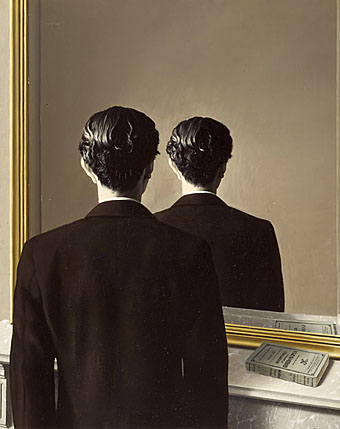
Edward James by René Magritte; La Reproduction Interdite (1937).

• “James was filmed in the late 1970s, striding round Las Pozas in a sweater and a tattered dressing-gown, surmounted by parrots (The Secret Life of Edward James can be seen on YouTube). When asked what motivated him, he replied: ‘Pure megalomania!’ He was having his second childhood, he said, though he wasn’t sure the first had ever ended.” Mike Jay on lifelong Surrealist, Edward James (1907–1984), and the concrete fantasia he built in the Mexican jungle.

• “I found the roots of electronic music in a cupboard!” Musician Paul Purgas (one half of Emptyset) on the discovery of early electronic music from India’s National Institute Of Design. Related: Purgas talks about his discovery with Patrick Clarke.

• RIP Phil May. Here’s The Pretty Things in their guise as psych band “Electric Banana” for an appearance in What’s Good for the Goose (1969). A decent moment in an otherwise terrible film.

• Music is a memory machine: David Toop explores how the transmission of music between disparate cultures can be a tool against populism and prejudice.

• Kraftwerk’s remarkable journey, and where it took us: Bob Boilen and Geeta Dayal discuss the tanzmusik of Düsseldorf.

• At Dangerous Minds: Acid Drag & Sexual Anarchy: Fifty years ago The Cockettes turned drag upside down.

• Hua Hsu on the secret lives of fungi: “They shape the world—and offer lessons for how to live in it”.

• The great writer who never wrote: Emma Garman on the flamboyant Stephen Tennant.

• Cult 1998 PlayStation game LSD: Dream Emulator is finally playable in English.

• Jim Jupp of Ghost Box records talks about the Intermission compilation album.

• Jonathan Moodie on psychoactive cinema and sacred animation.

• Alex Barrett on where to begin with Akira Kurosawa.

• At Dennis Cooper’s: Skeletons.

• Skeleton Makes Good (1982) by Captain Beefheart & The Magic Band | Red Skeletons (1996) by Coil | Kids Will Be Skeletons (2003) by Mogwai

Weekend links 516

correa.jpg

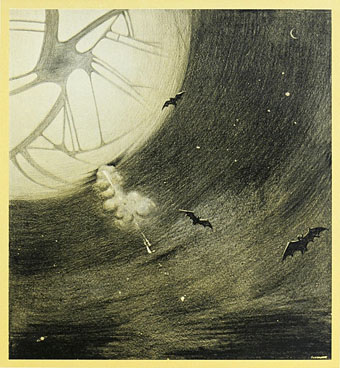
Bats in space: an illustration by Henrique Alvim Corrêa from a 1906 edition of The War of the Worlds.

• Auf wiedersehen to Florian Schneider. Until he left Kraftwerk in 2009 (or 2006 or whenever it was), Schneider had been the group’s longest-serving member, keeping things running for the few months in 1971 when Ralf Hütter was absent. The brief period when Kraftwerk was Schneider plus soon-to-be-Neu! (Michael Rother, guitar, and Klaus Dinger, drums) fascinates aficionados over-familiar with the later albums. The music they produced was a wild and aggressive take on the rock idiom but Scheider maintained the link with Kraftwerk before and after, not only instrumentally but with his ubiquitous traffic cones, as noted in this post. There’s no need for me to praise Kraftwerk any more than usual, this blog has featured at least one dedicated post about them for every year of its existence, and besides which, the group itself is still active. Elsewhere: Simon Reynolds on how Florian Schneider and Kraftwerk created pop’s future; A Kraftwerk Baker’s Dozen Special; Dave Simpson attempts to rank 30 Kraftwerk songs (good luck getting anyone to agree with this); Jude Rogers with ten things you (possibly) don’t know about Kraftwerk; Dancing to Numbers by Owen Hatherley; Pocket Calculator in five languages; Florian Schneider talks about Stop Plastic Pollution.

• Intermission is a new digital compilation from Ghost Box records featuring “preview tracks from forthcoming releases and material especially recorded for the compilation during the global lockdown”. In a choice of two editions, one of which helps fund Médecins Sans Frontières.

• How groundbreaking design weirdness transformed record label United Artists, against all odds. By Jeremy Allan.

Sex in an American suburb is not quite the same phenomenon as sex in, say, an eastern European apartment block, and sex scenes can do a great deal to illuminate the social and historical forces that make the difference. All of which is to say that sex is a kind of crucible of humanness, and so the question isn’t so much why one would write about sex, as why one would write about anything else.

And yet, of course, we are asked why we write about sex. The biggest surprise of publishing my first novel, What Belongs to You was how much people wanted to talk about the sex in a book that, by any reasonable standard, has very little sex in it. That two or three short scenes of sex between men was the occasion of so much comment said more about mainstream publishing in 2016, I think, than it did about my book. In fact, in terms of exploring the potential for sex in fiction, I felt that I hadn’t gone nearly far enough. I’ve tried to go much further in my second novel, Cleanness. In two of its chapters, I wanted to push explicitness as far as I could; I wanted to see if I could write something that could be 100% pornographic and 100% high art.

Garth Greenwell on sex in literature

• James Balmont’s guide to Shinya Tsukamoto, “Japan’s Greatest Cult Filmmaker”.

• A Dandy’s Guide to Decadent Self-Isolation by Samuel Rutter.

• Maya-Roisin Slater on where to begin with Laurie Anderson.

• The Count of 13: Ramsey Campbell’s Weird Selection.

• Adam Scovell on where to begin with Nigel Kneale.

• When John Waters met Little Richard (RIP).

• RB Russell on collecting Robert Aickman.

• Weird writers recommend weird films.

• Campo Grafico 1933/1939.

• Ruckzuck (1970) by Kraftwerk | V-2 Schneider (1977) by David Bowie | V-2 Schneider (1997) by Philip Glass

Tom’s World

tom01.jpg

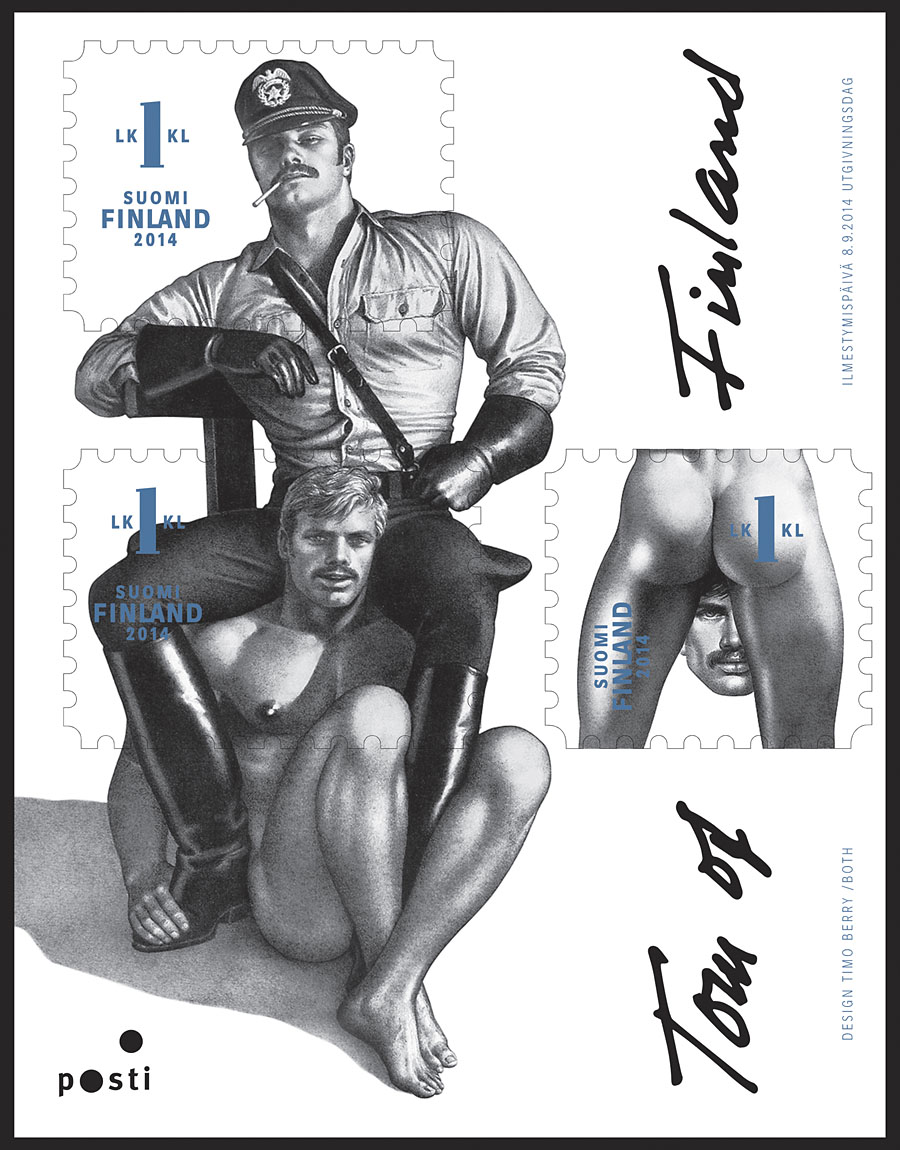
The celebratory stamps produced by the Finnish postal service in 2014.

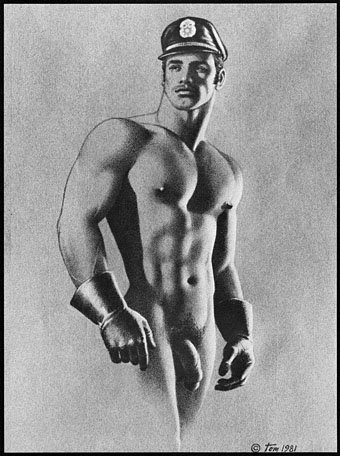
A post for Touko Valio Laaksonen, the man known to the world as Tom of Finland, born 100 years ago today. Back in March I finally acquired Tom of Finland XXL, a gorgeous, heavyweight Taschen volume edited by Dian Hanson, as a result of which Tom and his leather-clad muscle-men have been in my thoughts even without his anniversary. The thick-necked hunks that populate Tom’s drawings have never been my ideal of masculine beauty but I admire his dedication to erotic obsession as well as his draughtsmanship, the latter even more so after seeing the high-quality reproductions in Hanson’s collection. The drawings from the 1970s and 80s are especially impressive, when success had given the artist more time to spend perfecting his figures and capturing all the ways that leather apparel folds itself and reflects the light. His beautiful pencil renderings of jackets, trousers and boots treat their subjects to the careful scrutiny that Dutch still-life painters used to devote to pheasants and apples; this is a fetishist’s infatuation raised to the status of art.

tom07.jpg

Leather duo (1963).

Tom of Finland’s progress from amateur pornographer to gallery artist and national institution is a very unlikely career path, especially when he wasn’t dependent on the support of the art market. Tom’s earliest drawings and comic strips were relatively simple things but still explicit enough for the Finnish authorities in the 1940s to find them obscene. Many erotic artists have been subject to similar opprobrium but none of them have achieved posthumous fame as the most internationally visible male artist from the nation that once proscribed their work, and all this without toning down that work in any way. Tom shares his celebrity with Moomin creator Tove Jansson, which means that Finland is now the only nation in the world whose art is represented internationally by a gay man and a lesbian. Their work, needless to say, could hardly be more different, despite both artists being adept at black-and-white illustration and the creation of sequential narratives. Jansson’s Moomins have been universally popular for many years but Tom of Finland’s art, which has never been anything other than gay pornography, is inevitably limited in its appeal. The lavish depictions of cock-sucking and anal sex are so profuse and unrelenting that whatever is shown of his drawings in the general media is always carefully selective, shunning the enormous penises in favour of a moustached face or a pair of embracing clones.

tom04.jpg

I’m amused by this and also reassured that there are still a few aspects of human life that are too anarchic for exploitation by mass media. The global domination of American culture and American technology has rendered everything grist to its all-devouring mill, everything, that is, except for explicit sex. Pornography is also a part of the US cultural behemoth but it’s like the bastard child that everybody pretends doesn’t exist and wishes would go away. America’s gay publications gave Tom of Finland his nom de plume and made him famous, but porn, for a variety of reasons, resists universal acceptance and approval. Tom’s art is so single-minded in its representation of gay men gleefully fucking each other that there’s little about it that can be exploited by cultural products intended to appeal to the widest audience, or sold to nations with repressive attitudes to gay sex and sexuality. Tom’s libidinous leather-clad hero, Kake, ejaculates his way through multiple penetrations and gang bangs the likes of which you’ll never see in a big-budget franchise, no matter how much Hollywood teases audiences with more polite same-sex scenarios. How many erections are a paying audience prepared to swallow?

Continue reading “Tom’s World”