Goodfellow and Borges

goodfellow1.jpg

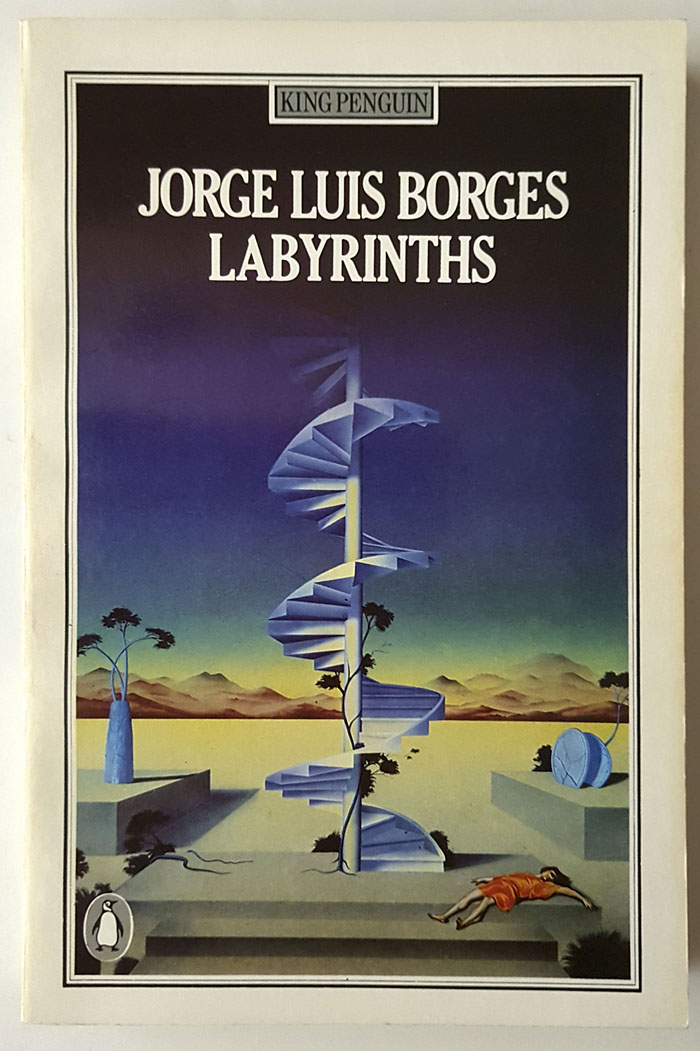
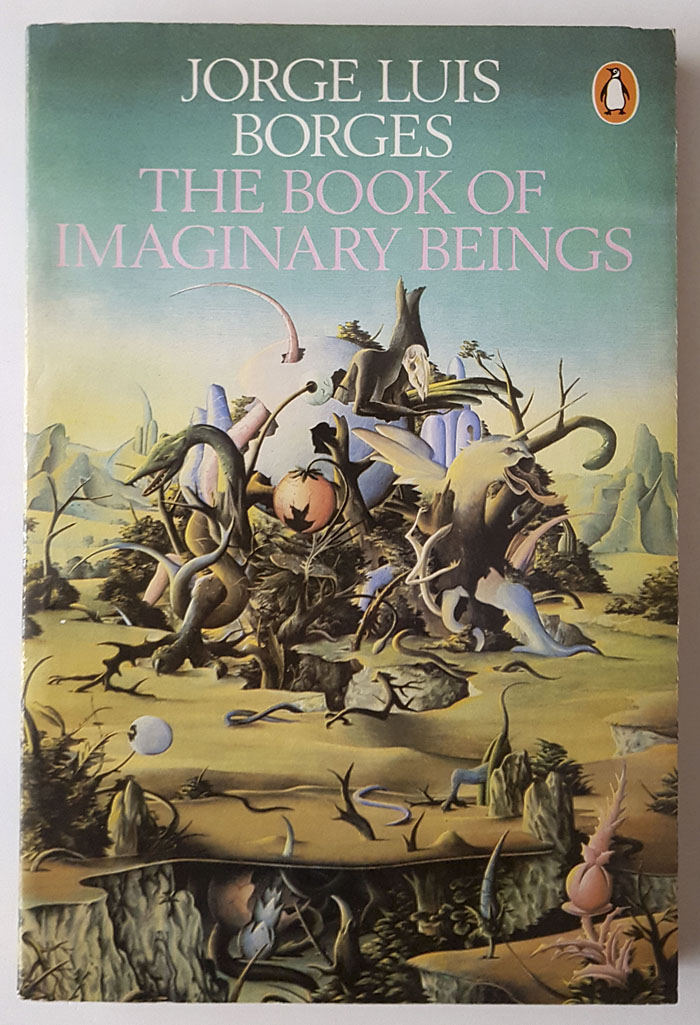
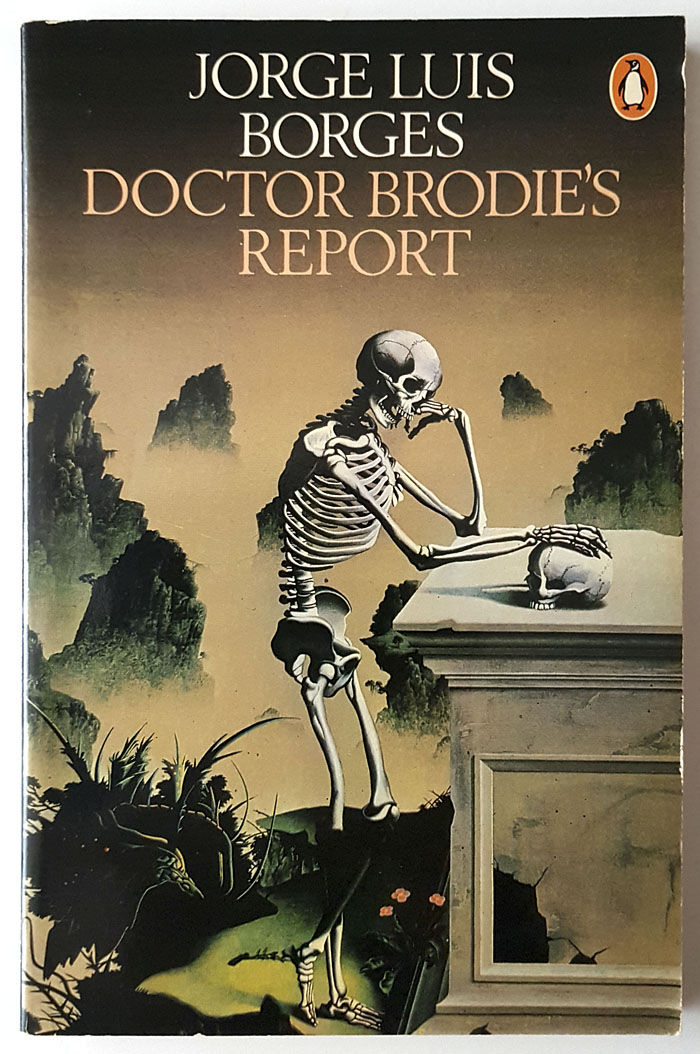
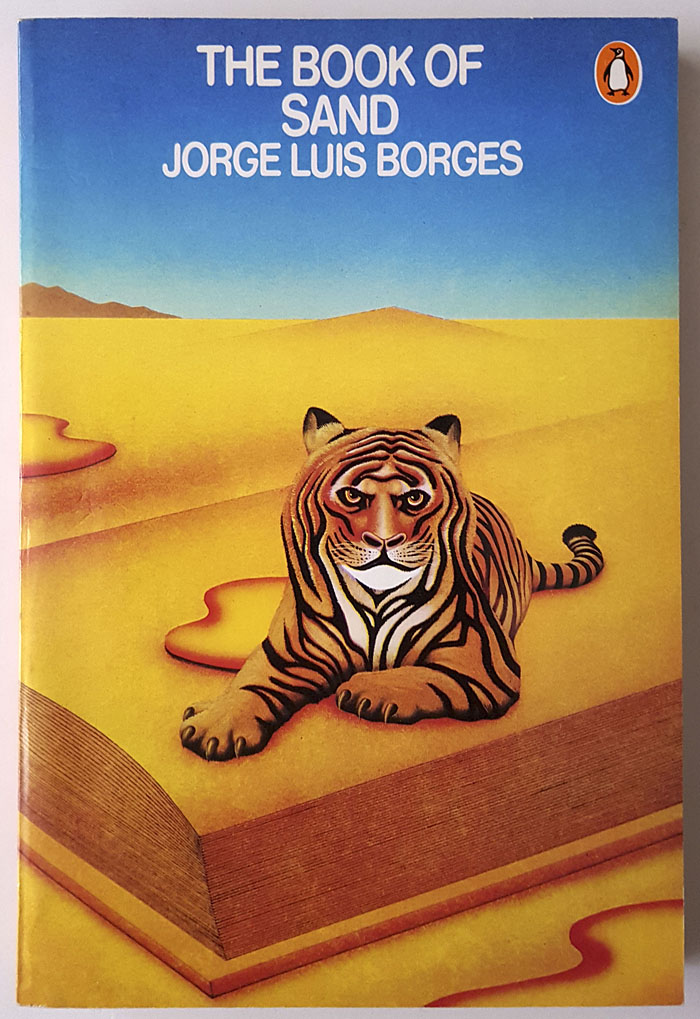
Last week’s story search had me looking through this handful of Penguin volumes again, all of which have cover illustrations by Peter Goodfellow. These were the first Borges books I bought, beginning with the Labyrinths collection in 1985. The Book of Sand is two volumes in one—The Book of Sand and a late poetry collection, The Gold of the Tigers—with cover art suitable for both. I used to think that the covers of the other books were pastiching or quoting well-known artists but now I’m not so sure. Two of them definitely are quotes or pastiches: The Book of Imaginary Beings is a play on the weird growths you find in Hieronymus Bosch, while Doctor Brodie‘s contemplative skeleton is from the famous anatomical engravings in De Humani Corporis Fabrica by Andreas Vesalius, with some Chinese or Japanese landscape details added to the background.
goodfellow2.jpg

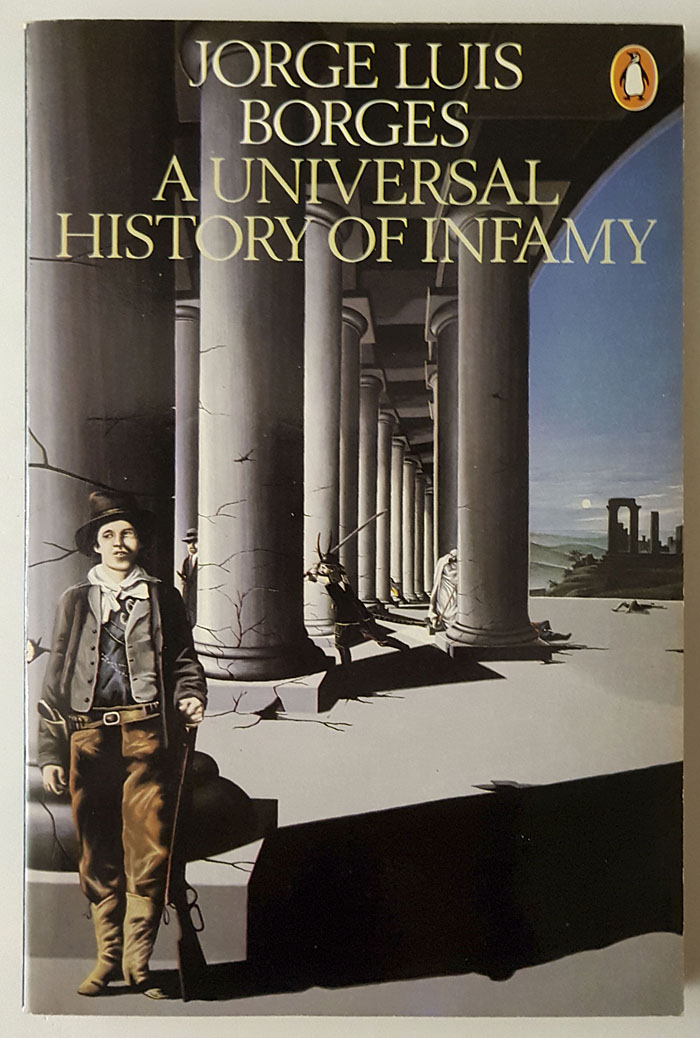
Two positive artistic references suggested that the other covers might follow suit, so I used to take the Labyrinths cover as a vague reference to the anomalies that Salvador Dalí would situate in his desert vistas, while A Universal History of Infamy was de Chirico, perhaps, although this no longer seems certain at all. Those columns look like Bernini’s double colonnade from Saint Peter’s Square in Rome, not a Turin arcade, and the picture lacks the disjunctive perspectives you find in de Chirico’s “Metaphysical” paintings. The pastiche thesis is further diluted when you discover that Goodfellow had been quoting from Bosch as far back as his cover for Ursula Le Guin’s Rocannon’s World in 1972, while he borrowed another skeleton from Vesalius for Structures by JE Gordon. Sometimes you can reach too far for meaningful connections.
goodfellow3.jpg

The Bosch-like cover does seem to have had an enduring influence, however. When Penguin published the Collected Fictions in the UK in 1999 they used a detail from Bosch’s Garden of Earthly Delights for the artwork. Bosch details turned up on a later edition of A Universal History of Infamy, and have subsequently appeared on a series of Turkish Borges editions. Not a bad choice for a writer whose fictions offer universes of possibility.
goodfellow4.jpg

goodfellow5.jpg

Elsewhere on { feuilleton }
The book covers archive
The illustrators archive

Previously on { feuilleton }
The Rejected Sorcerer
The Immortal by Jorge Luis Borges
Borges on Ulysses
Borges in the firing line
La Bibliothèque de Babel
Borges and the cats
Invasion, a film by Hugo Santiago
Spiderweb, a film by Paul Miller
The Library of Babel by Érik Desmazières
Books Borges never wrote
Borges and I
Borges documentary
Borges in Performance

Art on film: Space is the Place

taylor1.jpg

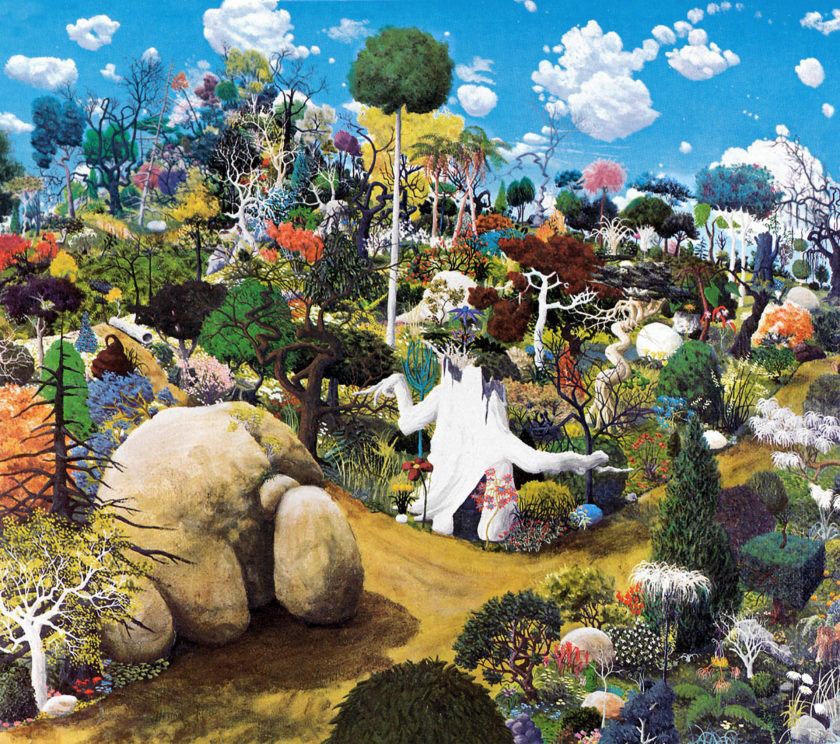
Mescaline Woods (1969) by Gage Taylor.

Continuing an occasional series about artworks in feature films. This is more of a trivial example than the epic study of Providence but it seems worth mentioning when the art and the film in question aren’t so familiar.

taylor2.jpg

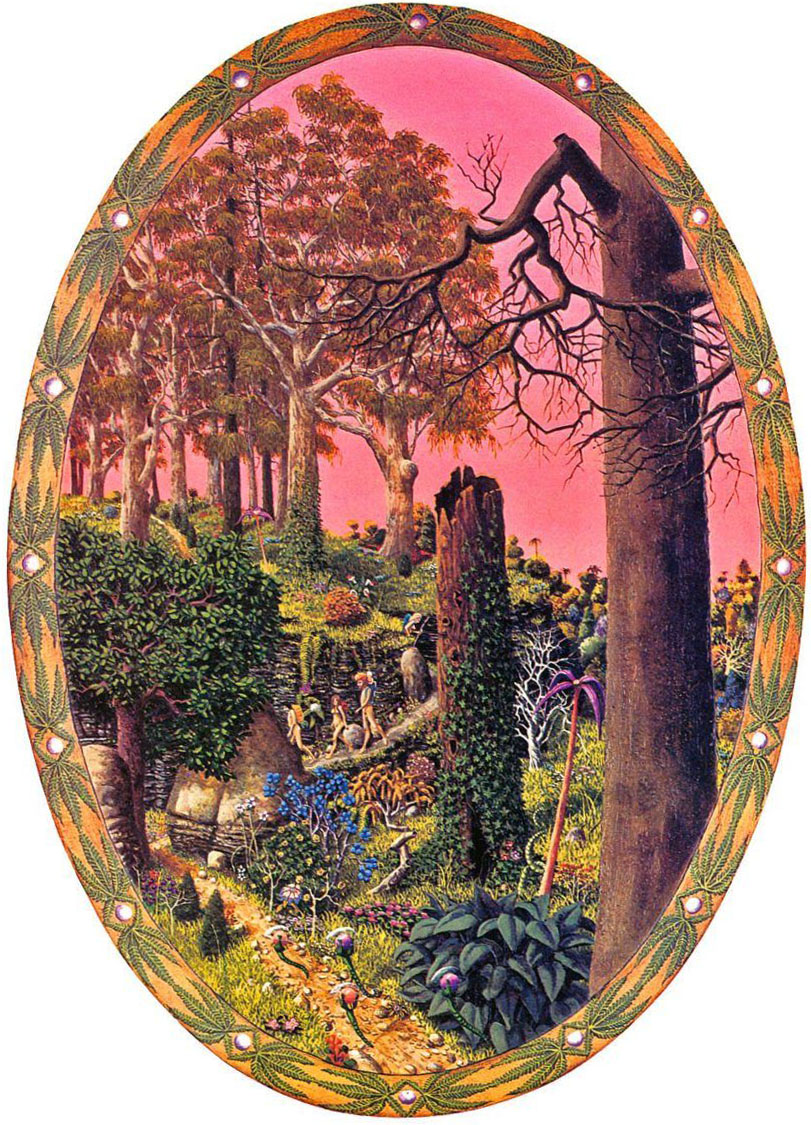
Encounter (1971) by Gage Taylor.

Last week my friend Jay Babcock was asking on his Substack newsletter for other examples of the utopian hippy landscape art that flourished in the 1970s. I recommended the paintings of Gage Taylor (1942–2000), an artist who was part of the loose movement known as the Californian Visionaries during that decade; paintings by the group were showcased in the Visions book published by Pomegranate in 1977, and shortly thereafter could be found in the early issues of OMNI magazine. Taylor was a prime exponent of slightly fantastic, idealised landscapes with titles like Mescaline Woods, painted in a style which, for the most part, he managed to prevent from becoming too saccharine. Encounter is a typical example: a quartet of naked hippies wandering through an Arcadian scene bordered by decorative cannabis leaves. The painting is definitely utopian in asking us to accept a clothes-free hike along a trail with no concern for sharp stones or injurious plants and animals.

aliens.jpg

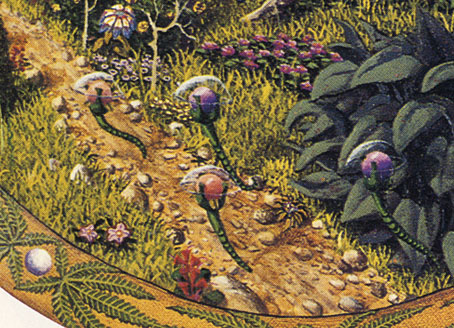
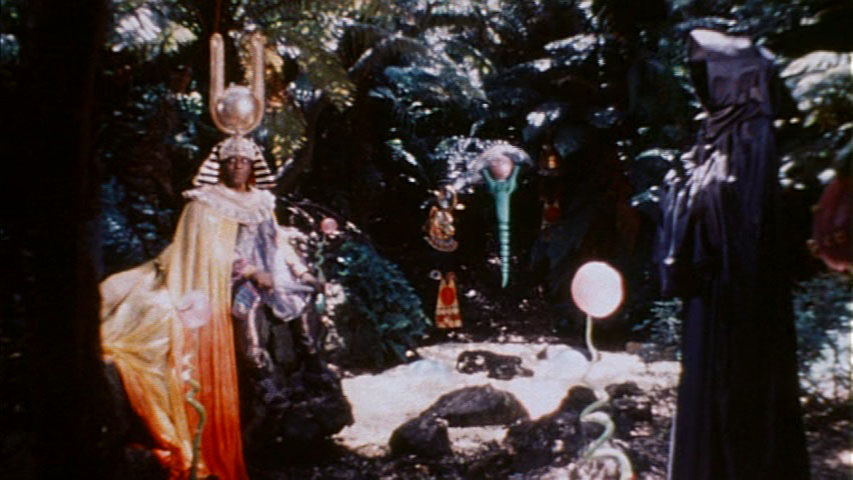
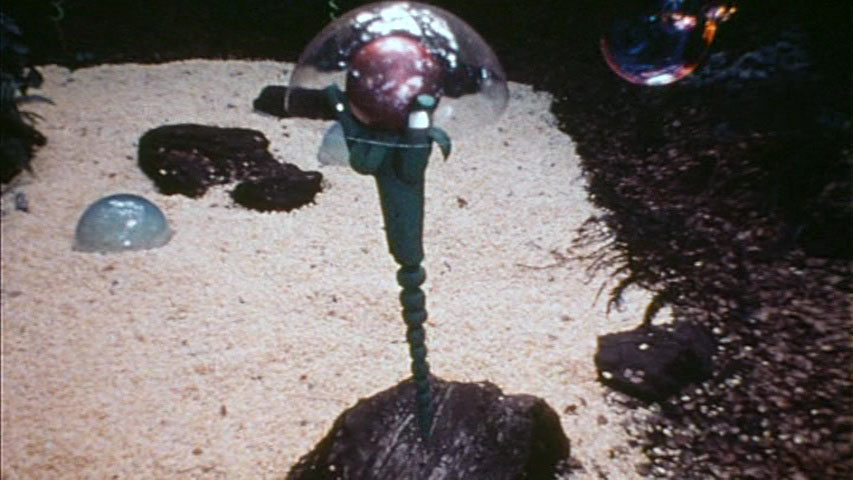
Looking through Visions again, and at this painting in particular, I was struck by the foreground group of floating alien creatures which I belatedly realised are the origin of the aliens from the opening scenes of Space is the Place (1974), the Sun Ra feature film directed by John Coney. And after watching those scenes again, details from Taylor’s paintings (including Mescaline Woods) turn up as brief establishing shots of the planet where Sun Ra has landed his spacecraft, something I’d missed entirely. Taylor is credited as one of the set decorators so I’d guess he made the alien creatures himself. I’d have been happy with more of the cosmic weirdness and less of the Blaxploitation clichés that pad out the later scenes but with films as unlikely as this we have to be thankful they exist at all. At its best Space is the Place approaches the delirium of The Holy Mountain, albeit on a much lower budget; Sun Ra and the villainous Overseer even play a game to decide the fate of the Earth using a unique pack of Tarot cards.

space1.jpg

space2.jpg

space3.jpg

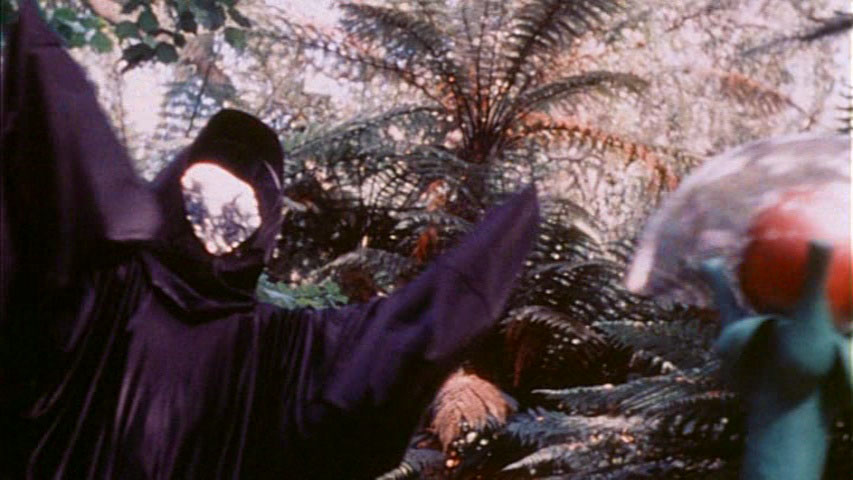
Another more obvious external reference in the opening scenes is the cowled and mirror-faced individual that Sun Ra talks to, a figure taken from Maya Deren’s Meshes of the Afternoon. Deren’s film in 1974 wasn’t the cult item that it is today so this is an opportunistic swipe on the part of the film-makers, but the borrowing allows us to regard Mirror-face as the same character in both films. Watch them together.

Previously on { feuilleton }
Art on film: Providence
Art on film: The Beast
Meshes of the Afternoon by Maya Deren

Weekend links 627

aldridge.jpg

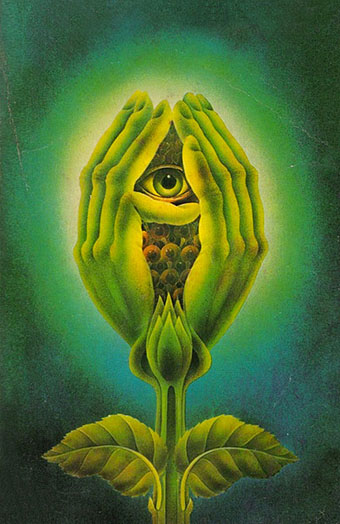
Cover art by Alan Aldridge for The Secret Life of Plants, 1975. Via.

• At Aquarium Drunkard: Alice Coltrane and band in a furious live performance at the Berkeley Community Theatre, 1972. The audio is on YouTube, and was also released on (unofficial) vinyl a couple of years ago, but you can download the whole set at Dimeadozen. (Free membership required.)

• “Black Square is tragic; it’s absurd; it can be bewildering or funny; it’s certainly metaphysical; and now it serves as a precursor for works and projects yet to be imagined.” Andrew Spira on the precursors of Black Square by Kazimir Malevich.

• “The possibility of plant consciousness cuts two ways, depending on whether you see plants as friend or foe, benevolent or threatening.” Elvia Wilk on the secret lives of plants.

• New/old music: Robot Riot by Stereolab. A previously unreleased recording from the mid-90s which will appear on the fifth instalment in the Switched-On compilation series.

• “Dare’s good, but Love And Dancing broke the mould and kicked off the whole modern dance scene.” Ian Wade on 40 years of remix albums.

• Coming soon from Strange Attractor: Arik Roper: Vision of The Hawk.

• At Unquiet Things: Deborah Turbeville’s unseen Versailles.

• “Thinking like a scientist will make you happier”.

• At Dennis Cooper’s: Karel Zeman Day.

Plantasia (1976) by Mort Garson | Musik Of The Trees (1978) by Steve Hillage | The Secret Life Of Plants (1979) by Stevie Wonder

Jan Parker’s witches

parker01.jpg

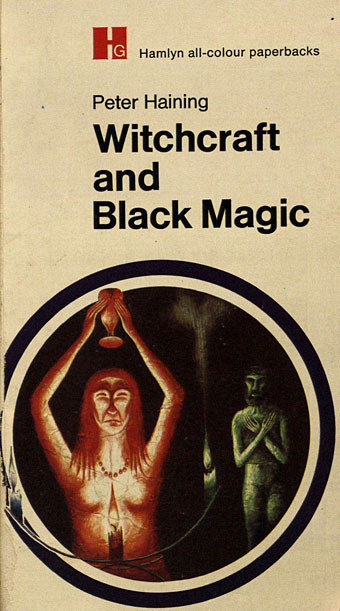
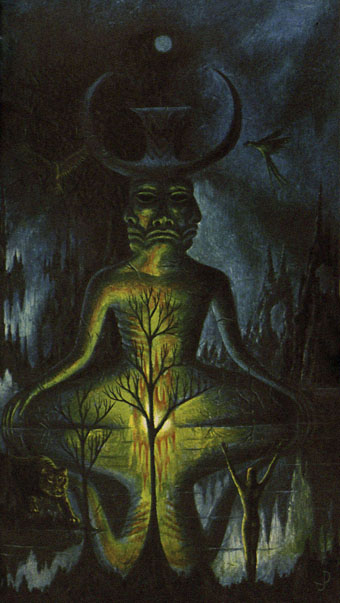
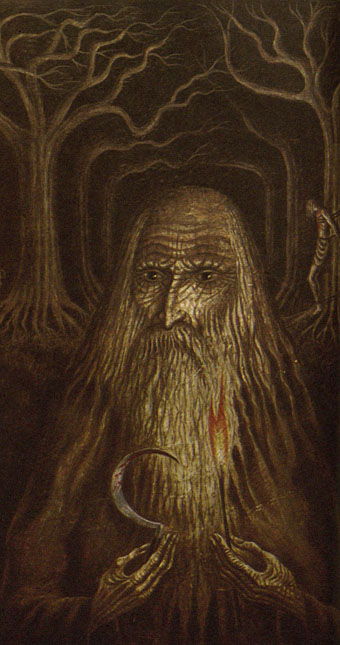
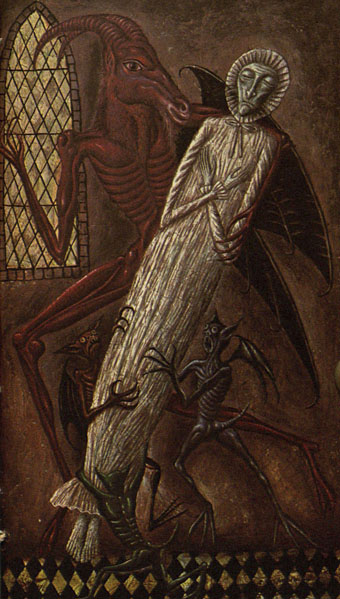
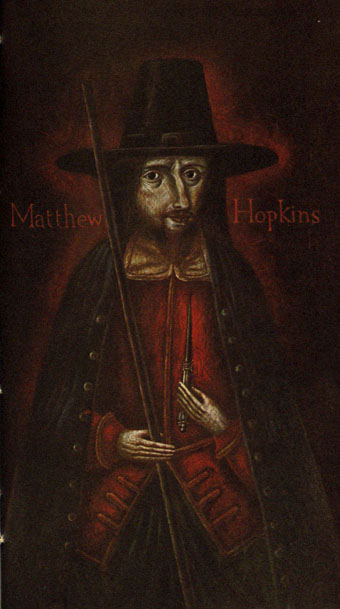
Also witch-finders, demons, magi, and a skeletal Adolf Hitler clutching a glowing crystal ball… Jan Parker is a British artist who was working as an illustrator in the early 1970s, during which time he produced a small number of covers for SF and fantasy titles. One of these, The Worlds of Frank Herbert, is a book I used to see a lot on the secondhand shelves although I never owned a copy. As with Victor Valla’s cover art, the 70s was a decade when idiosyncratic imagery of the type created by Parker and co. was a more common sight on genre covers than it is today. Witchcraft and Black Magic, published by Hamlyn in 1971, brought Parker’s brand of naïve weirdness to a Peter Haining history of the more lurid forms of occultism. This is a book that I did own for a while until someone borrowed it and never returned it, a persistent hazard for the books in my not-very-extensive occult library. Haining’s study is the kind of thing that publishers often call a pocket guide, although this suggests something you’d carry around to be used as an identification tool during chance encounters; you wouldn’t want to encounter most of the people (never mind the creatures) in these paintings.

parker02.jpg

A handful of Parker’s illustrations turned up some years ago at the now-defunct Front Free Endpaper, then were reblogged at Monster Brains and elsewhere. The copies here are from another recent upload at the Internet Archive where the book is part of a sub-archive of titles scanned from Indian libraries. The very tight binding evidently presented difficulties for the scanner, hence the appearance of fingers holding open most of the pages. It’s good to see this one again; I always valued the book more for the artwork than the text which isn’t bad but was simply another commission for the very prolific Haining, a writer who was a better anthologist than a historian. If you want a general history of the occult there are more authoritative options elsewhere.

parker03.jpg

As for the artwork, I wonder now how long it took Parker to paint all these pictures. There are about 80 original illustrations plus a number of others taken from antique books or from artists such as Frans Hals and Goya; that’s a lot of original art for a book of only 160 pages. Many of Parker’s pieces are copies of pre-existing portraits or of familiar illustrations like the perennially popular demons from de Plancy’s Dictionnaire Infernal. This makes me wonder why Hamlyn commissioned copies from Parker rather than simply paying a picture library for the original images as Marshall Cavendish were doing in 1971 with their multi-part encyclopedia, Man, Myth and Magic. Whatever the reason I’m pleased they gave Parker so much free reign. His depictions of historical figures wouldn’t be out of place in the portrait gallery in Dance of the Vampires, while some of his other pieces stray into outright Surrealism; the picture of people being menaced by flying eyeballs was used for the cover art of the US reprint from Bantam.

parker04.jpg

Haining’s book had at least one reprint in the UK before going out of print. The early 1970s saw the peak of the occult revival which had begun in the previous decade, and which made room in publishers’ lists for odd little books like this one. Secondhand copies are still floating around although they’re seldom cheap. If you do find one just be careful who you lend it to.

parker05.jpg

Continue reading “Jan Parker’s witches”

Weekend links 624

griffiths.jpg

An alphabet designed by Ben Griffiths. Via.

• “From the cellular to the galactic, via Paleolithic cave markings to the trace impressions left by drone photography on our mind’s eye, incorporating dancing plagues, communist psychedelic witches, hyper-sexual fungi, chthonic descents, and skyward ascents, The Neon Hieroglyph weaves together a series of painterly and poetic considerations on a feminized history of the rye fungus Ergot, the chemical basis of LSD.” Coming soon from Strange Attractor: The Neon Hieroglyph, a book, LP and folio of prints by Tai Shani.

• “3rd From The Sun was the last album of Chrome’s imperial phase, and it cemented their status as one of the most inhuman and superhuman rock bands that America ever produced. More people need to recognize.” Agreed. (previously)

• “People often say, ‘How can you be so disciplined?’ It’s easy. Otherwise, I would have to go work for somebody else!” John Waters (again). Also here.

I’ve always thought that literature should be entertaining as well as instructive—a very old-fashioned idea but one that I adhere to. When I set out to write in this way—particularly in this way, a political way, if you want to call it that—I intend to make a donation, to try to give something. There doesn’t seem to me to be any point in giving more misery or exacerbating unhappiness through some kind of hyper-intellectual, pyrotechnical writing about unhappiness and the shit that we all find ourselves in. That’s been done plenty. I think first of all that it doesn’t need to be done any more and second of all there’s a kind of reactionary aspect to it which is that the emphasizing of misery without any anti-pessimism, as you put it, would be simply seduction into inactivity and political despair. In other words, to do politics at all on any level, especially on a revolutionary or on an insurrectionary level, there has to be some anti-pessimism—I won’t say optimism because that sounds so fatuous, futile; but anti-pessimism is a nice phrase. And there’s a deliberate attempt at that in the writing. Then again it’s a matter of my personality, I guess, inclined towards the notion of the healing laugh to some extent. We have an anarchist thinker in America, John Zerzan, who wrote an essay against humour which maybe is one of the things I was reacting against. Even if irony is counter-revolutionary which I think it might be to a certain extent I don’t see any way in which you could say that laughter itself is counter-revolutionary. This doesn’t make any sense to me unless you mean to get rid of language and thought altogether, which is just another form of nihilism. So as long as you’re going to accept culture on some level you’re certainly going to have to accept humour. And as long as you’re going to have to accept humour you might as well see humour as potentially revolutionary.

Peter Lamborn Wilson aka Hakim Bey, who died last month. Many of Wilson’s writings are available at The Anarchist Library. From 2008: A poem for Leonora Carrington

• “It’s such a fundamental question,” says Midori Takada, “why do humans need to make rhythm, and the space that structure creates?”

• “14 Warning Signs That You Are Living in a Society Without a Counterculture” by Ted Gioia.

• A trailer for Earwig, the new film from Lucile Hadžihalilović, based on a story by Brian Catling.

• New music: Aura by Hatis Noit, and Warmth Of The Sun by Pye Corner Audio.

• At Dennis Cooper’s: Spotlight on…SE Hinton Rumble Fish (1975).

• “Hear tracks from the 1980s Peruvian electronic underground”.

Intermittent Eyeball Fodder at Unquiet Things.

West Tulsa Story (1983) by Stewart Copeland | Kála/Assassins Of Hakim Bey (1997) by Coil | Neon Lights (2000) by Señor Coconut Y Su Conjunto