Weekend links: the queer edition

queer.jpg

A T-shirt design by artist Daryl Vocat.

Tove Jansson: Out of the Closet. The unorthodox life and work of the woman who gave us the Moomins.

Submissions are now open for PANK’s October special online issue featuring Queer prose, poetry & art.

• More new magazines: Zeus and Made in Brazil Magazine, the latter being a spin-off from the justly-praised weblog of Brazilian hotness.

• An old magazine, called, er…Magazine: “Everything about Magazine was new, from the stark photoless cover design with its bold typeface to the way the men were photographed. The pictures weren’t overtly sexual, but proudly confronted the viewer in a different way: “To us, showing a face was the most important thing because back in 1980, gay people still had to hide their faces,” Lestrade says.” A few pictures from Magazine.

Revealed: The Tradition of Male Homoerotic Art, an exhibition at the Leslie-Lohman Gallery, NYC, from May 12th.

• The programme for the International Dublin Gay Theatre Festival which is running to May 16th.
scissors.jpg

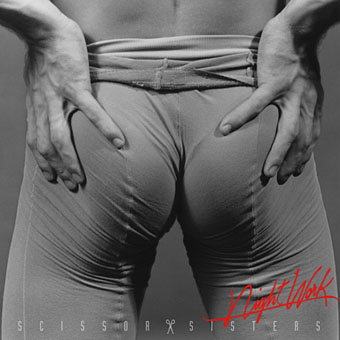
Scissor Sisters have a new album, Night Work, out next month. The cover picture is a photo of dancer Peter Reed by Robert Mapplethorpe. Antony and the Johnsons have announced a new album (and accompanying book) for October.

• Headline of the week: “Christian right leader George Rekers takes vacation with ‘rent boy’ ”. Rekers took issue with the story; his Rentboy.com escort took issue with Rekers’ issue-taking. Then things became unpleasant. And now another escort has come forward.

Henry & Glenn Forever, “a love story to end all love stories”. “Who knew Rollins was such a caring spouse? Who knew Hall and Oates were so infernally evil—yet so considerate?”

• This week’s Tumblr silliness: Lesbians Who Look Like Justin Bieber.

• I’m not on Facebook, nor will I ever be. If you are, however, here’s ten reasons why you should quit. The EFF has six things you need to know about Facebook Connections. Wired thinks that Facebook has gone rogue and an alternative is needed. What does Facebook publish about you and your friends? Finally, Gawker has ten reasons why you’ll be on Facebook forever.

The Prague Pneumatic Post.

How to serve absinthe.

Cthulhu is not cute.

• Song of the week: Gay Messiah by Rufus Wainwright.
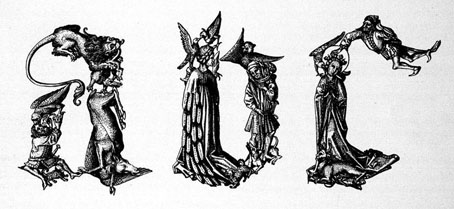
Gothic alphabets

gothic1.jpg

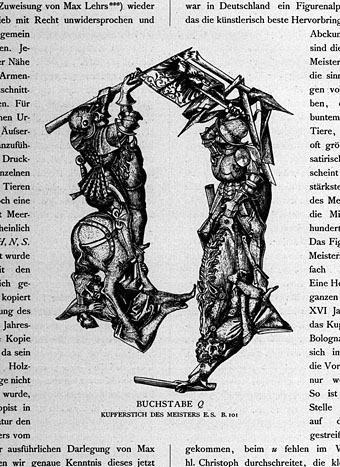
I have a couple of books with examples of medieval capitals like these, each letter being an amalgam of people, animals or (in the case of the example below) duelling knights. These are from Gothische Alphabete (1897), a book by Jaro Springer at the excellent University of Heidelberg which has the whole volume available as a PDF or as scans of individual pages.

gothic2.jpg

Previously on { feuilleton }
Letters and Lettering

Pamela Colman Smith’s Russian Ballet

pcs1.jpg

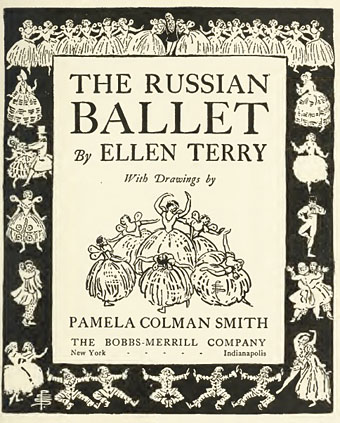
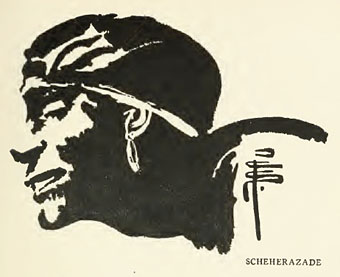
Another chance find at the Internet Archive. This small book from 1913 is an appraisal of Diaghilev’s Ballets Russes written by noted actress Ellen Terry and with illustrations—which Archive.org doesn’t mention—by Pamela Colman Smith, an artist whose Tarot designs are some of the most successful ever created yet who received little credit for her work while she was alive. It’s a shame that the Internet Archive perpetuates this state of affairs despite her name on the book’s title page. This is a fascinating set of ink sketches all of which are marked by the distinctive monogram familiar from her Tarot cards. One of the drawings in the book is also marked by an obscene doodle; I’ll leave it to the curious to discover which one.

pcs2.jpg

Continue reading “Pamela Colman Smith’s Russian Ballet”

Salammbô illustrated

salammbo1.jpg

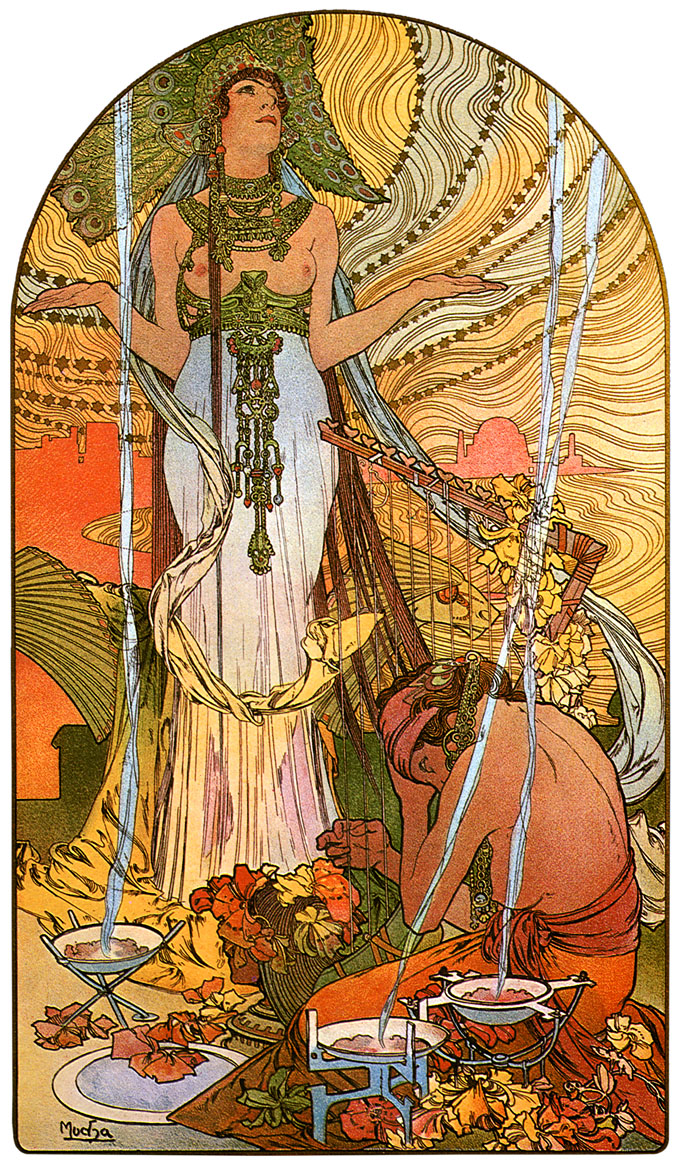
Salammbô by Alphonse Mucha (1897).

Alphonse Mucha’s gorgeous rendering of Flaubert’s Carthaginian heroine isn’t included in the many illustrated editions at this Salammbô site but plenty of other adaptations are. Examples range from faithful renderings by George Rochegrosse and Mahlon Blaine to drawings which are less successful or even downright bad. Also included are panels from Philippe Druillet‘s bizarre science fiction adaptation from the 1980s, a version which is often closer to Frank Herbert than Gustave Flaubert although many of the compositions are striking. One of these was used for a sleeve illustration by Richard Pinhas on his excellent East West album in 1980. And by coincidence, Druillet’s site mentions a forthcoming exhibition of his Salammbô nudes at the Galerie Pascal Gabert on May 20th.

salammbo2.jpg

Elsewhere on { feuilleton }
The album covers archive
The illustrators archive

Previously on { feuilleton }
The art of Mahlon Blaine, 1894–1969
Druillet meets Hodgson
The music of Igor Wakhévitch

Jugend, 1900

jugend-1900-01.jpg

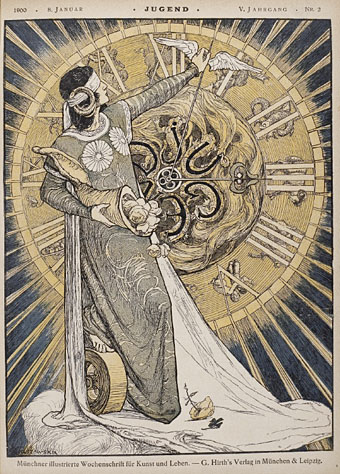
Continuing the rake through back issues of Jugend magazine, the German fin de siècle periodical of “art and life”, this post covers the year 1900 and will be the final Jugend image trawl. I mentioned in the post for 1899 that the magazine loses its Art Nouveau dynamism as the years pass. 1900 represents the point where all the graphics which make Jugend valued today—and which gave the name to the German manifestation of Art Nouveau: Jugendstil—are being pushed aside by the burgeoning nationalist and militarist fervour which led eventually to the First World War. At this point a couple of the notable Art Nouveau stylists such as Otto Eckman and Julius Diez are still present, and the work of Hugo Höppener, aka “Fidus” is increasingly prominent. In subsequent years the eccentric Fidus is mostly on his own, pursuing his obsession with naked figures, and his work seems even more curious in such staid surrounds. As before, anyone wanting to see more of these graphics is advised to explore the bound volumes at the Heidelberg University archive. The two books for 1900 can be found here and here.

jugend-1900-02.jpg

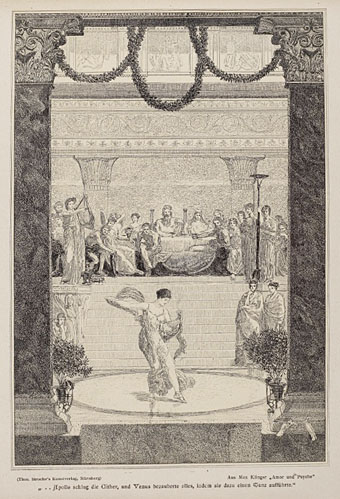
A picture by the Symbolist and Secession artist, Max Klinger.

jugend-1900-03.jpg

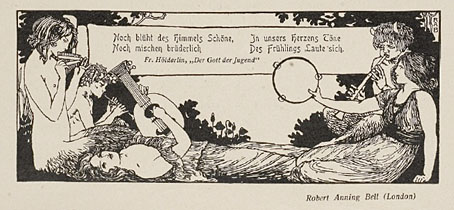
Nymphs and satyrs by English artist and illustrator Robert Anning Bell.

Continue reading “Jugend, 1900”